A vehicle problem rarely happens at a convenient time. Your car may quit on I-44 during rush hour, refuse to start in a grocery store lot, or sit disabled on the shoulder after an accident. When you search for emergency towing near me, the immediate goal is simple: get yourself safe, get clear information, and get the vehicle handled without creating more damage.
The right next step depends on where you are and what the vehicle is doing. A dead battery in a safe parking lot may only need a jumpstart. A car with steering, brake, tire, or drivetrain damage needs a tow. Trying to force a vehicle to move when it is not safe can turn a manageable roadside problem into an expensive repair.
Start With Safety Before Calling for a Tow
If the vehicle is still moving, get as far out of traffic as you safely can. A parking lot, wide shoulder, or side street is better than stopping in an active lane. Turn on the hazard lights. At night, use interior lights or a flashlight if it helps other drivers see you, but stay aware of traffic around the vehicle.
On busy Tulsa roads such as US 75, Highway 169, Memorial Drive, or Riverside Drive, your position matters as much as the breakdown itself. If you are on a narrow shoulder or close to fast-moving traffic, do not stand between your vehicle and the roadway. Move to a safe place away from traffic when possible. If the situation feels dangerous, contact emergency services first.
Do not keep restarting a vehicle that is overheating, smoking, leaking heavily, or making loud mechanical noises. Do not drive on a flat tire just to reach the next exit unless there is an immediate safety reason to move. Even a short distance can damage the wheel, suspension, or bodywork.
Once you are in a safer position, gather the details a tow operator needs. Your exact location is the biggest one. A street name alone may not be enough on a highway or large parking area. Look for the nearest exit, cross street, business name, mile marker, building entrance, or landmark. Let the dispatcher know whether your vehicle is blocked in, in a garage, in a ditch, or parked somewhere the truck will need to approach carefully.
It also helps to share the vehicle year, make, model, and condition. Mention low ground clearance, all-wheel drive, a locked steering wheel, missing keys, a flat tire, accident damage, or an electric vehicle. Those details determine the equipment and loading approach needed for a safe job.
What Emergency Towing Near Me Should Actually Mean
An emergency tow is not just a truck showing up and pulling a vehicle down the road. Proper towing starts with understanding why the vehicle cannot move and how it can be loaded without adding damage.
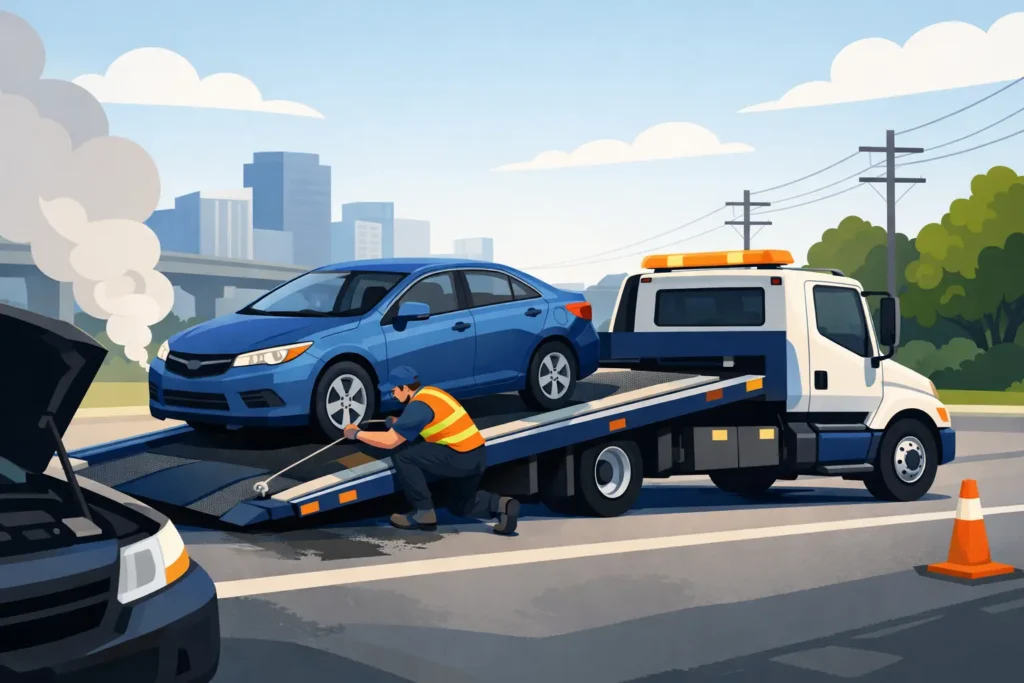
Flatbed towing is often the right answer for disabled cars, trucks, luxury vehicles, low-clearance vehicles, and EVs. The vehicle is loaded onto the bed and secured for transport instead of being pulled with two wheels on the pavement. That matters when there may be unseen drivetrain, suspension, or tire damage after a breakdown or collision.
A careful operator also considers the pickup location. Loading a vehicle in a tight Downtown Tulsa garage, a crowded apartment lot, or along a high-traffic road takes more than backing up and hooking on. The truck has to be positioned safely, the vehicle needs the right angle for loading, and the driver needs to protect the bumper, undercarriage, and wheels during the process.
Electric vehicles deserve particular attention. Many EVs, including Tesla models, have manufacturer-specific towing requirements and can be damaged if moved incorrectly. The same is true of many all-wheel-drive vehicles. If you are unsure whether your vehicle can be towed a certain way, say so before the truck is dispatched. A flatbed and proper loading equipment remove much of that uncertainty.
Speed matters in an emergency, but rushed handling is not the same as efficient handling. A clear arrival estimate, a truck equipped for the job, and straightforward communication are more useful than vague promises when you are standing next to a disabled vehicle.
When Roadside Help Is Enough and When You Need a Tow
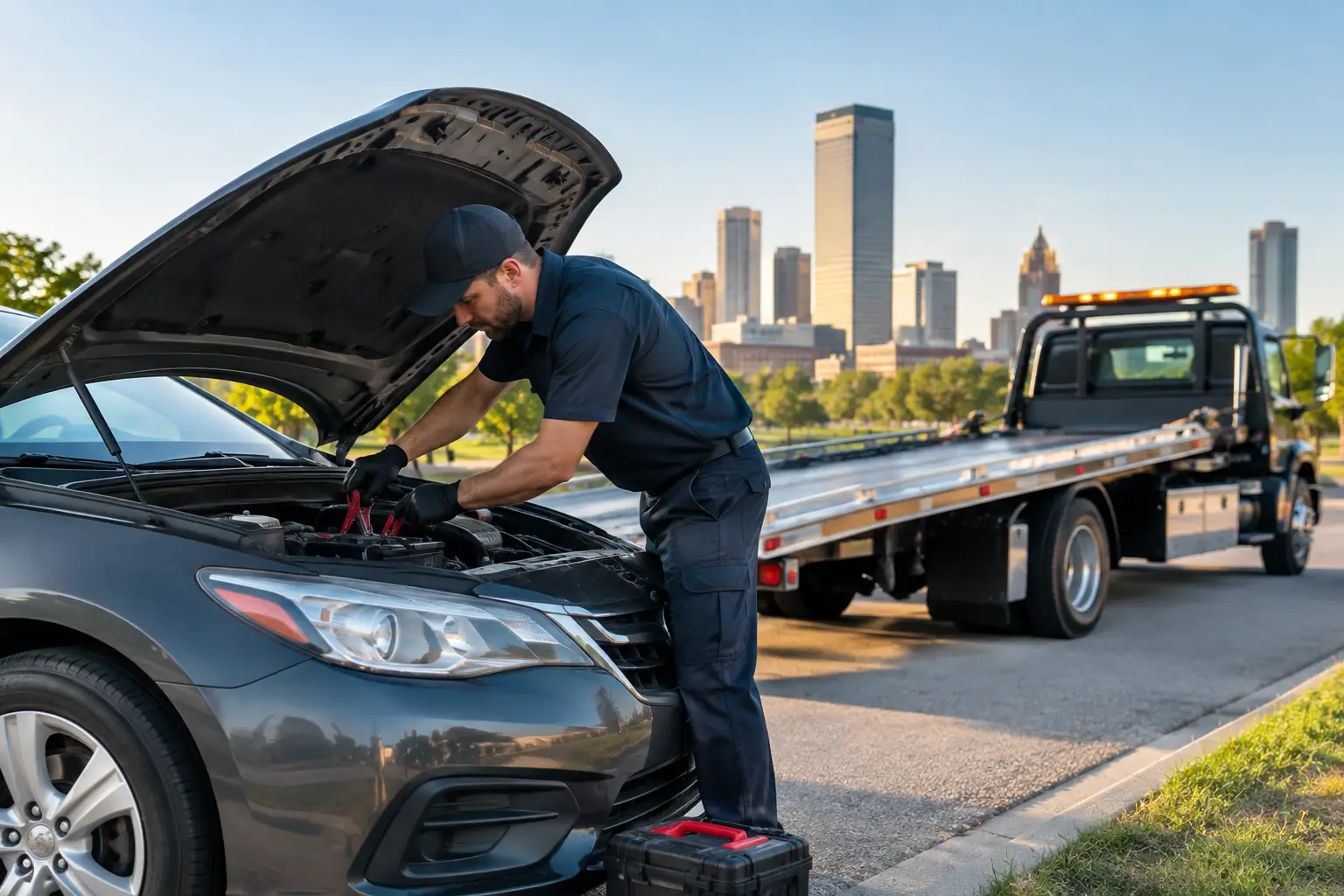
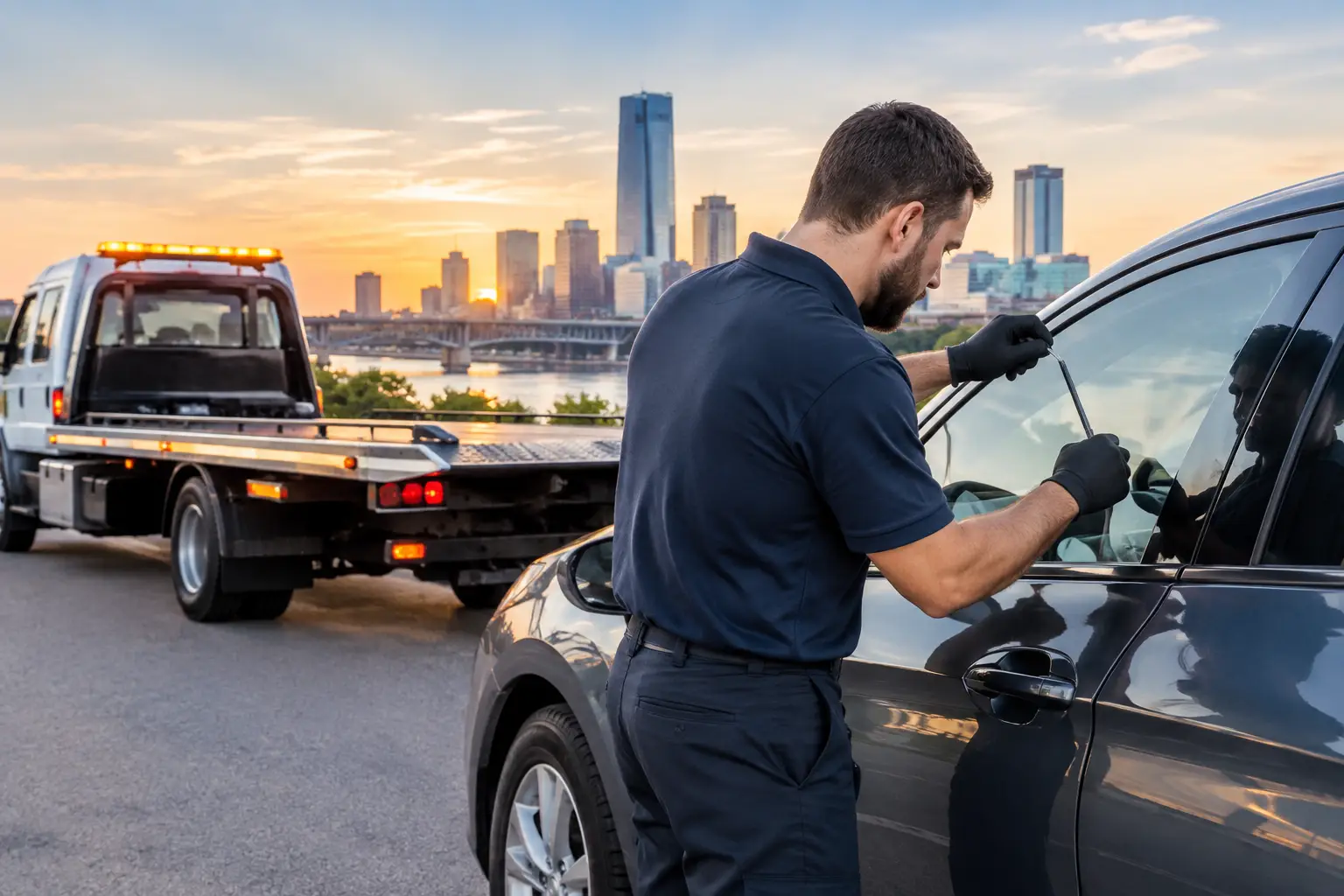
Not every call requires transport. If the battery is dead and the vehicle starts normally after a jump, roadside assistance may get you moving again. A lockout can often be handled on site. If a tire is flat and you have a usable spare, tire help may be enough to get you to a repair shop.
A tow is the safer call when the vehicle will not start for an unknown reason, has an engine warning combined with poor operation, has accident damage, overheats, will not shift correctly, or cannot be driven without risk. It is also the right choice when you are stuck in mud, a ditch, or another position where the vehicle cannot move safely under its own power. A winch-out may be needed before transport can begin.
There is a practical trade-off here. A jumpstart or tire change may save a tow if the problem is truly minor. But if there is a good chance the vehicle will fail again before you reach home or a shop, arranging transport once is usually safer than being stranded a second time. Trust what the vehicle is telling you. A warning light, smoke, grinding sound, or unstable handling is not something to test in traffic.
Give the Tow Operator the Right Destination
Before the truck arrives, decide where the vehicle needs to go. That may be your home, a trusted repair shop, a dealership, or another safe location. If the vehicle is under warranty, needs specialized service, or is an EV, the dealership may make sense. If you already know a local repair shop that can inspect it quickly, taking it there may reduce downtime.
Tell the operator if the destination has access issues. Repair shops can have narrow gates, crowded service lanes, or after-hours drop procedures. Apartments and homes may have steep driveways or limited turning room. These details help prevent a simple drop-off from becoming difficult at the end of the job.
For drivers in Tulsa, Jenks, Bixby, Broken Arrow, and nearby areas, local route knowledge can make a real difference. A tow from a congested stretch of I-44 is different from a pickup in a quiet neighborhood. The goal is not to make the situation complicated. It is to choose a safe route, load the vehicle correctly, and deliver it where you need it.
Questions Worth Asking Before the Truck Arrives
You do not need a long interview while dealing with a breakdown, but a few direct questions can clear up uncertainty. Ask whether the vehicle will be transported on a flatbed, what information the driver needs before arrival, and whether the destination you have in mind is within the active service area.
Ask for an arrival estimate, understanding that traffic, weather, prior calls, and the exact pickup location can affect timing. If your vehicle is in a risky location, say that plainly. The operator needs to know whether traffic control, a specific approach, or faster coordination may be necessary.
Be ready to confirm that you are authorized to move the vehicle. Keep your keys, identification, and destination information available. Remove valuables if you can do so safely, and take a few photos if the vehicle has accident damage. Those steps are not about making the tow harder. They help keep the process clear from pickup through drop-off.
A Better Way to Handle a Bad Roadside Moment
A breakdown puts you under pressure, especially when you are late, stranded with family, or stopped near traffic. Keep the decision simple: protect yourself first, describe the situation accurately, and do not gamble on driving a vehicle that is clearly unsafe.
Tulsa Towing, powered by Neptune Towing, focuses on that practical approach with roadside help and damage-free flatbed transport for vehicles that need to be moved. When the vehicle cannot safely go another mile, getting it loaded correctly and delivered to the right place is the useful next move.