A lowered car can be sitting on a perfectly flat parking lot and still be difficult to tow safely. The problem is not just getting it onto a truck. It is getting the front bumper, splitter, exhaust, side skirts, and underbody over the loading angle without turning a breakdown into body-shop damage. That is why flatbed towing for lowered cars requires the right equipment, a careful setup, and an operator who does not rush the load.
Whether your car is lowered from the factory, built with aftermarket suspension, or simply has a low front lip, the approach matters. A vehicle that clears a driveway one day may not clear a standard tow ramp at the angle required for loading.
Why Lowered Cars Need a Flatbed
A conventional tow method can put stress on parts that were never meant to carry the vehicle’s weight. Low front bumpers can scrape before the tires reach the deck. Splitters can catch. A low exhaust or suspension component can contact the ramp during the transition from ground to bed.
A flatbed keeps all four tires off the road during transport. That protects the vehicle from additional drivetrain wear and avoids the complications that can come with towing certain all-wheel-drive, performance, hybrid, and electric vehicles with only two wheels lifted. For a lowered car, though, the real advantage is controlled loading.
The bed can be positioned close to the ground, but that alone does not solve every clearance issue. The operator still has to judge the vehicle’s approach angle, breakover angle, and where the car may touch as it transitions onto the deck. That is the difference between using a flatbed and using it correctly.
Flatbed Towing for Lowered Cars Starts With the Loading Angle
The lowest point at the front of the vehicle usually determines the loading plan. On some cars, it is the bumper. On others, it is an aftermarket lip, splitter, intercooler piping, or a low-mounted skid plate. A car with air suspension can also create a different situation if the system has failed or the vehicle is sitting lower than normal.
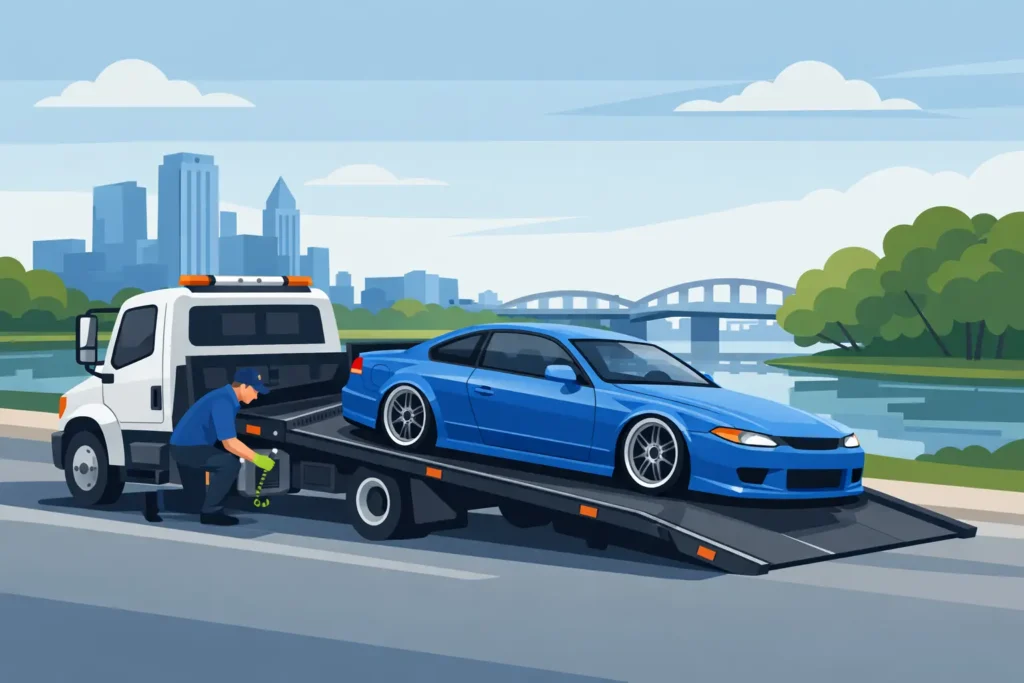
A careful operator checks clearance before pulling. If the ramp angle is too steep, the truck may need additional ramp extensions, loading boards, or a different bed position to reduce the approach angle. These tools create a longer, smoother path from the pavement to the flatbed.
That extra setup takes a few minutes. It is worth it. Pulling a low car straight onto a steep ramp because it is faster can crack a bumper cover, tear off a splitter, or damage the underside where the driver cannot see it.
The winch should do the pulling
For a disabled lowered car, the winch is usually the safest way to bring the vehicle onto the bed. The cable is connected to an appropriate recovery point or another safe attachment point for that vehicle. It should not be hooked to a random suspension component, bumper support, or thin piece of underbody trim.
The car is then drawn up slowly while the operator watches the clearance points. Slow loading gives time to stop and adjust if the bumper begins to approach the ramp or the vehicle needs a different angle.
If the car can move under its own power, that does not automatically mean it should be driven onto the bed. A mechanical issue, transmission concern, brake problem, or tight loading angle may make winching the better choice. The safest method depends on the vehicle and why it needs a tow.
Wheel straps protect the vehicle during transport
Once the car is on the bed, it needs to be secured properly. Professional flatbed towing generally uses wheel straps that hold the tires in place rather than relying on chains attached to suspension parts or body components.
This matters more on lowered vehicles because suspension geometry, low ride height, and aftermarket parts leave less room for error. The goal is to secure the vehicle firmly without placing unnecessary pressure on a control arm, sway bar, exhaust section, or painted wheel.
The operator should also check that the car has enough clearance when the bed returns to transport position. A vehicle may load cleanly while the deck is low but sit differently once the bed is raised and leveled.
What to Tell the Tow Truck Operator Before They Arrive
A quick description during the call can help the truck arrive prepared. Say that the car is lowered, even if it is only slightly lower than stock. Mention a front splitter, very low bumper, air suspension issue, wide wheels, a locked wheel, or any damage that affects how the car rolls.
The vehicle’s location matters too. A lowered car in a level driveway is different from one stopped on the shoulder of I-44, in a steep apartment entrance, or inside a parking garage. In Tulsa, roadside space and traffic conditions around US 75, Memorial Drive, Riverside, and Highway 169 can affect where the truck can safely position for loading.
You do not need to know every suspension detail. A simple, honest description gives the operator a better starting point. If possible, let them know whether the vehicle rolls freely, starts, steers, and has working brakes. Those details determine whether a standard winch load is workable or whether a more careful recovery setup is needed.
Common Situations That Need Extra Care
Not every lowered car is a modified sports car. Factory-low sedans, coupes, EVs, and luxury vehicles can all have limited clearance. The same applies to cars with damaged tires, broken suspension, collision damage, or a flat tire that has dropped one corner closer to the ground.
Air suspension failures deserve special attention. If a vehicle has settled onto its bump stops, it may be much lower than the driver expects. It may also be unsafe to roll normally until it is loaded. An operator needs to assess the position of the vehicle before deciding how to pull it onto the bed.
Electric vehicles can add another layer of concern. Their battery packs sit low in the chassis, and many have manufacturer-specific towing instructions. A flatbed is often the right transport choice, but the loading and tie-down points still need to be handled with care.
Cars with aftermarket body kits also require patience. A splitter that has survived daily driving can still catch if the truck is positioned poorly. The safe answer is not to force it. It is to change the angle, extend the ramp path, or use another loading method that protects the car.
What Drivers Can Do While Waiting
If you are parked in a safe place, leave the car as level as possible and avoid moving it onto a steep curb cut or driveway. Do not keep trying to drive a damaged or low-clearance car over an obstacle just to make the tow easier. That can create more damage before the truck gets there.
Remove loose items from under the car if they are safe to reach, but do not crawl underneath a vehicle on the roadside. If the car has a front tow hook, recovery eye, or manufacturer-provided towing point, you can mention it to the operator. There is no need to install anything unless you know exactly how it works.
Take a few photos of the vehicle before loading if that gives you peace of mind, especially after an accident. Then give the operator room to work. Loading a low car often involves positioning the bed, checking angles, and making small adjustments that are easier to do without extra movement around the truck.
A Careful Tow Is Cheaper Than Avoidable Damage
The right tow is not just about reaching the repair shop or dealership. It is about getting there without adding a damaged bumper, broken splitter, scraped exhaust, or underbody problem to the original issue.
Tulsa Towing handles lowered vehicles with flatbed equipment and a damage-conscious approach, whether the car is stranded at home, outside a shop, or along a busy Tulsa roadway. Clear communication before the truck arrives helps make the process simpler.
If your vehicle sits low, say so when you request service. That one detail gives the operator a chance to plan the load properly and give your car the careful handling it needs.