A car can make it home with a minor warning light. It cannot safely make it home with a wheel coming loose, steam rolling out from under the hood, or a transmission that will not shift. If you are asking, when do I need towing, the safest answer is usually this: tow it when driving could make the damage worse, put you in danger, or leave you stopped in a worse location.
The hard part is that roadside problems do not always look dramatic. Some can be fixed where you are with a jumpstart, tire change, or lockout service. Others need a flatbed before one more mile turns into a much bigger repair. Here is how to tell the difference.
When Do I Need Towing Instead of Roadside Help?
Start with one practical question: can the vehicle move safely under its own power without causing more damage? If the answer is no, arrange a tow.
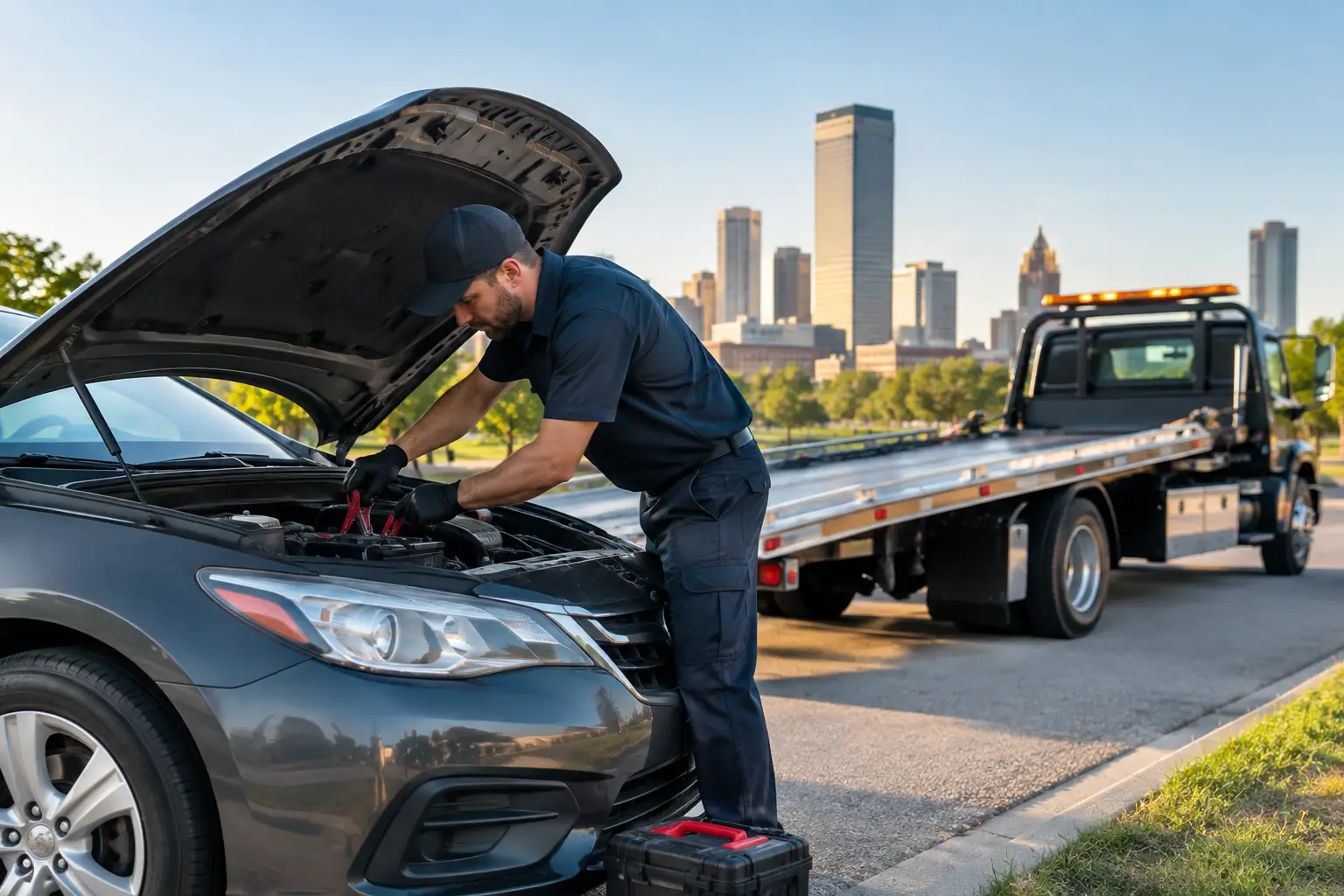
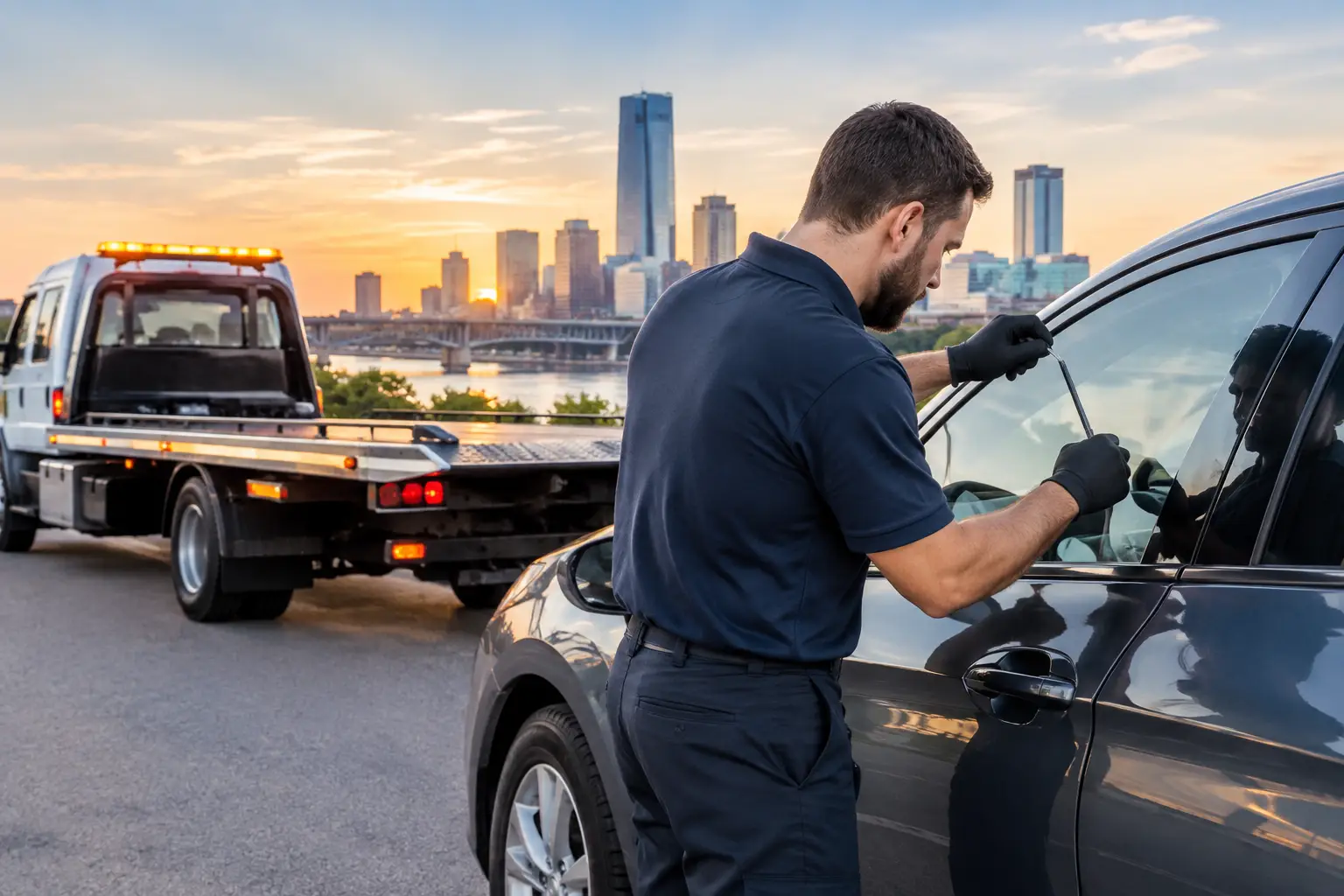
Roadside assistance can solve a problem when the vehicle itself is otherwise safe to drive. A dead battery may only need a jumpstart. A flat tire may only need the spare installed, assuming the spare is properly inflated and the tire damage did not affect the wheel or suspension. A lockout needs entry into the vehicle, not a tow.
Towing makes more sense when the vehicle will not start because of a mechanical issue, cannot steer or brake correctly, is leaking fluid, has been in a collision, or is stuck where it cannot be moved safely. A tow is also the right call if you are uncertain. It is better to have the vehicle checked at a repair shop than to risk a breakdown in traffic on I-44, US 75, or a busy stretch of Memorial.
Signs You Should Stop Driving Right Away
Some symptoms are clear stop signs. Do not try to nurse the vehicle along just because you are close to home or the shop.
The engine is overheating
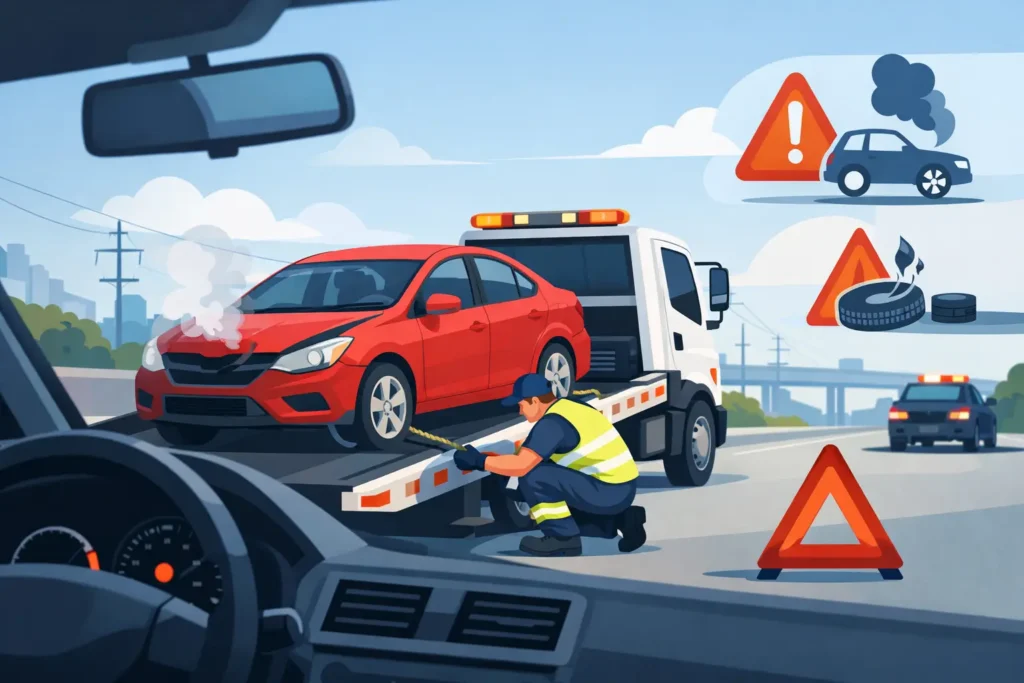
If the temperature gauge is in the red, a temperature warning appears, or steam is coming from the engine bay, pull over as soon as it is safe. Turn the engine off and let it cool. Do not open a hot radiator cap.
An overheating engine can be caused by a coolant leak, failed hose, water pump issue, cooling fan problem, or another fault that will not improve by driving. Continuing to run it can damage the engine quickly. This is a tow situation, not a wait-and-see situation.
You have an oil pressure warning or major fluid leak
A low oil pressure light, fresh oil pouring beneath the vehicle, or a large puddle of coolant, transmission fluid, or brake fluid calls for caution. Fluids keep critical parts lubricated, cooled, and working correctly. Without them, damage can happen fast.
A few drops on the driveway are different from a steady leak at a parking lot or roadside. Still, if you cannot identify the fluid or the leak is active, do not drive it to find out. Have it transported to a repair facility.
The brakes feel wrong
A brake pedal that drops to the floor, feels unusually soft, pulls hard to one side, or requires much more distance to stop is a reason to stop driving. So is grinding that is loud and constant when braking.
Brake problems are not worth testing in traffic. Get to a safe spot if possible, use your hazard lights, and call for towing. A short trip can become dangerous quickly around stop-and-go traffic, hills, or wet roads.
Steering, suspension, or a wheel does not feel secure
If the steering wheel suddenly shakes, the vehicle pulls sharply, a wheel sits at an odd angle, or you hear heavy clunking after hitting a curb or pothole, pull over. The same applies if a tire has separated, a wheel is damaged, or lug nuts appear loose.
A spare tire only helps when the rest of the wheel and suspension are intact. If the vehicle is wobbling or does not track straight, a flatbed tow avoids further damage and keeps you from losing control.
Accident Damage Often Means You Need a Tow
After a collision, a car may look driveable while having damage that is not obvious from the driver seat. A cracked bumper is one thing. Bent steering components, damaged suspension, leaking fluids, broken lights, deployed airbags, or a tire rubbing against bodywork are another.
Do not judge the situation only by whether the engine starts. Look underneath if it is safe to do so. Check for leaking fluid, hanging parts, wheel damage, and anything dragging on the ground. If the hood will not latch, the trunk is open, a door will not close, or the vehicle is pulling to one side, do not drive it.
A proper flatbed keeps all four wheels off the ground during transport. That matters after an accident because pulling a damaged vehicle with two wheels rolling can add stress to parts that are already bent or loose.
Transmission, Engine, and Electrical Problems That Call for Towing
A vehicle that starts but will not move normally still needs a tow. If the transmission will not shift into gear, slips badly, makes loud grinding sounds, or the vehicle only moves in one direction, stop driving. Trying to force it can turn a repairable transmission problem into a more expensive one.
Engine noises matter too. Knocking, loud tapping, metal-on-metal grinding, or a sudden loss of power with warning lights can point to a serious mechanical issue. Pull over safely and turn the vehicle off. Do not keep restarting it repeatedly in hopes that it clears up.
Electrical failures can be less obvious. A simple dead battery may be resolved with a jumpstart. But if the vehicle dies again immediately, has a burning electrical smell, loses power while driving, or shows multiple warning messages at once, it may have an alternator, wiring, or computer issue. A tow to a shop is the safer move.
Electric Vehicles and All-Wheel Drive Vehicles Need Extra Care
Not every vehicle should be towed the same way. Electric vehicles, including Tesla models, have specific transport requirements. Improper towing can damage the drive system, underbody, or battery area. The same concern applies to many all-wheel drive and four-wheel drive vehicles, which should not be pulled with only two wheels off the ground unless the manufacturer specifically allows it.
Low-clearance cars need careful loading as well. Rushed loading can scrape bumpers, damage the undercarriage, or put stress on the vehicle. A flatbed with the right equipment and loading approach is usually the best option for these vehicles.
When calling for help, tell the dispatcher the make, model, whether it is electric, all-wheel drive, lowered, or has visible damage. That information helps the tow operator arrive prepared instead of guessing at the roadside.
When You Are Stuck, Do Not Spin the Tires
Mud, wet grass, a ditch, loose gravel, and snow can leave a vehicle stuck even when nothing is mechanically wrong. It is tempting to keep pressing the accelerator, but spinning the tires can dig the vehicle in deeper. It can also damage tires, wheels, driveline parts, or the surrounding ground.
If the vehicle is high-centered, partly off the road, or positioned at an angle, it may need a controlled winch-out rather than a standard tow. Do not hook chains, straps, or ropes to random parts under the vehicle. Modern cars have plastic panels, sensors, and components that can be damaged easily. Let a trained operator use the proper recovery points and equipment.
What to Do While You Wait for a Tow Truck
Your first job is getting yourself safe. If the vehicle can be moved out of an active travel lane without creating more risk, move it carefully to a shoulder, parking lot, or nearby safe area. If it cannot move safely, turn on hazard lights and stay aware of traffic.
On a high-speed road, stand well away from traffic if you can exit the vehicle safely. Avoid standing between your vehicle and other traffic. If visibility is poor, it is raining, or traffic is moving fast, give yourself more distance from the roadway.
When you call, be ready with your location, the vehicle make and model, the problem you are seeing, and where you want the vehicle delivered. Mention parking garage clearance, a locked wheel, accident damage, or an EV. Clear details make dispatch and loading smoother.
For drivers in Tulsa, Jenks, Bixby, and Broken Arrow, local route knowledge also matters. A truck stopped near a busy interchange or narrow shoulder needs a plan that keeps the scene controlled and gets the vehicle loaded without adding to the problem.
A Tow Can Be the Cheaper Decision
Many drivers hesitate because they are trying to avoid the cost or inconvenience of towing. That is understandable. But a tow is often less expensive than replacing an overheated engine, repairing collision damage made worse by driving, or dealing with a vehicle that breaks down again several miles later.
The right decision depends on the vehicle, the warning signs, and where you are stopped. A dead battery in a safe parking lot may only need a jumpstart. A dead battery combined with electrical warnings or a vehicle stalled in traffic may call for a tow instead.
Tulsa Towing, powered by Neptune Towing, handles roadside problems with the same basic approach: assess what can be safely handled on site, then use proper flatbed equipment when the vehicle needs transport. The goal is not to overcomplicate a bad day. It is to get your vehicle where it needs to go without causing additional damage.
When something feels unsafe, sounds wrong, leaks, overheats, or will not move correctly, trust that warning. Pull over, protect yourself from traffic, and let the next mile be on a flatbed instead of under your own power.