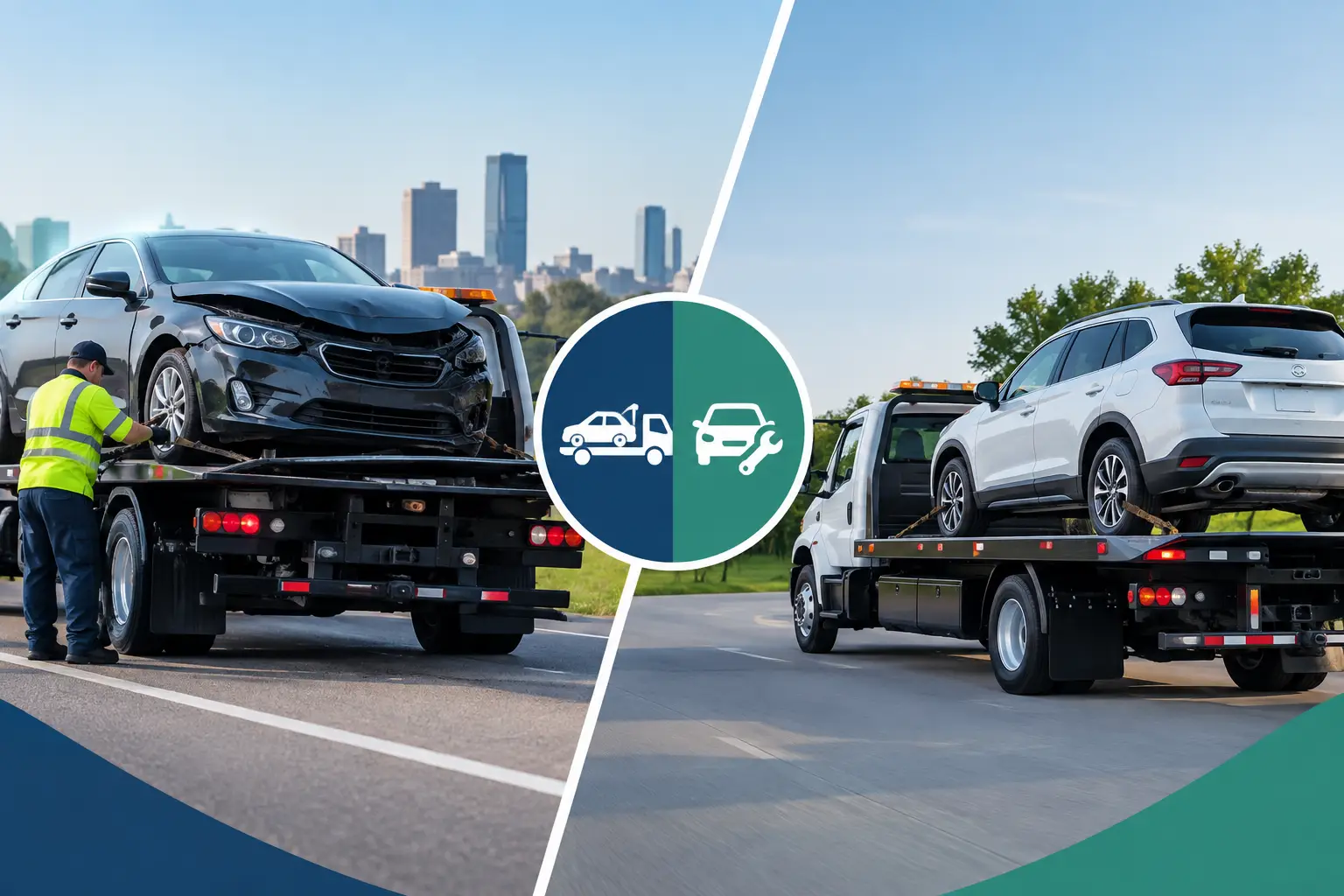
An EV that will not move creates a different kind of roadside problem. It may still have power on the screen, but refuse to shift into gear. It may be completely dead after a low-voltage battery issue. It may have a damaged wheel, a warning message, or collision damage that makes driving unsafe. This guide for electric car transport explains what needs to happen next so your vehicle gets loaded correctly instead of being dragged, pushed, or handled like a standard gas vehicle.
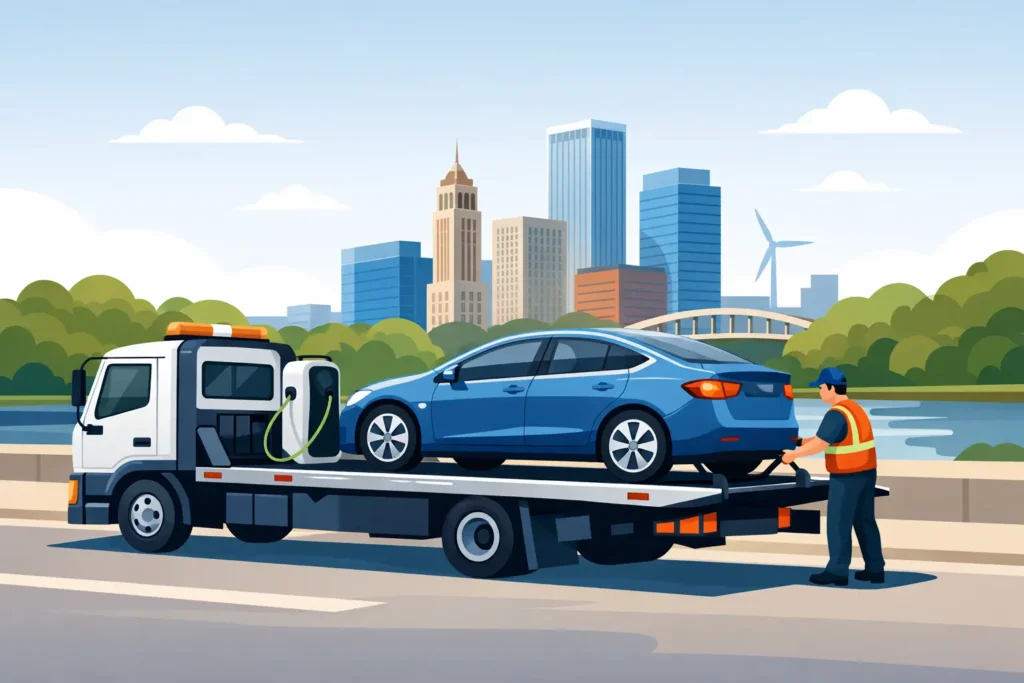
For most electric vehicles, proper flatbed towing is the right starting point. The vehicle stays fully off the ground, which helps protect the drive system, underbody, tires, and body panels during transport. That matters on low-clearance vehicles such as Tesla models, but it also applies to many other EVs with battery packs mounted beneath the floor.
Why Electric Car Transport Needs Extra Care
Electric cars are heavy, low to the ground, and built differently underneath. The large high-voltage battery pack is usually mounted along the bottom of the vehicle. A careless loading angle, improper tie-down point, or attempt to pull the car by a suspension component can cause damage that is far more expensive than the original breakdown.
The main concern is not that EVs are impossible to tow. They are towed safely every day. The concern is using the right equipment and following the vehicle’s specific transport instructions. A flatbed keeps all four wheels off the pavement and gives the operator control over the loading process.
An EV also may not roll freely when it loses power. Electronic parking brakes can stay engaged, the car may remain in Park, or the vehicle may need a transport or tow mode activated before it can be moved. That is why the details you provide when requesting a tow truck matter.
A Guide for Electric Car Transport When Your EV Is Disabled
If your electric car stops on I-44, US 75, Memorial, or in a crowded parking lot, start by getting yourself to a safe place away from moving traffic if you can do so safely. Turn on hazard lights. Do not keep trying to force the vehicle into gear if it is showing warnings or refusing to move.
When you call for towing, tell the dispatcher the make, model, and approximate location of the vehicle. Say that it is an electric vehicle. Also explain whether the vehicle can roll, whether it is in a garage, whether a wheel is damaged, and whether there was an accident. Those details help determine the safest way to load it and whether additional equipment is needed.
If you drive a Tesla, let the towing operator know whether the screen is working and whether you can access Tow Mode. Tesla vehicles typically need Tow Mode enabled before loading when possible. Other EV brands may use different names for the same function, such as transport mode or neutral mode. The owner’s manual or vehicle screen may provide instructions, but do not spend time searching through menus if you are in an unsafe roadside location. Tell the towing operator what the vehicle is doing.
Flatbed Loading Protects the Drivetrain
A flatbed is generally the preferred method because the vehicle rides with all four wheels off the ground. This avoids turning the drive wheels during transport, which can be a problem for certain EV drivetrains when the vehicle is powered down.
Loading still has to be done carefully. Low-profile ramps, proper approach angles, and the correct recovery points reduce the chance of scraping the front bumper, battery shield, or lower body panels. If the EV will not shift into neutral or release the parking brake, the vehicle may need to be moved onto skates or dollies before it is positioned on the bed. That takes more time than a normal drive-up load, but rushing it is not the answer.
Once the vehicle is on the flatbed, it should be secured using proper wheel restraint equipment. The goal is to hold the vehicle firmly in place without attaching to components that are not designed for towing force.
Do Not Assume a Dead EV Is Just Out of Charge
Sometimes an EV will not start because the main battery has been depleted. Other times, the issue is the small 12-volt or low-voltage battery that operates locks, computers, and contactors. A car can have plenty of charge in its main battery and still be unable to wake up, unlock, shift, or enter tow mode because of a low-voltage problem.
A jumpstart may help in some situations, but it depends on the vehicle and the cause of the failure. If a warning light remains on, the vehicle will not shift, or it has been sitting dead for a while, transport to a qualified repair facility is often the safer call. Repeatedly attempting to jump or force-start an EV can waste time when the real issue needs diagnosis.
What to Do Before the Tow Truck Arrives
You do not need to become an EV technician on the shoulder of the road. A few simple steps can make the handoff quicker and safer.
Keep the key fob or phone key available. If the car still has screen power, take a photo of any warning message before shutting it down. If you have roadside coverage through your manufacturer, insurer, or membership plan, have that information ready if you plan to use it.
Remove personal items you will need immediately, especially house keys, medication, work equipment, and charging adapters. Once the vehicle reaches a shop or dealership, access may be limited while it is being inspected. If the car is plugged into a charger, disconnect it only if it is safe to do so and there is no damage to the charging equipment.
Do not crawl under the vehicle to inspect the battery pack. If the underside made contact with debris, a curb, road damage, or an object after an accident, leave the inspection to trained personnel. A damaged battery pack can require special handling even when the vehicle appears normal from the outside.
Accident Damage Changes the Transport Plan
After a collision, the question is not simply whether the EV starts. Damage to a wheel, suspension, steering component, or underbody can make normal loading unsafe. The vehicle may need to be winched carefully onto a flatbed rather than driven up the ramps.
If you see smoke, hear hissing, smell unusual chemical odors, or notice heat coming from underneath the vehicle, move away from it and call emergency services. Do not touch exposed orange cables or try to inspect a damaged battery area. These situations are uncommon, but they require more than routine roadside handling.
For a standard accident tow with no signs of battery damage, clear communication still makes a difference. Let the operator know which end of the vehicle is damaged, whether airbags deployed, and whether the wheels turn. That information helps avoid surprises during recovery.
Choosing the Right Drop-Off Location
The nearest location is not always the best destination. If the problem is a flat tire or a simple low-voltage battery issue, a local repair shop that works on EVs may be appropriate. If the vehicle has a manufacturer-specific warning, charging system issue, or warranty concern, the dealership may make more sense.
Before the truck arrives, confirm the shop is open and can accept the vehicle. After-hours drop-offs are common, but some facilities have specific instructions for where to leave keys and whether they can accept an EV with collision or battery-related damage. A quick call can prevent the vehicle from being delivered to a locked lot with no clear next step.
For drivers in Tulsa, Jenks, Bixby, or Broken Arrow, local route knowledge also helps when the vehicle is disabled in traffic or a tight apartment, office, or garage area. Tulsa Towing, powered by Neptune Towing, uses flatbed equipment for damage-free EV transport and focuses on getting the vehicle directly to the repair shop, dealership, or destination you choose.
Questions Drivers Often Have About EV Towing
Can an electric car be towed with two wheels on the ground?
It depends on the vehicle and its manufacturer instructions, but this should never be assumed. Many electric vehicles are not meant to be towed with drive wheels on the ground, especially when powered off. A flatbed is usually the safer transport method because all four wheels are elevated.
What if my EV is locked and completely dead?
Tell the towing operator before arrival. Accessing the vehicle, releasing the parking brake, and loading a non-rolling EV requires a different approach than loading a car that can shift into neutral. The tow may still be straightforward, but the operator needs the right information and equipment.
Will towing damage the battery?
Proper flatbed transport is designed to avoid battery damage. The biggest risks come from improper loading, scraping the underbody, using incorrect attachment points, or moving a collision-damaged vehicle without accounting for the condition of the battery area.
A disabled electric car is stressful enough without wondering whether the tow will create another problem. Give clear details, request proper flatbed transport, and let the vehicle be loaded at a controlled pace. Getting it to the right shop safely is the job.