A crash on I-44, Memorial, US 75, or a neighborhood street can leave a vehicle sitting at an angle, leaking fluid, blocking traffic, or simply unable to drive straight. Accident towing is not just a matter of hooking up a car and leaving. The vehicle needs to be moved safely, loaded correctly, and taken where you want it to go without causing more damage during an already stressful situation.
The first few minutes matter. Get yourself and your passengers out of immediate danger if you can do so safely, call 911 when there are injuries, hazards, or a blocked roadway, and avoid trying to drive a damaged vehicle just to get it off the road. A car may look drivable after impact while having damage to the steering, suspension, tires, cooling system, or battery area that makes moving it a real risk.
What to Do Before Accident Towing Arrives
Start with safety, not the vehicle. Turn on your hazard lights, move to a safer area away from traffic when possible, and stay aware of passing cars. On busy Tulsa roads, traffic can continue moving quickly even when drivers can see an accident ahead.
If the vehicle can be moved a short distance without creating a danger, follow directions from first responders. But do not force it to move if a wheel is bent, a tire is flat, fluids are pouring out, airbags have deployed, or the car is making unfamiliar noises. Trying to limp away from the scene can turn collision damage into a larger repair.
When you call for a tow, have a few details ready: your location or nearest cross streets, the vehicle year, make, and model, and whether it is drivable or visibly damaged. Let the dispatcher know if the vehicle is in a parking garage, on a highway shoulder, stuck against a curb, or has low clearance. Those details help send the right equipment and prepare the driver for the scene.
You should also decide where the vehicle needs to go. That may be your preferred body shop, repair shop, dealership, home, or another location you have confirmed can accept the vehicle. If you are unsure, say so clearly. A good tow operator can explain practical options, but the destination should be understood before loading starts.
Why Proper Accident Towing Matters
Collision damage is often worse than it looks from the outside. A bumper may appear mostly intact while a tire is pushed out of position. A truck may start and run but have damaged steering components. Even a minor rear-end crash can leave parts hanging underneath where they can catch the pavement during a careless pull.
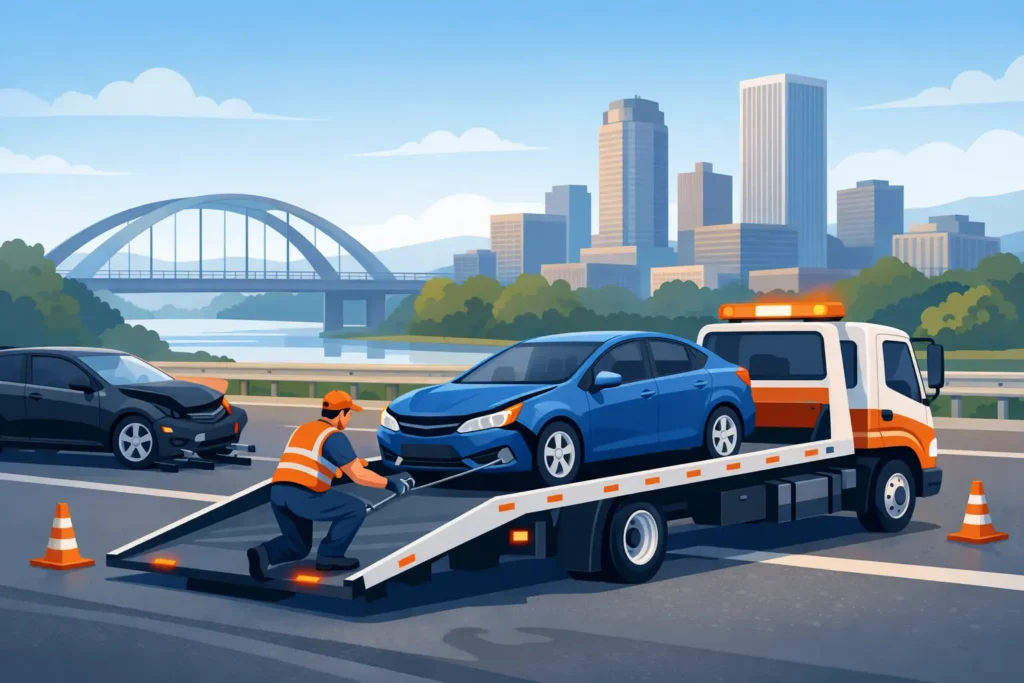
That is why a flatbed is often the right choice after an accident. The vehicle is loaded onto the bed and transported with all four wheels off the ground. This avoids rolling a damaged wheel, drivetrain, or suspension down the road. It also gives the operator more control when the vehicle cannot be driven onto the bed under its own power.
A careful load begins with looking over the vehicle. The tow operator needs to identify loose parts, damaged wheels, low bumpers, blocked access points, and where the vehicle can safely be secured. There is no one setup that fits every car. The right approach changes depending on the impact, the vehicle’s position, and whether it is front-wheel drive, rear-wheel drive, all-wheel drive, electric, lifted, or low to the ground.
Rushing this part is where extra damage can happen. A car with front-end damage may need to be winched carefully rather than driven or pulled abruptly. A vehicle sitting crooked against a curb may need to be repositioned before it can be loaded. The goal is simple: get it onto the truck without dragging damaged parts, stressing the suspension, or making the original problem worse.
When a Vehicle Should Never Be Driven
Some damage makes the decision easy. Do not drive if a wheel is rubbing, pointing the wrong direction, or locked in place. The same goes for major fluid leaks, smoke, a deployed airbag that blocks your view, a cracked radiator, damaged lights for nighttime travel, or a car that pulls hard to one side.
Electric vehicles need extra caution after an impact as well. Damage underneath the vehicle or around the battery area should be treated seriously. An EV should be handled with equipment and loading methods that protect its low clearance and avoid improper contact underneath. Tesla and other electric vehicles are not vehicles to improvise with after a crash.
Sometimes the damage is less obvious. If your vehicle starts but the steering feels off, warning lights appear, the brakes feel different, or a new vibration begins after impact, arrange a tow. The cost and inconvenience of towing are usually far less than the risk of losing control or damaging more components on the way to a shop.
Choosing the Right Destination After a Crash
Before the truck arrives, call the repair shop or dealership if possible. Confirm that it can receive your vehicle, ask where they want it parked after hours, and provide any gate code or instructions to the tow driver. A clear destination saves time and prevents the vehicle from being dropped somewhere inconvenient.
If you use a body shop, make sure it is the shop you actually want handling the repairs. You are already dealing with phone calls, insurance details, and transportation after the accident. Knowing the destination up front keeps one part of the process simple.
For vehicles that need mechanical inspection before body work, a trusted repair shop may make more sense than a dealership. It depends on the type of damage, the age of the vehicle, and where you can get timely service. The tow itself should be based on safe transport, not pressure to choose a destination you did not request.
What a Careful Tow Scene Looks Like
A professional accident tow is organized, even when the scene is not. The operator should assess the position of the vehicle, make the area visible, communicate what needs to happen, and load the vehicle using the proper attachment points and securement methods.
You may see wheel straps, skates, dollies, winch lines, ramps, or blocks used during the job. These are not signs that something is going wrong. They are often what allows a damaged or immobile vehicle to be moved without dragging it across pavement or forcing a damaged wheel to turn.
If the vehicle is in a tight parking lot, against a divider, or in a garage, the tow may take more setup than a straightforward roadside pickup. That is normal. The safest method is not always the fastest-looking method. A few extra minutes spent positioning equipment correctly can prevent damage to the vehicle, nearby cars, or the property around it.
Clear communication matters just as much as equipment. You should know where the vehicle is going and have a way to confirm when it has been delivered. If there are personal items you need from the car, ask before it is loaded. Once a damaged vehicle is secured on a flatbed, opening doors or reaching into it may not be safe.
Accident Towing for Tulsa Drivers
Local familiarity helps when a crash happens during rush hour, near a busy interchange, or on a narrow street where there is little room to work. A tow operator who understands Tulsa traffic patterns can plan the approach, find a safer loading position when one is available, and get the vehicle moving without adding confusion to the scene.
Tulsa Towing, powered by Neptune Towing, focuses on flatbed transport and careful handling for damaged cars, trucks, and electric vehicles. The work is straightforward: assess the vehicle, load it safely, communicate clearly, and deliver it to the location you choose.
After the vehicle is gone, take a breath before moving on to the next call. Make sure you have your keys, insurance information, and any necessary belongings, then focus on getting yourself somewhere safe. The right tow does not erase the accident, but it keeps a bad situation from becoming a more complicated one.