A vehicle that will not start on Memorial, a low-clearance car stopped near Tulsa Hills, or an EV disabled along US 75 creates the same immediate question: can it be moved without making the problem worse? The future of flatbed towing safety is not about flashy equipment for its own sake. It is about making sure the truck, vehicle, driver, and roadway are handled with fewer risks from the first call to final unload.
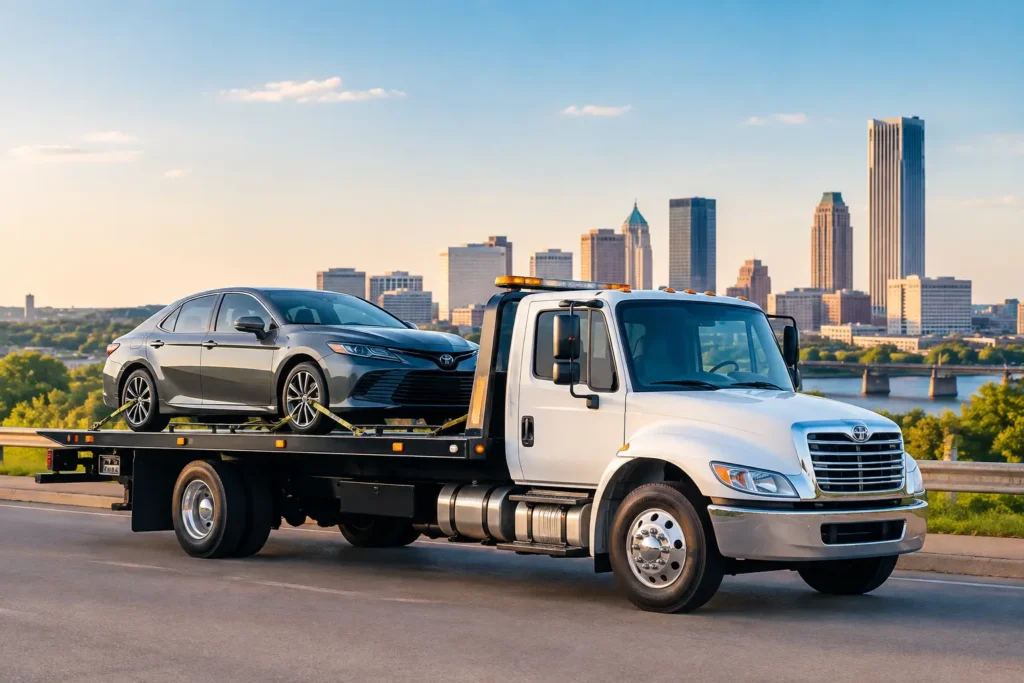
Flatbed towing is already one of the safest ways to transport many disabled vehicles because all four tires ride above the road. But a flatbed alone does not make a tow damage-free. Safe results still come down to the operator’s decisions: where to position the truck, how to load the vehicle, which attachment points to use, how to secure it, and whether conditions are safe enough to proceed.
The Future of Flatbed Towing Safety Starts Before Loading
The safest tow begins before a truck arrives. Better dispatch details help an operator bring the right equipment and approach the job correctly. The make and model matter. So do details such as whether the vehicle is all-wheel drive, has a damaged wheel, sits low to the ground, is locked, or is an electric vehicle.
A driver stranded in a busy lane may only be able to say, “My car won’t move.” That is understandable. Still, a few clear questions can prevent a rushed setup once the truck arrives. Is the vehicle in a garage? Is it facing uphill? Did it hit a curb or another vehicle? Does it have a flat tire? These answers affect loading angle, winch placement, and whether the tow truck can safely pull in close.
Technology will continue to improve this process. Digital dispatch systems can document the vehicle type, location, photos, and special concerns before the operator is on scene. GPS traffic information can also help choose a safer route through Tulsa or around congestion on I-44 and Highway 169.
But dispatch technology has limits. A photo does not always show a bent suspension part, a loose bumper, or a slick shoulder. The operator still needs to assess the actual scene before touching the vehicle.
Better Equipment Helps, but It Does Not Replace Experience
Newer flatbeds can offer improved winches, more precise hydraulic controls, better lighting, backup cameras, and wheel-lift options for difficult recoveries. These tools can reduce unnecessary movement and give an operator better visibility around a vehicle.
For drivers, the main benefit is control. A smooth hydraulic bed and properly used winch let a vehicle be pulled onto the deck gradually rather than forced into position. That matters with low-clearance cars, vehicles with transmission trouble, and cars that cannot be driven under their own power.
Future equipment will likely include more sensor-based warnings. Winch-load monitoring can help identify unusual resistance. Camera systems can improve blind-spot awareness around traffic and pedestrians. Electronic inspection records may make it easier to track equipment condition and routine maintenance.
None of that changes a basic fact: equipment only works as well as the person using it. An overloaded winch line, a bad attachment point, or an operator trying to hurry through an unsafe position can still cause damage. The future should mean better tools backed by proven towing techniques, not replacing judgment with buttons and screens.
Securement Will Stay the Most Important Part
Once a vehicle is on the bed, the job is not finished. Proper securement keeps it from shifting during turns, braking, lane changes, and rough pavement. This is especially important on a truck with heavy traffic moving around it or when traveling over uneven roads.
Wheel straps, tie-downs, and attachment methods need to fit the vehicle and its condition. A truck with a damaged front end may need a different loading plan than a car with a dead battery. A vehicle with a flat tire or locked wheel can require additional care. There is no single setup that fits every job.
Future towing safety will bring more consistency in how securement is checked and documented. That is useful, but the real standard remains simple: the vehicle should stay stable without putting stress where it does not belong.
EVs Are Changing How Flatbeds Are Used
Electric vehicles are a major reason flatbed towing safety continues to matter. Many EVs have low ground clearance, heavy battery packs, specific tow-point requirements, and manufacturer instructions that may prohibit towing with drive wheels on the ground.
A flatbed is often the right transport choice for an EV, including Tesla vehicles, but loading one safely requires more than knowing it is electric. Operators need to account for the vehicle’s weight, parking brake condition, neutral or transport mode, and the correct recovery points. If the battery has been damaged in an accident, the situation may require extra caution before transport.
As more EVs enter the road, towing equipment and training will keep adapting. That may include better vehicle-specific information at dispatch, improved low-angle loading options, and clearer procedures for damaged battery systems.
The trade-off is that more technical vehicles can make a simple tow less simple. A quick solution is only helpful if it follows the vehicle’s needs. When an EV will not shift, will not release its brakes, or has collision damage, taking a few extra minutes to set up correctly can avoid a much larger problem later.
Roadside Safety Is Part of Damage-Free Towing
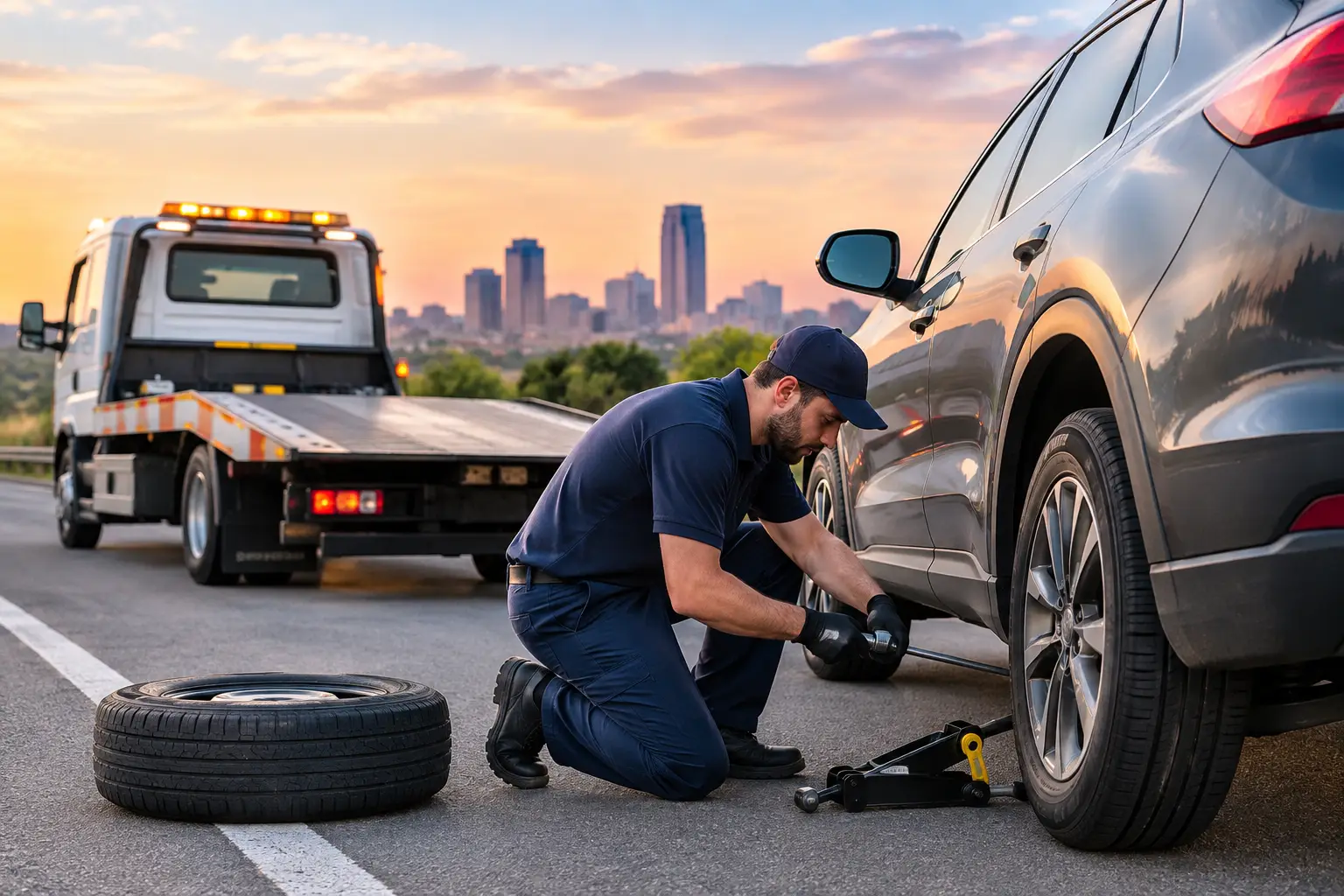
People often think of towing safety only in terms of the vehicle. The roadway matters just as much. A flatbed operator may be working inches from traffic, in rain, on a narrow shoulder, or in a parking lot where other drivers are not paying attention.
The next generation of towing safety will place more emphasis on scene visibility. Better warning lights, reflective gear, cones when conditions allow, and clearer positioning all help drivers see the work zone sooner. On high-speed roads, the safest option may be moving the disabled vehicle only enough to get out of immediate danger before completing the full loading process.
This is where local knowledge has real value. A breakdown near Riverside, downtown, or a crowded shopping area can create different risks than one on a quiet residential street. Knowing traffic patterns, access points, and safe places to position a truck helps reduce delays and exposure.
Drivers can help by moving to a safe location if the vehicle is still operable, turning on hazard lights, and staying clear of traffic. If getting out of the vehicle would put someone in danger, staying belted inside may be the safer choice until help arrives. It depends on the location, traffic speed, and condition of the vehicle.
Clear Communication Will Make Towing Safer
The technology side of towing gets attention, but communication is one of the most practical safety improvements available right now. A driver needs to know what is happening. Will the vehicle be winched? Can it be towed with the wheels locked? Is the chosen repair shop accessible? Is there damage that needs to be noted before loading?
Clear answers lower stress and prevent misunderstandings. They also give the vehicle owner a chance to share information that could affect the tow, such as an aftermarket suspension, a broken wheel, or a vehicle that is stuck in park.
For an owner-operated service such as Tulsa Towing, this is not an extra step added after the job. It is part of handling the job correctly. The goal is to get the vehicle where it needs to go without unnecessary complications, whether that means a repair shop across town or a dealership that can handle a specific EV.
What Drivers Should Expect From Safer Flatbed Towing
As safety practices improve, drivers should expect a tow operator to look over the situation rather than immediately hook up and pull. They should expect the vehicle to be loaded with a controlled winch process when it cannot be driven safely onto the bed. They should also expect securement checks before the truck leaves.
A careful tow may take slightly longer than a rushed one, particularly when a car is low, damaged, blocked in, or disabled in an awkward location. That time is usually spent preventing underbody damage, bumper damage, wheel damage, or a shift during transport.
The future of flatbed towing safety will bring better cameras, smarter dispatch tools, and more vehicle-specific procedures. The part that matters most will stay the same: careful work by someone who understands the vehicle in front of them. When your vehicle cannot move safely, the right next step is not simply getting it on a truck. It is getting it loaded, secured, and delivered with care.