A dead EV on the shoulder of I-44 is not a situation for a quick hook-and-go tow. Electric vehicle transport requires the right loading method, a clear understanding of how the vehicle moves, and careful handling from the pickup point to the repair shop or dealership. That matters whether your Tesla will not shift, your EV ran out of usable charge, or it was damaged in an accident near Midtown, South Tulsa, or another busy part of town.
Most electric vehicles are heavier than comparable gas cars, sit low to the ground, and use drivetrains that can be damaged when the wheels are forced to roll. The goal is simple: get the vehicle safely onto a flatbed, secure it correctly, and deliver it without adding a towing problem to the issue you already have.
Why electric vehicle transport is different
An EV may look like any other sedan or SUV from the outside, but it does not always tow like one. Many electric vehicles use all-wheel drive, and their electric motors may remain connected to the wheels even when the vehicle is powered down. Pulling one with the drive wheels on the road can create drivetrain damage. On some models, rolling the vehicle incorrectly can also affect regenerative braking systems or other electronic components.
Low clearance is another concern. Tesla vehicles, compact EVs, and several electric crossovers can sit close to the pavement. A steep approach angle, metal-on-body contact, or rushed loading can scrape bumpers, rocker panels, battery shields, or underbody panels. The battery pack is mounted low in the vehicle, so avoiding undercarriage contact is part of doing the job right.
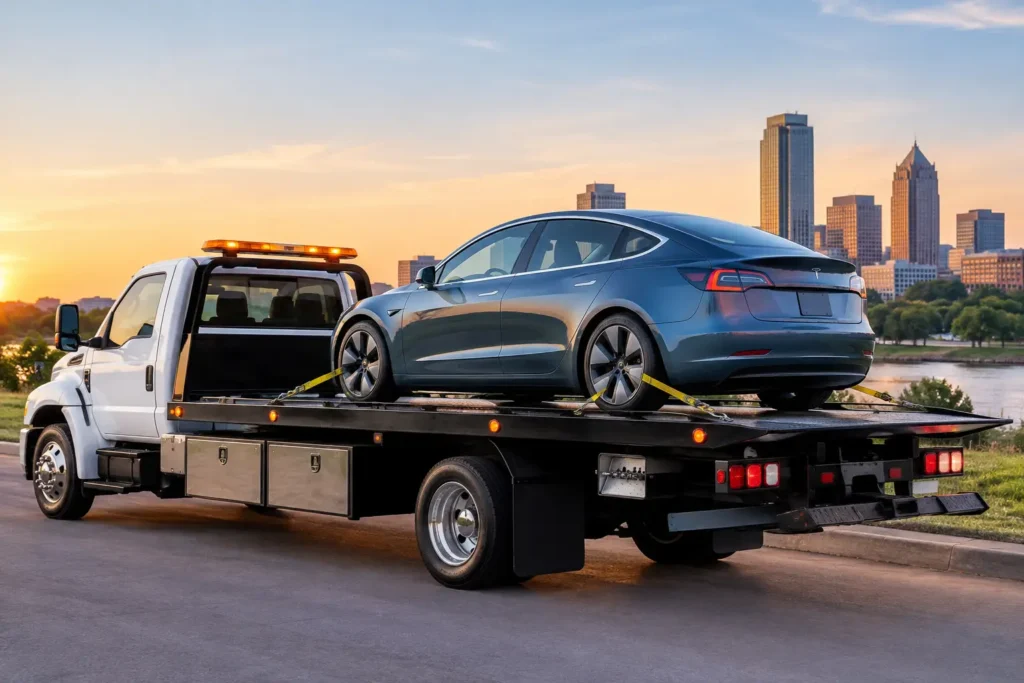
That is why a flatbed is generally the proper choice for a disabled EV. The vehicle is carried with all four wheels off the ground instead of being dragged or towed behind a truck. It also gives the operator more control when loading a vehicle that cannot shift into neutral, has a locked parking brake, or will not power up.
When an EV needs a tow instead of a charge
Running low on charge does not automatically mean the vehicle needs transport. If the EV can safely reach a working charger and has enough range to get there, charging is the better answer. But roadside conditions are not always that simple.
If the vehicle shows zero range, will not enter Drive, has warning messages, or is parked where it cannot remain safely, a tow may be needed. The same applies after a collision, a tire failure without a usable spare, or a mechanical issue that leaves the car unable to move.
A problem with the small 12-volt battery can create a confusing situation. The main battery may still have charge, yet the car may not wake up, unlock normally, shift, or release the electronic parking brake. A jumpstart may help in some cases, but it does not always solve the underlying problem. If the EV remains disabled, it needs to be loaded in a way that does not force the wheels or damage the vehicle.
On busy routes such as US 75, Highway 169, Memorial Drive, or Riverside Drive, safety comes before troubleshooting. Move out of traffic if the vehicle can be moved safely. If it cannot, turn on hazard lights, stay aware of passing traffic, and arrange for the vehicle to be transported rather than trying to improvise a solution on the roadside.
How a flatbed protects a disabled EV
A proper electric vehicle transport job starts before the winch line is attached. The operator needs to assess the vehicle’s position, clearance, condition, and ability to roll. An EV in a flat parking lot is different from one stopped in a garage, sitting on a steep driveway, or disabled after an accident.
When the vehicle can be placed in the manufacturer-approved tow or transport mode, loading is usually more straightforward. That setting may release the parking brake and allow the vehicle to roll without trying to engage the drive system. Instructions vary by model, and the vehicle screen or owner manual may provide the necessary steps.
When it cannot enter transport mode, careful equipment selection becomes even more important. Skates, dollies, or other recovery tools may be needed to move a locked wheel without dragging the tire across pavement. The right approach depends on the vehicle and where it is sitting. There is no single shortcut that works safely for every EV.
Once the vehicle is on the bed, it should be secured at approved points using proper wheel restraints and tie-down methods. The goal is to hold the vehicle firmly without placing avoidable stress on suspension components, body panels, or the battery area. Careful loading is especially important after an accident, when damage underneath the car may not be visible from the roadside.
Do not use a basic tow strap as a plan
A tow strap can be useful for limited recovery situations, such as repositioning a vehicle that is stuck in a safe area. It is not a substitute for transporting a disabled EV on a flatbed. Pulling an electric vehicle down the road with a strap leaves too much room for drivetrain damage, steering issues, traffic hazards, and contact with the ground.
If your vehicle is stuck in mud, a ditch, or a slick parking area after heavy rain, it may need a controlled winch-out before it can be loaded. This is common around uneven lots, construction areas, and residential streets on the edges of Tulsa. Recovery and transport are separate parts of the job, and both need to be handled with the vehicle’s clearance and wheel position in mind.
What to tell the tow operator before arrival
Clear information helps the truck arrive prepared and reduces time at the scene. When requesting EV transport, say that the vehicle is electric and share the make and model if you know it. A Tesla, Ford Mustang Mach-E, Rivian, Hyundai Ioniq, Kia EV, or electric pickup may have different loading considerations.
Also explain whether the vehicle is in a parking garage, on a highway shoulder, inside a driveway, or in a lot with low clearance. Let the operator know if the wheels are locked, the car will not shift into neutral, the 12-volt battery is dead, or the vehicle was involved in a collision. Those details affect how the vehicle is approached and what equipment may be needed.
If you have access to the vehicle’s tow mode instructions, keep them available. You do not need to become a towing expert in an emergency, but the screen prompts or manufacturer directions can help confirm the correct setting for your specific model. Do not force the vehicle into neutral or repeatedly try to start it if there is visible collision damage, smoke, a burning smell, or a battery warning related to impact.
Accident damage and EV battery safety
An electric vehicle involved in a crash needs extra caution, even when it appears drivable. Damage to the underside, battery enclosure, high-voltage cables, or cooling system may not be obvious. Warning lights, fluid leaks, unusual noises, heat, smoke, or a sharp chemical smell are reasons to stay clear of the vehicle and call emergency services when needed.
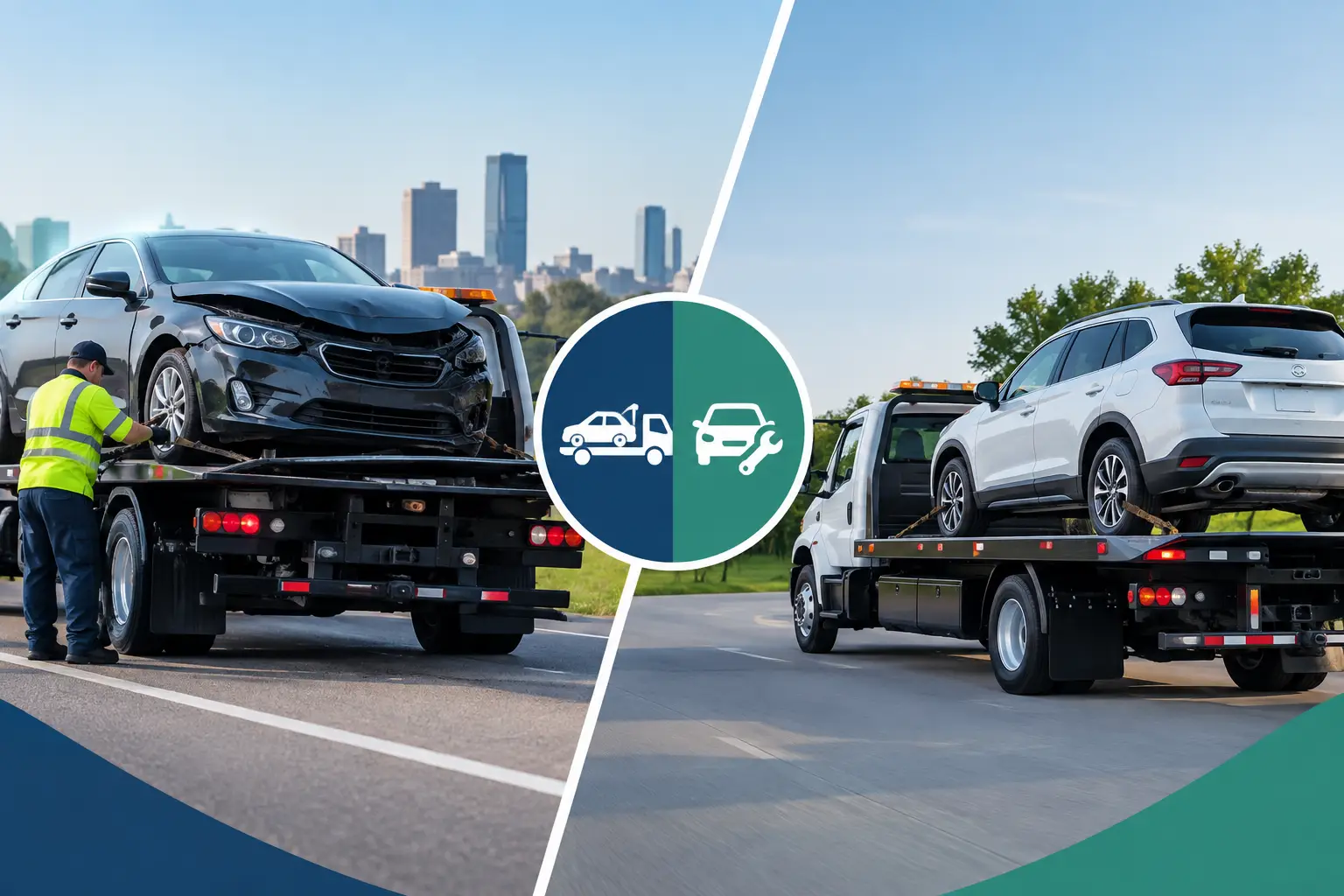
A tow operator should know that the vehicle is an EV and that it was in an accident before loading begins. This allows for a more careful inspection of the scene and a safer decision about handling. The destination also matters. Some vehicles need to go directly to a dealership, collision center, or repair facility equipped to assess EV battery and high-voltage system damage.
Do not assume that a vehicle with light exterior damage is safe to drive because it still powers on. The safest choice depends on the location and the condition of the car. A vehicle that feels normal in a quiet parking lot may be a different risk on the way home through Downtown Tulsa traffic.
Choosing the right destination for your EV
Before the truck arrives, decide where the vehicle needs to go if possible. A dealership may be the right choice for software, charging, battery, or warranty-related concerns. An experienced repair shop may be appropriate for tires, suspension, brakes, or non-battery repairs. After a collision, a body shop should be prepared to inspect electric vehicles rather than treating the job like a standard gas-car repair.
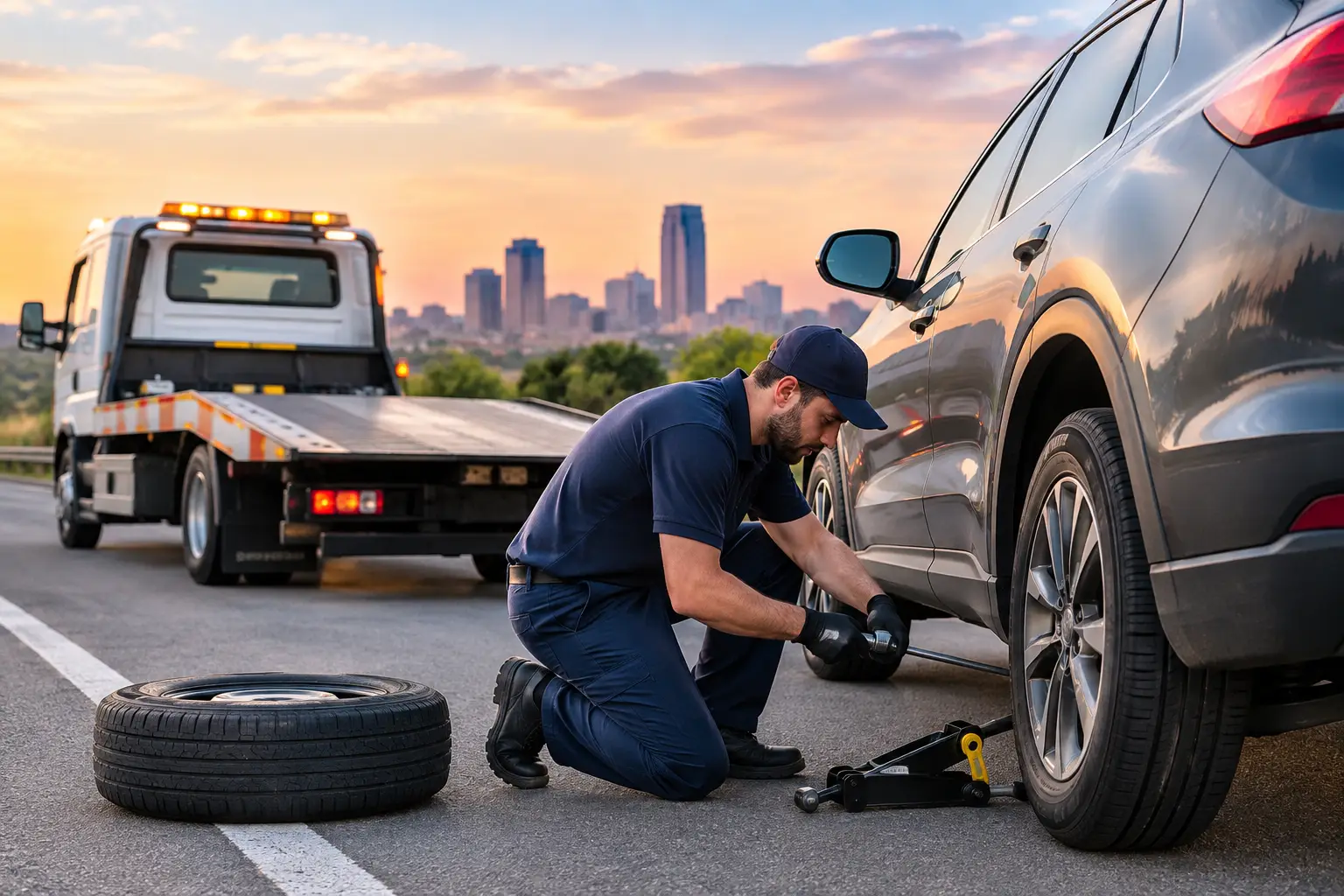
For a simple tire issue, roadside tire help may get you moving if the tire can be safely changed and you have a usable replacement. Many EVs do not include a spare, however, and some wheel or tire damage makes a tow the safer call. If there is any question about driving on a damaged tire, avoid risking the wheel, suspension, or battery area.
Tulsa Towing, powered by Neptune Towing, uses flatbed equipment for local EV transport throughout Tulsa and, when availability allows, nearby Jenks, Bixby, Broken Arrow, and Glenpool. The focus is getting the vehicle to the location you choose with clear communication and careful handling.
When an EV cannot move, the best next step is usually not a workaround. Keep the vehicle safe, share its condition clearly, and have it loaded the right way so the repair begins with the vehicle arriving in the same condition it left the roadside.