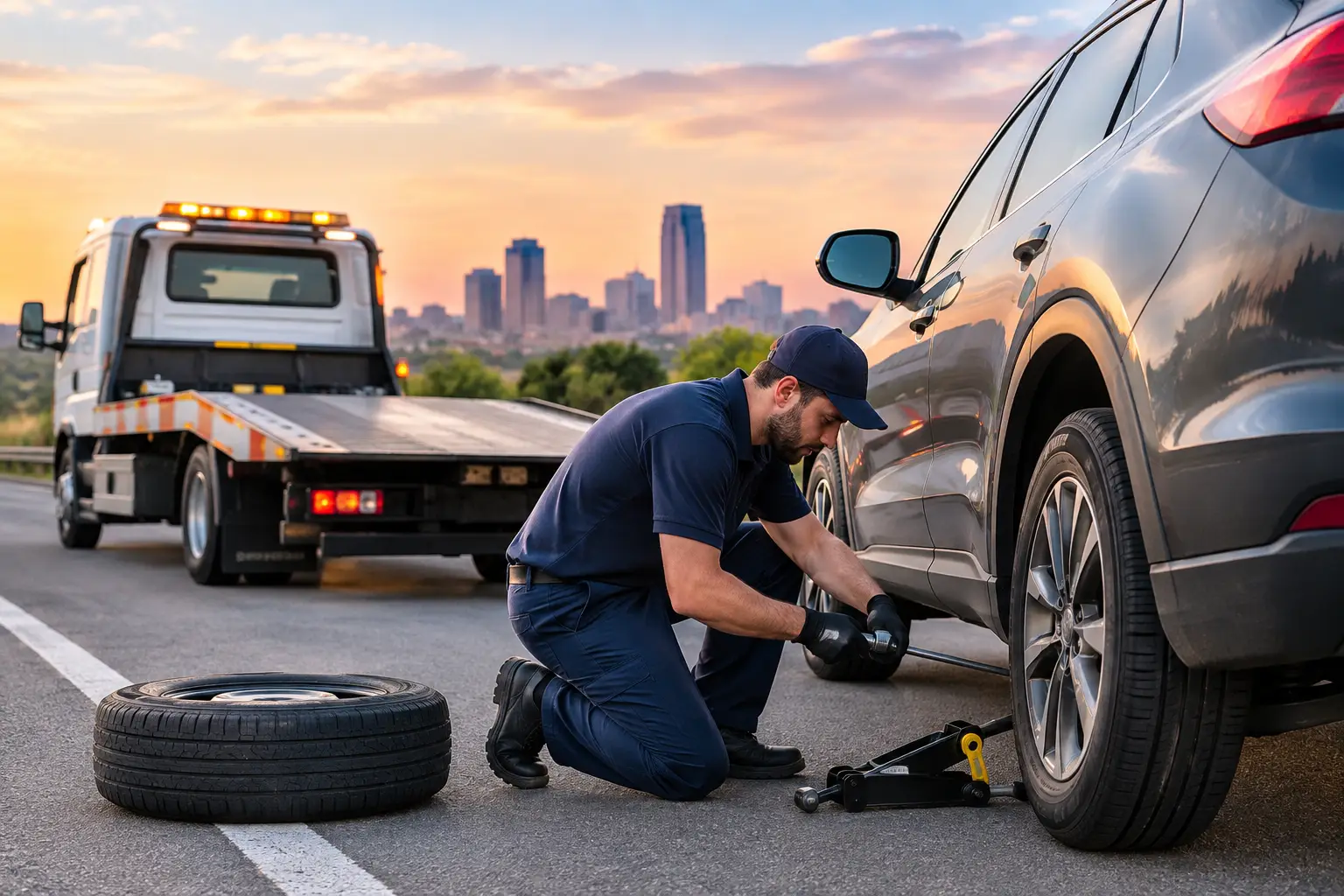
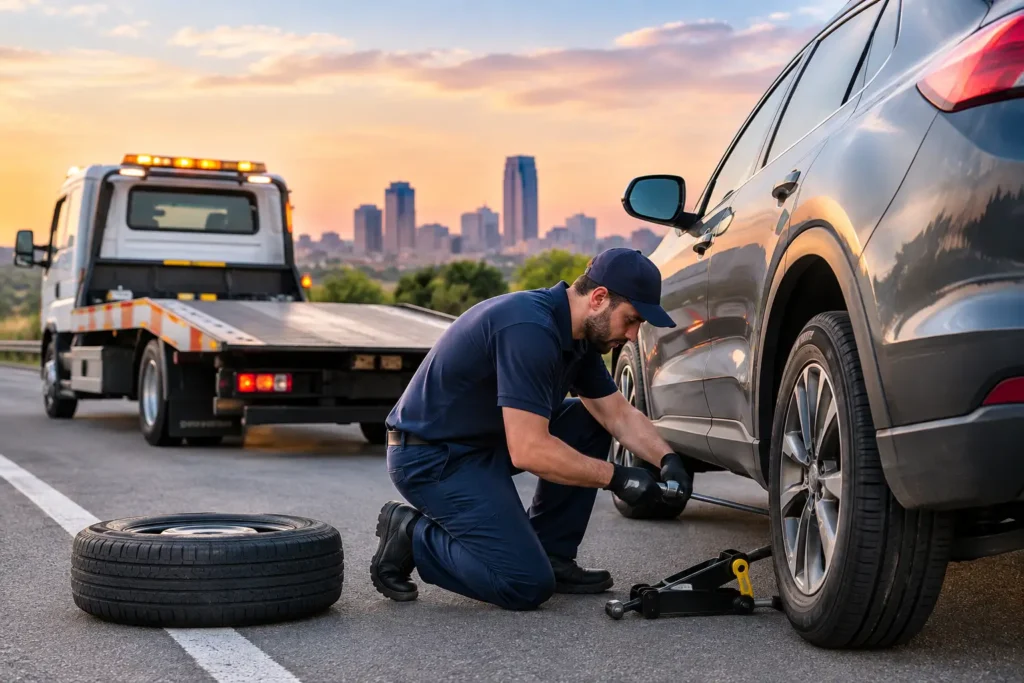
A flat tire on I-44, US 75, or a busy stretch of Memorial can turn a normal drive into a safety problem fast. Can roadside teams change tires? In many cases, yes. If your vehicle has a usable spare, the wheel can be removed safely, and there is room to work, roadside assistance can often get the spare installed and get you moving again.
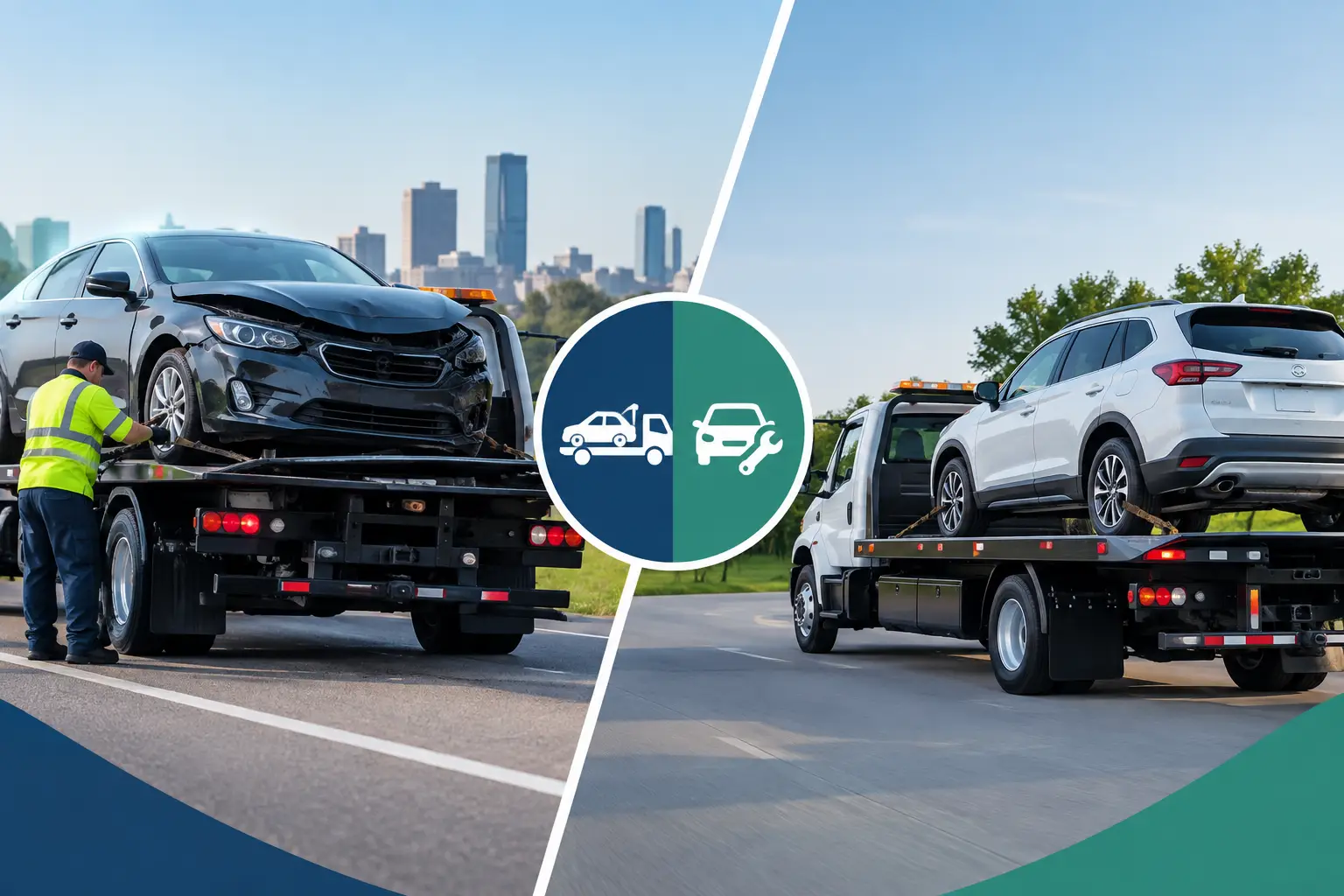
That said, changing a tire is not always the right answer. The location of the vehicle, the condition of the spare, wheel damage, and the type of vehicle all matter. Sometimes the safest move is to skip the roadside tire change and transport the vehicle to a repair shop on a flatbed.
Can Roadside Teams Change Tires Safely?
A roadside team can usually change a tire when the job is straightforward. The vehicle needs to be parked on stable ground, away from moving traffic when possible, with a properly inflated spare tire available. The technician also needs access to the lug nuts and the correct lifting points for the vehicle.
Most drivers carry a compact spare or a full-size spare under the trunk floor, beneath the rear of a truck, or inside the cargo area of an SUV. If that spare is in good condition, a roadside technician can remove the flat, install it, and make sure the wheel is secured before you leave.
The word “safely” matters. A tire change in a quiet Midtown parking lot is very different from one on the narrow shoulder of US 75 during rush hour. If the vehicle is sitting too close to traffic, on an uneven surface, or in a spot where a jack cannot be used securely, a tow is the better call. Getting a vehicle off the road without adding risk comes first.
What a Roadside Tire Change Usually Includes
Roadside tire help is meant to get you out of the immediate problem, not replace a full tire shop visit. The technician checks whether the spare can be used, locates the vehicle’s proper jack points, removes the damaged tire, and installs the spare according to the vehicle’s setup.
Before leaving, the lug nuts should be tightened correctly and the spare should be checked for visible problems. If you have a compact temporary spare, it is only intended to get you to a tire shop or repair facility. It is not a tire to keep driving on for days, take on a highway trip, or use at normal speeds.
A roadside provider may also be able to help if a tire has simply gone low and can be inflated enough to reach a nearby shop. But a tire that has a sidewall cut, a bent wheel, exposed cords, or a major puncture needs more than air. Continuing to drive on it can damage the wheel or create a loss-of-control risk.
When a Tow Is Safer Than Changing the Tire
There are several common situations where a roadside tire change is not practical. A tow is often the safer option when there is no spare, the spare is flat, or the spare has dry rot, severe cracking, or other obvious damage. Many newer vehicles do not come with a spare at all. They may include sealant and an air compressor instead, but those kits do not work for every puncture and cannot fix sidewall damage.
A tow is also the right choice if the wheel itself is damaged. Hitting a pothole, curb, or road debris can crack or bend a wheel along with flattening the tire. Installing a spare may not solve the issue if the wheel hub, suspension, or other components were affected.
Other situations call for transport instead of trying to work at the roadside:
- The vehicle is stopped in an unsafe traffic position or on a narrow highway shoulder.
- A wheel lock key is missing, so the lug nuts cannot be removed.
- More than one tire is flat or damaged.
- The vehicle is loaded heavily and cannot be lifted safely with its factory jack.
- The damaged tire followed an accident or impact that may have caused additional vehicle damage.
This is especially relevant for drivers in South Tulsa, where highway ramps, construction zones, and fast-moving traffic can leave very little safe space around a disabled vehicle. A few extra minutes spent deciding whether to tow can prevent a much bigger problem.
Why the Vehicle Type Matters
Not every vehicle should be lifted or handled the same way. Low-clearance cars can be damaged if a jack or loading equipment is placed in the wrong area. Heavy-duty pickups need proper support and enough room to work safely. Electric vehicles require added care because of their battery placement and manufacturer-specified lift points.
Tesla and other EV owners should not assume a standard tire change is automatically simple. The tire itself may be straightforward, but lifting an EV incorrectly can damage the battery pack underneath. If a safe roadside change cannot be completed using the proper points and equipment, flatbed transport is the safer way to get the vehicle to a tire shop or dealership.
The same goes for vehicles with oversized tires, aftermarket wheels, seized lug nuts, or unusual wheel lock systems. An experienced roadside operator checks the situation before forcing anything. A rushed approach can turn a flat tire into damaged threads, a broken stud, or a scratched wheel.
What to Do While You Wait for Help
If the tire goes flat while you are driving, slow down gradually and avoid hard braking or sharp steering. Pull as far from traffic as you safely can. A parking lot, side street, or wide shoulder is better than stopping in an active travel lane. Turn on your hazard lights and keep passengers safely away from traffic if they need to exit the vehicle.
Once parked, take a quick look for the spare tire, wheel lock key, and any factory tire tools. You do not need to start changing the tire yourself if the location feels unsafe. Knowing whether the spare is present and accessible helps the roadside team determine whether a tire change is likely or whether a tow truck should be dispatched instead.
When you call, explain where the vehicle is, whether you are on a highway or in a parking lot, and whether you have a spare. Mention anything unusual, such as a damaged wheel, missing wheel lock key, low-clearance vehicle, or EV. Clear details help the right equipment arrive without wasted time.
In areas like East Tulsa or near Tulsa Hills, a vehicle may be in a shopping center lot where a tire change is simple. On I-44 or Highway 169, the same flat tire may require a different plan because traffic and shoulder space change the safety picture.
After the Spare Is Installed
A spare tire solves the immediate roadside issue, but it is not the end of the repair. Drive directly to a tire shop when possible. A technician there can inspect the flat tire, determine whether it can be repaired, check the wheel for damage, and replace the spare with a proper tire if needed.
Pay attention to the spare type. Compact spares are usually marked with speed and distance limits. They have less traction, different handling, and less braking performance than a full-size tire. Avoid high speeds, aggressive turns, and long-distance driving until the regular tire is repaired or replaced.
If your vehicle uses all-wheel drive, ask the tire shop whether the replacement tire needs to match the tread depth of the others. A single new tire can sometimes create problems on AWD systems when the remaining tires are significantly worn. That is a repair-shop decision, but it is worth raising before you leave.
The Right Help Depends on the Situation
Roadside teams can change tires when the vehicle, spare, and location allow for safe work. When those conditions are not there, a flatbed tow protects both the vehicle and the people around it. Tulsa Towing, powered by Neptune Towing, handles both situations with the same goal: get the immediate hazard under control and get your vehicle where it needs to go without unnecessary damage or confusion.
If you are dealing with a flat, focus first on getting to a safe position. The tire can be repaired later. Your safety beside the road cannot.