
Your car will not start, you are parked at a gas station or stuck outside work, and the first question is usually simple: should I tow a nonstarter? The right answer depends on why it will not start, where you are sitting, and whether trying to move it could create more damage. On a busy stretch near Memorial Drive, Downtown, or Tulsa Hills, safety also has to come first.
A nonstarting vehicle does not always need a tow. A weak battery, loose battery connection, or an accidental interior light left on may be solved with a jumpstart. But repeated jumpstarting, forcing a vehicle to roll, or guessing at the problem can turn a manageable breakdown into a larger repair. When the cause is unclear, a careful tow to a repair shop is often the safer call.
Should I Tow a Nonstarter or Try Roadside Help First?
Start with the clues your vehicle gives you. If the dash lights come on but the engine clicks once or turns over slowly, the battery may be low. A jumpstart can be reasonable if the battery is the likely issue and the vehicle is parked safely. After it starts, let it run only long enough to get to a nearby repair facility if you are confident it will stay running. If the battery warning light remains on, the alternator may not be charging it, and the car could die again shortly after you leave.
If you hear rapid clicking, see dim lights, or know the battery is old, roadside assistance may save you a tow. A technician can also check for obvious connection issues at the battery. That is different from repeatedly trying to crank the engine. Multiple attempts can drain the battery further, overheat the starter, and leave you with less information about the original problem.
A jumpstart is not a fix for every no-start condition. If the engine cranks normally but will not fire, the issue may involve fuel, ignition, a sensor, or another mechanical fault. If there is no crank at all and the battery seems healthy, the starter, ignition system, park-neutral safety switch, or electronic system may be involved. Those are situations where getting the vehicle to a qualified shop makes more sense than trying random fixes in a parking lot.
When Towing a Nonstarter Is the Safer Choice
Tow the vehicle when there is a real chance that starting or moving it could make matters worse. Warning signs include smoke, a burning smell, fluid leaking under the vehicle, visible collision damage, a flashing check engine light before it died, or an engine that stopped while you were driving. Do not attempt a jumpstart if the battery is cracked, swollen, leaking, or frozen.
A tow is also the right move if the vehicle starts but will not shift properly, makes harsh grinding noises, overheats, or immediately stalls. Getting it running does not mean it is safe to drive. That matters on I-44, US 75, Highway 169, and other high-speed Tulsa routes, where a second breakdown can put you in a much worse position.
Consider towing if you are stranded somewhere unsafe. A car that might be repairable on site is still not worth working around when it is sitting close to traffic, on a narrow shoulder, in heavy rain, or in a poorly lit area. The priority is getting you and the vehicle out of the hazard safely.
If the vehicle has been sitting for months, has contaminated fuel, or has known mechanical trouble, it should usually be transported rather than driven once it starts. A short trip can become an expensive one if an engine overheats or a transmission fails on the road.
Do Not Force a Nonstarter to Move
One of the most common mistakes is trying to push a vehicle out of a parking space or get it rolling so it can be started. That is risky, especially with automatic transmissions, vehicles with electronic parking brakes, and cars that have steering or brake systems that require power assistance. A vehicle that will not start may also be locked in Park for a reason.
Avoid attaching a strap to another vehicle and pulling it down the road. This can damage bumpers, suspension components, driveline parts, or the transmission. It also gives the driver very little control if the disabled vehicle has limited steering or braking. A proper tow setup is built to handle the vehicle securely from the start.
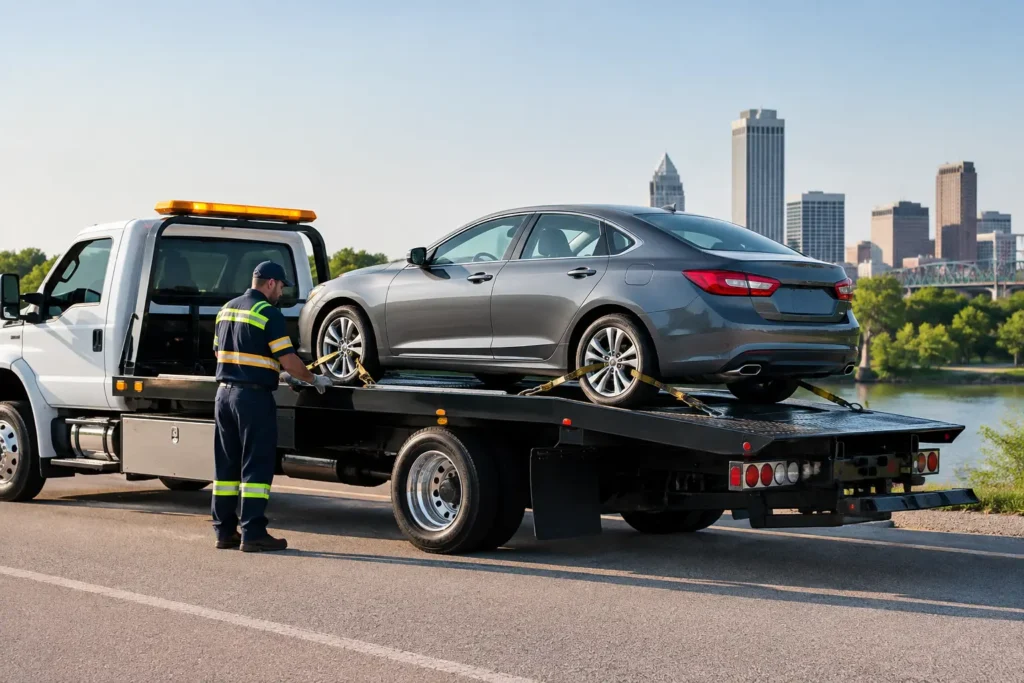
For many vehicles, especially low-clearance cars, all-wheel-drive models, luxury vehicles, and trucks, a flatbed is the safest transport method. The vehicle is loaded fully off the ground, secured correctly, and delivered without putting unnecessary miles or stress on the drivetrain.
Special Considerations for Electric Vehicles
Electric vehicles need extra care when they will not power on or move. A dead 12-volt battery can keep an EV from waking up even when the main battery has charge remaining. Other no-start situations can involve the high-voltage system, charging equipment, or a fault that should be diagnosed at the dealer or an EV-capable repair shop.
Do not assume an electric vehicle can be pulled like a gas-powered car. Many EVs should not be towed with their drive wheels on the ground because that can damage the drive unit. Teslas and other EVs also have specific procedures for putting the vehicle into tow mode or handling it when tow mode cannot be activated. In those situations, flatbed transport and the correct loading technique matter.
The same is true for all-wheel-drive vehicles. If you are unsure whether your car can be towed with two wheels down, do not guess. Let the tow operator know the make, model, drivetrain, and whether the vehicle will roll, shift into Neutral, or release the parking brake. That information helps bring the right equipment and plan the load safely.
What to Do While You Wait
Once you decide you need help, make the location safe and easy to find. Turn on hazard lights if the electrical system allows it. If you are on a highway shoulder, move away from traffic when it is safe to do so and stay out of the vehicle if conditions make that the safer option. On a busy road, your location matters more than a detailed diagnosis.
When you call for assistance, be ready to share the vehicle year, make, model, and current location. Mention whether it is in a garage, tight parking space, apartment complex, or roadside lane. Also explain what happened just before it would not start: did it slowly crank, click, stall while driving, show a warning light, or have a recent battery issue? A clear description helps determine whether a jumpstart, roadside service, or tow is the practical response.
If you are in a parking garage or beneath a low clearance structure, say so early. Not every tow truck can safely access every garage. In South Tulsa, Midtown, Broken Arrow, Jenks, and Bixby, access conditions can vary from open retail lots to tight residential driveways. The goal is to avoid sending equipment that cannot do the job safely.
Remove valuables if you can do so safely, take a few photos of the vehicle’s condition, and have the key available. If the car is going to a repair shop after hours, confirm where the shop wants it left and whether they need keys placed in a drop box. Those small details can prevent an unnecessary delay once the vehicle arrives.
Choosing the Right Destination
For a basic battery issue, you may choose a parts store, your home, or a local repair shop. If the vehicle died while driving, has warning lights, leaks, or will not crank after a jump attempt, send it straight to a shop that can diagnose the problem. Towing it once to the right place is usually better than moving it from one parking lot to another.
Tell the operator where you want the vehicle delivered before loading begins. A straightforward towing service should transport your vehicle to the destination you choose, not add confusion to an already stressful situation. Tulsa Towing, powered by Neptune Towing, focuses on safe flatbed transport and clear communication for drivers who need to get a disabled vehicle where it needs to go.
A nonstarter is frustrating, but you do not need to diagnose the whole vehicle from the driver’s seat. If a safe jumpstart is likely to solve it, try that route. If the cause is uncertain, the vehicle is unsafe to drive, or you are stuck in a risky spot, protect the car and yourself by having it moved properly.

