
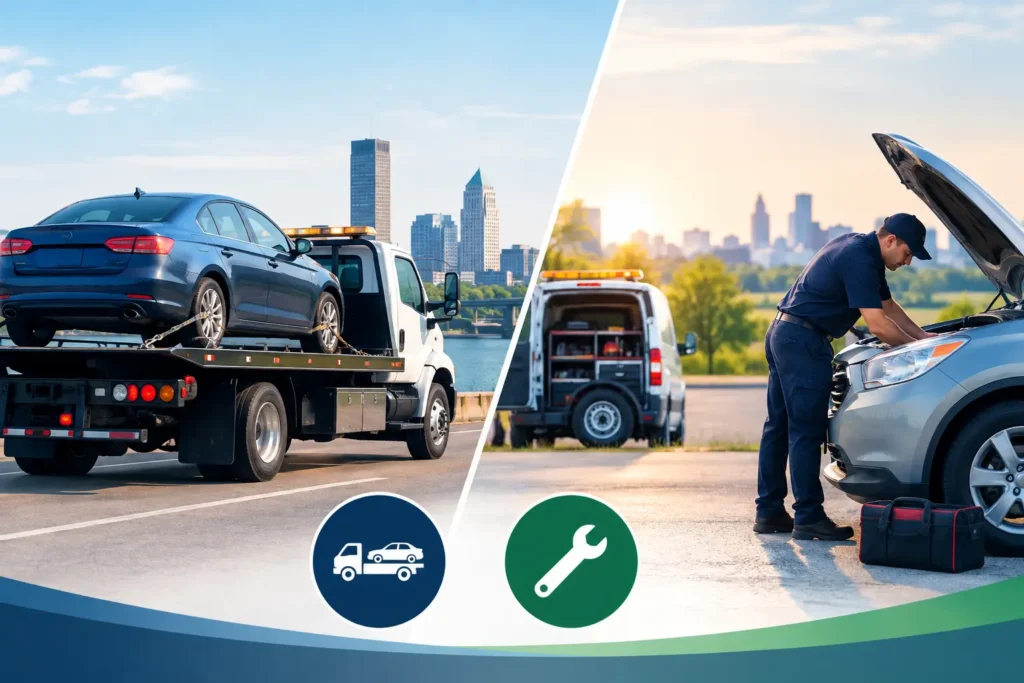
A dead battery in a Midtown office lot and a broken wheel on I-44 may both start with the same question: should you call for help at the roadside or have the vehicle towed? Tow truck versus roadside repair is not really about choosing the cheaper or easier-sounding option. It is about whether the problem can be handled safely where the vehicle sits without risking more damage, traffic exposure, or another breakdown a few blocks later.
Roadside assistance is the right answer when there is a clear, limited issue and the vehicle should be safe to drive once it is corrected. A tow is the better call when the car cannot move safely, the cause is uncertain, or driving it could turn a manageable repair into a major one.
Tow Truck Versus Roadside Repair: Start With Safety
The location matters as much as the vehicle problem. A flat tire in a quiet South Tulsa driveway is different from a flat tire on the shoulder of US 75 during rush hour. A jumpstart in a Bixby grocery store parking lot may take only a few minutes. A vehicle that died in a live lane, has smoke coming from under the hood, or is sitting at an unsafe angle needs a different plan.
Roadside service works best when there is enough room to work safely and the fix is straightforward. A trained operator can assess the situation, but drivers should not assume every issue can be solved at the curb. If the vehicle remains unreliable after a quick service, a flatbed tow protects both the vehicle and the driver from being stranded again.
If you are stopped on I-44, Highway 169, Memorial Drive, or another high-traffic Tulsa route, get as far out of traffic as possible. Turn on your hazard lights, stay aware of passing vehicles, and do not stand between your car and traffic. On a narrow shoulder, it may be safer to stay in the vehicle with your seat belt on if conditions allow rather than waiting outside near fast-moving traffic.
When Roadside Assistance Makes Sense
Roadside help is designed for problems with a known solution. It gets you moving again when the vehicle itself is otherwise in sound condition.
Dead battery with no other warning signs
A jumpstart may be enough when you left an interior light on, the battery is simply drained, and the vehicle starts and runs normally afterward. Once it starts, pay attention to warning lights, dim headlights, electrical glitches, or a battery that dies again quickly. Those signs can point to a failing battery, loose connection, or charging-system issue. In that case, driving across Tulsa may not be worth the risk. A tow to a repair shop can save you from a second stop on the road.
Flat tire when the vehicle is stable
Flat tire help is often a roadside job when the tire can be changed safely, the spare is usable, and the wheel or suspension is not damaged. This is common in parking lots, residential streets, and wide, safe shoulders.
A spare is meant to get you to a tire shop, not to support normal driving for days. If the tire blew apart, the rim is bent, several tires are damaged, or the vehicle is sitting where a change cannot be performed safely, towing is the better choice. The same goes for vehicles with locking lug nuts when the key is missing or specialized equipment is needed.
Locked out with the vehicle otherwise fine
A vehicle lockout is one of the clearest examples of roadside assistance. If the keys are inside and the vehicle is secure, the issue can usually be handled on site without moving the car. Proper lockout methods matter, especially on newer vehicles with delicate weather stripping, electronic locks, and side-curtain airbag components.
Stuck but mechanically able to drive
A winch-out can make sense when a vehicle has slipped into mud, a ditch, or a slick shoulder but has no visible damage and can drive once it is back on solid ground. This calls for judgment. A vehicle that is deeply buried, leaking fluids, hanging on an obstacle, or damaged underneath may need more than a pull. Forcing it free can make the situation worse.
When a Tow Truck Is the Safer Call
A tow is not an admission that the problem is serious. It is often the practical decision when there is no safe way to verify the vehicle on the spot. It also keeps a small mechanical issue from becoming a roadside hazard.
The engine will not start and the cause is unclear
If a jumpstart does not work, or the vehicle cranks but will not start, roadside help has reached its limit. Fuel delivery, ignition, sensor, security-system, or engine issues cannot be responsibly diagnosed from the shoulder. Towing the vehicle to your chosen repair shop or dealership gives it a proper place to be checked.
Overheating, fluid leaks, smoke, or burning smells
These are tow situations. A temperature gauge in the red, steam from the hood, puddles beneath the vehicle, or a burning odor can signal a problem that gets expensive quickly when driven. Letting the engine cool may reduce immediate danger, but it does not identify the cause. Do not keep adding coolant or restarting the vehicle and hope it makes it home.
Collision damage or a vehicle that will not track straight
After an accident, damage is not always obvious. A bumper may look minor while a tire rubs, a suspension part is bent, or a fluid line has been damaged underneath. If the steering wheel is off-center, a wheel points in the wrong direction, a tire is low, or the car pulls hard, it should be transported rather than driven.
Flatbed towing is particularly useful here because all four wheels are carried off the ground. It avoids adding miles to damaged drivetrain or suspension components and provides a controlled way to move the vehicle from the scene.
Electric vehicles, low-clearance cars, and all-wheel drive
Some vehicles should not be improvised into motion. Electric vehicles, including Teslas, have specific towing requirements and low battery packs that need careful handling. Many all-wheel-drive vehicles also need all wheels off the ground to avoid drivetrain damage. Low-clearance cars can be scraped or stressed when loaded without the right approach.
This is where proper flatbed equipment and experienced loading matter. The goal is not just to get the vehicle onto a truck. It is to do it without damaging the bumper, underbody, wheels, or drive system on the way to the shop.
What to Tell the Dispatcher
A clear description helps determine whether roadside service or a tow truck should be sent. Tell the dispatcher your exact location, including nearby cross streets, a business name, or the direction of travel if you are on a highway. Mention whether the vehicle is in a parking garage, blocked by other cars, in a ditch, or on a narrow shoulder.
Describe what happened before the vehicle stopped. Did the battery light come on? Did you hear a pop before the tire went flat? Is there visible damage or leaking fluid? Also provide the year, make, model, and whether it is electric, all-wheel drive, lifted, lowered, or a heavy-duty pickup. Those details help ensure the right equipment arrives.
For drivers in Downtown Tulsa parking garages or tight residential areas around Brookside, access can change the loading plan. A local operator who understands the area can account for clearance, traffic, and safe positioning before arriving.
The Cost of Trying to Drive It Anyway
Many drivers choose roadside help because they want to avoid the cost and inconvenience of a tow. That makes sense when the problem is truly simple. But driving an overheating car, a vehicle with a damaged wheel, or an EV with an unknown warning can create a larger repair bill than the tow would have cost.
There is also the problem of being stranded twice. A jumpstart may get a weak battery going, but it will not fix a failed alternator. Airing up a damaged tire may buy a few miles, but it will not repair a sidewall cut. A careful decision at the first stop is usually less stressful than making a second emergency call later.
Tulsa Towing, powered by Neptune Towing, handles roadside assistance when the issue can safely be resolved on site and flatbed towing when your vehicle needs to be moved without adding risk. The focus is simple: explain what can be done, use the proper equipment, and get the vehicle where it needs to go.
When you are unsure, do not make the decision based only on whether the car can still roll. Ask whether it can be driven safely and reliably to its next stop. If the answer is anything less than clear, having it transported is often the calmest way to get out of a bad roadside situation.

