
A breakdown in the middle of Tulsa traffic is not the time to sort through vague towing information. This guide to city towing service explains what to do first, what a capable tow operator needs to know, and how to get your vehicle moved without turning one problem into a second one.
Whether you are stopped near Memorial Drive, dealing with a no-start in Midtown, or sitting on the shoulder of I-44, the first goal is simple: get yourself out of danger and get clear help on the way.
What City Towing Service Means in Tulsa
City towing is built around getting a disabled vehicle from its current location to a nearby repair shop, dealership, home, or another safe destination within the local area. It may be a short move after an accident, a tow from an office parking lot, or transport when a car will not start in a residential neighborhood.
The distance may be short, but the job still requires the right equipment and judgment. A low-clearance car needs a different loading approach than a heavy-duty pickup. An electric vehicle may have manufacturer-specific transport requirements. A vehicle in a tight downtown garage, apartment lot, or crowded shopping center can require careful positioning before it can be loaded safely.
For many Tulsa drivers, city towing starts with a simple problem: the vehicle will not move, and it cannot safely stay where it is. A professional tow service should focus on resolving that problem clearly, not adding confusion, delays, or unnecessary complications.
Start With Safety Before You Call
If your vehicle is still moving, get to the safest available location. On highways such as US 75, Highway 169, or I-44, that usually means moving as far from the travel lanes as possible. Turn on your hazard lights. If you can safely exit the vehicle and move away from traffic, do so. Do not stand between your vehicle and moving traffic, especially on a narrow shoulder.
On a city street or in a parking lot, visibility still matters. Use hazards, avoid blocking an active lane when possible, and watch for other drivers who may not see you right away. At night or during heavy rain, give yourself extra space from traffic.
You do not need to diagnose the vehicle before requesting help. A dead battery, overheating warning, flat tire, collision damage, or an engine that suddenly shuts off can all lead to a tow. Describe what happened as plainly as you can. That gives the dispatcher a better starting point and helps send equipment suited to the situation.
What to Tell a City Tow Truck Dispatcher
Clear information saves time, particularly when traffic is heavy or your vehicle is difficult to access. Start with your exact location. A nearby business, cross street, highway direction, parking-garage level, or apartment gate code can make the difference between a direct arrival and a truck searching the area.
Next, provide the year, make, and model of the vehicle. Mention anything that affects loading: very low ground clearance, all-wheel drive, a locked steering wheel, missing keys, accident damage, flat tires, or a vehicle that is stuck in park. If you drive a Tesla or another EV, say so during the call. EVs need proper handling and should not be treated like every other disabled vehicle.
Be ready to state where the vehicle needs to go. It could be a repair shop in South Tulsa, a dealership, your home in Broken Arrow, or another local destination. If you have not chosen a shop yet, say that upfront rather than guessing. The operator can explain the options for getting the vehicle moved safely.
It also helps to let the dispatcher know if you are in a high-risk location. A vehicle on Riverside Drive during busy traffic, for example, is different from a car parked safely in a Bixby driveway. Good location details help the tow truck approach the job safely and efficiently.
When Roadside Assistance May Be Enough
Not every service call needs a tow. If the problem is a weak battery, a jumpstart may get you moving. A lockout can often be handled on site. A flat tire may be changed if you have a usable spare, the wheel is safe to remove, and the vehicle is in a workable location.
That said, roadside assistance is not always the right answer just because it is the quicker fix. A jumpstart does not solve a failing alternator. Installing a spare tire does not help if the spare is flat, damaged, or missing. If an overheating vehicle, warning lights, collision damage, or mechanical noise makes driving questionable, a tow is usually the safer choice.
The trade-off is simple: getting the vehicle running may be enough for a short trip in some cases, but forcing it to drive when it is not safe can create more damage. A straightforward tow to a local shop can be the better call when there is real uncertainty.
Why Flatbed Towing Is Often the Right Choice
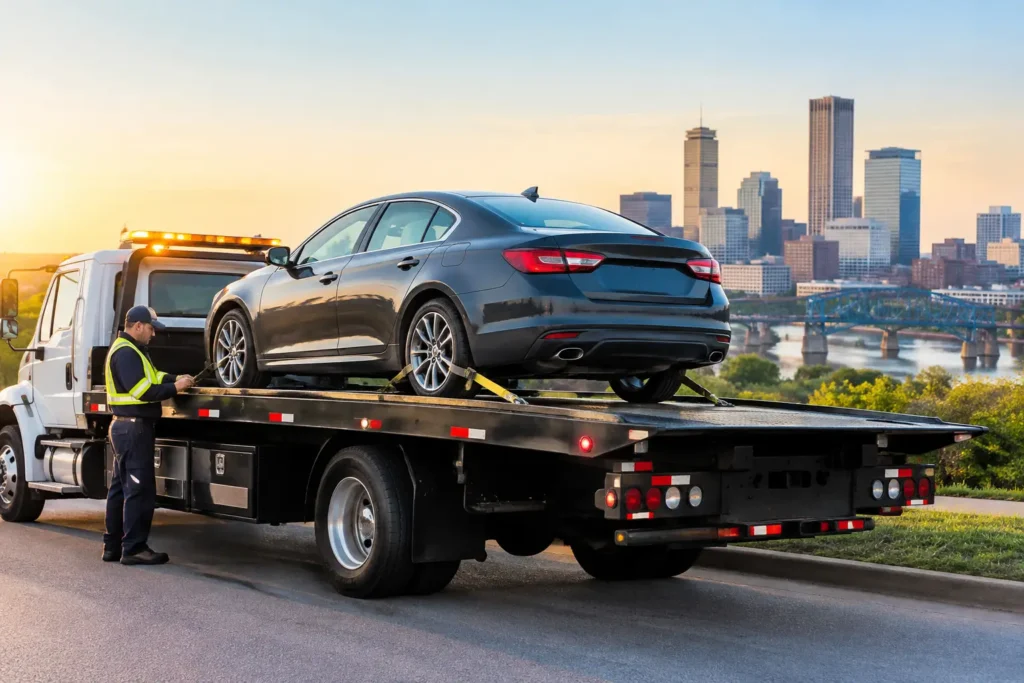
For city towing, a flatbed is often the safest way to move cars, trucks, and EVs. The vehicle is loaded fully onto the bed rather than being pulled with two wheels on the ground. That reduces the risk of drivetrain issues, tire damage, and problems caused by improper towing angles.
Flatbed towing is especially useful for all-wheel-drive vehicles, low-clearance cars, vehicles with accident damage, and electric vehicles. It also gives the operator more control when the vehicle cannot be driven onto the truck under its own power.
Proper loading matters just as much as the truck itself. The operator needs to assess the vehicle’s position, clearance, wheel condition, and whether it can roll and steer. A rushed hookup can scrape a bumper, damage a wheel, or put stress on components that were not designed to be pulled that way. Careful loading takes a little attention, but it is how the vehicle gets where it needs to go without additional damage.
Common City Towing Situations
A vehicle does not have to be wrecked to need a tow. In Tulsa, many calls come from ordinary situations that become urgent because the driver is stranded or the vehicle is blocking access.
A commuter may leave work in Downtown Tulsa and find a dead battery. A family in East Tulsa may have a vehicle that starts but will not shift correctly. Someone leaving Tulsa Hills may notice a coolant leak or an overheating warning. In Jenks, Bixby, and Broken Arrow, a car may be stuck in a driveway, disabled at a school pickup line, or unable to leave a store parking lot.
Accident towing is another common reason to call. Even when a vehicle looks drivable after a minor collision, damaged steering, a leaking fluid line, a loose bumper, or a bent wheel can make continuing unsafe. If there is doubt about whether the vehicle can be driven, it is better to have it inspected after transport than risk a second incident on the road.
Winch-out service may be needed when the vehicle is off the pavement, stuck in mud, hung up on a curb, or positioned where it cannot move under its own power. These jobs require a careful assessment of the ground, recovery points, and nearby obstacles. Pulling from the wrong place can damage the vehicle or make the situation worse.
Choosing a Tow Destination Without Guesswork
Before the truck arrives, decide where you want the vehicle delivered if you can. Your regular repair shop is often the easiest option because they already know the vehicle’s history. A dealership may make sense for warranty work, specialized diagnostics, or certain EV issues. Home can be the right destination when the shop is closed or you need time to make a repair decision.
Consider the shop’s hours and whether it can accept after-hours drop-offs. Ask whether there is a designated key drop or a preferred parking area. This avoids leaving the vehicle in a place that creates problems for the shop or delays service the next day.
If the car is being taken home, think about access. A narrow driveway, steep incline, low tree branches, or limited street parking can affect where the flatbed can safely unload. Tell the operator about those details before arrival when possible.
What Good Communication Looks Like During a Tow
A city tow should not feel mysterious. You should know that help has been dispatched, understand the general plan for the vehicle, and be able to confirm the destination before loading begins. If the vehicle needs special handling, that should be discussed rather than assumed.
Once the truck arrives, remove valuables and personal items you need from the vehicle if it is safe to do so. Make sure the destination is correct and take photos of the vehicle if an accident or existing damage is involved. Then let the operator do the loading work. Standing too close to the truck, cables, ramps, or vehicle during loading is unsafe.
Tulsa Towing, powered by Neptune Towing, keeps the process focused on the job at hand: clear communication, proper flatbed equipment, and damage-free transport to the destination you choose. The service is centered on towing and roadside help, not storage or impound work.
A Practical Guide to City Towing Service Calls
The best towing call is a clear one. Give the exact location, describe the vehicle and problem, mention any access issues, and confirm the destination. From there, the right operator can decide whether roadside assistance, a flatbed tow, or a careful winch-out is needed.
If you are stranded in Tulsa, stay visible, stay away from traffic, and do not gamble on driving a vehicle that feels unsafe. A careful tow now can save you from a larger repair and a more dangerous situation later.

