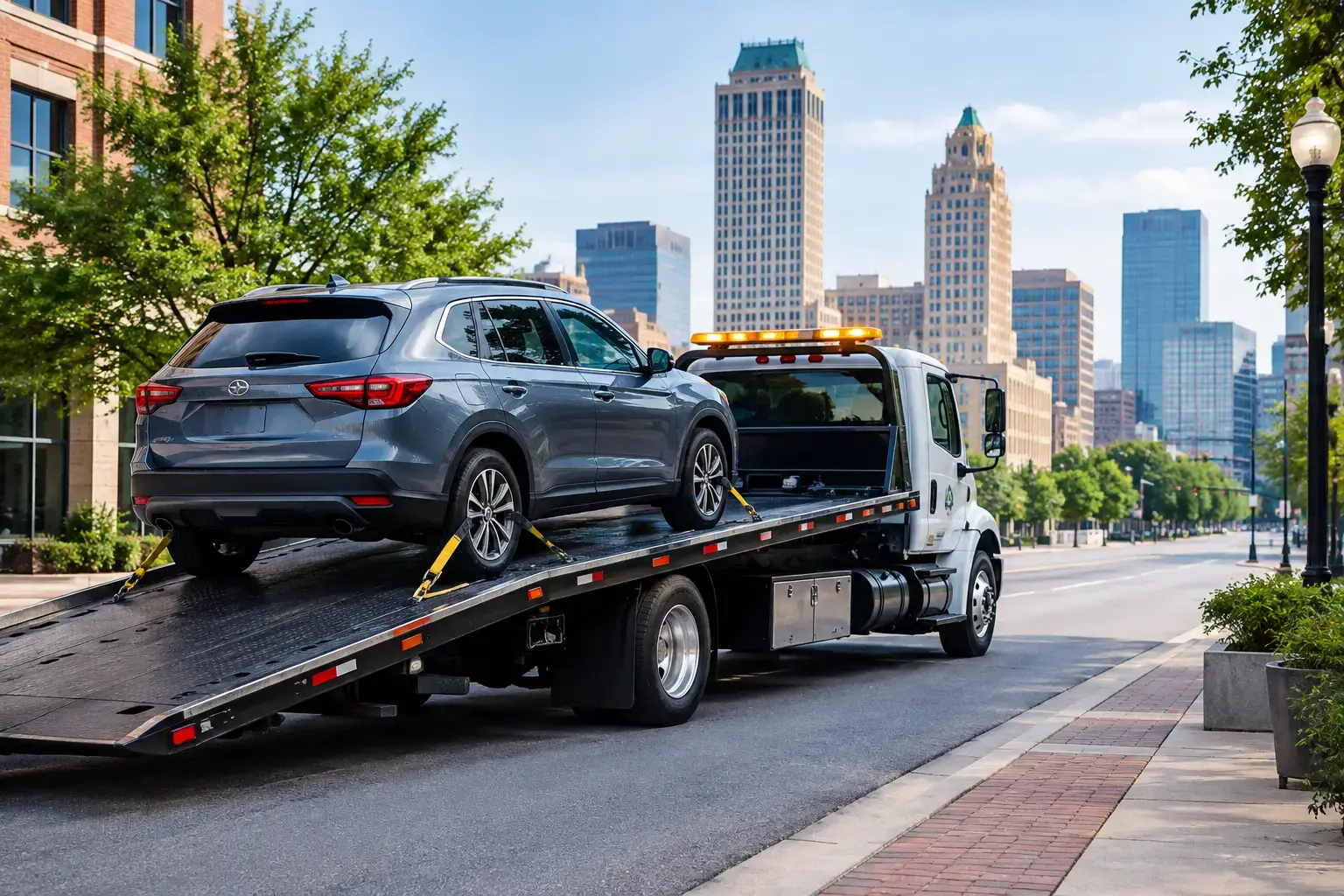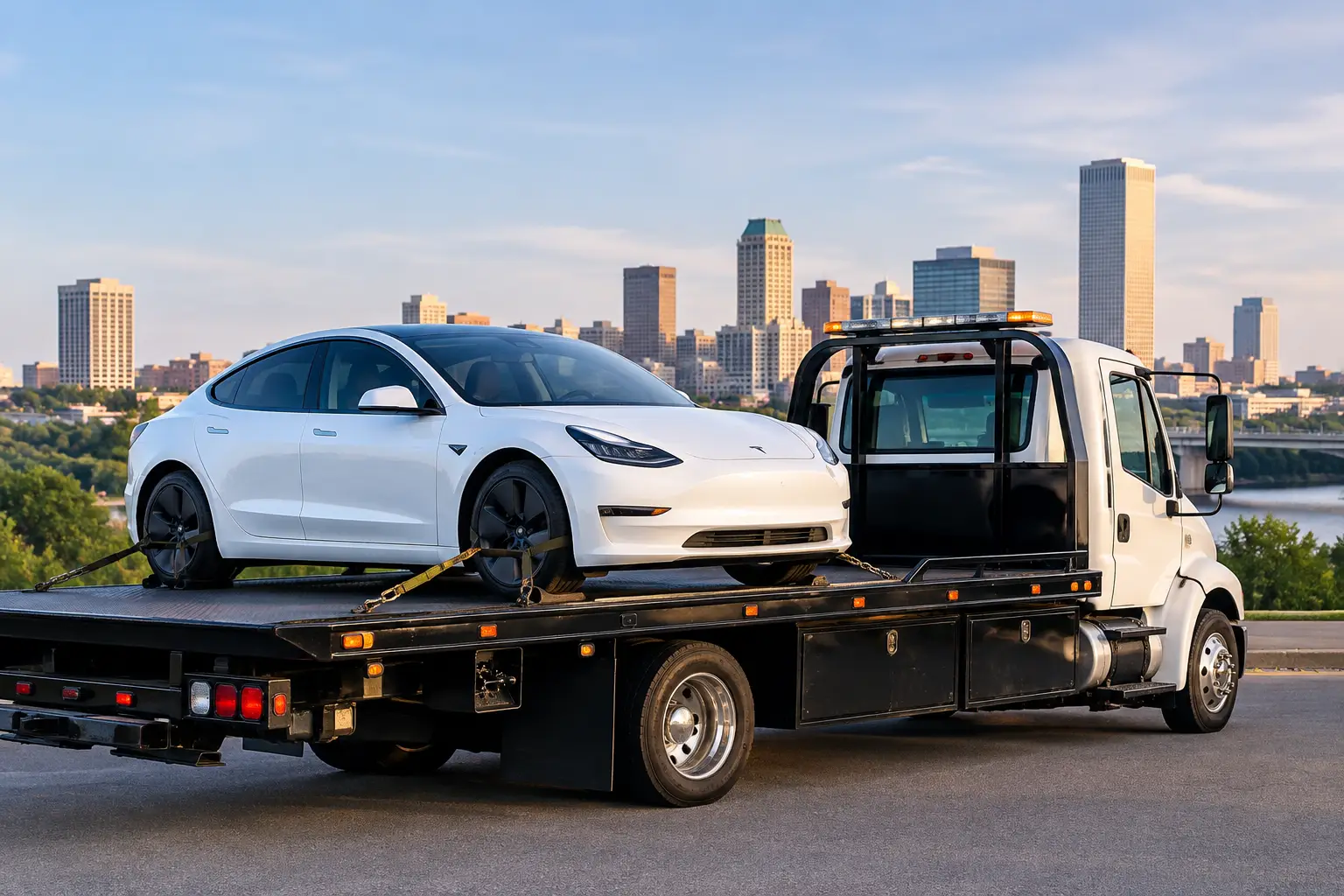
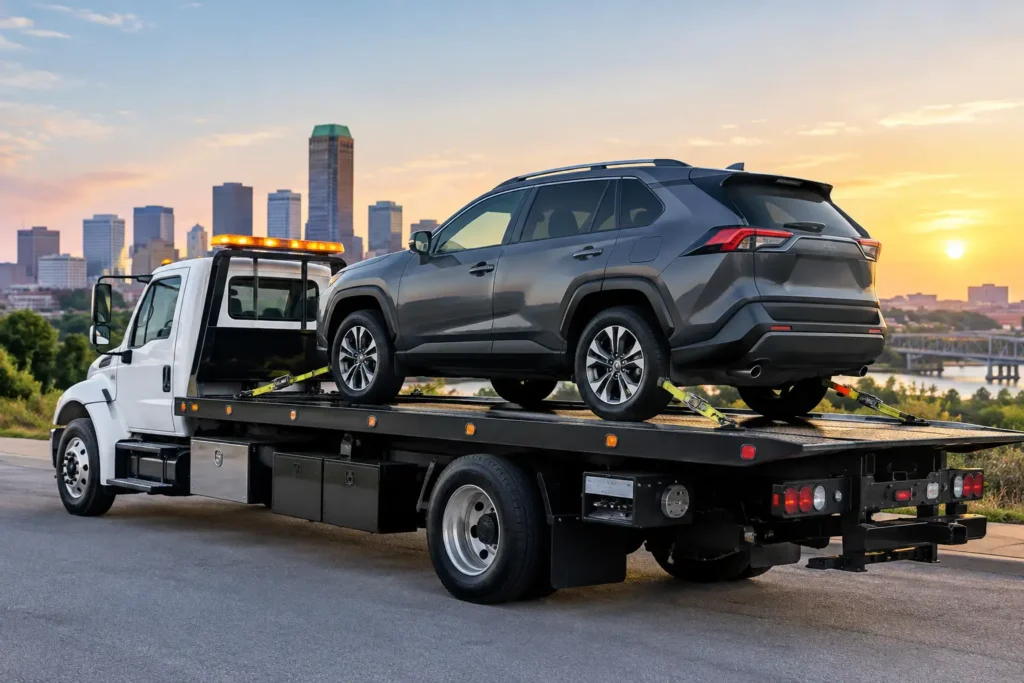
A disabled AWD vehicle on I-44, Memorial Drive, or a South Tulsa parking lot needs the right kind of tow, not just the closest truck. Can towing move all-wheel-drive vehicles? Yes, but the method matters. In most cases, the safe answer is a flatbed tow that keeps all four tires off the ground.
All-wheel-drive systems are built to send power to more than one wheel. That gives many drivers better traction in rain, snow, loose gravel, and uneven road conditions. It also means towing the vehicle incorrectly can put stress on parts that were never meant to turn at different speeds while the engine is off.
Can Towing Move All-Wheel-Drive Without Damage?
It can, when the vehicle is loaded and secured properly. A flatbed is the preferred option for most AWD cars, SUVs, trucks, hybrids, and electric vehicles. The vehicle is winched onto the bed, all four wheels are lifted off the pavement, and it rides to the repair shop, dealership, or destination without the drivetrain turning.
That is the simple part. The problem starts when an AWD vehicle is pulled with only two wheels raised and the other two rolling on the road. Depending on the vehicle, that can force the center differential, transfer case, transmission, or electric drive components to operate in a way they were not designed to handle. Damage may not always show up immediately. A vehicle might drive away after the tow, then develop noise, warning lights, binding, or expensive drivetrain problems later.
A careful towing operator does not guess based on the vehicle’s size or appearance. Many SUVs look similar from the outside, but one may be front-wheel drive while another has full-time AWD. The correct approach starts by identifying the exact drivetrain and following the manufacturer’s towing instructions.
Why Flatbed Towing Is Usually the Right Choice for AWD
Flatbed towing removes the main risk: rolling driven wheels on the pavement. Once the vehicle is fully on the bed, the tires, axles, differentials, and transfer case are not being spun by the road.
This is especially useful when the vehicle cannot be started, has transmission damage, has been in an accident, or is showing an AWD or traction-control warning light. In those situations, nobody should assume the vehicle can be put in neutral and pulled normally. Some vehicles have electronic parking brakes, shift-lock systems, low ground clearance, or damaged suspension that require extra care during loading.
The loading process matters just as much as the ride. A low-clearance sedan may need the right ramp angle and careful winching to avoid scraping the bumper or undercarriage. A heavier AWD pickup may need proper positioning and securement points. An EV with all-wheel drive needs special attention to its manufacturer-approved tow procedure and battery-area clearance.
For a real roadside breakdown, a flatbed gives the operator more control. That matters on busy roads near Downtown Tulsa, along US 75, or in tighter areas around Brookside and Cherry Street where traffic, parking angles, and limited space can make a simple tow less simple.
Are Tow Dollies Safe for All-Wheel-Drive Vehicles?
Tow dollies can be part of a safe solution in limited situations, but they are not the first choice for most AWD vehicles. A dolly lifts one end of the vehicle while the other wheels remain on the ground. Unless the vehicle manufacturer specifically permits that arrangement, it can still rotate part of the AWD system during transport.
Some vehicles can be moved with all four wheels supported using dollies under each tire. This can be useful when a vehicle is blocked in, parked in a difficult spot, or cannot be loaded directly onto a flatbed. It is specialized work, and the setup has to be done correctly.
The key point for drivers is simple: do not assume a two-wheel lift is safe just because the vehicle is in neutral. Neutral does not automatically disconnect every part of an AWD drivetrain. On many modern vehicles, it does not.
What About an AWD Vehicle With a Flat Tire or Dead Battery?
A flat tire or dead battery does not always mean the vehicle needs a tow. If the tire can be safely changed on site, or the battery only needs a jumpstart, roadside assistance may get you moving again. But the situation changes if the spare is missing, the wheel is damaged, the battery will not hold a charge, or the vehicle will not shift properly after a jump.
With an AWD vehicle, it is also worth checking the other tires after a tire failure. AWD systems can be sensitive to major differences in tire size or tread depth. One brand-new tire paired with three heavily worn tires can create a mismatch that some manufacturers advise against. That is a repair-shop conversation, but it is a good reason not to rush back onto the road without checking.
If the vehicle is stopped in an unsafe place, such as a shoulder near Highway 169 or a busy intersection in Midtown, getting it out of traffic safely comes first. Turn on hazard lights, move away from traffic if you can do so safely, and avoid trying to push or pull the vehicle with another car. A short improvised pull can cause damage or put people in danger.
AWD, 4WD, and EVs Are Not All Towed the Same Way
Drivers often use AWD and four-wheel drive interchangeably, but the towing instructions can be different. A traditional 4WD truck may have a transfer case that can be placed in a true neutral position. If the manufacturer allows it, certain towing methods may be acceptable. That does not mean every 4WD truck can be towed the same way.
AWD crossovers and sedans commonly use a center coupling or electronically controlled system that does not have a driver-accessible neutral setting. These vehicles are usually flatbed candidates.
Electric vehicles require another level of care. Many EVs use motors at the front, rear, or both axles, and rolling the wheels can create electrical or mechanical issues depending on the model. Tesla vehicles and other EVs should generally be transported with all four wheels off the ground unless the manufacturer provides a specific procedure. A tow operator should confirm the vehicle model, condition, and whether it can roll before loading.
What to Tell the Tow Truck Driver
A few details can help send the right equipment and avoid delays. When calling for help, say that the vehicle is all-wheel drive, identify the make and model if you know it, and explain what happened. Mention whether it starts, shifts into neutral, has a locked wheel, has a flat tire, or has been in an accident.
Also describe where the vehicle is sitting. Is it in a garage in Downtown Tulsa, facing the wrong direction in a Bixby driveway, or stuck near a curb in Broken Arrow? Is the front end damaged? Is there very little room around it? Those details help the operator plan the safest load rather than arriving with assumptions.
Tulsa Towing uses proper flatbed equipment for AWD vehicles because keeping all four wheels off the road is usually the safest way to protect the drivetrain. Clear information at dispatch makes it easier to bring the right setup and get the vehicle moving without adding another problem to the day.
Do Not Let a Bad Tow Turn Into a Bigger Repair
When an AWD vehicle breaks down, it is easy to focus only on getting it off the road. That is understandable, especially late at night or when traffic is moving fast. But a tow is part of the repair process. The wrong method can turn a battery issue, flat tire, or minor mechanical failure into a transfer case or transmission repair.
If you are unsure whether your vehicle is AWD, check the badge on the liftgate, the owner’s manual, or tell the operator the make, model, and year. When there is any doubt, a flatbed is the cautious choice. Getting the vehicle safely to a shop is worth doing right the first time.