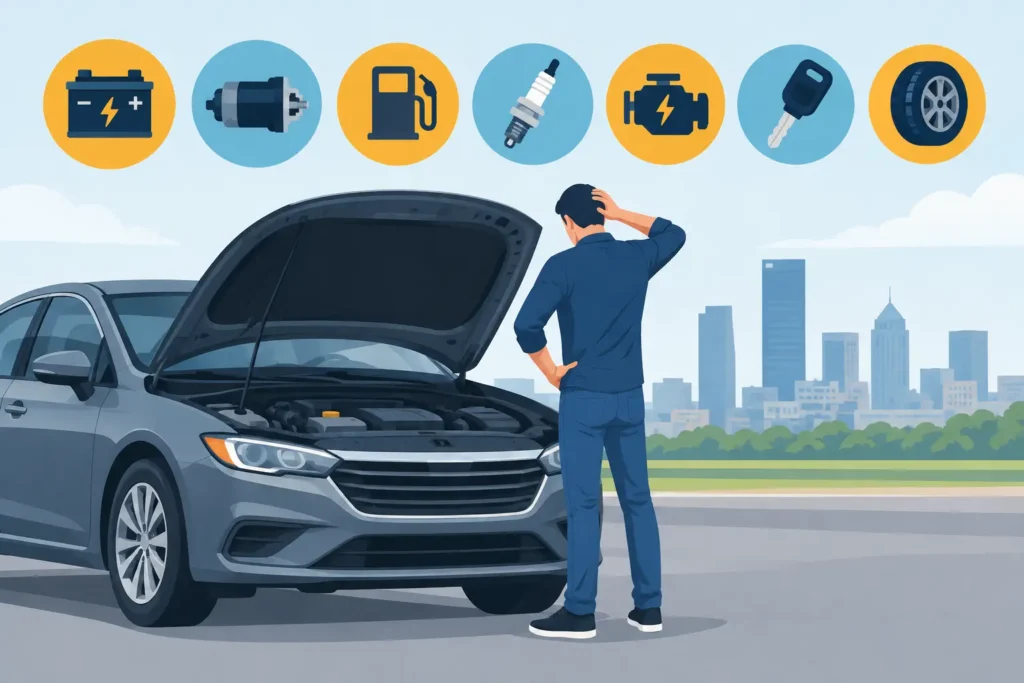
A vehicle that ran fine when you parked it can refuse to start without much warning. The most common reasons vehicles refuse to start are usually a dead battery, a starting-system problem, a fuel issue, or an electronic safety feature doing its job. When it happens in a Midtown parking lot, on the shoulder of I-44, or in your South Tulsa driveway, the first goal is simple: stay safe, avoid making the problem worse, and get the right kind of help.
The sound and behavior of the vehicle give useful clues. A single click is different from rapid clicking. An engine that cranks normally but will not fire is different from one that does nothing at all. You do not need to diagnose it like a mechanic, but knowing the difference can help determine whether a jumpstart may solve it or whether the vehicle needs a tow to a repair shop.
1. A Dead or Weak Battery
A weak battery is one of the most frequent reasons a vehicle will not start. Batteries can fail after headlights or an interior light are left on, but they also wear out from age, heat, cold snaps, and short trips that never fully recharge them.
Common signs include dim dashboard lights, a slow labored crank, rapid clicking when you turn the key, or no response at all. If the lights come on but the engine barely turns over, the battery may not have enough power to run the starter.
A jumpstart may get you moving, but it does not always mean the battery is the only problem. If the vehicle dies again soon after a jump, the charging system may not be keeping the battery charged. If you are parked in a tight garage, along busy Memorial Drive, or where traffic makes working under the hood unsafe, roadside assistance is the better call.
2. Loose or Corroded Battery Connections
A battery can be in decent shape and still fail to start the vehicle if the terminals are loose or covered in corrosion. The connection has to carry a large amount of power to the starter. A poor connection can act just like a dead battery.
You may see white, blue, or green buildup around the battery terminals. Sometimes the vehicle starts one day and will not start the next, especially after hitting a bump or closing the hood. Do not keep twisting or striking battery cables in an attempt to make contact. Damaged cables, sparks, and battery acid are not a roadside project.
If the terminals are visibly loose, or a jumpstart does not change anything, the vehicle may need professional service rather than another attempt to crank it.
3. A Failing Starter or Starter Circuit
The starter is the electric motor that turns the engine over when you start the vehicle. When it begins to fail, you may hear one solid click, a whirring sound, or nothing at all. Dashboard lights may still look normal because the battery has power, but the engine does not crank.
Starter trouble can be intermittent. The vehicle may start after several attempts, then leave you stranded later that day. That is a sign not to ignore, particularly if you are headed onto US 75 or Highway 169 where stopping unexpectedly creates a bigger safety problem.
Repeatedly turning the key or pressing the start button will not repair a failing starter. It can drain the battery and leave you with two problems instead of one. A tow to your preferred shop is often the practical solution when the engine will not crank and a battery issue has been ruled out.
4. The Vehicle Is Not in Park or Neutral
Automatic vehicles have a safety switch that prevents starting unless the transmission is in Park or Neutral. If the shifter is not fully seated in Park, the vehicle may act completely dead when you try to start it.
Keep your foot on the brake, move the shifter firmly into Park, and try again. If that does not work, try Neutral while holding the brake pedal. This is a simple check, but do it only when the vehicle is on level ground and you can keep it from rolling.
Manual-transmission vehicles have a similar safety setup through the clutch pedal. Press the clutch fully to the floor before attempting to start. If the vehicle starts only when the shifter or pedal is held a certain way, the safety switch may need repair.
5. A Key, Fob, or Ignition Recognition Problem
Many newer vehicles will not start if they cannot detect the key fob. A weak fob battery, damaged key, interference, or an issue with the vehicle’s immobilizer system can stop the start sequence.
If you use push-button start, hold the key fob close to the start button and try again. Some vehicles have a specific backup location for the fob, often in the center console or near the steering column. Check the owner’s manual if it is available. For a traditional key, make sure it turns normally and is not bent or damaged.
Do not force a key in the ignition. If the steering wheel is locked, gently turn the wheel left and right while turning the key. If the vehicle still will not recognize the key, a tow may be needed for proper diagnosis.
6. No Fuel Reaching the Engine
An engine that cranks at normal speed but will not start may not be getting fuel. The cause can be as basic as an empty fuel tank or as involved as a failed fuel pump, blown fuse, or fuel-system issue.
Start with the obvious check: look at the fuel gauge, but do not rely on it blindly if it has been acting erratically. Parking on an incline can also affect what the gauge reads when the tank is very low. Adding fuel can help if the tank is empty, but it will not solve a mechanical fuel problem.
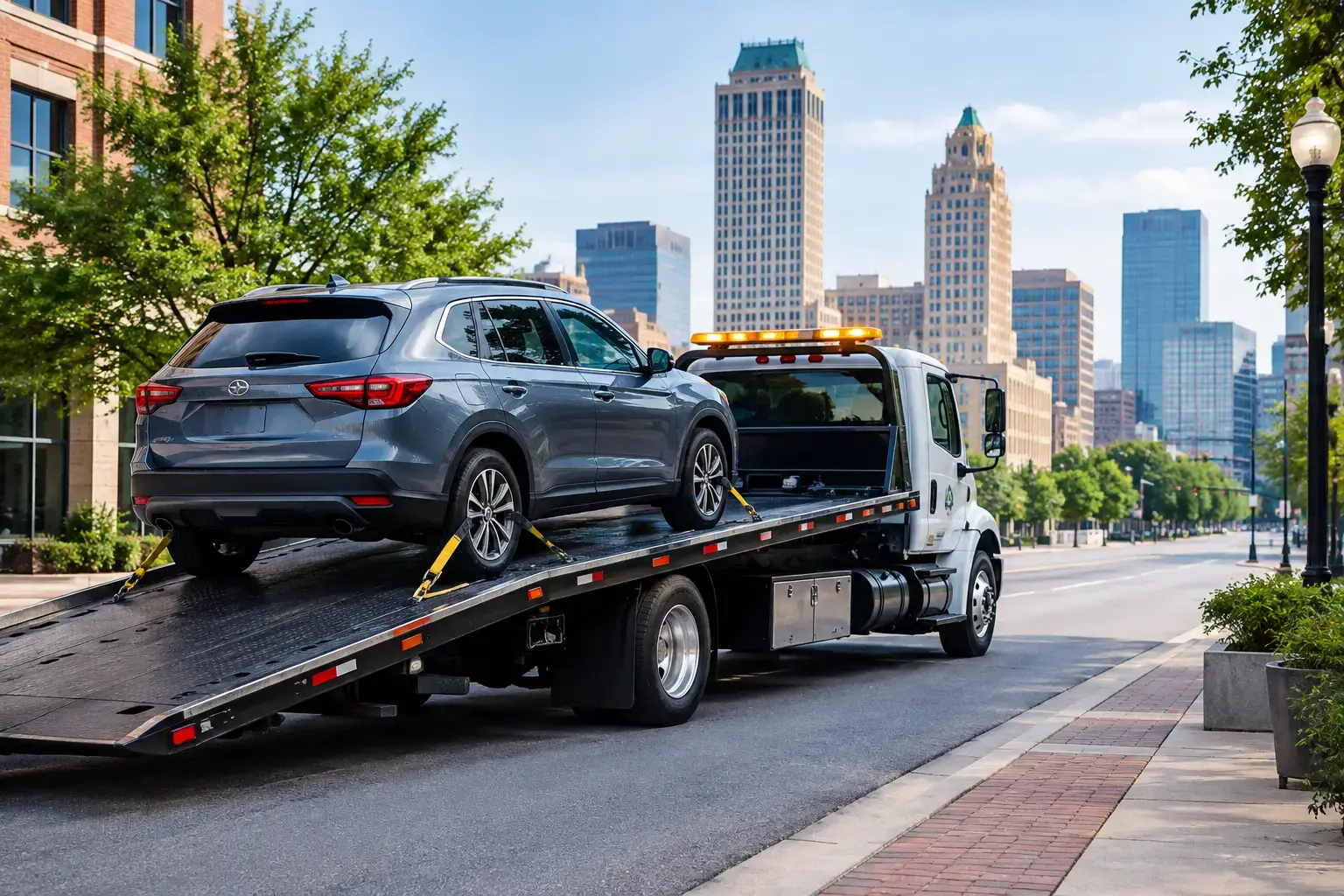
If the vehicle cranks but will not fire after a recent fill-up, avoid repeated attempts. In rare cases, a wrong-fuel situation or a separate engine issue can require shop service. A safe flatbed tow protects the vehicle and gets it to a technician without adding unnecessary miles or risk.
7. An Engine, Electrical, or Security-System Fault
Modern vehicles depend on sensors, modules, wiring, and safety systems to start correctly. A warning light, flashing security light, overheating issue, blown fuse, or rodent-damaged wiring can all lead to a no-start condition.
This is also where a vehicle that was involved in a collision may refuse to restart. Even a minor impact can trigger safety systems or damage components that are not obvious from the driver’s seat. Do not try to bypass warning messages or repeatedly restart a vehicle that smells like fuel, has smoke, leaking fluid, or visible damage.
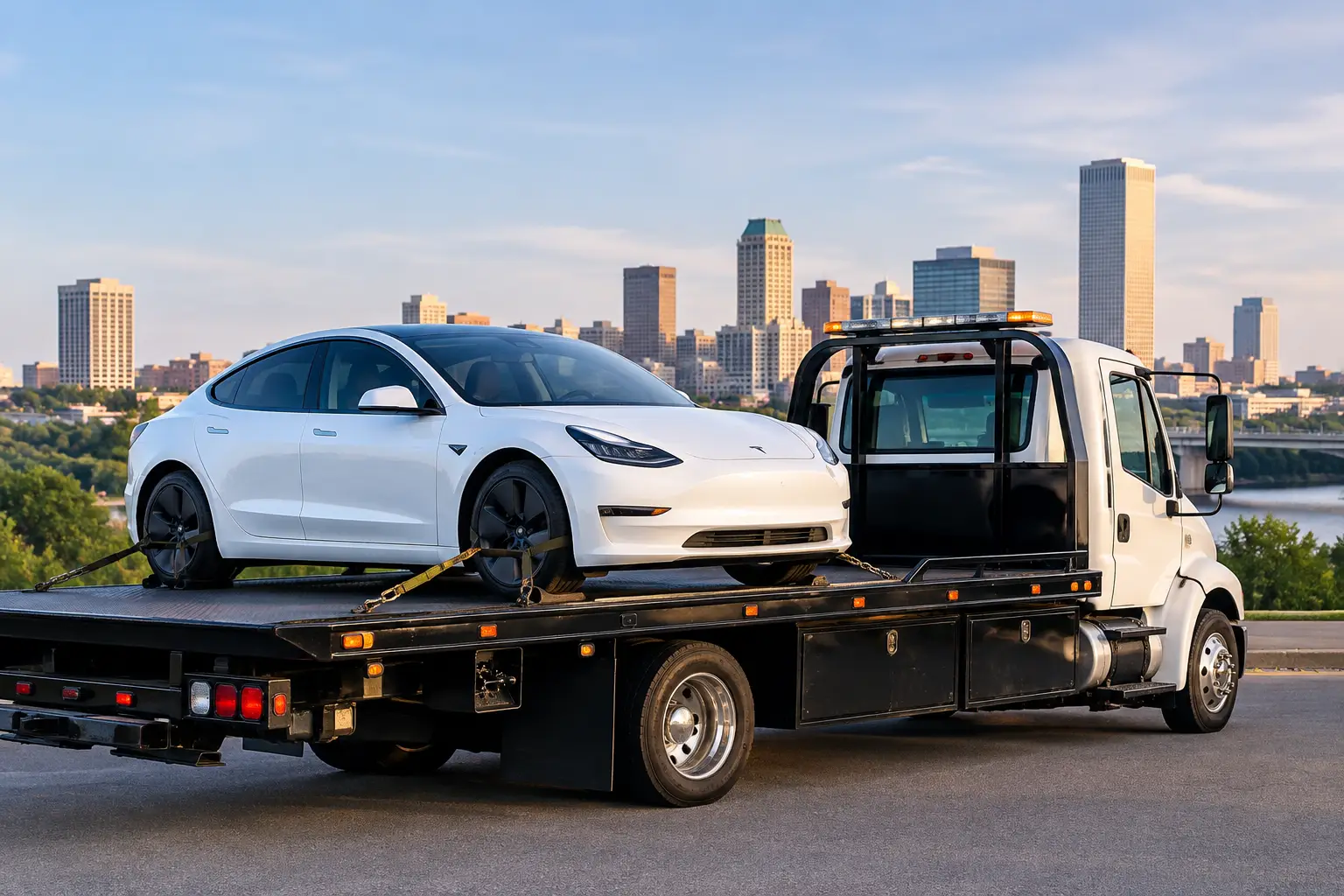
Electric vehicles and hybrids need extra care. Their 12-volt battery can still cause a no-start condition, even though the vehicle has a larger high-voltage battery system. Do not attempt to access orange high-voltage cables or improvise a jump procedure. EVs, including Teslas, should be moved using the correct loading method so the drivetrain and battery system are not damaged.
What to Do Before Calling for Help
If you are in a safe place, take a moment to check whether the dash lights are on, whether the engine cranks, and whether the vehicle is in Park or Neutral. Turn off accessories such as the radio, climate control, and headlights. If you are on a roadway, move only if the vehicle can be moved safely. Otherwise, turn on hazard lights, stay out of traffic, and do not stand near passing vehicles.
When you request roadside help or a tow truck near you, share the vehicle year, make, model, location, and what happens when you try to start it. Mention whether it is an EV, hybrid, low-clearance car, heavy-duty truck, or a vehicle with collision damage. That information helps ensure the right equipment is dispatched.
For drivers in Tulsa, Jenks, Bixby, and Broken Arrow, Tulsa Towing can help with jumpstarts when appropriate and damage-free flatbed transport when the problem needs a shop. A no-start situation is frustrating, but it does not have to turn into a rushed decision. Keep yourself out of danger first, then get the vehicle handled the right way.