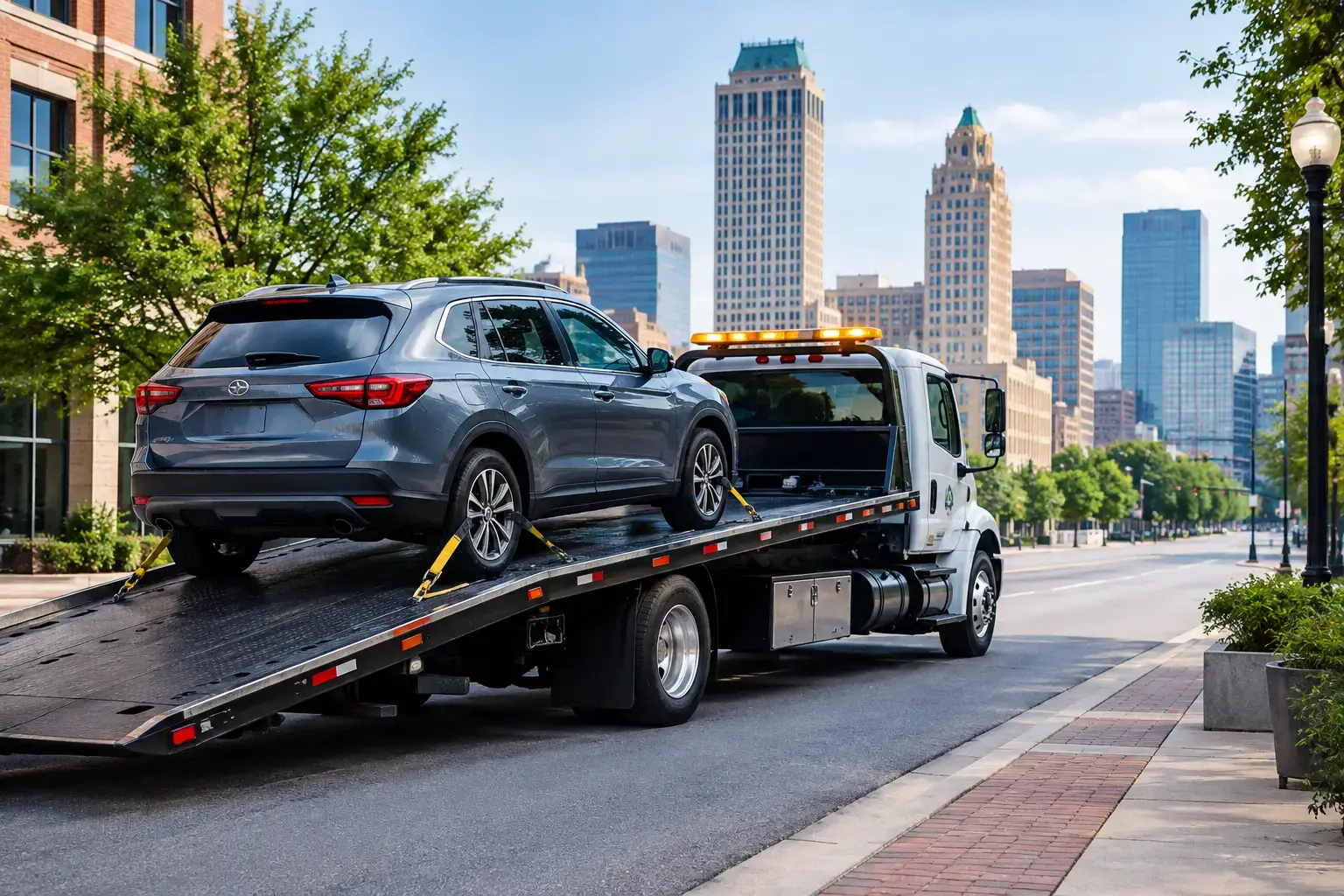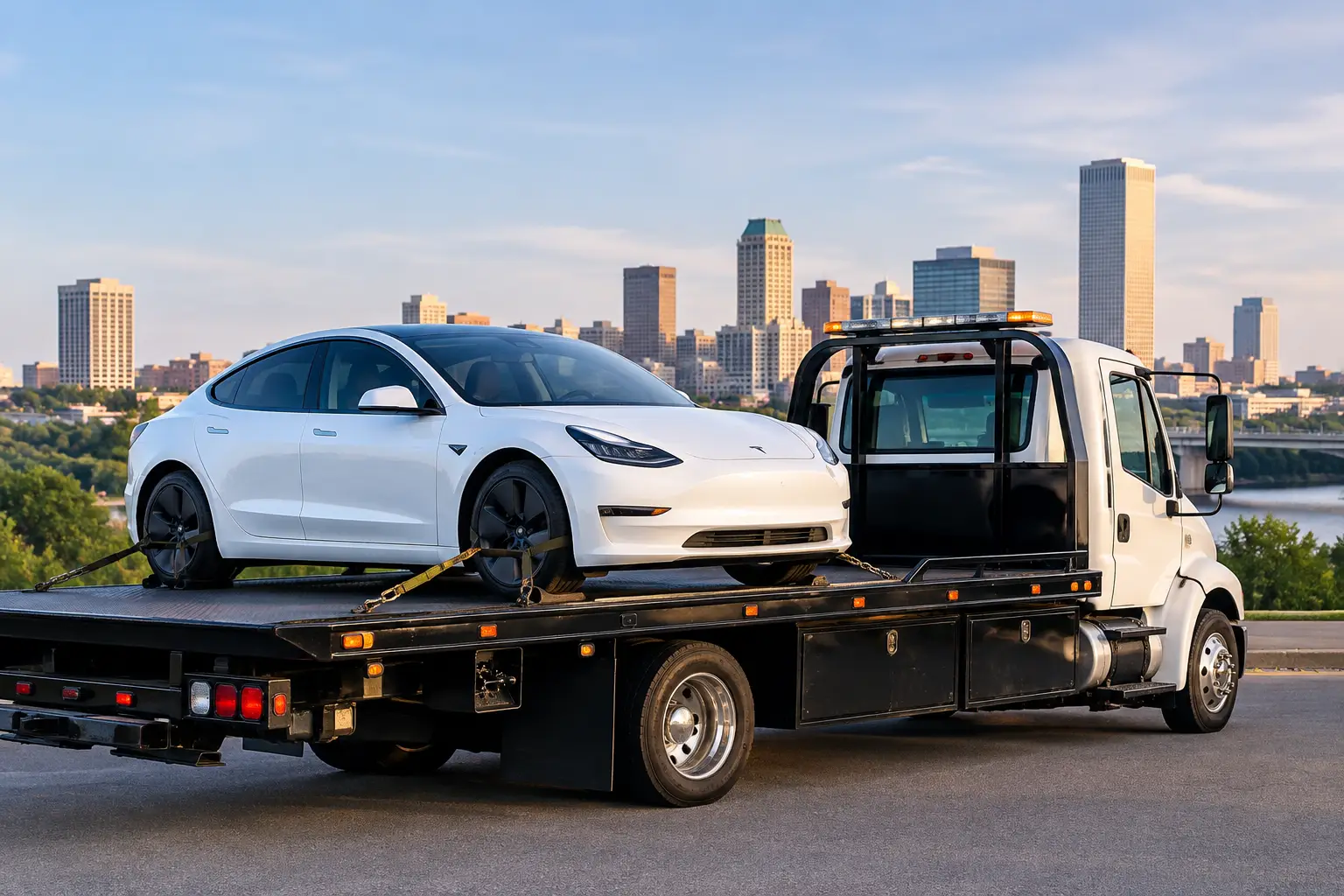
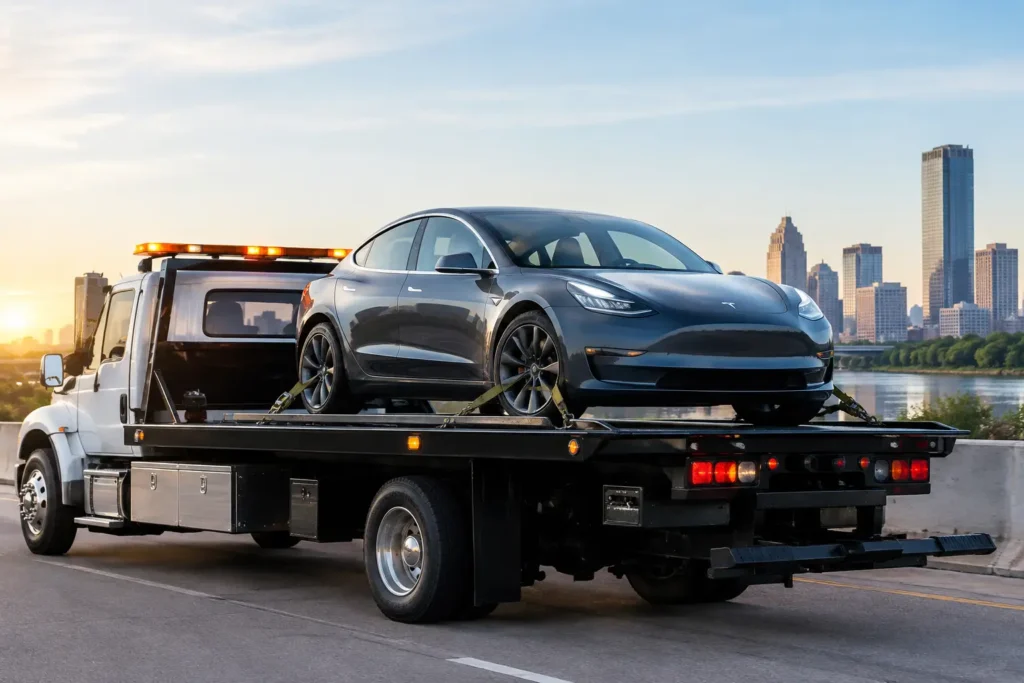
A Tesla that will not move is not a situation for a quick hook-up and a rushed drive away. This Tesla towing review covers what matters when the vehicle is disabled: getting it out of traffic safely, using the correct loading method, and avoiding damage that turns one problem into a much larger repair.
For drivers in Tulsa, this can happen anywhere: a dead 12-volt system in a South Tulsa parking lot, a flat tire near Midtown, a drivetrain warning on I-44, or a vehicle that will not shift out of Park outside a home in Broken Arrow. The right response depends on the condition of the Tesla, its location, and whether its wheels can roll. The towing method should change with the situation.
Why Tesla Towing Is Different
Teslas are heavy, low to the ground, and powered by a high-voltage battery system. Those facts affect how they should be moved. A tow operator needs to account for clearance at the front bumper, the underside of the battery pack, wheel position, and the vehicle’s electronic controls before loading begins.
The biggest mistake is treating an EV like an ordinary disabled car. Pulling it with two wheels on the ground, using improper dollies, attaching equipment to the wrong point, or dragging a locked wheel can cause damage. It may also create problems with the drive units or tires. A Tesla should generally be transported with all four wheels off the road on a flatbed.
That does not mean every Tesla tow is complicated. Many are straightforward when the vehicle can be placed in Tow Mode, the wheels are free, and there is enough room to position a flatbed properly. The careful part is confirming those conditions before anyone starts pulling.
Tesla Towing Review: The Flatbed Matters
A flatbed gives the operator control from the first pull to final unloading. The bed can be lowered to reduce the loading angle, which matters on low-clearance vehicles such as a Model 3 or Model S. The vehicle is then secured for transport rather than being carried with part of it rolling down the road.
A proper loading setup also protects the areas owners worry about most: the front valance, rocker panels, wheels, suspension components, and battery enclosure beneath the floor. Clearance has to be watched at the transition from pavement to bed and again when the bed is raised. A steep angle or careless pull can make contact where it should not.
On a normal call, the operator first checks whether the Tesla can roll and steer. If it can, the vehicle may be guided onto the bed under its own low-speed power or carefully winched in the correct mode. If it cannot, the recovery approach has to account for locked wheels, a dead low-voltage battery, or a position that prevents a direct pull.
This is where real towing experience matters. A Tesla stopped level in an open lot is one job. A Tesla parked nose-in at an apartment complex, sitting in a tight Downtown Tulsa garage, or disabled along a busy section of US 75 takes more planning. The goal is still the same: load it without forcing it, dragging it, or guessing.
Tow Mode Is Helpful, But It Is Not the Whole Job
Tesla’s Tow Mode is designed to allow the vehicle to roll freely for loading and transport preparation. Depending on the model, the screen may need power, the vehicle may need to be in Park, and the driver may need to follow specific prompts. Owners should use the instructions shown in their vehicle or manual when they can safely do so.
But Tow Mode is not a fix for every disabled Tesla. If the 12-volt battery is dead, the touchscreen is unavailable, the vehicle has collision damage, or a wheel is locked, the operator may need a different loading plan. This is one reason it helps to tell the towing company exactly what happened before dispatch.
A driver does not need to diagnose the whole issue at the roadside. Simple details are enough: whether the car powers on, whether it will shift, whether a tire is flat, whether it was in an accident, and whether it is parked in a garage, driveway, or traffic lane. Those details help the tow truck arrive prepared.
What to Do While Waiting for a Tesla Tow
Safety comes first. If the Tesla is stopped on I-44, Highway 169, Riverside Drive, Memorial Drive, or another high-traffic area, move it out of the travel lane only if it can be done safely. Turn on hazard lights, keep a safe distance from traffic, and avoid standing between the vehicle and passing cars.
If the vehicle is already in a parking lot or residential driveway, avoid repeatedly trying to force it into gear. Do not attempt to pull it with another vehicle. Do not attach a chain or strap underneath the car unless you know the proper recovery point and method. The underside is not a place for trial and error.
Before the tow truck arrives, remove loose personal items if you need them, make sure the destination is confirmed, and have the key card or phone key available. If the Tesla is going to a service center, body shop, tire shop, or your home, give the operator the exact location. A clear destination prevents delays after the vehicle is already loaded.
If the vehicle has been in a collision, tell the dispatcher about visible damage, deployed airbags, a damaged wheel, or any signs of smoke, leaking fluid, or battery-area impact. In that situation, the loading process may need additional caution. Stay clear of the vehicle if there is smoke, heat, or an unusual odor, and follow directions from emergency personnel when they are on scene.
Common Tesla Towing Situations Around Tulsa
Not every call starts with a major warning message. A tire issue is one of the more common reasons an EV needs a flatbed. A Tesla can be difficult to move safely on a flat tire, especially when the tire is badly damaged or the wheel is affected. Loading it onto a flatbed avoids adding road damage to an already compromised tire or rim.
A no-start situation is another common call. Tesla owners may describe it as a dead battery, but the issue could involve the low-voltage battery, a charging concern, a system fault, or a condition that keeps the vehicle from shifting. The tow operator’s job is not to guess at the repair. It is to get the vehicle loaded correctly and delivered where the owner needs it.
Parking garages create their own problems. Low overhead clearance can limit which truck can enter, and tight ramps leave little room for a bad angle. In areas such as Downtown or the Blue Dome District, it is worth mentioning the garage level, ceiling clearance if known, and whether the Tesla is facing in or out. That information can save time and help determine the safest approach.
Accident towing requires the same attention, with more variables. A wheel may be turned sharply, suspension may be damaged, or the car may be blocked by debris or traffic. A flatbed and controlled winching are often the right answer, but the exact setup depends on what is damaged and where the Tesla came to rest.
Questions to Ask Before You Approve a Tow
When you need a tow truck near you, the first concern is understandably how soon help can arrive. It is also reasonable to ask whether the company can transport a Tesla on a flatbed and whether they handle EVs regularly. Those are direct questions, and clear answers matter.
Ask where the vehicle will be taken and confirm the address before loading. If your Tesla is at a charger, apartment complex, office lot, or a place with restricted access, mention that as well. A good dispatch process should cover the vehicle location, condition, destination, and a realistic arrival update.
Tulsa Towing, powered by Neptune Towing, handles local flatbed transport with the focus where it belongs: careful loading, clear communication, and getting the vehicle to its destination without unnecessary complications. Service is centered on Tulsa, with nearby calls in Jenks, Bixby, Broken Arrow, and Glenpool handled when availability allows.
A disabled Tesla is stressful enough without wondering whether it will be handled correctly. Give the dispatcher the basic facts, stay in a safe place, and make sure the transport plan is built around flatbed loading and the vehicle’s actual condition.