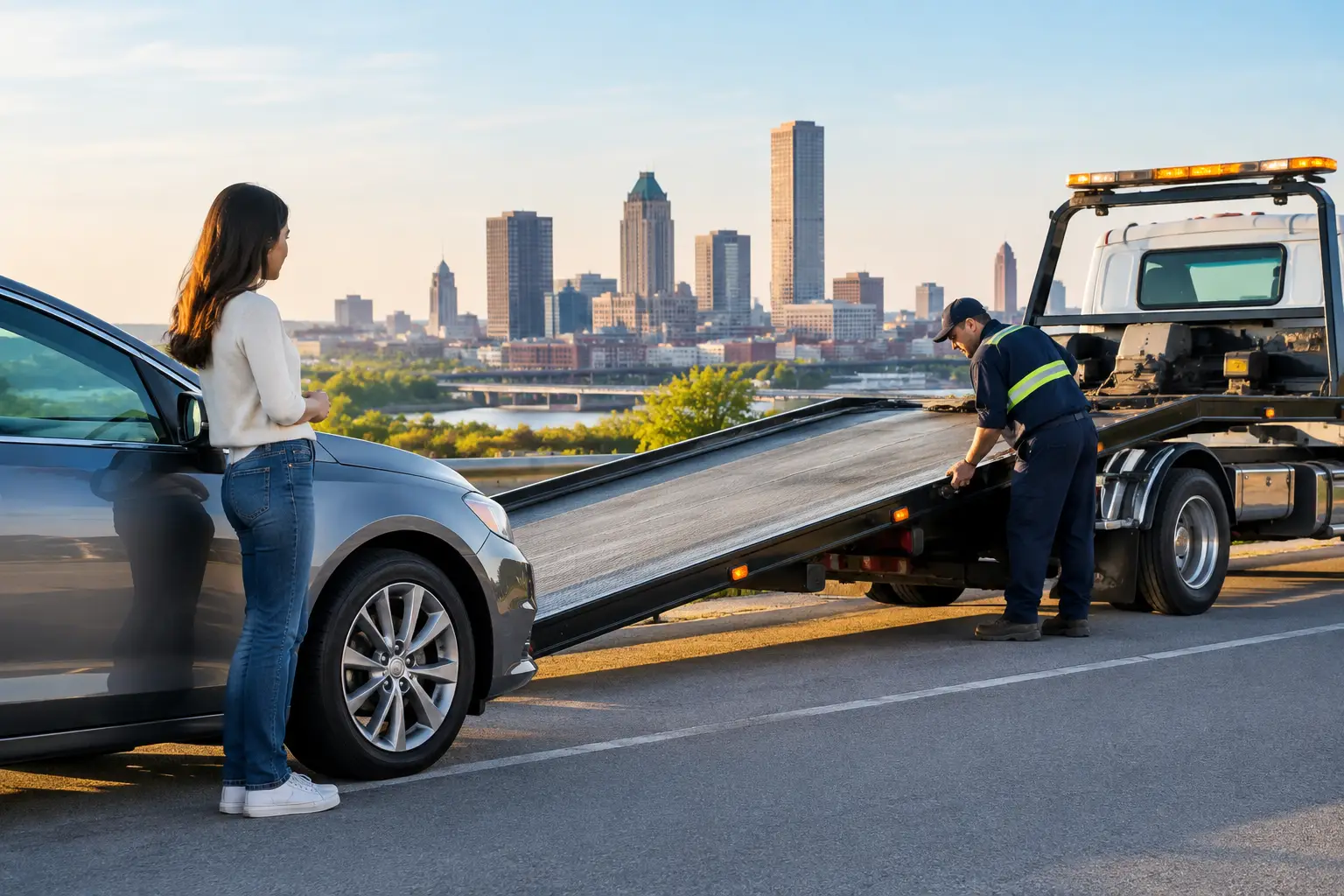
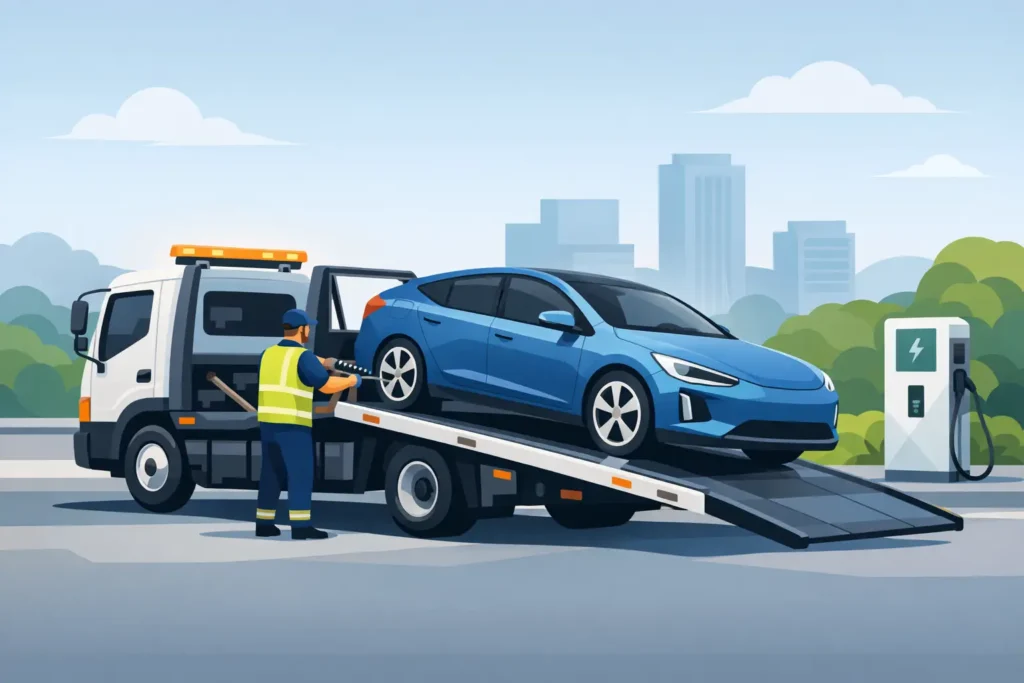
A dead EV on the shoulder is not a job for a chain and a quick pull. Can a tow truck tow electric cars? Yes, but the method matters. Most electric vehicles should be loaded onto a flatbed so all four tires stay off the ground. That protects the drive system, battery area, and low-clearance body panels while getting the vehicle safely to a repair shop, dealer, or home.
For a driver stuck on I-44, US 75, or in a crowded Tulsa parking lot, the main concern is simple: will the tow cause more damage? With the right equipment and a driver who knows how EVs are built, it should not.
Can a Tow Truck Tow Electric Cars Without Damage?
A properly equipped tow truck can tow an electric car without damage. In most cases, that means a flatbed tow truck, careful loading, and following the vehicle manufacturer’s transport instructions.
Electric cars are different from many gas-powered vehicles because their electric motors may be connected directly to the wheels. Letting the drive wheels roll while the vehicle is being pulled can generate electricity inside the system. Depending on the model, that can damage the motor, inverter, or other expensive components.
A flatbed avoids that problem. The EV is winched onto the deck, secured at approved tire points, and transported with every wheel off the pavement. It is the cleanest option for Teslas, Rivians, Ford Mustangs Mach-E, Hyundai IONIQ models, Kia EVs, and other electric vehicles.
Damage-free towing also comes down to clearance. Many EVs sit low, and the battery pack runs underneath much of the vehicle. A rushed loading angle, the wrong attachment point, or dragging a disabled car over a curb can cause trouble. Proper ramps, controlled winching, and a careful operator make a real difference.
Why Flatbed Towing Is the Right Choice for EVs
Flatbed towing keeps the vehicle stationary during transport. That is the key advantage. No drive wheels are turning, and there is no need to guess whether a particular model can be pulled in neutral for a short distance.
It also gives the tow operator more control when the car will not move under its own power. An EV may be in park, have a locked electronic parking brake, or have a dead 12-volt battery that prevents it from shifting into transport mode. Those issues are common after a breakdown and do not automatically mean the car cannot be moved. They do mean the loading process needs to be handled correctly.
A careful operator may use skates or dollies to move a vehicle whose wheels are locked before loading it onto a flatbed. This keeps the tires from being dragged and helps protect the vehicle in tight spaces, parking garages, driveways, and accident scenes.
For routine breakdown towing, a wheel-lift alone is usually not the first choice for an electric car. Some manufacturers permit limited procedures with dollies, but those instructions vary by model. A flatbed removes much of that uncertainty.
What Happens When an Electric Car Has No Power?
An EV with a drained high-voltage battery is not always completely dead. It may still have enough 12-volt power to unlock the doors, release the parking brake, or enter a transport setting. But if the 12-volt battery is also low, the vehicle may not respond normally.
This is where guessing can lead to damage. Forcing a car out of park, pulling hard against locked wheels, or hooking to the wrong location is not the answer. The tow operator needs to assess whether the car can roll, whether it has a designated tow mode, and how to load it without stressing the suspension or underbody.
Tesla vehicles, for example, have specific procedures for entering Transport Mode and releasing the electronic parking brake. Other EVs have their own instructions. The details change by make, model, and year, so a tow operator should not treat every electric car the same way.
If you are waiting for a tow, keep the key or key card available, tell the dispatcher the exact make and model, and let them know whether the vehicle is in a garage, parked on a slope, involved in a collision, or unable to shift. That information helps the right truck and equipment arrive prepared.
Accident-Damaged EVs Need Extra Care
Not every EV tow is a normal breakdown. After an accident, the battery pack may have been struck, scraped, or exposed to debris underneath the vehicle. In that situation, the safest approach depends on what happened at the scene.
A damaged battery does not automatically mean there is an immediate fire risk, but it should be treated carefully. Warning signs can include smoke, hissing, popping sounds, unusual heat, a strong chemical odor, or visible damage under the car. If any of those are present, move away from the vehicle if it is safe to do so and contact emergency services.
For a vehicle with no obvious battery damage, the tow still needs to avoid contact with the battery enclosure and use approved loading points. The goal is to keep a collision from becoming a second problem during transport.
This matters on busy roads around Tulsa, where traffic, narrow shoulders, and uneven pavement can make a recovery more difficult. A controlled flatbed load is often safer for the vehicle and for everyone working around it.
EV Towing Mistakes That Can Cost You
The biggest mistake is assuming every tow is the same. An electric car should not be dragged behind a truck with its drive wheels on the road unless the manufacturer specifically allows that exact method. Even then, there may be speed, distance, and wheel-position limits.
Another problem is using an improper hook point. EV underbodies are not a place to improvise. The battery pack is heavy, expensive, and positioned low in the chassis. A tow strap or chain connected in the wrong area can damage panels, suspension parts, or components under the car.
Drivers can help avoid problems by not trying to move the car themselves with a rope, another vehicle, or a rental dolly. What looks like a short pull across a parking lot can become an expensive repair if the wheels are locked or the drivetrain is engaged.
What to Tell the Tow Company When You Call
You do not need to know every technical detail about your EV. A few clear facts are enough: the make, model, location, whether it can roll, whether it has been in an accident, and where you want it taken.
Mention if the car is in a parking garage, on a steep driveway, blocked in by other vehicles, or sitting on a highway shoulder. Also say if you received a battery, drivetrain, or high-voltage warning before it stopped. That helps the towing provider plan for the access and loading conditions instead of arriving with the wrong setup.
Tulsa Towing, powered by Neptune Towing, handles EV transport with flatbed equipment and a damage-free approach built for real roadside situations. Whether the vehicle is a Tesla that will not enter Transport Mode or an EV that has simply run out of charge, the job starts with getting the loading plan right.
A Safe Tow Starts Before the Truck Arrives
If your electric car is disabled, get yourself out of traffic when possible, turn on hazard lights, and avoid standing near moving lanes. Do not crawl under the vehicle to look at the battery pack, especially after impact damage. Keep the key, key card, or phone-based key ready, and be prepared to explain what the car is doing.
The right tow is not just about moving an EV from point A to point B. It is about keeping a breakdown from turning into avoidable damage. A flatbed, the correct loading process, and clear information from the driver are usually all it takes to get the vehicle where it needs to go safely.