
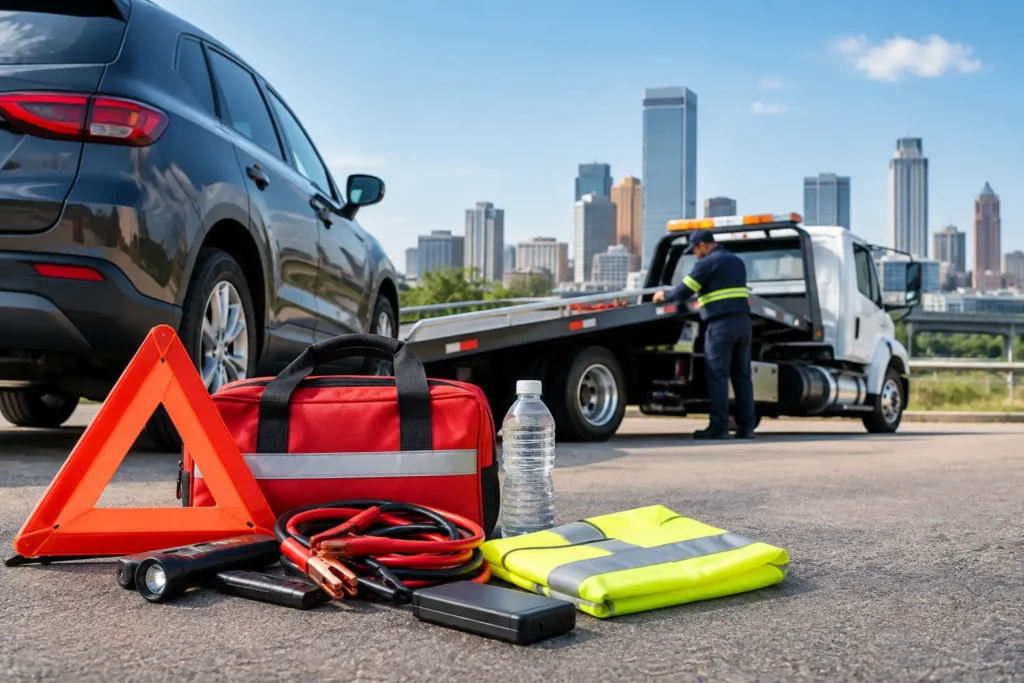
A stalled vehicle on I-44 near Midtown, a flat tire outside Tulsa Hills, or a dead battery in a South Tulsa parking lot can turn into a long wait fast. This emergency kit review Tulsa drivers can use is built around what actually helps when the vehicle will not move, help is on the way, and you need to stay safe until the situation is handled.
An emergency kit is not meant to turn a driver into a mechanic. Its job is simpler: make you easier to see, keep you comfortable, help with a few basic problems, and give you the information needed for a safe tow or roadside service call. The best kit is one you can find in the dark and use without digging through a trunk full of loose items.
Emergency Kit Review Tulsa Drivers Can Use
Tulsa drivers deal with a mix of highway traffic, sudden storms, hot pavement, dark parking areas, and long stretches of road where pulling over safely matters. A useful kit should reflect that reality. It does not need to be expensive or packed with tools you do not know how to use.
Start with visibility. Reflective warning triangles or road flares, a reflective safety vest, and a working flashlight belong in every vehicle. A small LED flashlight is better than relying on a phone flashlight, especially when you need your phone battery for directions, insurance information, or calling for help. Keep spare batteries with it, or choose a rechargeable light and check it regularly.
A compact first-aid kit also makes sense. It should cover minor cuts, scrapes, and blisters, not replace medical care after a collision. Add disposable gloves. They are useful when changing a tire, handling a dirty battery connection, or helping someone with a small injury.
For weather and waiting, keep bottled water, a light blanket, and a poncho or compact rain jacket. Oklahoma heat can make a roadside wait uncomfortable quickly, while a cold rain can make it worse. If you travel regularly with children, older family members, or pets, adjust those supplies for the people who are usually in the vehicle.
A practical kit can include these items without taking up much room:
- Reflective triangles or flares, a safety vest, and an LED flashlight
- First-aid supplies and disposable gloves
- Drinking water, a blanket, and rain protection
- A phone charging cable and a charged portable battery pack
- Basic tire supplies, including a pressure gauge and tire inflator if you know how to use it
- Jumper cables or a jump pack rated for your vehicle
- Paper towels, wet wipes, and a small bag for cleanup
Keep everything in a zippered bag or plastic tote that will not slide around. The cargo area is usually the best place, but do not bury the kit under sports gear, groceries, or work equipment. If you have a sedan with a shallow trunk, a soft-sided bag is easier to fit beside the spare tire area.
What a Kit Can Handle and What It Cannot
A roadside kit can help with a low tire, a weak battery, or a short wait for assistance. It cannot make a damaged tire safe, repair a vehicle that overheated, or solve a breakdown in an active traffic lane. Knowing that difference prevents a small problem from becoming a dangerous one.
For example, a tire inflator may get you enough air to move from a parking space to a safer location if the tire has a slow leak. It is not a reason to drive on a tire with a sidewall tear, a visible bulge, or a severe loss of pressure. The same goes for jumper cables. A jumpstart may get an older battery going once, but repeated dead-battery problems can point to a failing battery or charging system.
Be careful with universal tool kits. A few basic tools can be useful, but loose sockets, cheap jacks, and unfamiliar equipment often create more frustration on the shoulder of US 75 or Highway 169. Your owner’s manual, spare tire equipment, and tire key – if your wheels use locking lug nuts – matter more than a large box of random tools.
Electric vehicle owners should take a different approach. A portable jump pack may still be useful for a 12-volt issue, but it will not recharge the vehicle’s main battery. Keep the correct charging adapters for the stations you use and understand where your vehicle’s approved tow points are located. EVs and low-clearance cars need careful loading, and dragging or improper recovery can cause damage. When an EV cannot be driven, flatbed transport is generally the right way to move it.
Build the Kit Around Your Normal Routes
The right emergency kit depends on how and where you drive. A driver who stays around Downtown, Brookside, and Midtown may prioritize a jump pack, flashlight, and phone charger for parking garages and busy lots. Someone commuting from Broken Arrow, Bixby, or Jenks may spend more time on highways, where reflective gear, water, and warning triangles become more valuable.
Families should include supplies that keep passengers settled during a wait: extra water, simple snacks that tolerate heat, necessary medications, and a spare phone cable. Do not leave medication in the car if heat can damage it. Drivers who use their trucks for work may also need a heavier-duty jump pack, tire repair supplies, and gloves, but the equipment should match the truck’s size and battery system.
Check your kit at least twice a year. Replace expired first-aid items, test the flashlight, rotate water and snacks, and make sure the portable battery pack still holds a charge. Summer is a good time to check for heat-damaged items. Before colder weather arrives, confirm you still have a blanket and rain gear.
Safe Steps While You Wait for Help
The kit matters most after you have moved to the safest available location. If the vehicle is still drivable, get off the travel lane and as far from moving traffic as practical. Turn on hazard lights. On a busy roadway, stay in the vehicle with seat belts fastened if getting out would put you near traffic.
If you can safely exit and have room away from traffic, place warning triangles well behind the vehicle according to their instructions. Do not walk along a highway shoulder at night just to place equipment. Visibility helps, but it is never worth stepping into a dangerous area.
When calling for roadside help or a tow, give a clear location. The nearest cross street, highway direction, exit number, visible business, and vehicle color all help. Mention if the vehicle is in a garage, has low ground clearance, is all-wheel drive, is electric, or is blocked in. Those details affect the equipment and loading plan.
If a vehicle cannot move safely, the goal is not to force a quick repair. It is to protect the people around it and get the vehicle where it needs to go without adding damage. Tulsa Towing, powered by Neptune Towing, handles local roadside situations with that same straightforward approach: assess the problem, explain the next step, and use proper flatbed equipment when transport is needed.
A good emergency kit will not prevent every breakdown. It gives you a safer, calmer place to start while the right help gets to you – and that can make a real difference on a Tulsa roadside.

