
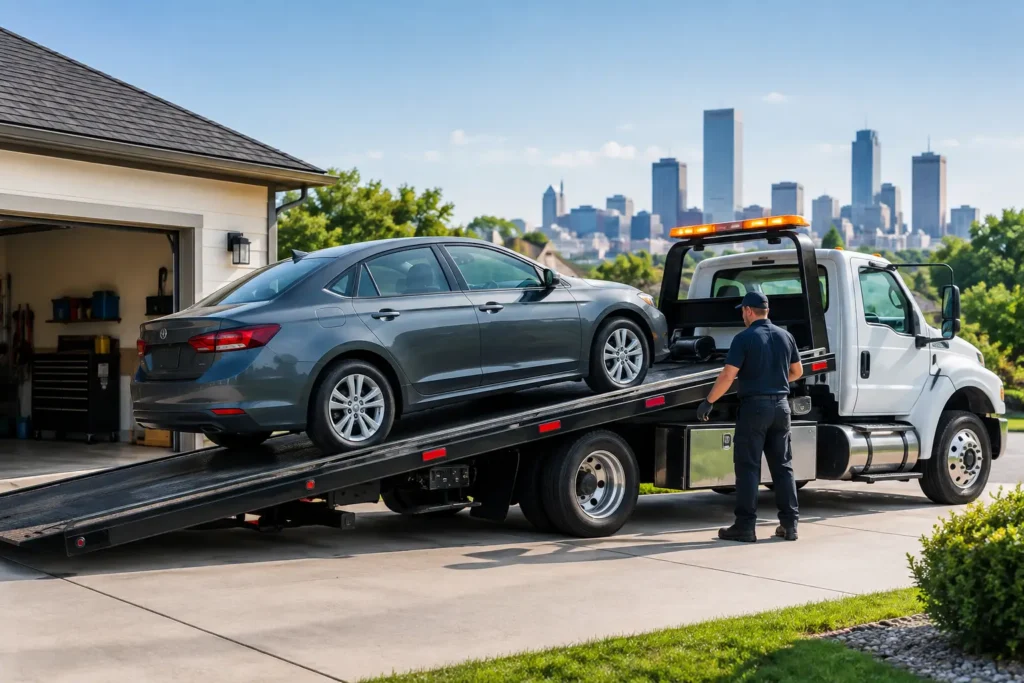
A vehicle that will not start inside a garage is different from a breakdown on I-44 or Memorial Drive. There may be a low ceiling, tight turns, concrete columns, a ramp, another vehicle blocking the path, or just enough room to open the driver door. Moving cars from Tulsa garages safely starts with understanding the space before any truck is sent in or any vehicle is pulled out.
A rushed tow in a confined area can turn a dead battery, flat tire, or mechanical failure into bumper, wheel, or underbody damage. The right approach is simple: assess access, use equipment that fits the job, and move the vehicle only when there is a clear plan.
Why garage towing requires a different plan
Most parking garages were not built with tow trucks in mind. Height restrictions are the first issue, especially in Downtown Tulsa garages where clearance bars may be lower than the height of a standard flatbed or wheel-lift truck. Even if a tow truck can enter, there may not be enough turning room to line up with the disabled vehicle.
Home garages can be just as challenging. A car may be parked nose-first against a wall, sitting on a flat tire, blocked by stored items, or unable to shift into neutral. In South Tulsa and Midtown neighborhoods, attached garages often have narrow driveways and short approaches that make loading angles matter.
The vehicle itself also changes the job. A low-clearance sedan, all-wheel-drive SUV, heavy pickup, or electric vehicle cannot be handled the same way. Pulling the wrong vehicle from the wrong point can damage the bumper cover, suspension, drivetrain, or battery-area underbody. That is why the first question is not simply, “Can you tow it?” It is, “Where is it parked, and what has to happen to get it out safely?”
What to tell the tow company before dispatch
Clear information saves time and helps the operator arrive prepared. When calling for a car stuck in a garage, explain whether it is a residential garage, apartment garage, dealership bay, or multi-level parking structure. Mention the posted height clearance if you can see it, along with the garage level and whether the vehicle can roll.
It also helps to describe the problem in plain terms. Let the dispatcher know if the car has a locked steering wheel, is in park, has a flat tire, has been in an accident, or will not power on. If it is an EV, say so upfront. Electric vehicles often have specific tow instructions, and they should not be dragged with the drive wheels on the ground.
If the vehicle is in a Downtown Tulsa parking garage, share the entrance street and the closest usable exit. In a large garage, an operator may need to meet you outside first, inspect the clearance, and determine whether the vehicle must be moved to street level before loading. That is not wasted time. It is how unnecessary damage gets avoided.
When a flatbed can and cannot enter a garage
A flatbed is generally the preferred option for damage-free transport once the vehicle is outside and accessible. It keeps all four wheels off the ground and is especially useful for all-wheel-drive vehicles, low cars, trucks, and Teslas. But a flatbed is not always able to enter a garage.
The deciding factors are height, ramp angle, lane width, turning radius, and the position of the disabled vehicle. Some ground-level commercial garages have enough room for proper loading. Others have clearance too low for a flatbed body, even when the entry looks open from the street.
In many cases, the safer plan is to use the appropriate equipment to get the car out of the garage first, then transfer it to a flatbed in an open area. For example, a vehicle may need to be carefully repositioned to a driveway, surface lot, or curbside loading area before transport. The method depends on the vehicle and the garage layout. There is no one-size-fits-all answer.
A good tow operator will not force a truck under a low clearance bar or attempt a sharp ramp with a vehicle that could scrape. If the setup does not make sense, the plan should change before the vehicle moves.
Moving cars from Tulsa garages with low clearance
Low-clearance jobs come down to inches. The truck height matters, but so does the height of the vehicle being moved and the angle of every ramp. A car can clear a garage entrance and still scrape while transitioning onto a sloped driveway or trailer bed.
Low vehicles need extra care around front lips, bumper covers, splash shields, and side skirts. Proper loading may involve adjusting the approach angle, using the right loading technique, and avoiding any sudden pull that could catch the bottom of the car. This is particularly important for sporty sedans, modified cars, and EVs with low battery trays.
If a car is parked in a cramped apartment garage near Broken Arrow or Bixby, access can be more difficult than the distance of the tow itself. The transport may only be a few miles to a repair shop or dealership, but getting the vehicle out without damage is the part that requires experience.
A vehicle that will not roll needs more than a tow hook
A non-running vehicle is not always a non-moving vehicle. If the car can be placed in neutral and the steering unlocks, it may be possible to roll it carefully into a better loading position. When it cannot roll, the job becomes more involved.
A locked transmission, seized wheel, flat tire, collision damage, or parking brake issue can prevent normal movement. The wrong response is to drag the vehicle across concrete or pull hard on a bumper attachment point. That can cause damage that was not there before.
Instead, the operator needs to evaluate where the vehicle can be safely connected, whether the wheels can turn, and whether there is room to control the movement. In some garage situations, a winch-assisted reposition is the safest way to bring the vehicle toward an accessible area. The goal is controlled movement, not just movement.
Electric vehicles need specific handling
Electric vehicles are common around Tulsa, and a garage call involving a Tesla or another EV needs careful handling. If an EV has a dead 12-volt battery, a system fault, collision damage, or a drive issue, it may not shift or roll normally. Towing it incorrectly can create expensive problems.
A flatbed is the preferred transport method for most EVs. Before that happens, the vehicle may need to be brought out of the garage using an approach that protects the underbody and keeps the drive wheels from being dragged. The owner should also have the key or phone access available when possible, since vehicle settings and steering behavior can affect the move.
Do not assume a quiet vehicle is safe to push or that it will behave like a standard gas-powered car. Tell the tow operator the make and model before arrival so the job can be planned correctly.
How to make the garage pickup go faster
You do not need to solve the towing problem yourself, but a few details can make dispatch smoother. If it is safe, clear loose items from around the vehicle and make sure the key is available. Keep the garage entrance and vehicle location easy to identify, especially after dark.
For parking structures, take a quick photo of the clearance sign and note the level, section, and nearby elevator or stairwell. If there is a security gate or building manager, find out whether a tow truck or operator needs access approval. A few minutes spent confirming those details can prevent an avoidable delay.
Do not try to push a heavy vehicle down a ramp or use a personal truck and strap to pull it from a garage. Tight spaces leave little room for correction, and a small mistake can put people, walls, and vehicles at risk.
Choose careful handling over a quick guess
Garage towing is not about getting a vehicle moving as fast as possible. It is about getting it out without adding damage, blocking traffic, or creating a bigger problem in a confined space. That means checking the route, choosing the right equipment, and explaining the plan before the vehicle is moved.
Tulsa Towing, powered by Neptune Towing, handles local vehicle transport with that practical approach. Whether the car is in a Midtown home garage, a Downtown parking structure, or a tight apartment garage near Riverside, the next step is a clear assessment and a safe way out.

