A vehicle that will not move is stressful enough. The last thing you need is added damage from trying to force it home, letting the wrong person hook it up, or choosing a tow method that does not fit the vehicle. This guide to safe vehicle transport explains what matters from the moment you pull over until your car, truck, or EV reaches a repair shop, dealership, or home.
The goal is straightforward: protect people first, then protect the vehicle. A safe tow is not just about getting a vehicle from point A to point B. It is about loading it correctly, securing it at the right points, accounting for damage or mechanical issues, and communicating clearly about where it needs to go.
Start with safety at the breakdown location
Before any truck arrives, get yourself out of danger if you can do so safely. On a busy stretch of I-44, US 75, Memorial, or Riverside, traffic is often the biggest immediate concern. Pull as far from moving traffic as possible, turn on your hazard lights, and avoid standing between your vehicle and the road.
If the car is disabled in an active lane, on a blind curve, or near fast-moving traffic, stay in a safe location away from traffic when conditions allow. Do not try to push a vehicle across lanes or attempt repairs on the shoulder if that puts you at risk. A tow operator needs room to work safely too, especially when loading a vehicle beside traffic.
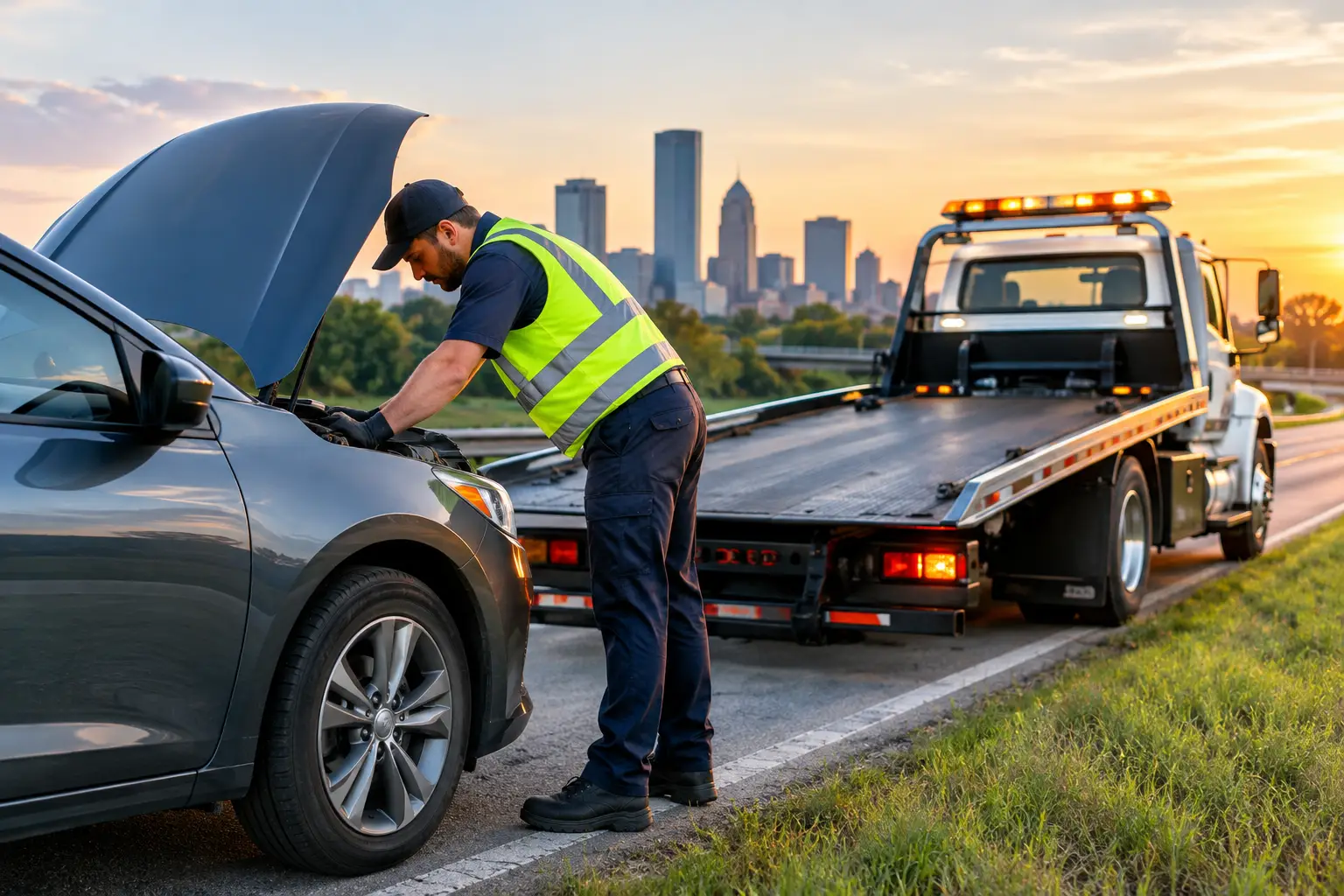
Take a quick look at the vehicle before help arrives. Note a flat tire, leaking fluid, wheel damage, a locked steering wheel, or body damage from an accident. That information helps the tow provider bring the right equipment and plan the loading process before getting on scene.
Choose the right transport method for the vehicle
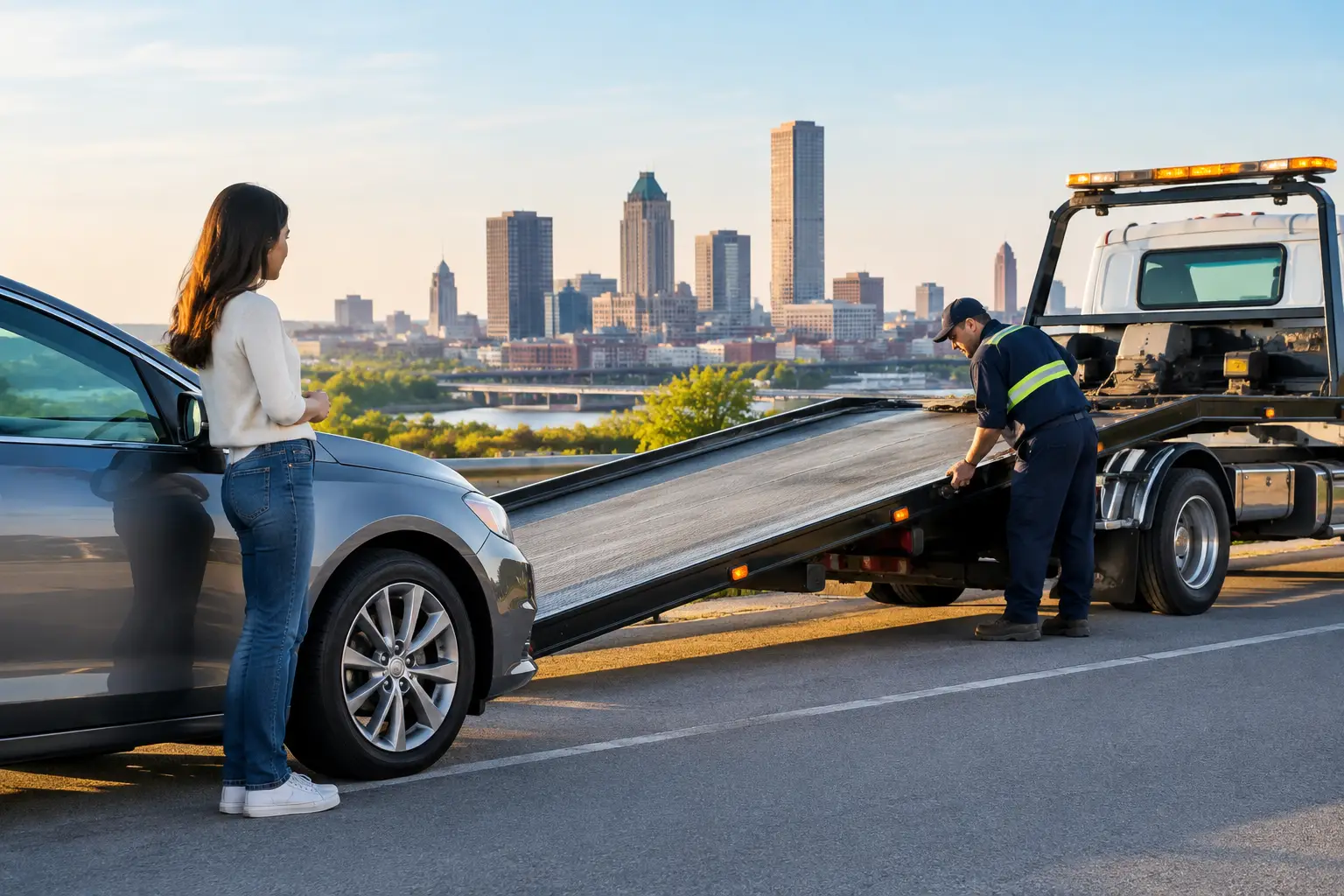
Not every tow should be handled the same way. The safest option depends on the vehicle, where it is sitting, what is damaged, and where it needs to go. For many cars, trucks, SUVs, and electric vehicles, a flatbed is the right choice because all four wheels are carried off the ground.
Flatbed towing reduces unnecessary wear on the drivetrain and avoids rolling a damaged vehicle down the road. It is particularly useful after an accident, when a wheel is damaged, when the car will not shift properly, or when there is concern about steering or suspension damage. It also gives the operator better control when transporting a low-clearance vehicle that could scrape during a rushed load.
A short distance does not automatically make a shortcut safe. Even a trip across Tulsa to a nearby repair shop can create damage if the vehicle is pulled incorrectly. Front-wheel drive, rear-wheel drive, all-wheel drive, four-wheel drive, and EVs all have different considerations. When there is any question, carrying the vehicle on a flatbed is usually the safer call.
Electric vehicles need extra attention
Tesla and other electric vehicles are not vehicles to tow by guesswork. Many EVs have specific transport instructions, designated tow points, and requirements for keeping the drive wheels off the ground. Improper handling can create expensive problems with the drivetrain, battery system, underbody, or suspension.
Tell the dispatcher that the vehicle is electric when you call. Also mention whether it is parked in a garage, whether the tires are flat, whether it can be placed in tow mode, and whether it has been in an accident. Those details affect how the vehicle can be loaded safely.
What to tell the tow operator before loading
Clear information saves time and helps prevent mistakes. You do not need to know every mechanical detail, but you should explain the problem as clearly as possible. If the car overheated, lost a wheel, was involved in a collision, has a dead battery, will not go into neutral, or is stuck in park, say so upfront.
The pickup location matters just as much. A vehicle in a wide parking lot is different from one in a tight apartment complex, underground garage, narrow driveway, or shoulder beside Highway 169. Let the operator know about low clearance, gated access, steep inclines, sharp turns, or obstacles around the vehicle.
It also helps to provide the exact destination. Confirm the repair shop, dealership, body shop, or home address before loading begins. If it is going to a shop after hours, ask where the vehicle should be left and whether there are key-drop instructions. A careful tow can still turn into a headache if the vehicle is delivered to the wrong entrance or left where it blocks a service lane.
Check the vehicle before it goes on the bed
A professional operator should inspect the situation before starting the pull. That includes looking at wheel condition, ride height, the vehicle’s position, and visible accident damage. The plan may need to change if a wheel is folded under, a bumper is loose, the tires are flat, or the car is sitting too low to load with a standard approach.
For low-clearance cars, the loading angle is a real concern. Extra ramps, boards, or the right bed position may be needed to avoid scraping the bumper, splitter, exhaust, or underside. Taking a few extra minutes here is better than dragging a vehicle onto equipment because someone is in a hurry.
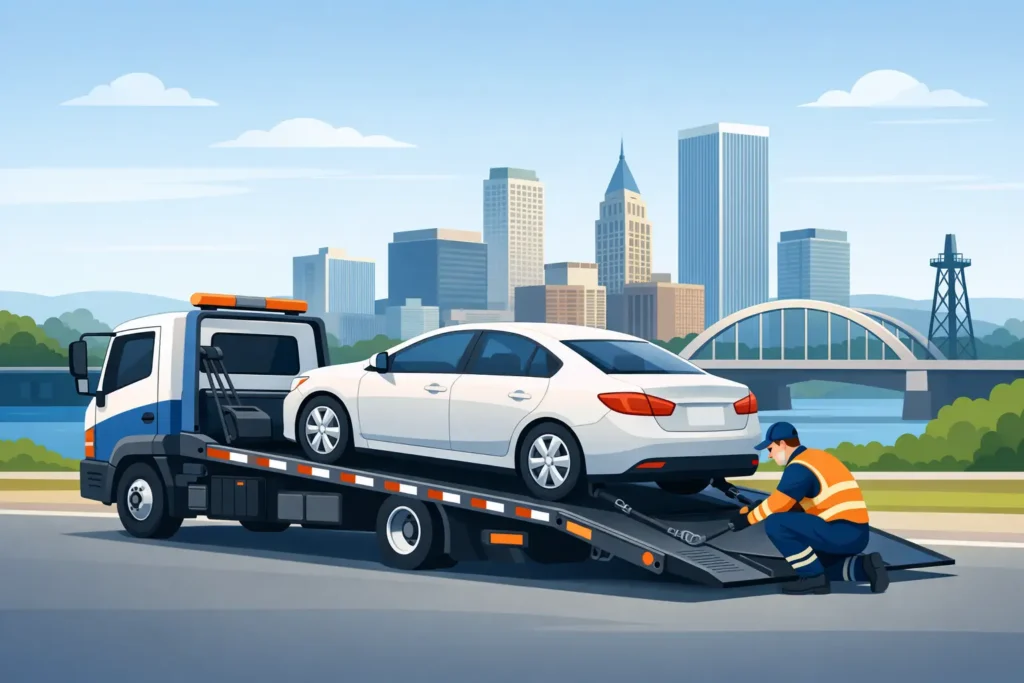
The vehicle should be secured using proper tie-down points and wheel straps. The goal is to keep it stable without putting unnecessary strain on parts that were never meant to carry towing force. Improvised connections to suspension pieces, bumpers, or fragile underbody components can create damage that was not there before the tow.
If your vehicle has been in an accident, take photos before it is loaded when it is safe to do so. Photos document the condition of the vehicle and can be useful for insurance or repair conversations later. Remove personal items you need, keep the keys accessible, and make sure the operator has the right contact number if a question comes up at delivery.
Avoid the common mistakes that create more damage
The first mistake is trying to drive a vehicle that is clearly not safe to drive. A warning light alone does not always mean you need a tow, but overheating, severe vibration, smoke, major fluid loss, steering problems, collision damage, or a wheel issue are different. Continuing to drive can turn a repairable problem into a bigger one.
The second mistake is accepting a tow method without explaining what is wrong with the vehicle. If the transmission will not shift, the wheels are locked, or the vehicle is all-wheel drive, that changes how it should be moved. Give the full picture before the truck arrives, not after the equipment is already positioned.
The third is assuming every destination is easy to access. Some repair shops have limited after-hours space. Some apartment garages cannot fit a standard tow truck. Some residential streets are too tight for a simple turnaround. Clear communication ahead of time lets the operator prepare instead of improvising in a crowded space.
Finally, do not treat the vehicle handoff as an afterthought. Confirm the destination, ask how the vehicle will be positioned, and make sure the keys are handled properly. If a family member, repair shop, or dealership is receiving the vehicle, give them a heads-up so they know it is coming.
A practical guide to safe vehicle transport after an accident
Accident towing needs more caution because damage is not always obvious. A vehicle may look drivable but have a bent suspension component, compromised steering, a leaking radiator, a damaged wheel, or a loose panel that could come off at speed. In those situations, flatbed transport is often the sensible choice.
Do not attempt to straighten parts, force a wheel forward, or pull a vehicle off another vehicle without assessing the situation. If it is stuck in mud, a ditch, or against a curb, a controlled winch-out may be needed before it can be loaded. Pulling from the wrong point can damage body panels, suspension, or the frame area.
For drivers in Tulsa, Jenks, Bixby, and Broken Arrow, local route knowledge also helps. Getting a disabled vehicle off a crowded corridor and onto a flatbed is only part of the job. The operator also needs to select a safe way to reach the destination without adding unnecessary delays or exposing a damaged vehicle to more road risk.
Know when roadside help is enough
Not every call requires transport. A jumpstart, flat tire change, lockout service, or minor roadside issue may get you moving again safely. But if the battery will not hold a charge, the tire sidewall is damaged, the vehicle overheats again, or the engine will not run normally, towing is often the better decision.
There is a trade-off. Roadside help may save time when the issue is simple and the vehicle is safe to operate. Transport makes more sense when the cause is unknown or driving could create more damage. A good decision is based on the condition of the vehicle, not just whether it starts.
When you need a tow, slow down long enough to give accurate details, choose damage-conscious transport, and confirm the destination. That small amount of preparation helps make a difficult roadside situation simpler and gets your vehicle where it needs to go without creating a second problem.