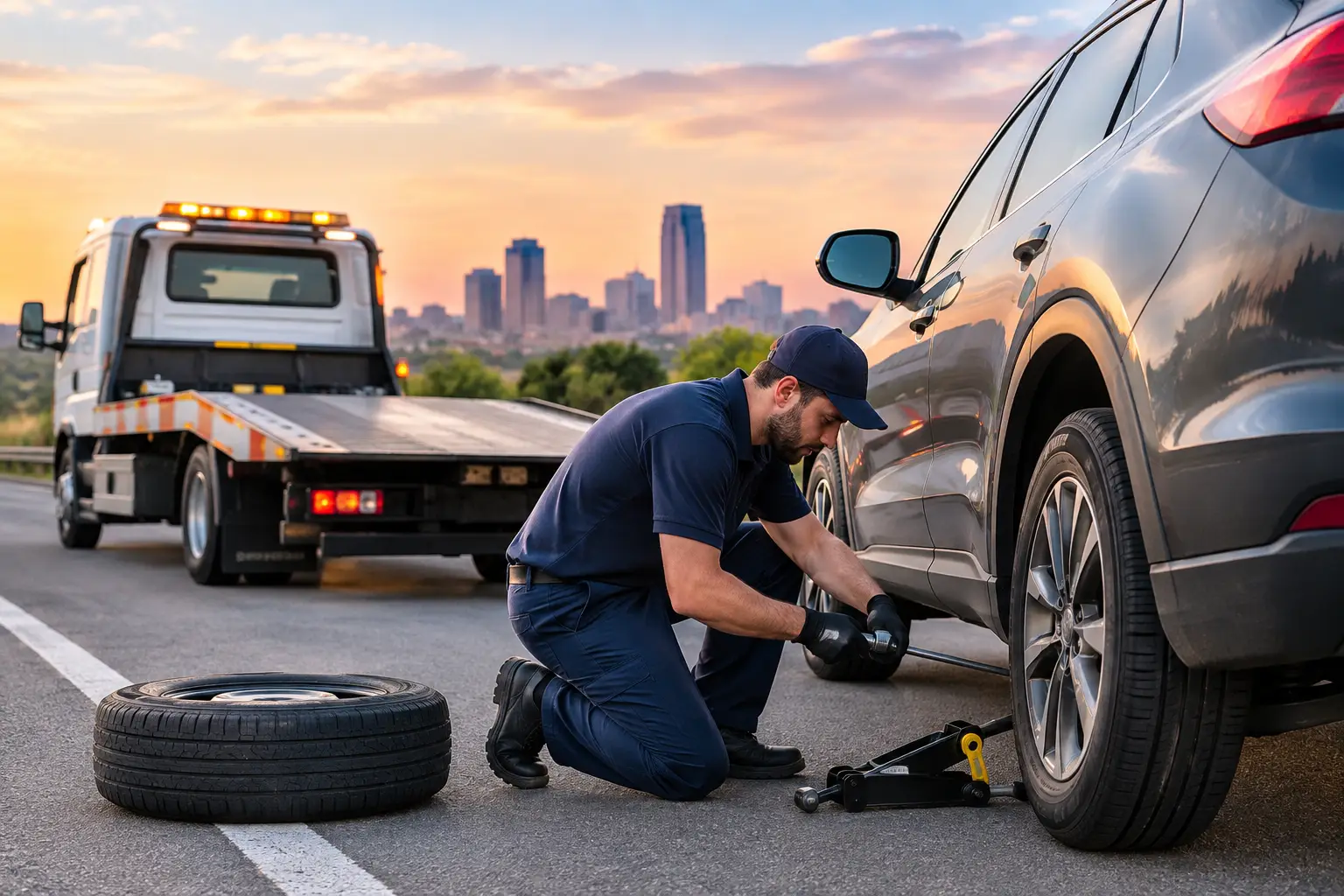
When your car is stuck on the shoulder, sitting dead in a parking lot, or blocking a driveway, the first question is usually simple: how long does a tow take? The honest answer is that some tows are done fast, while others take longer because the job starts before the truck ever hooks up to the vehicle. Dispatch time, location, traffic, vehicle condition, and safe loading all matter.
How long does a tow take from call to drop-off?
Most towing jobs have three parts: getting a truck to you, loading the vehicle safely, and transporting it to the destination. People often think only about the drive itself, but a good tow includes careful setup and secure loading. That is especially true for low-clearance cars, trucks, all-wheel-drive vehicles, and EVs.
In a straightforward local tow, the full job can often take anywhere from 30 minutes to over an hour. If the truck is already nearby, your vehicle is easy to access, and the destination is close, it can move quickly. If you are on a busy stretch of highway, stuck in a tight garage, or dealing with rush-hour traffic, the timeline can stretch.
That is why a real answer is usually based on your exact situation, not a canned estimate. A company that knows the area and asks the right questions can usually give you a much better idea of timing before the truck arrives.
What affects how long does a tow take?
The biggest factor is response time. If the nearest available truck is already finishing a job across town, your wait will be longer than if a truck is close by. Traffic conditions also matter. A tow truck moving through Midtown at a quiet hour is dealing with a different situation than one trying to reach a breakdown on I-44 or US 75 during heavy traffic.
Vehicle access is another big piece of the timeline. A car parked in an open lot is usually faster to load than one wedged against a curb, stuck in mud, or trapped in a parking garage with limited room to work. If the wheels are locked, the steering is damaged, or the car will not roll, extra setup is needed to move it safely without causing damage.
Then there is the type of vehicle itself. A standard sedan with no damage is one thing. A heavy-duty pickup, an accident-damaged SUV, or an electric vehicle may require more care, different loading angles, or special handling. That extra time is not a delay for the sake of it. It is part of doing the tow correctly.
Dispatch and travel time
The first part of the job is simply getting the truck to your location. In-city response can be quick, but no towing company controls traffic lights, construction, accidents, or lane closures. A truck may be close in miles and still take longer than expected if the route is tied up.
Clear information helps here. If the driver knows exactly where you are, what lane or lot you are in, and whether the vehicle is drivable, they can plan the right approach. That cuts down wasted time and avoids sending the wrong equipment.
Loading time on scene
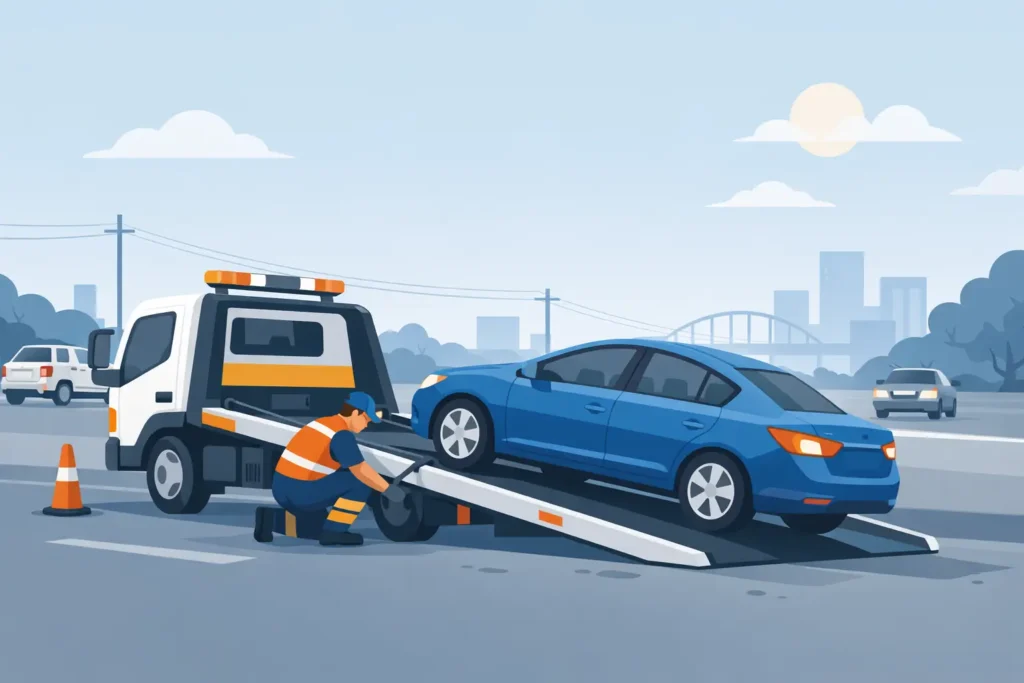
Loading is where experience shows. On a routine call, loading may only take several minutes once the truck is in position. On a more complicated tow, it can take longer because the operator needs to line up properly, secure the vehicle, check clearances, and make sure everything is stable before transport.
This is also where rushed work causes problems. A fast hook-up is not always a good hook-up. If a vehicle sits low, has wheel damage, or cannot be shifted into neutral, it needs to be handled carefully. Taking a few extra minutes at this stage is better than dealing with underbody damage, bumper damage, or drivetrain issues later.
Distance to the destination
After loading comes transport time. A short tow to a nearby repair shop is obviously faster than taking the vehicle across town. That part sounds simple, but city driving can still add time based on the route, traffic flow, and whether the drop-off location is easy to access.
If the destination is a dealership, shop, home, or private lot with a narrow entrance, unloading may take a little longer too. The tow is not done until the vehicle is placed safely where it needs to be.
Typical tow timelines in real situations
A basic breakdown tow is often the quickest kind of job. If the car is in a standard parking lot, rolls normally, and only needs to go a short distance, the process is usually straightforward. In that case, most of the total time may come from dispatch and driving to you rather than the actual loading.
Highway calls can take longer. The truck still has to reach you safely, position around traffic, and load in a way that protects both the vehicle and the scene. On a busy road, the operator may need to wait for the right moment to work safely instead of rushing into traffic.
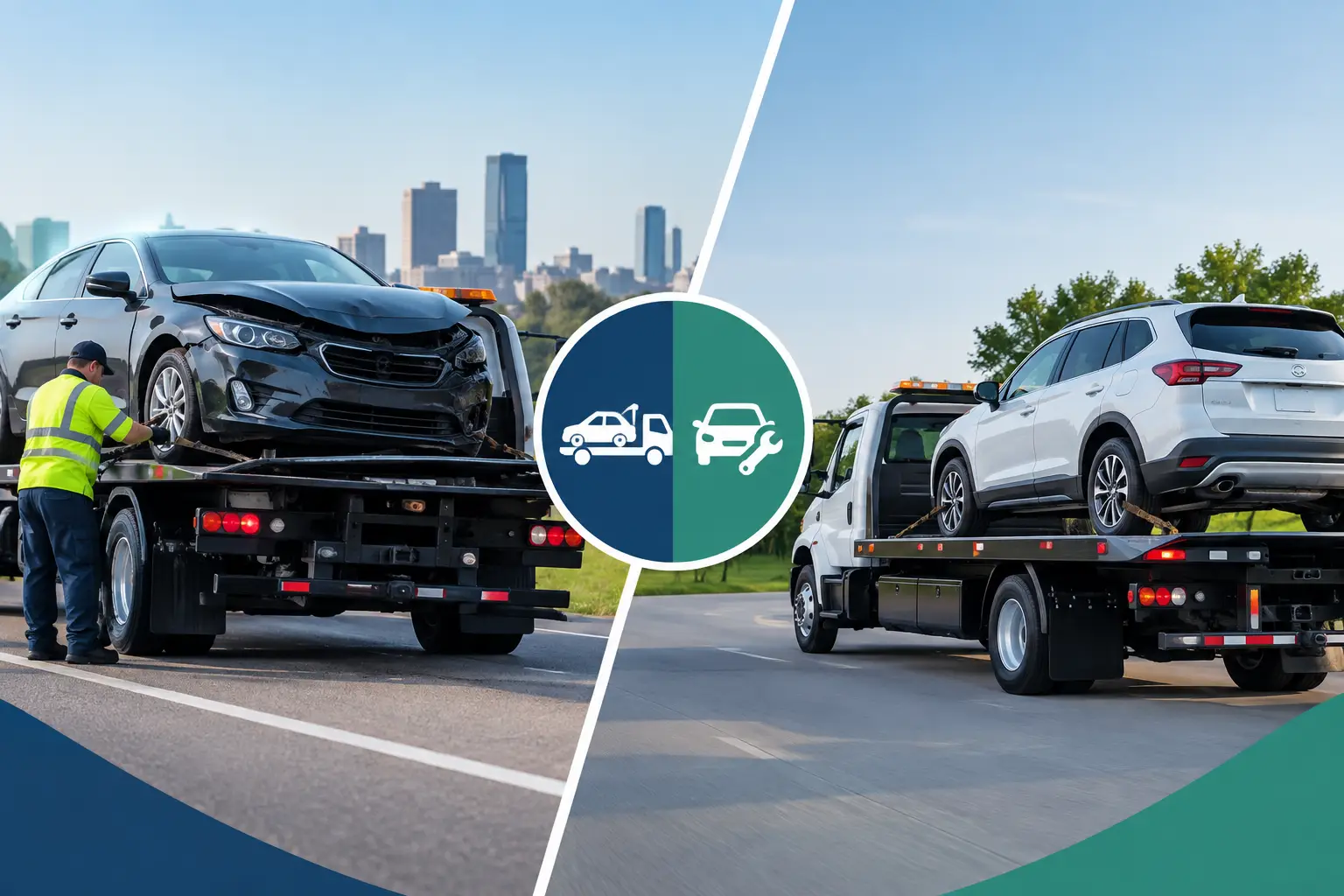
Accident tows often take more time than people expect. Even when the vehicle looks like it can move, damaged suspension, broken steering parts, or locked wheels can slow down the process. A car that has been hit may need extra care to avoid dragging damaged parts or causing more problems during loading.
Winch-out and stuck vehicle calls are different again. If a vehicle is off pavement, in mud, or angled awkwardly, recovering it is usually the longest part of the job. The tow itself may be short after that, but getting the vehicle back into a safe loading position takes time.
Why careful towing can take a little longer
A lot of drivers asking how long does a tow take really mean something else: is this going to drag on for hours? Usually, the answer is no. But a careful tow is not the same as a rushed tow.
Flatbed towing, for example, often takes a bit more setup than quick hook methods, but it is the right choice for many vehicles because it keeps the car fully off the road during transport. That matters for low-clearance cars, all-wheel-drive vehicles, trucks, and EVs. Taking the time to load the vehicle properly is part of keeping it damage-free.
That trade-off is worth understanding. A few extra minutes spent using the right angles, ramps, and securement points can save you from body damage or mechanical issues. Most drivers would rather the tow be done right than done sloppy.
What you can do to speed things up
You do not need to know towing equipment to help the process move faster. The most useful thing you can do is give clear information when you call. Share your exact location, the type of vehicle, whether it starts or rolls, and where you want it taken.
If the vehicle is in a spot with limited access, mention that too. Tight apartment lots, parking garages, busy intersections, and shoulder breakdowns all change how the job is approached. If you can safely send a landmark or explain which entrance to use, that saves time.
It also helps to remove confusion about the destination before the truck arrives. If you already know whether the vehicle is going to a repair shop, home, or dealership, the operator can plan the route and finish the job more efficiently.
When a tow takes longer than expected
Sometimes the timeline changes after the truck gets there. That is not always a sign of bad service. It often means the operator found something that was not obvious on the phone, such as locked wheels, collision damage, poor access, or a vehicle that needs specialized handling.
Weather can also slow things down. Rain, ice, and poor visibility change how quickly a tow truck can travel and how safely a vehicle can be loaded. In a place like Tulsa, storm days often bring heavier call volume too, which affects availability across the city.
The good sign is communication. If a company tells you what is happening, gives you a realistic ETA, and explains why the job may take a little longer, that usually means the process is being handled properly.
The real answer drivers need
If you are stuck and wondering how long does a tow take, the most accurate answer is this: a simple local tow can be fairly quick, but every job depends on access, traffic, vehicle condition, and how carefully the vehicle needs to be loaded. The fastest-looking tow is not always the safest one.
For drivers in Tulsa and nearby areas, local route knowledge and the right equipment make a real difference. Tulsa Towing, powered by Neptune Towing, handles local towing with a straightforward approach – clear communication, proper flatbed service, and careful loading based on the vehicle in front of us, not guesswork.
If you ever need a tow, the best thing to look for is not just speed on paper. It is a company that can reach you, tell you what to expect, and move your vehicle safely without adding more problems to a bad day.