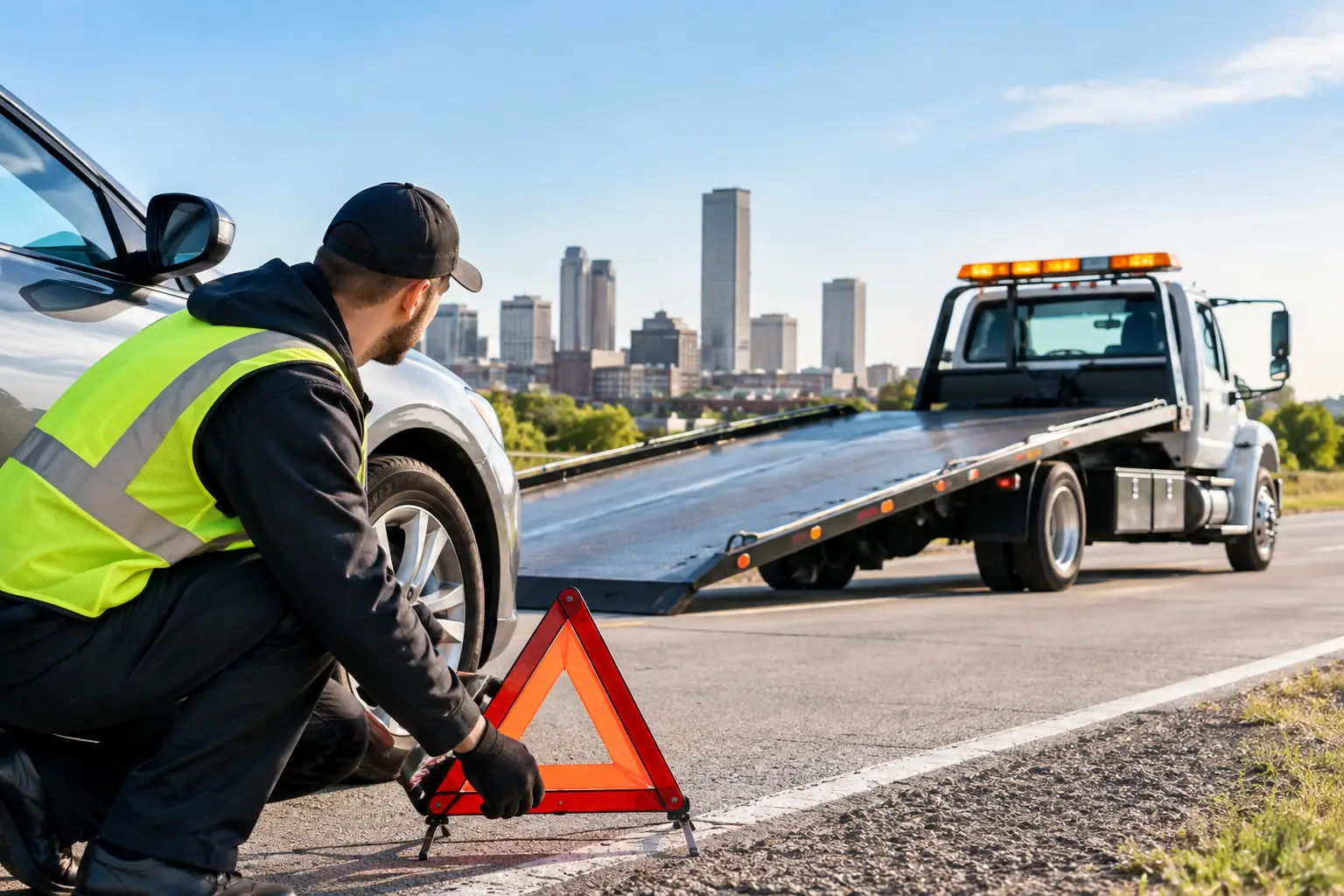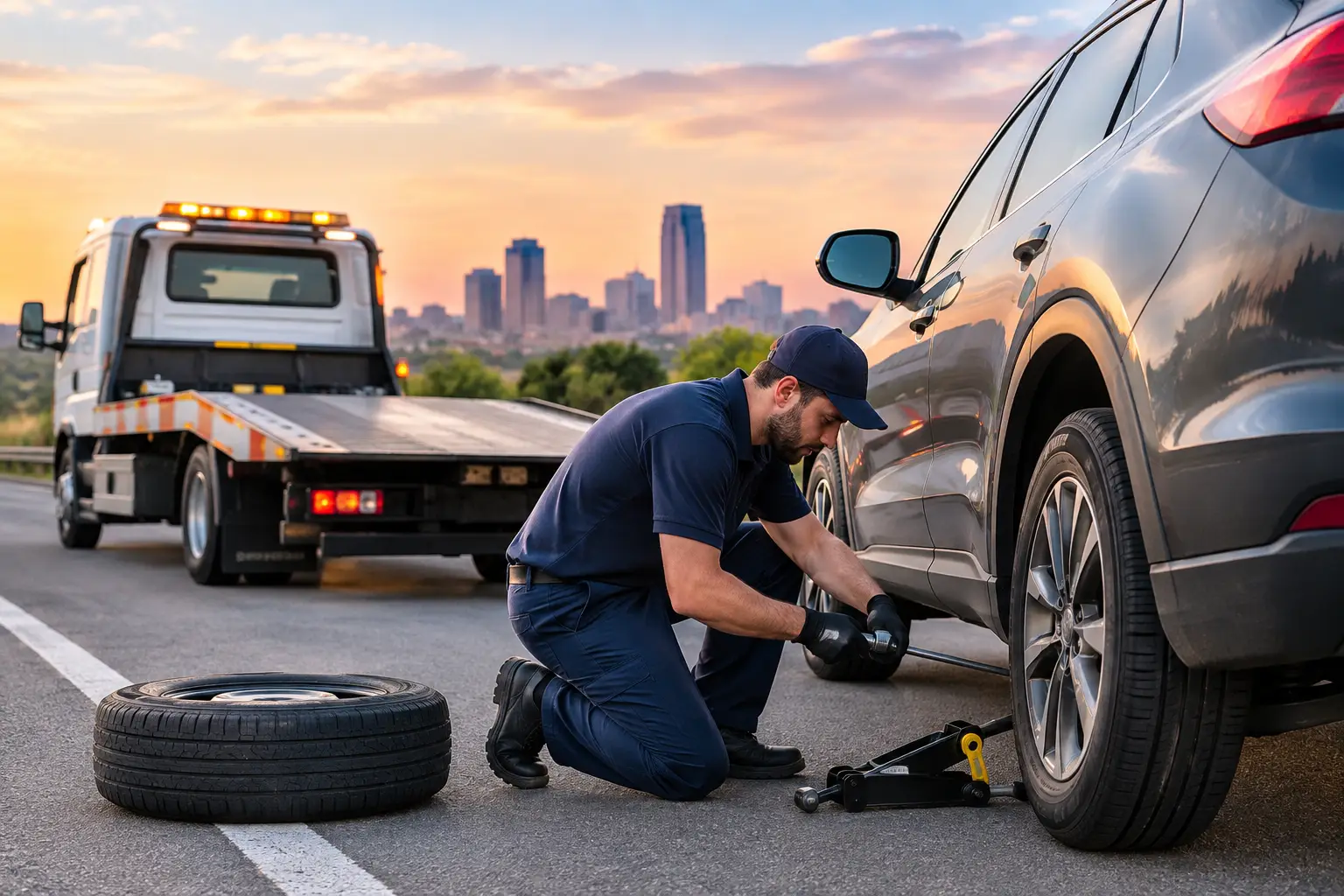
A breakdown on I-44, a no-start in a Midtown parking lot, or a vehicle that will not move in South Tulsa can put you in a hurry. Knowing how to prepare for car towing before the truck arrives helps keep you safe, gives the driver what they need, and prevents delays when it is time to load your vehicle.
The goal is not to fix the problem on the shoulder. It is to get yourself out of danger, make the vehicle accessible, and communicate clearly so the tow can be handled the right way. A few practical steps make a real difference, especially around busy Tulsa traffic corridors like US 75, Memorial Drive, and Highway 169.
Start With Your Safety, Not the Vehicle
If the vehicle is disabled in traffic or on a highway shoulder, get as far from moving traffic as conditions allow. Turn on your hazard lights. If the car can be moved safely, pull into a parking lot, side street, or wider shoulder rather than stopping where a tow truck has little room to work.
On a busy roadway, do not stand between your vehicle and traffic. Stay on the side away from passing cars when possible, and move to a protected location if the situation feels unsafe. At night, use the interior light only if it helps you gather what you need, since bright cabin lights can reduce your view outside the vehicle.
If the vehicle was involved in an accident, has leaking fluids, smoke, deployed airbags, or damage near the wheels, do not try to drive it farther just to find a better spot. Tell the towing dispatcher what you see. A vehicle that looks drivable can still have suspension, steering, or underbody damage that makes moving it unsafe.
Give Clear Details When You Request a Tow
A tow driver can arrive better prepared when they know what they are coming to handle. The vehicle type, exact location, condition, and destination all affect equipment setup and loading time.
Be ready to provide the make, model, year, color, and plate number if available. Mention whether the vehicle is a car, SUV, pickup, electric vehicle, or low-clearance vehicle. A Tesla or other EV needs careful handling, including the right loading approach and attention to its towing instructions. A heavy-duty pickup, vehicle with oversized tires, or car sitting unusually low may also require extra planning.
Your location should be as specific as possible. “Near Riverside” can cover a lot of ground. A better description is the closest cross street, direction of travel, exit number, business name, parking-lot section, or a recognizable landmark. If you are on I-44 or US 75, say which direction you are traveling and where the vehicle is positioned.
Explain what happened in plain terms. Examples include: the engine will not start, the tire is flat but there is no spare, the vehicle overheated, the car is stuck in mud, or the keys are locked inside. Also say whether the wheels turn, the vehicle can be shifted into neutral, and whether it is parked in a garage or tight space. Those details help determine whether roadside assistance is enough or whether a flatbed tow is the safer answer.
Prepare Your Car for Towing Without Creating More Problems
Once help is on the way, gather personal items you will need before the car is loaded. Take your wallet, medications, work equipment, garage opener, house keys, and anything valuable that should not remain in the vehicle. Check the trunk, center console, door pockets, and child-seat area. It is much easier to do this while the car is still on the ground than after it is secured on a flatbed.
Keep the keys available for the tow driver. Even when a vehicle will not start, the driver may need the key or key fob to unlock the steering wheel, access neutral, release the parking brake, or safely position the vehicle. For push-button vehicles, bring the fob with you instead of leaving it in a bag inside the car.
If the vehicle will go into neutral and it is safe to do so, you can let the driver know. Do not force the shifter or repeatedly try to start a damaged vehicle. Modern vehicles often have electronic shift locks, electronic parking brakes, or safety systems that need to be handled carefully. Let the towing professional assess the setup rather than risking damage to the transmission or drivetrain.
Remove loose items from the roof, cargo tray, or exterior if they could blow off during transport. Fold in mirrors when they are not damaged and doing so is safe. If a wheel is flat, a bumper is hanging, or a part is dragging underneath, point it out before loading. The driver needs to see existing damage and decide how to protect the vehicle during the tow.
Make the Vehicle Easy to Reach
Tow trucks need room to position, winch, and load safely. If your car is in a driveway, apartment lot, garage, or shopping center, move yourself and other vehicles out of the loading path if possible. Do not block the front or rear of the disabled vehicle with another car.
Tight locations are common around Downtown Tulsa garages, older Midtown streets, and crowded apartment complexes in East Tulsa. Tell the dispatcher ahead of time if there is a low overhead clearance, narrow entrance, steep driveway, locked gate, or parking garage involved. That information can prevent a truck from arriving with an access issue that could have been avoided.
If the vehicle is stuck in snow, mud, a ditch, or soft ground, do not keep spinning the tires. Spinning can bury the vehicle farther, damage the tire, or create a deeper recovery problem. Let the towing provider know whether the vehicle is on pavement, grass, gravel, mud, or an incline. A winch-out may be needed before the vehicle can be transported.
Know Where the Vehicle Is Going
Decide on the destination before the truck arrives whenever you can. That may be your home, a trusted repair shop, a dealership, or a tire shop. Confirm the shop address, its hours, and whether it accepts after-hours drop-offs. Showing up at a closed facility with a locked gate can leave you making another decision under pressure.
If you are not sure where to take the vehicle, consider the problem. A simple dead battery may be handled on site with a jumpstart. A flat tire may only require tire service if a safe spare is available. Overheating, warning lights, collision damage, drivetrain problems, and repeated no-start issues usually make a repair shop the better destination.
For EVs, choose a destination that can diagnose the issue, not just a location with a charger. A low battery is different from a warning message, collision damage, or a vehicle that will not shift. Be clear about the vehicle’s condition so it can be transported correctly.
Take a Quick Look Before Loading
A short walk-around helps everyone. If you can safely do it, take a few photos of the vehicle before it is loaded, especially if there is collision damage, a flat tire, body damage, or an aftermarket front lip. Photos are not about expecting trouble. They help document the condition of a vehicle that may already be damaged or sitting in a difficult position.
Point out anything unusual to the driver: a broken wheel, loose bumper, locked steering wheel, lowered suspension, all-wheel drive, or a parking brake that will not release. This is also the time to mention a destination change, a shop with limited access, or a family member who needs to retrieve items from the vehicle.
A careful tow starts with a clear handoff. Tulsa Towing uses proper flatbed equipment because getting the vehicle fully supported is often the safest choice, particularly for low-clearance cars, all-wheel-drive vehicles, trucks, and EVs.
What Not to Do While You Wait
Do not attach a rope, chain, or strap to a random point under the vehicle and ask another driver to pull it. Modern cars have plastic panels, sensors, undertrays, and mounting points that can be damaged quickly. A bad pull can turn a straightforward tow into a more expensive repair.
Avoid sitting in the vehicle while it is being loaded unless the tow operator specifically instructs you to do so. Keep children and pets well away from the loading area. Flatbed loading involves moving equipment, winch lines, and a vehicle that may shift as it is secured.
Also, do not assume every vehicle can be towed with the drive wheels on the ground. All-wheel-drive vehicles, EVs, and many automatic transmissions need a specific method of transport. When in doubt, stop trying to move it and give the driver accurate information.
The calmest thing you can do during a towing situation is make the vehicle safe, keep the keys and essentials with you, and give clear details about where you are and what the car is doing. Once the truck arrives, let the loading process be handled carefully. That is how a bad roadside moment stays limited to one problem instead of becoming several.