A dead battery in a grocery store lot is frustrating. A vehicle stalled on I-44, US 75, or a busy stretch of Memorial is a safety problem first. Knowing how to request emergency towing before you are stuck helps you give the dispatcher the right information, protect yourself near traffic, and get the right truck sent for your vehicle.
The goal is simple: get yourself to a safe place, explain the situation clearly, and make sure your vehicle is handled with the proper equipment. You do not need to diagnose every mechanical issue. You do need to describe what happened and where the vehicle is sitting.
Start With Safety Before You Call
If your vehicle is in a travel lane, on a highway shoulder, near a blind curve, or in any place where traffic is moving close to you, focus on getting safe before worrying about the tow. Turn on your hazard lights. If the vehicle can be moved without creating more danger, pull as far from traffic as possible.
If there has been a collision, anyone is injured, there is smoke, fuel leaking, or the vehicle is creating an immediate road hazard, call 911 first. Emergency responders may need to secure the scene before a tow truck can safely load the vehicle.
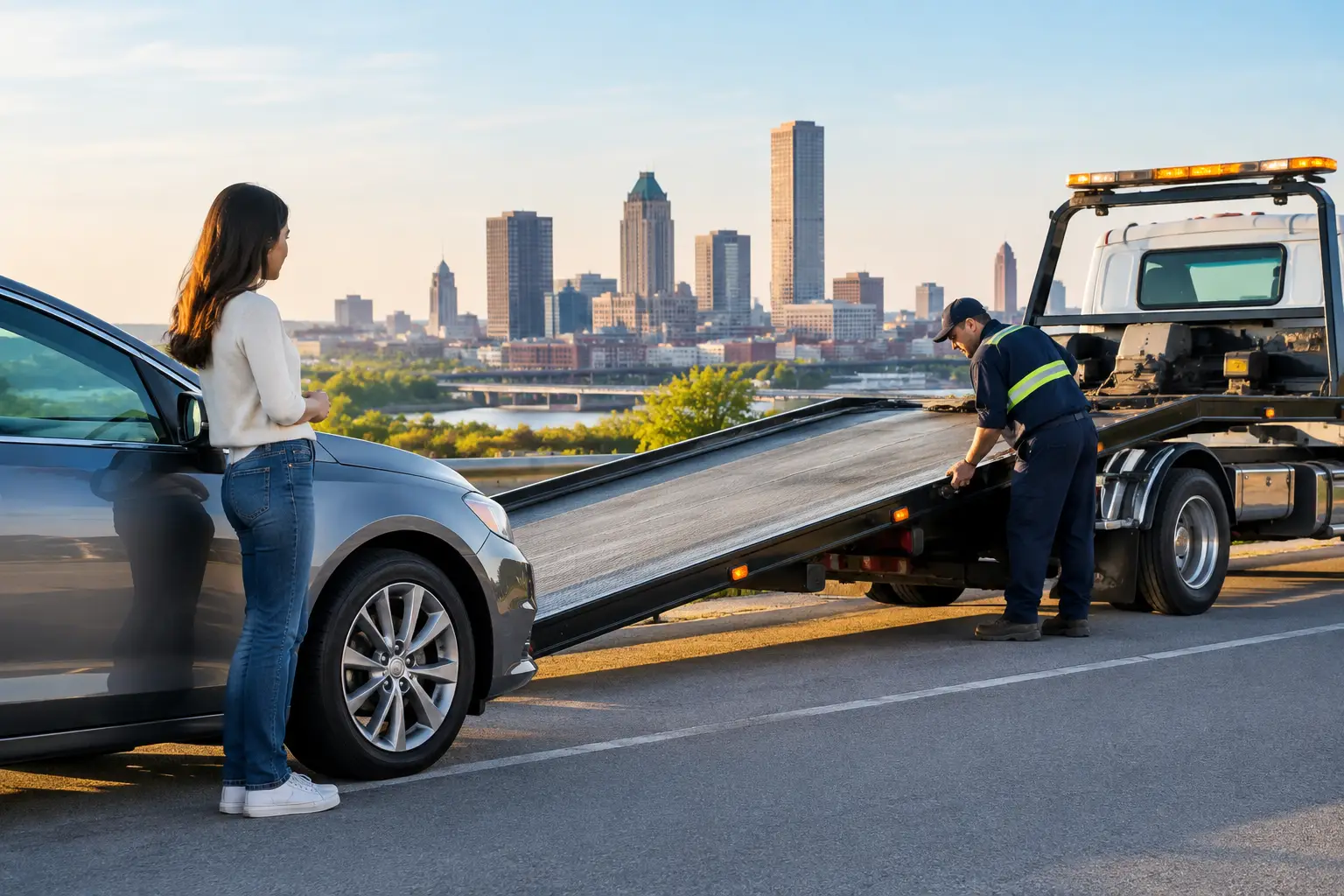
On a busy Tulsa roadway, stay aware of traffic. If you can safely exit the vehicle and move behind a guardrail or well away from moving cars, do so. Do not stand between your vehicle and traffic. If you are in a safer place, such as a parking lot, driveway, or residential street, remain nearby and keep your phone available so the driver can reach you.
How to Request Emergency Towing Clearly
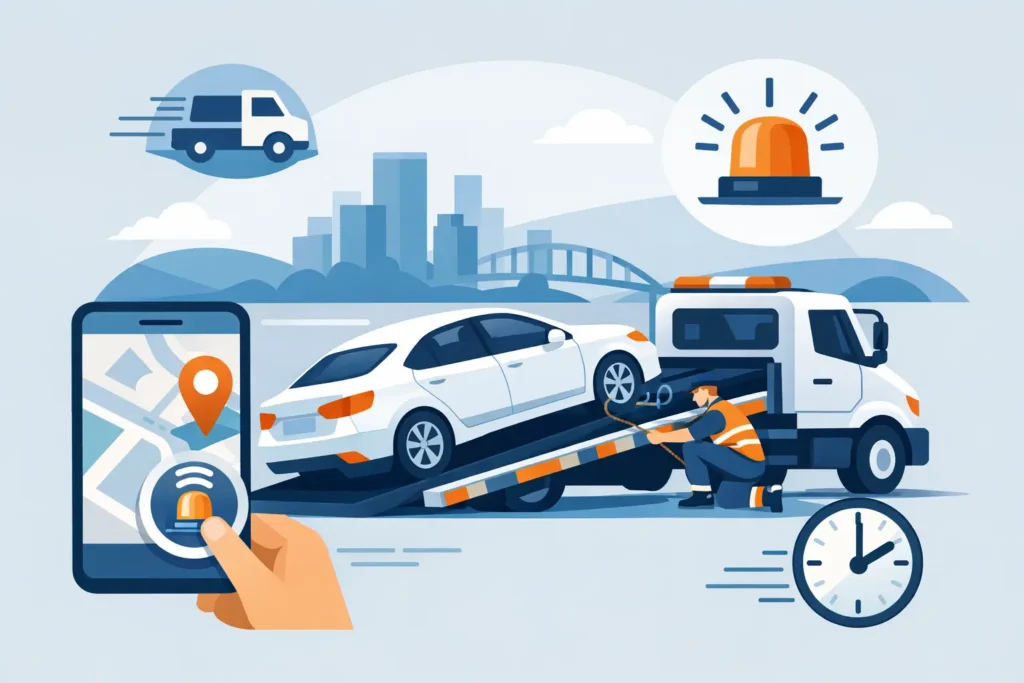
When you call for emergency towing, lead with your location and whether the vehicle is in a safe spot. A dispatcher cannot send the right help quickly without knowing where to find you. Saying “I am near Riverside” is a start, but a cross street, business name, highway direction, mile marker, or map pin description is much more useful.
Then explain the basic reason you need help. Your vehicle may have broken down, been involved in an accident, lost a tire, overheated, or simply refused to start. That information helps determine whether roadside assistance may solve the issue or whether a flatbed tow is the safer choice.
Be ready to provide these details during the call:
- Your exact location, including the nearest cross street, landmark, highway direction, or parking lot entrance.
- The vehicle year, make, model, color, and whether it is a car, truck, SUV, EV, or specialty vehicle.
- The vehicle condition, such as whether it rolls, is in park, has a locked wheel, has collision damage, or is stuck.
- Where you want it taken, whether that is your home, a repair shop, dealership, or another safe destination.
- A working callback number and any access details, such as a parking garage level or gated apartment entrance.
You do not need towing terminology to make the call. Plain language works. For example: “My Tesla will not move and is parked in a garage on the second level,” or “My pickup has a flat tire on the passenger side and I am on the shoulder heading north.” Those details tell the operator far more than simply saying the vehicle is broken down.
Tell the Tow Company What the Truck Needs to Know
The condition of the vehicle matters because not every disabled vehicle can be handled the same way. A car that rolls freely in a flat parking lot is different from a truck with a damaged front wheel, an all-wheel-drive vehicle after a collision, or an EV that will not shift into neutral.
Mention anything that affects loading. This includes a very low front bumper, a locked steering wheel, a vehicle stuck in mud, snow, or a ditch, or tires that are flat or damaged. If the vehicle is inside a parking garage, say so before the truck is dispatched. Clearance restrictions can affect which equipment can access the vehicle safely.
Electric vehicles deserve special attention. Teslas and other EVs should be transported according to the vehicle’s towing guidance, often on a flatbed. The driver needs to know if the battery is depleted, if the vehicle has collision damage, or if it cannot be placed in transport mode. Proper handling helps avoid damage to the drivetrain, body panels, and undercarriage.
The same applies to heavy-duty pickups, modified vehicles, and low-clearance cars. A rushed hookup can create damage that was not there before. Giving accurate details lets the towing company plan the load instead of guessing after arrival.
Confirm the Destination and the Basic Plan
Before the truck arrives, make sure you know where the vehicle is going. If you have a preferred repair shop, provide its name and address. If it is after hours, ask whether the shop has a designated drop-off area and whether you need to leave keys or contact information with the vehicle.
If you are unsure where to take it, a tow company can often transport the vehicle to your home or to a local repair facility you choose. The right destination depends on the problem. A vehicle with a simple no-start issue may be better at home if you have a mechanic coming later. A vehicle with overheating, steering trouble, collision damage, or an unknown mechanical failure usually belongs at a repair shop.
Ask what you should expect when the truck arrives. In many cases, the driver will confirm the vehicle, inspect its condition, explain how it will be loaded, and verify the destination before moving it. Clear communication at this stage prevents wrong-address drop-offs and avoids confusion about a vehicle that cannot be driven or rolled normally.
What to Do While You Wait
Waiting for a tow can feel longer than it is, especially after dark or near fast-moving traffic. Keep your hazards on if the vehicle has power and doing so will not drain the battery further. Keep your phone charged if possible, and watch for calls or texts from the towing driver.
If you are safely parked, gather what you need from the vehicle before it is loaded: keys, identification, insurance information, medications, work items, and valuables. Remove items from the roof rack or cargo area only if it is safe and practical. Do not try to repair the vehicle in an unsafe traffic area, crawl underneath it, or force it into gear to make loading easier.
For an accident tow, take photos of the vehicle and scene if you can do so safely. This is useful for documenting the condition of the vehicle before transport. If police are on scene, follow their instructions about where to wait and when the vehicle can be moved.
When Roadside Help May Be Enough
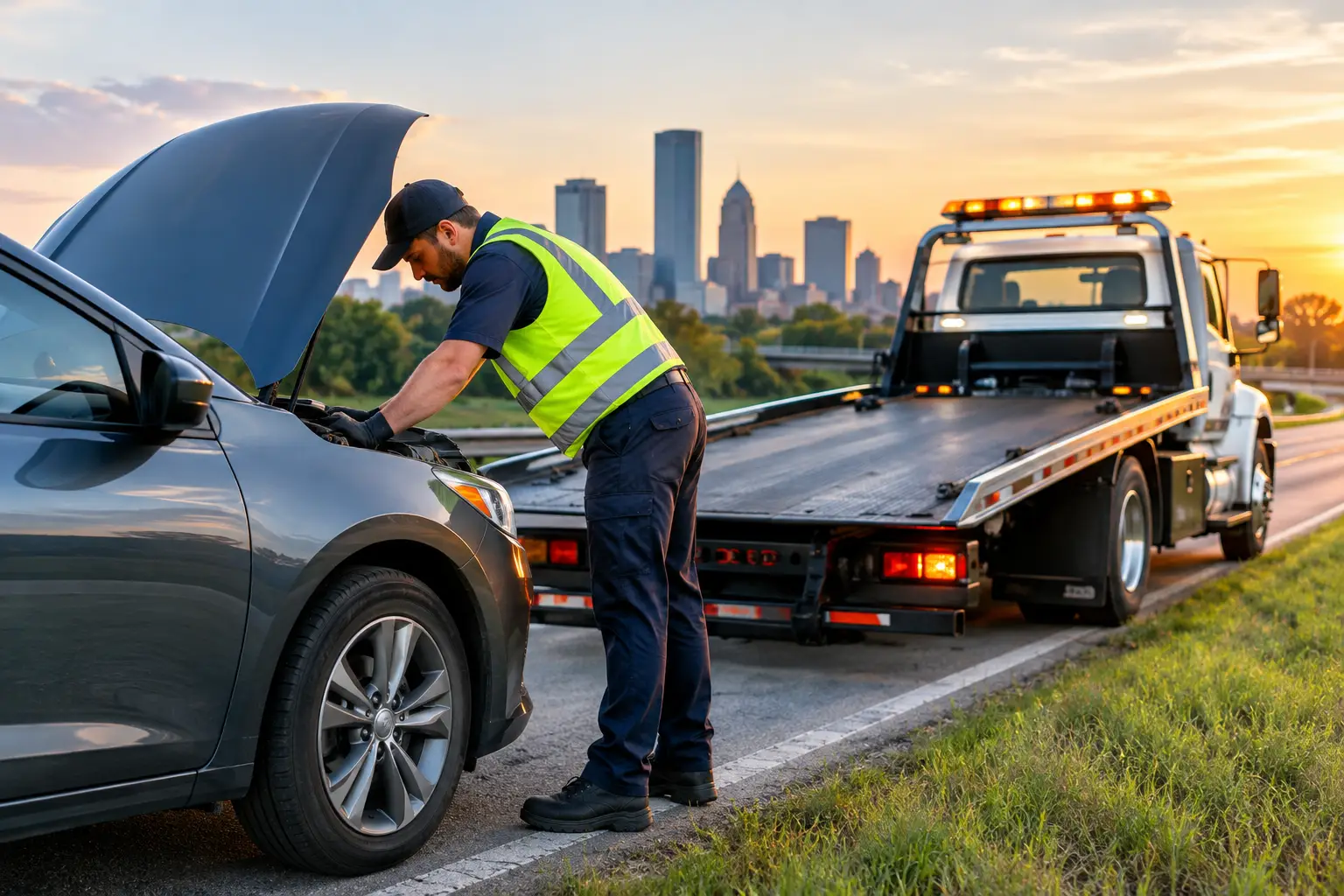
Not every emergency call requires a tow. A jumpstart may get you moving if the battery is weak, a lockout service may solve the problem if keys are inside, and a tire change may be enough when you have a usable spare. But it depends on the situation.
A jumpstart is not always the answer if the battery keeps dying, warning lights are on, or the engine will not stay running. A spare tire is not useful if multiple tires are damaged, the wheel is bent, or the vehicle is stopped in a dangerous place. When there is any doubt about whether the vehicle can be driven safely, towing is the better call.
Tulsa Towing handles both roadside situations and damage-free flatbed transport, so the problem can be assessed based on what is actually happening at the vehicle. The point is not to tow a vehicle that can be safely helped on site. It is to avoid asking a driver to take a risk with a vehicle that should not be driven.
A Better Call Makes a Safer Tow
Emergency towing is easier when you focus on the few details that matter: your exact location, the vehicle condition, any loading concerns, and the destination. From downtown traffic to a quiet driveway in Jenks, Bixby, or Broken Arrow, those details help the right equipment arrive prepared.
Take a breath, get yourself out of danger, and describe what you see rather than trying to guess what failed. A careful tow starts well before the truck reaches you – it starts with a clear call and a safe place to wait.