You are standing in a grocery store parking lot, the keys are visible on the driver’s seat, and the doors are locked. At that point, the lockout service vs spare key question is not theoretical. You need the option that gets you moving without damaging the vehicle, wasting an hour, or turning a simple lockout into a bigger problem.
A spare key can be the fastest answer when it is nearby and available. A professional lockout service is usually the better answer when the spare is miles away, the vehicle has a modern security system, or getting back inside safely matters more than saving a few minutes. The right choice depends on where you are, what you drive, and whether the key itself is the real problem.
Lockout service vs spare key: the real difference
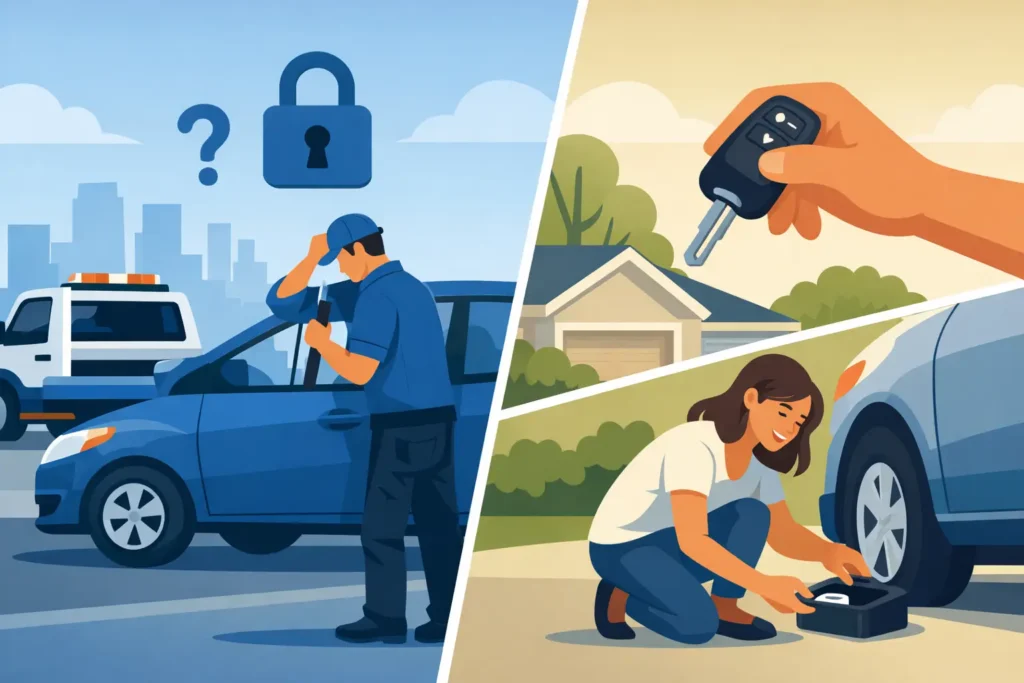
A spare key is a prevention tool. It works best before the situation gets stressful. Maybe your spouse has it at home, a family member is nearby, or you keep a properly secured extra key in a place you can access. If someone can bring it to you quickly, it may be the simplest solution.
A lockout service is an immediate roadside response. A trained operator comes to the vehicle and uses the appropriate entry methods to regain access without breaking glass, bending a door frame, or damaging weather seals. It is designed for the moments when there is no practical spare key option.
The difference comes down to time and access. A spare key only helps if you can get it faster than a roadside professional can reach you. If you are stranded along I-44, parked at Tulsa Hills after closing, or stuck at work while your spare is in Broken Arrow, waiting on the spare may not be the convenient choice.
When a spare key makes more sense
If the spare is close and someone can safely bring it, use it. This is often the low-stress choice for a lockout at home, at a relative’s house, or in a safe parking lot during the day. It also avoids having another person work on the vehicle when there is no need.
A spare is especially useful when you know the locks and remote are working normally. For example, you left the primary fob inside but have a functioning mechanical spare at home. Once it arrives, you can open the door and get on with your day.
There are limits. Do not leave a spare key in an obvious magnetic box under the vehicle or inside an unlocked console. Those hiding places are easy to find and can create a security problem. A better plan is keeping a spare with a trusted person, storing it securely at home, or using a wallet key if your vehicle manufacturer offers one.
Modern vehicles add another complication. A physical key may open the door but may not start the vehicle if it does not contain the correct transponder chip. Some smart keys also need programming before they will work. Before relying on a cheap duplicate, confirm that it can actually do what you need it to do.
When to call for lockout service
Call for lockout help when the spare key is not realistically available, you are in an unsafe spot, or you need to be back in the vehicle now. This is common in busy areas like Memorial Drive, US 75, downtown parking garages, and apartment lots where waiting around can be frustrating or unsafe.
A professional lockout is also the sensible choice when you are unsure how your vehicle opens. Trying to force your own entry can cause more trouble than the original lockout. Coat hangers, screwdrivers, wedges, and online tricks can scratch paint, tear a door seal, interfere with side-curtain airbags, or damage a lock mechanism. On newer cars, the wrong approach can also affect window tracks, sensors, and electronic door components.
The vehicle type matters. Low-clearance cars, luxury vehicles, trucks with complicated lock setups, and electric vehicles all need careful handling. Tesla and other EV owners should avoid improvised entry attempts, especially if they are not certain how the vehicle’s emergency access points work. The goal is to regain access, not create a repair bill afterward.
When you call, be ready to provide the vehicle year, make, model, exact location, and whether a child, pet, or vulnerable passenger is inside. You may also need to show proof that the vehicle belongs to you before entry is attempted. That protects the owner and keeps the service handled responsibly.
A lockout may not be the only issue
Sometimes the door is locked, but the real problem is a dead key fob battery, a failed vehicle battery, a damaged key, or a malfunctioning door lock. Getting inside may solve the immediate problem, but it may not get the vehicle running.
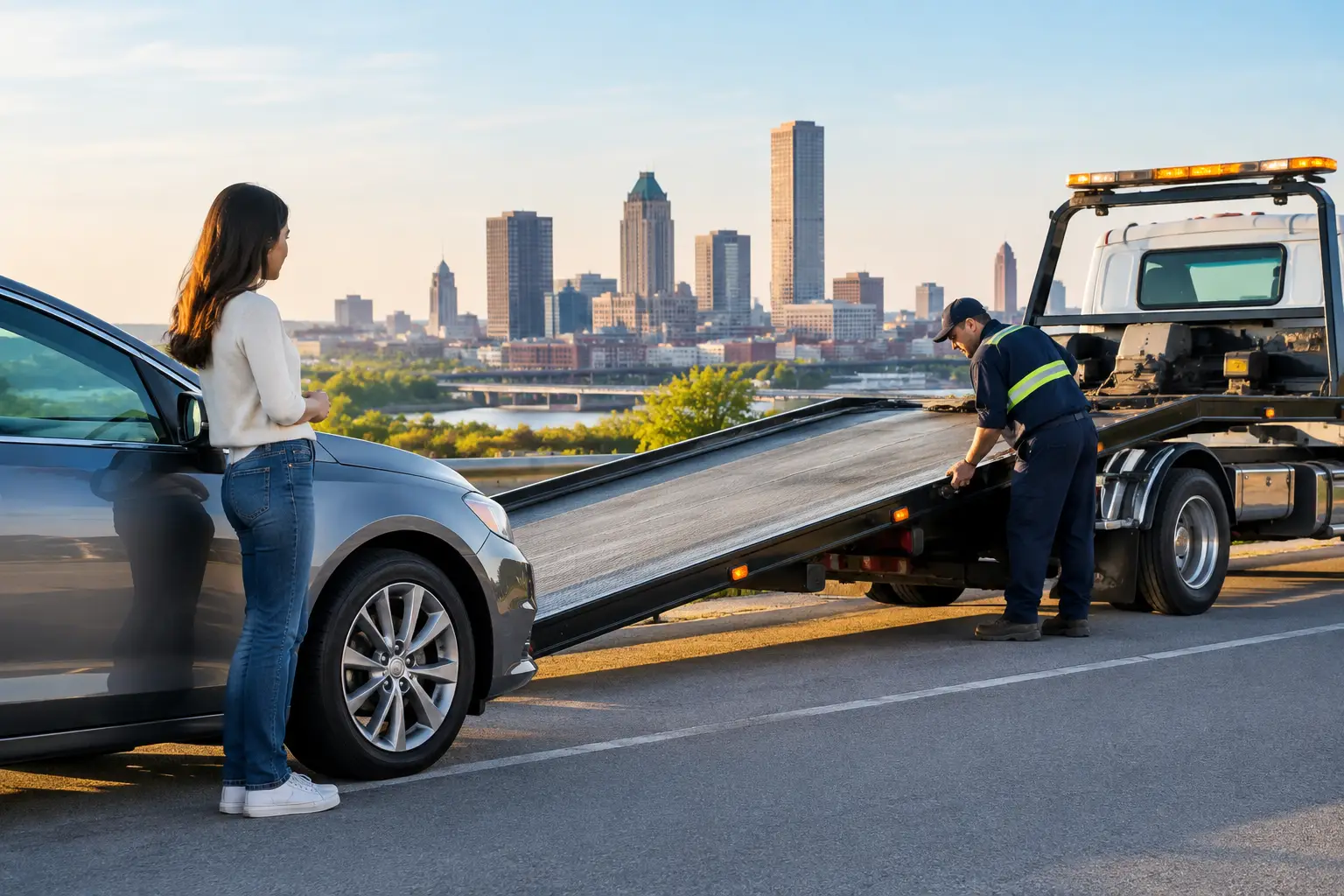
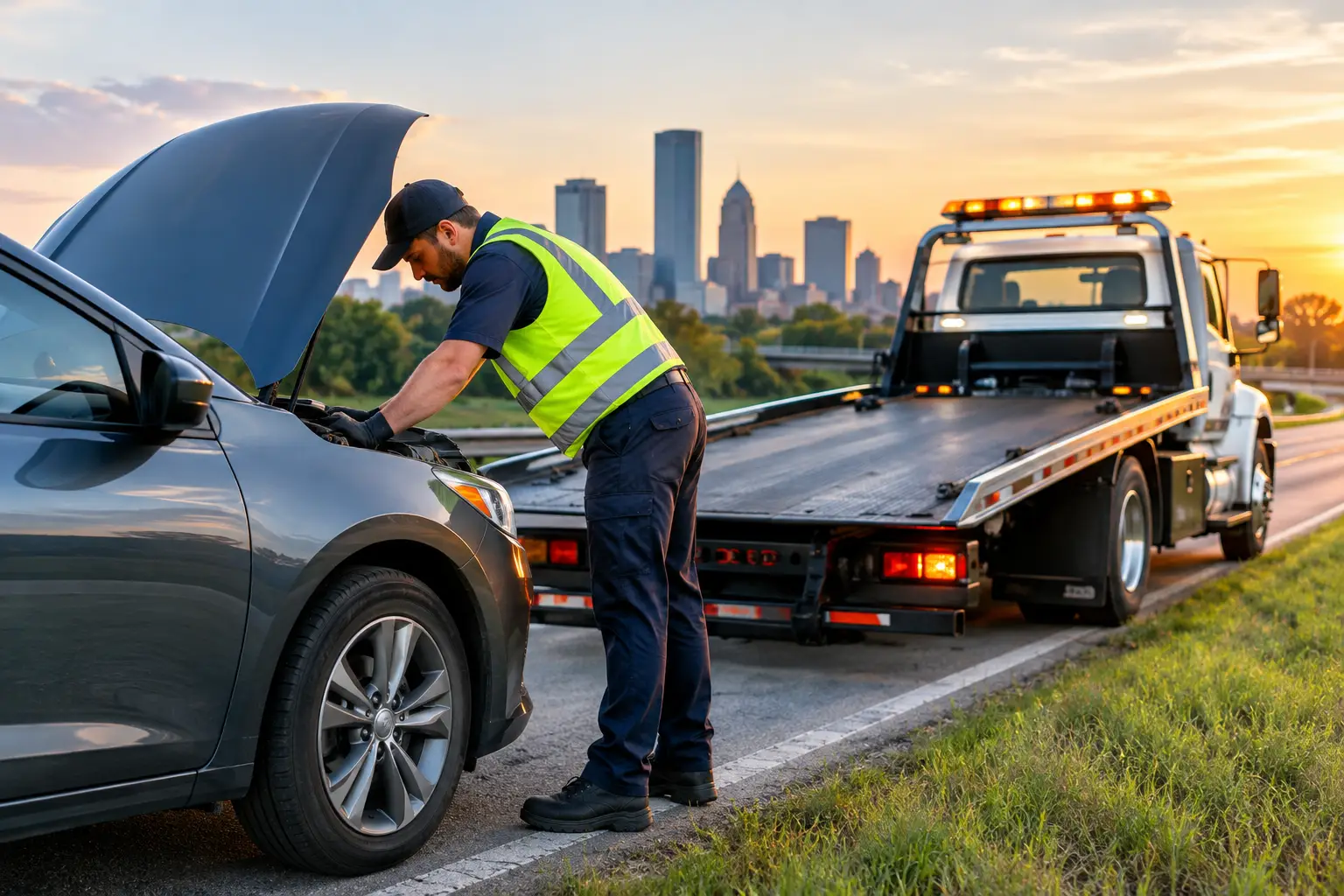
If the vehicle will not start after entry, roadside help may include a jumpstart if the battery is the issue. If it still will not move safely, the next step may be a flatbed tow to a repair shop or dealership. Clear communication matters here. A good operator should explain whether the job is a straightforward lockout or whether the vehicle needs a different solution.
Safety comes before convenience
Not every lockout can wait for a spare key. If a child, pet, or person needing medical care is locked inside, call 911 immediately. Tell dispatch the vehicle location, make, model, color, and whether the engine is running. In extreme heat or cold, conditions inside a vehicle can become dangerous quickly.
For an adult lockout on a shoulder or near fast traffic, move to a safe location if you can do so without crossing traffic. Stay visible, keep away from passing vehicles, and do not stand between your vehicle and the roadway. A lockout on the side of US 75 is different from one in your driveway. The decision should reflect the risk around you, not just the inconvenience.
If you are in a well-lit, safe place and a reliable person can bring your spare soon, waiting may be fine. If you are alone late at night, in bad weather, or blocking traffic, roadside assistance is usually the more practical move.
Cost is not the only comparison
People often assume a spare key is free and a lockout service costs money. That is only partly true. A spare key has to be cut, programmed when necessary, and stored where it remains accessible but secure. For some vehicles, replacing and programming an extra fob is not cheap.
A lockout service has a direct service cost, but it can save time and prevent damage from a do-it-yourself entry attempt. Breaking a window may look like the fast answer, but the glass cleanup, replacement cost, weather exposure, and possible interior damage make it a last resort outside a true emergency.
The best choice is not always the lowest immediate price. It is the option that gets you safely back on the road with the least chance of creating another vehicle problem.
Build a better plan after the lockout
Once you are back in the vehicle, take a few minutes to keep the same situation from happening again. Test your spare key or fob instead of assuming it works. Replace its battery if needed. Decide who can access it in an emergency, and keep that person’s number easy to find.
It also helps to check your vehicle’s lockout settings. Some cars automatically lock after a certain time, while others can lock with the fob still inside under specific conditions. Read the owner’s manual or ask a dealership how your model behaves. Knowing that detail can prevent a repeat call.
For drivers in Tulsa and nearby areas, a local roadside provider can be the right call when the spare is not within reach. Tulsa Towing, powered by Neptune Towing, handles vehicle lockouts with the same careful approach used for roadside assistance and damage-free transport: assess the situation, use the proper equipment, and keep the process simple.
A spare key is worth having, but it is not a complete plan. Keep one secure, make sure it works, and know when waiting for it is no longer the safe or practical choice. When a lockout happens in the wrong place or at the wrong time, getting careful help is the decision that lets you move forward without adding damage or stress.