A car that will not start in a Tulsa parking lot or on the shoulder of US 75 creates one immediate question: do you need a jumpstart or battery replacement service? The answer depends on why the battery went dead, not just whether the engine starts after a boost. A proper roadside response gets you moving when it is safe to do so and helps you avoid being stranded again a few miles down the road.
Start With Safety Before Trying a Jumpstart
If your vehicle is stopped in traffic, on I-44, or in another unsafe spot, move it only if it can be done safely. Turn on your hazard lights, stay aware of traffic, and avoid standing beside the vehicle near moving lanes. A dead battery is inconvenient. Getting too close to traffic while trying to solve it can make the situation worse.
In a driveway, work parking lot, garage, or safe lot, the situation is usually simpler. Before calling for help, notice what happens when you turn the key or press the start button. Do the dash lights come on? Is there a single click, repeated clicking, or no response at all? Those details help narrow down whether the problem is likely the battery, the charging system, the starter, or something else.
Do not keep trying to start the vehicle over and over. Each attempt drains the remaining battery power and can leave you with less information about the original issue.
When a Jumpstart Is the Right Call
A jumpstart is often the practical answer when the battery was drained by something temporary. Interior lights left on, a door that did not latch fully, a phone charger plugged in overnight, or a vehicle that has been sitting for several days can all leave a healthy battery too weak to start the engine.
Cold mornings can expose a battery that was already borderline. Heat matters, too. Tulsa summers are hard on batteries, and a battery weakened over time may finally fail after a hot day, even if it started normally the day before.
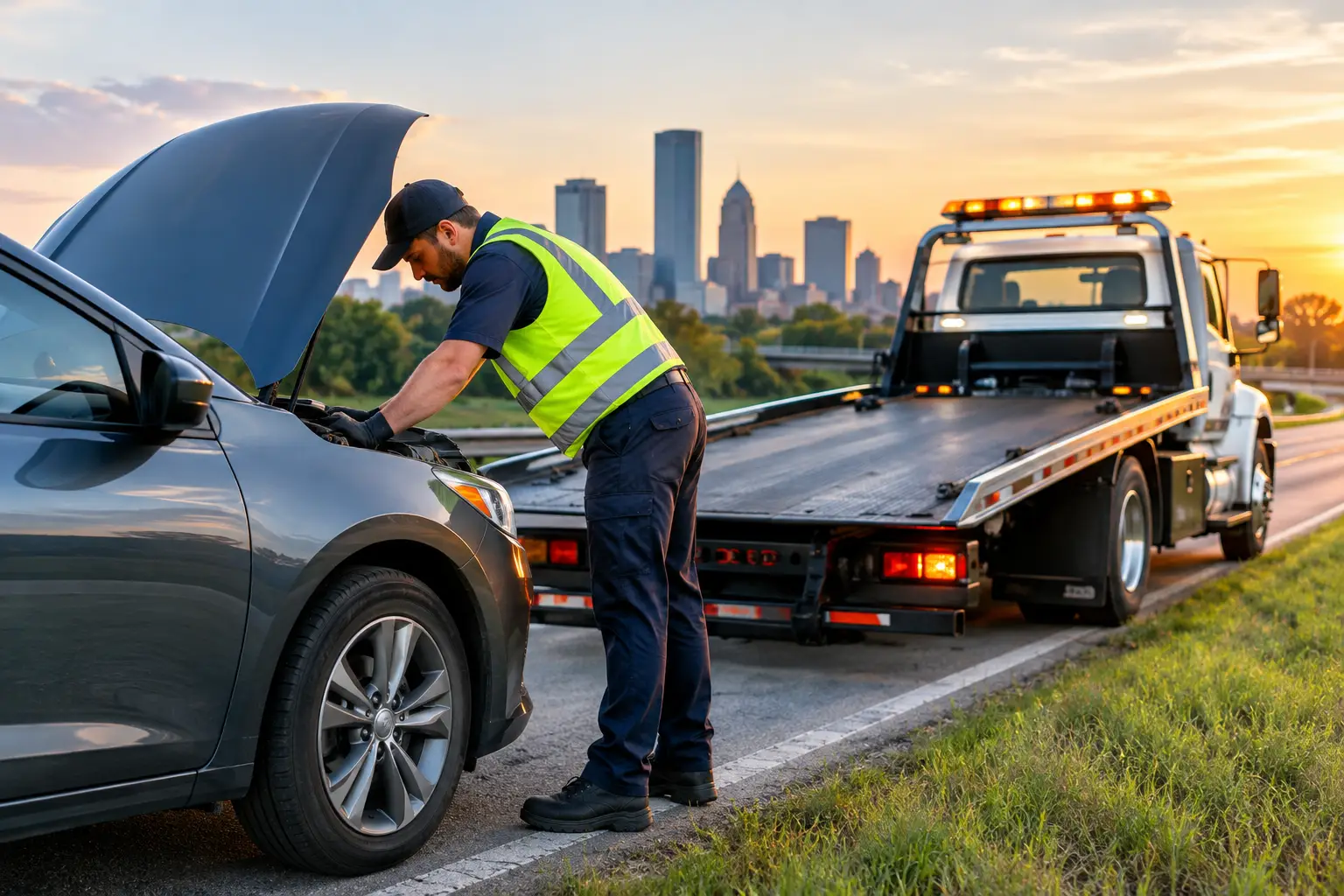
If the vehicle starts quickly with a professional jump and continues running normally, you may be able to drive it to a nearby shop for a battery and charging-system check. That does not automatically mean the battery is good. It means there was enough power restored to start the engine. The next step depends on the battery’s age, the reason it discharged, and whether the alternator is charging correctly.
A roadside jump is especially useful when you are at home, at work, or parked somewhere safe and need to get moving without arranging a tow immediately. It can save time, but it is not a repair for a battery that is at the end of its life.
Signs the Battery May Still Be Serviceable
A single dead-battery event does not always mean replacement is necessary. A jumpstart may be enough when the battery is relatively new, the vehicle was left unused, or there is a clear reason it drained. Once the engine starts, headlights and electronics should operate normally, and the vehicle should not show repeated warning lights or lose power.
Drive directly to where you need to have the battery checked rather than making extra stops. If the engine is shut off and the vehicle immediately will not restart, that is a strong sign the battery is not holding a charge or the charging system needs attention.
When Battery Replacement Is More Likely
Most car batteries last a limited number of years. The exact lifespan depends on the vehicle, weather, driving habits, and battery quality, but an older battery becomes less reliable even if it has not completely failed before.
Replacement is more likely when the vehicle has been slow to crank for days or weeks, needs multiple jumps, or loses power again soon after starting. Corrosion around the battery terminals, a swollen battery case, a sulfur or rotten-egg smell, and leaking fluid are also reasons not to treat the problem as a simple jumpstart.
A swollen or leaking battery should not be handled casually. Do not attempt to jump it. Keep your distance, avoid touching any residue, and arrange for professional help. Battery acid and damaged battery cases can create a safety issue beyond a no-start condition.
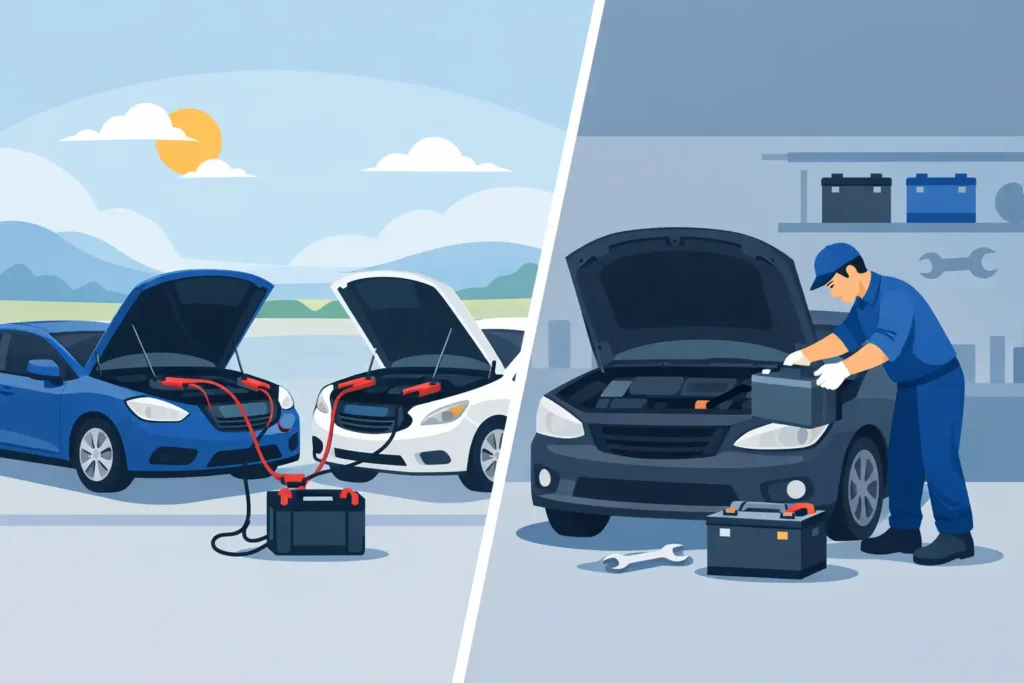
A battery replacement service can make sense if a qualified provider has the correct battery available and can safely install it for your vehicle. That is not always possible at the roadside. Many vehicles have batteries located under covers, in trunks, under seats, or in areas that require additional access. Some modern vehicles also need electronic settings or systems checked after battery replacement.
For that reason, the best choice may be a jump to get the vehicle to a repair shop, or a flatbed tow if the battery will not hold enough power to make that trip safely.
A Jumpstart Cannot Fix Every No-Start Problem
The battery gets blamed for many no-start calls because the symptoms can look similar. A clicking sound may point to low battery voltage, but it can also involve the starter or poor cable connections. If the engine cranks normally but does not start, the problem may be fuel, ignition, or an engine-management issue rather than the battery.
The alternator is another common factor. It recharges the battery while the engine runs. If the alternator is failing, a jump may start the vehicle, but it can stall once the battery’s remaining power is used. Dim headlights, a battery warning light, flickering electronics, or a vehicle that dies while driving are all warning signs that a jump alone may not solve the issue.
There is a trade-off here. Trying a jump first can be reasonable when the vehicle is safely parked and the problem looks like a drained battery. Continuing to drive after the warning signs of a charging-system failure can leave you stopped in a more difficult or unsafe location. When there is doubt, safe transport to a repair shop is often the lower-stress option.
Why Proper Jumpstarting Matters
Modern vehicles have sensitive electrical systems. Hooking up jumper cables incorrectly can damage fuses, modules, or wiring. Hybrid and electric vehicles require even more care because their high-voltage systems are not the same as the standard 12-volt battery used to power accessories and start vehicle electronics.
A Tesla or other EV may still need a low-voltage jump, but it should be handled according to the vehicle’s proper jump points and procedures. The high-voltage battery is not something to touch or improvise around. If the vehicle will not power up or cannot be safely moved after a low-voltage issue, flatbed transport is the correct approach.
The same care applies to trucks, low-clearance cars, and vehicles with batteries that are difficult to access. A quick fix is not worth turning a battery problem into electrical damage.
What to Tell Roadside Assistance When You Call
Clear details help get the right response to your location. Let the dispatcher know your vehicle’s year, make, and model, where it is parked, and what happens when you try to start it. Mention whether the battery warning light came on while driving, whether you have already tried a jump, and whether the vehicle is in a garage, on a highway, or in a tight parking area.
If you are in Tulsa, saying you are near Riverside, Memorial, Tulsa Hills, or a major highway exit can help identify the safest approach. A vehicle in a busy lane may need different handling than one in an apartment lot or office garage.
Also be clear about your goal. If you need to get home, a jump may be enough if the vehicle starts and runs properly. If you need the vehicle delivered to a repair shop because it has repeatedly died or shows charging problems, say so from the start. That allows the right equipment and plan to be arranged without wasting time.
When Towing Is the Better Decision
Choose a tow instead of relying on a jump when the vehicle will not stay running, the battery is visibly damaged, the battery warning light came on while driving, or the vehicle is stranded in an unsafe location. Towing also makes sense when you do not want to risk being stuck again on the way to a shop.
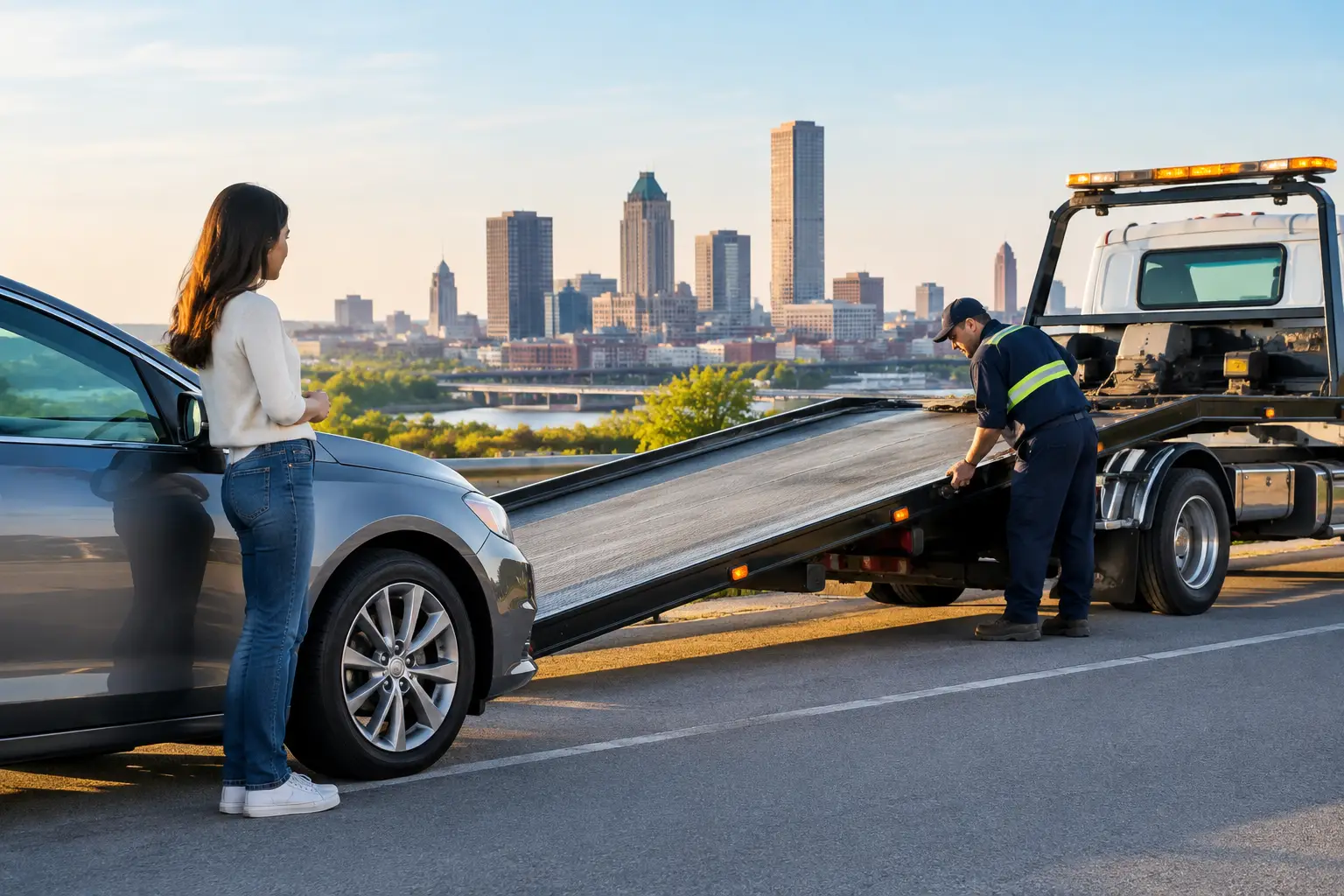
Flatbed transport is a careful option for vehicles that cannot be started, including EVs and low-clearance cars. It keeps the vehicle off the road and avoids putting unnecessary strain on a drivetrain that should not be driven or towed with its wheels down.
Tulsa Towing can provide a roadside jump when the situation calls for one or transport your vehicle safely to the repair shop or dealership you choose when it does not. The point is not to force a temporary fix. It is to handle the problem safely and get your vehicle where it needs to go.
If your vehicle starts after a jump, treat that as useful information, not a promise that the problem is over. Get the battery and charging system checked while you are already moving, before the next no-start happens at a less convenient time.