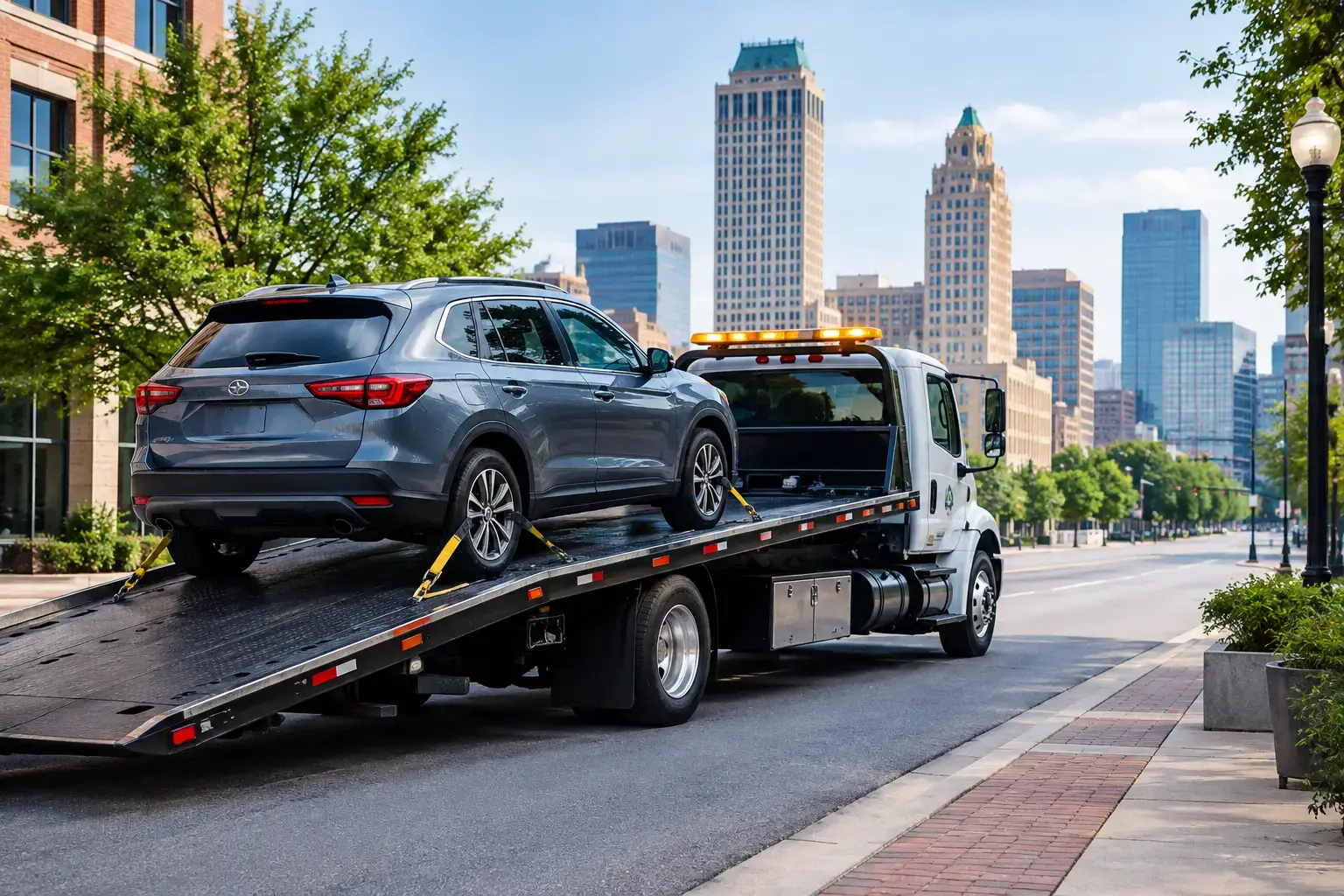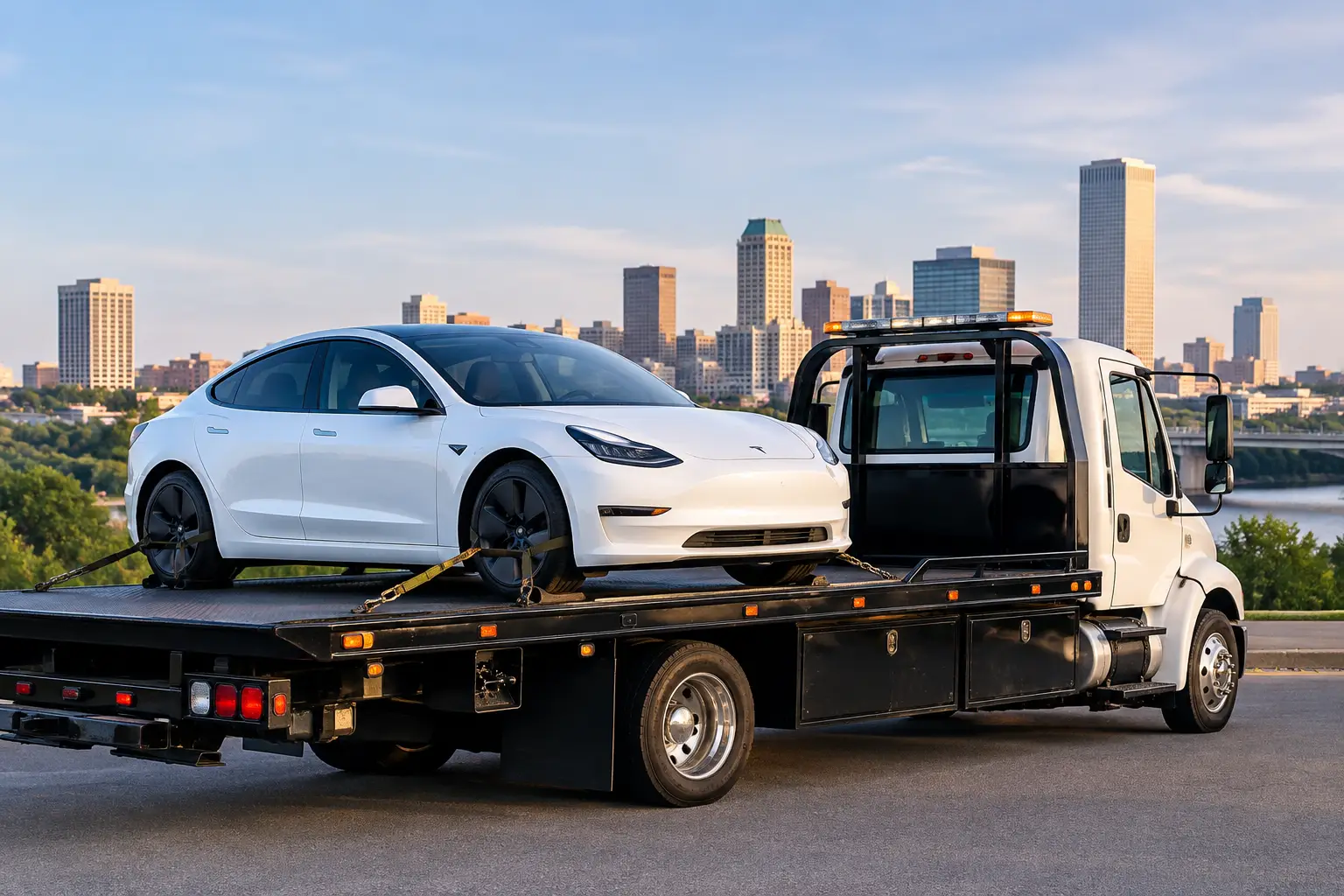
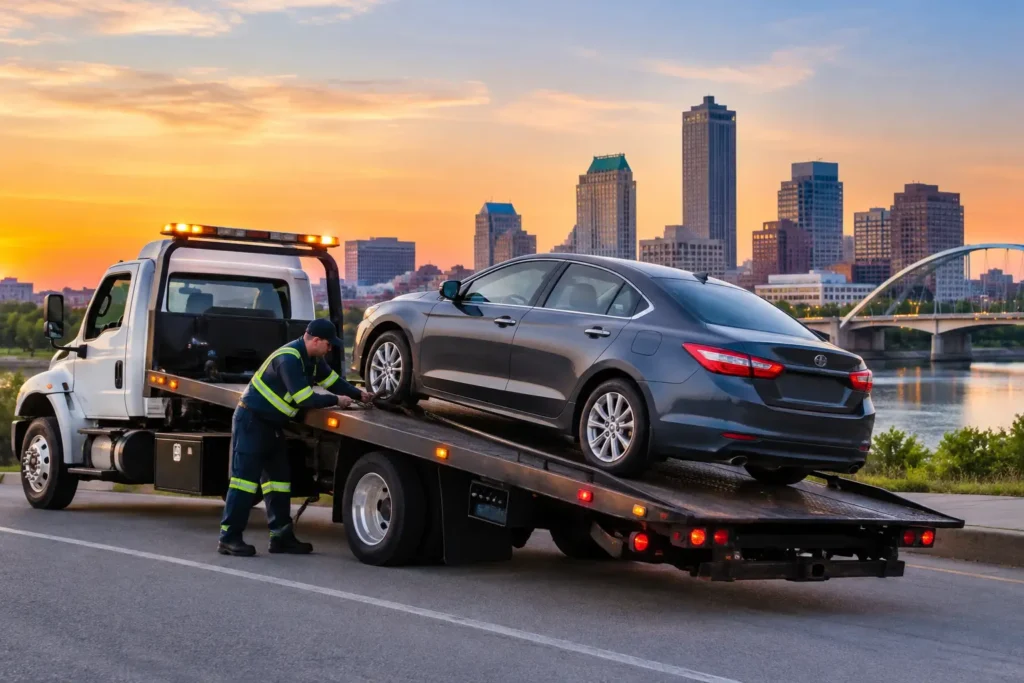
A stalled car downtown can turn into a bigger problem fast. One-way streets, busy intersections, limited curb space, and parking garages all affect how a tow truck reaches you and loads your vehicle. When you are requesting a tow downtown Tulsa, a few clear details at the start help get the right truck headed your way and keep the job moving without unnecessary delays.
The main thing is simple: get yourself to a safe spot if you can, give an accurate location, explain what the vehicle is doing, and tell the dispatcher where it needs to go. A careful tow starts before the truck arrives.
When Requesting a Tow Downtown Tulsa
Downtown Tulsa is not like a wide suburban parking lot. A vehicle stopped near the Blue Dome District, East Village, or the Tulsa Arts District may be close to traffic, blocked by parked cars, or sitting on a narrow street with little room to work. The nearest cross streets are often more useful than a building name alone.
If you are on a busy road, turn on your hazard lights and move out of the traffic lane only if the vehicle can be moved safely. Do not try to push a vehicle through an intersection or across multiple lanes. If the vehicle is in an unsafe position after a crash, has smoke coming from it, or creates an immediate hazard, call 911 first. Once the area is safe, towing can be arranged.
When you call for a tow, be ready to provide your exact location, vehicle make and model, and the reason it will not move. Let the driver know if the car is in a garage, has a flat tire, is locked, has steering damage, or is low to the ground. Those details determine the safest loading plan.
Give a Location a Tow Truck Can Actually Find
Phone maps can be slightly off downtown, especially around large buildings, garages, event areas, and construction zones. Instead of saying you are near downtown, give the street address if possible, the cross streets, and a nearby landmark that is visible from the road.
For example, saying that you are on South Boston Avenue between 3rd and 4th Street is more useful than saying you are by a restaurant. If you are parked inside a garage, tell the dispatcher the garage name, entrance street, floor level, and posted height clearance. A standard flatbed may not fit in every parking structure, and knowing that before dispatch prevents a wasted trip.
Downtown traffic also changes around BOK Center events, baseball games, concerts, and busy weekend nights. If a street is blocked, tell the dispatcher which direction traffic is moving and whether there is access from another side of the block. Clear information helps the truck take the right approach instead of circling through one-way streets.
If You Are in a Parking Garage
Garages require special attention. Before requesting a tow downtown Tulsa from a garage, check the clearance sign near the entrance if you can do so safely. Tell the towing company whether the vehicle is near a ramp, on an upper floor, or in a tight corner. Also mention if the vehicle cannot roll, cannot be shifted into neutral, or has a wheel turned hard to one side.
In some cases, the safest option is to handle the vehicle where it sits with the equipment that can access it, then move it to a clear loading area. It depends on the garage layout, clearance, and the condition of the vehicle. Rushing a tow in a confined space is how bumpers, wheels, and undercarriages get damaged.
Explain What Happened to the Vehicle
You do not need to diagnose the problem. Just explain the symptoms in plain language. Did the engine shut off? Did a tire blow out? Did the car hit a curb or another vehicle? Does it start but refuse to move? Is there a warning message on the dash?
That information matters because a car that simply will not start is handled differently from one with suspension damage or a locked wheel. A truck with a broken axle, for example, should not be dragged down the street to make loading easier. A proper flatbed keeps the vehicle off the road and avoids adding damage to a problem that is already stressful.
Be honest about modifications and special vehicle needs. Lowered cars, luxury vehicles, all-wheel-drive vehicles, and electric vehicles need careful handling. Tesla and other EV owners should mention the vehicle type when calling. EVs have specific tow requirements, and using the proper loading method protects the battery area and drivetrain.
Know Where You Want the Vehicle Taken
A tow call goes faster when you already know the destination. That may be your home, a trusted repair shop, or a dealership. Give the full destination address and tell the dispatcher if the shop will be closed by the time the truck arrives.
If a repair shop is closed, ask whether there is a designated drop-off area and whether you need to leave keys or contact information. Do not assume a vehicle can be left in any driveway, service lane, or customer parking space. A quick call to the shop can save trouble later.
For a short move within downtown, the destination might only be a few blocks away. Even then, a flatbed is often the right choice when the vehicle has a mechanical problem, has been in an accident, or cannot be driven safely. Short distance does not make careless handling less risky.
What to Do While You Wait
Once help is on the way, stay in a safe, visible location. If your car is safely parked, you may wait nearby, but keep your phone on and listen for the tow driver. In a crowded downtown area, a quick call or text can make it easier to spot each other.
Take personal items, work equipment, medication, and valuables out of the vehicle if you are able. Have your keys ready. If someone else is authorized to release the vehicle, make that clear ahead of time. The tow driver may also need to know whether the vehicle is in park, whether the parking brake is on, and whether there are any special instructions for starting or shifting it.
Do not stand between the vehicle and the tow truck during loading. Stay where the driver can see you, but give the equipment room to work. Winch cables, loading ramps, and moving vehicles all require space and attention. A good driver will explain what is happening and let you know where to wait.
Roadside Help May Be Enough
Not every downtown breakdown needs a tow. A dead battery, lockout, or flat tire may be handled on site if the location is safe and the vehicle has no other mechanical issue. This can be a better option when the car can be made roadworthy without transport.
Still, there are times when towing is the safer call. If the engine overheated, the vehicle has warning lights tied to steering or braking, the tire damage is severe, or you are stuck in a dangerous spot, getting the vehicle moved is usually the better decision. The goal is not just to get moving again. It is to avoid turning a manageable problem into expensive damage.
Choose Careful Handling Over a Quick Hookup
Downtown calls often come with pressure. You may be late for work, trying to leave an event, or stranded after dark. That urgency is real, but it should not lead to shortcuts. The right equipment, a clear plan, and careful loading matter whether your vehicle is a daily driver, a heavy-duty pickup, or an electric car.
Tulsa Towing, powered by Neptune Towing, focuses on getting vehicles loaded properly and delivered where the driver needs them to go. Clear communication at the beginning helps make that possible, especially in tight downtown locations.
If your vehicle is stopped downtown, focus on safety first, then give the clearest location and vehicle details you can. That small amount of preparation gives the tow driver a better path in, a safer load, and a smoother trip to the repair shop, dealership, or home.