A dead battery in a grocery store lot, a flat tire on the shoulder, keys locked in the car before work – most roadside problems start small and turn stressful fast. Good roadside assistance is about getting control of the situation quickly, figuring out whether the vehicle can be made drivable on site, and avoiding extra damage in the process.
That sounds simple, but it depends on the problem. Some calls are handled in minutes. Others look like a quick fix at first, then turn into a tow because the real issue is bigger than it seems. Knowing the difference matters, especially when you are stuck in traffic, parked in a tight space, or dealing with a vehicle that is not safe to move.
What roadside assistance actually covers
Roadside assistance usually means help for problems that keep a vehicle from moving safely but do not always require a full tow. The most common calls are jumpstarts, flat tire help, vehicle lockouts, and winch-out service when a car or truck is stuck.
A jumpstart is straightforward if the battery is the only problem. If the vehicle starts and keeps running, you may be able to get back on the road right away. If it dies again immediately or shows electrical warnings, that is often a sign the issue is not just the battery.
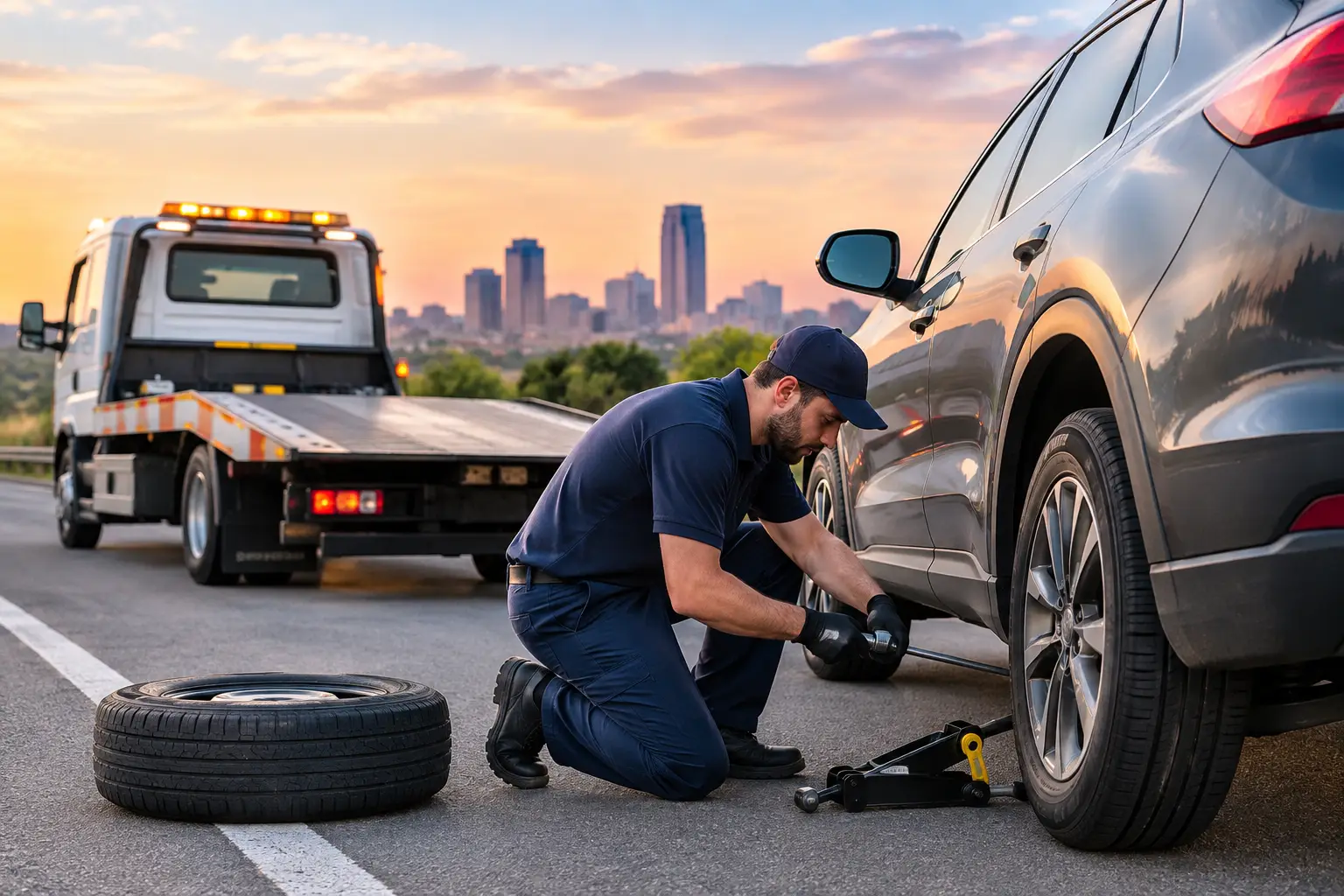
Flat tire service can be simple too, but only if there is a usable spare and the wheel can be changed safely where the vehicle sits. On a busy road, in a narrow parking garage, or with damaged lug nuts, the safer move may be towing the vehicle instead of trying to force a tire change in a bad spot.
Lockouts are another common call. In many cases, the vehicle can be opened without damage using the right tools and the right method. The key part is careful handling. Rushed lockout work can damage trim, weather seals, or the door itself.
Winch-out calls are a little different. If a vehicle is stuck in mud, a ditch, wet grass, or a curb edge, the goal is to recover it without making things worse. That takes more judgment than people realize. Pulling from the wrong angle or using the wrong equipment can damage the vehicle before it ever gets back on the road.
When roadside assistance is enough
If the vehicle has one clear issue and no signs of deeper damage, roadside assistance is often the fastest option. A drained battery after leaving the lights on, a single flat in a parking lot, or keys locked inside with no other mechanical problem are all cases where on-site help makes sense.
This is where clear communication matters. A good dispatcher or driver is not just checking boxes. They are trying to figure out where you are, what the vehicle is doing, whether it is blocking traffic, and whether the problem can actually be solved there. That saves time and helps send the right equipment the first time.
It also helps to be realistic about the condition of the vehicle. If you hit something, saw fluid leaking, lost steering response, or the car is making heavy mechanical noise, roadside help may not be enough. Forcing a quick fix just to avoid a tow can turn a manageable repair into a larger one.
When a tow makes more sense than roadside assistance
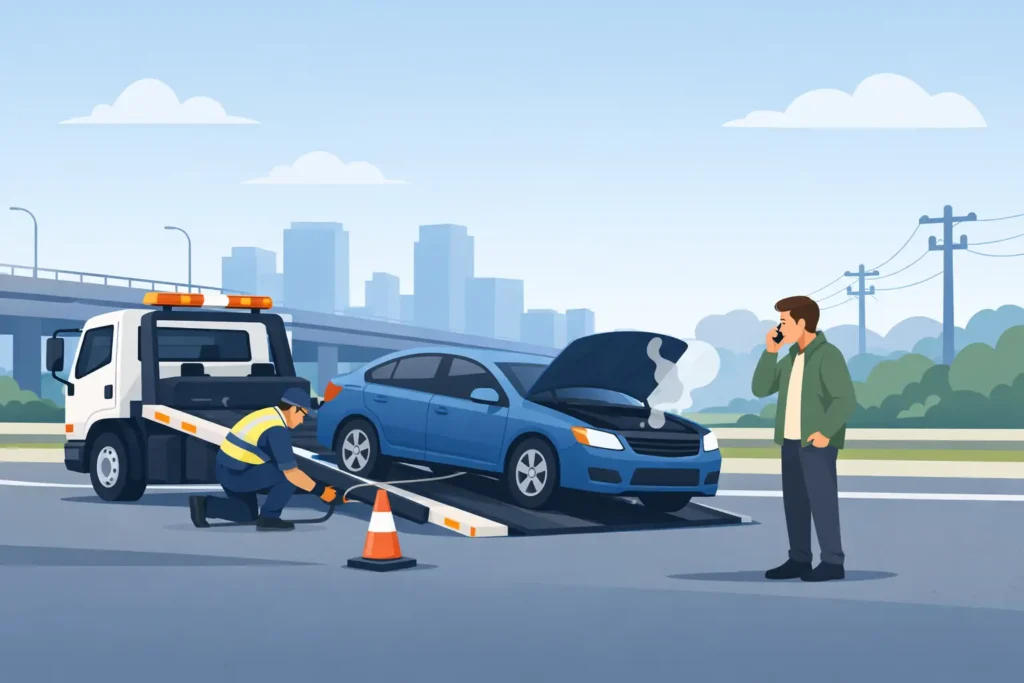
Sometimes roadside assistance is the first step, not the final answer. A dead battery may really be an alternator problem. A flat tire may come with a bent wheel. A vehicle stuck off the road may not be safe to drive even after it is pulled free.
That is where experience matters. The job is not to treat every call like the same routine service. It is to look at the vehicle, the location, and the risk. If the safest move is transport, then towing is the right call.
This comes up often with low-clearance cars, heavy pickups, and electric vehicles. These are not vehicles you want handled with guesswork. The wrong loading angle, the wrong contact point, or the wrong recovery method can create damage that had nothing to do with the original breakdown.
A proper flatbed is often the better answer when the vehicle cannot move under its own power or should not be driven after the issue is checked. It keeps the vehicle fully off the road and reduces the chance of scraping, suspension damage, or drivetrain problems during transport.
Roadside assistance on busy roads is a different situation
A flat tire in your driveway is one thing. The same flat on I-44 or US 75 is a different job entirely. Traffic changes everything.
On a busy shoulder, safety comes first. That means your location, how much room is available, whether the vehicle is visible to traffic, and whether the problem can be handled without putting anyone in a dangerous spot. In some cases, what sounds like a simple roadside assistance call becomes a tow because there is no safe way to work on the vehicle where it sits.
The same is true in crowded lots, apartment complexes, parking decks, and narrow side streets. Access matters. Equipment matters. So does local familiarity. Knowing how to approach a tight loading area or a high traffic corridor saves time when the situation already feels rushed.
Why the right equipment matters
Roadside work is not just about showing up. It is about showing up prepared.
Battery service needs proper jump equipment, not a rushed attempt that creates more electrical issues. Lockouts need the right tools for the vehicle, especially newer models with tighter tolerances and more delicate trim. Winch-out service needs controlled pulling and the right setup, not brute force.
And if the call changes from roadside assistance to towing, that transition should be simple. The vehicle should be handled with equipment that fits the job, whether it is a daily driver, a truck, or an EV. That is especially important for vehicles with low ground clearance or manufacturer-specific handling points.
Careful handling is what keeps a bad day from turning into body damage, wheel damage, or undercarriage problems. Most drivers calling for help are already dealing with enough. They should not have to worry about how the vehicle is being treated once help arrives.
What to do while you wait for roadside assistance
If your vehicle stops in traffic or on a shoulder, move it only if it is safe to do so. If it will not move, turn on the hazard lights and stay aware of traffic around you. If you are in a safer location like a parking lot or neighborhood street, stay with the vehicle unless the area feels unsafe.
When you call, give the exact location, the vehicle type, and what happened right before the problem started. That information helps determine whether roadside assistance is likely to solve it or whether towing should be sent from the start.
If the issue is a flat tire, check whether you have a usable spare. If it is a dead battery, mention whether the car clicks, cranks slowly, or shows no power at all. If you are stuck, explain what the vehicle is stuck in and whether it is sitting level or at an angle. Small details like that help avoid delays.
Roadside assistance should reduce stress, not add to it
The basic job is simple. Get there, assess the problem, fix it on site if it can be done safely, and tow it if it cannot. Where people get frustrated is when there is poor communication, unclear expectations, or careless vehicle handling.
That is why local, hands-on service matters. In Tulsa and nearby areas like Jenks, Bixby, and Broken Arrow, many roadside calls happen in the same kinds of places every day – highway shoulders, retail parking lots, apartment complexes, and neighborhood streets. Familiarity with those situations helps the job move faster and with fewer surprises.
Tulsa Towing, powered by Neptune Towing, works with a straightforward approach because that is what roadside calls require. You need a clear answer, the right equipment, and someone who knows when a quick on-site fix is enough and when the safer move is transport.
If your car will not move, the best roadside assistance is not the service that tries to force every problem into the same solution. It is the one that looks at the real situation, handles the vehicle carefully, and gets you to the next step without adding more trouble.