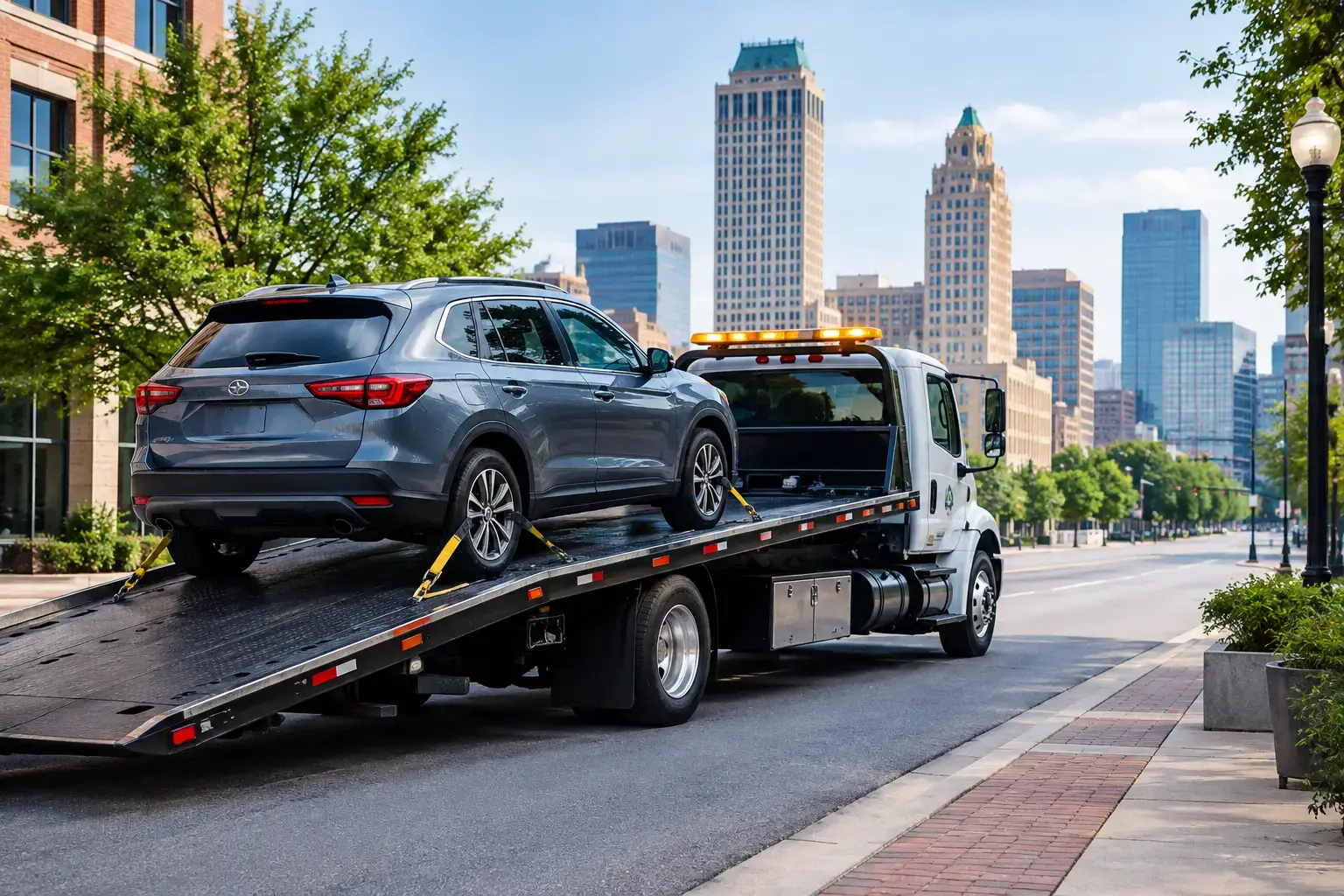
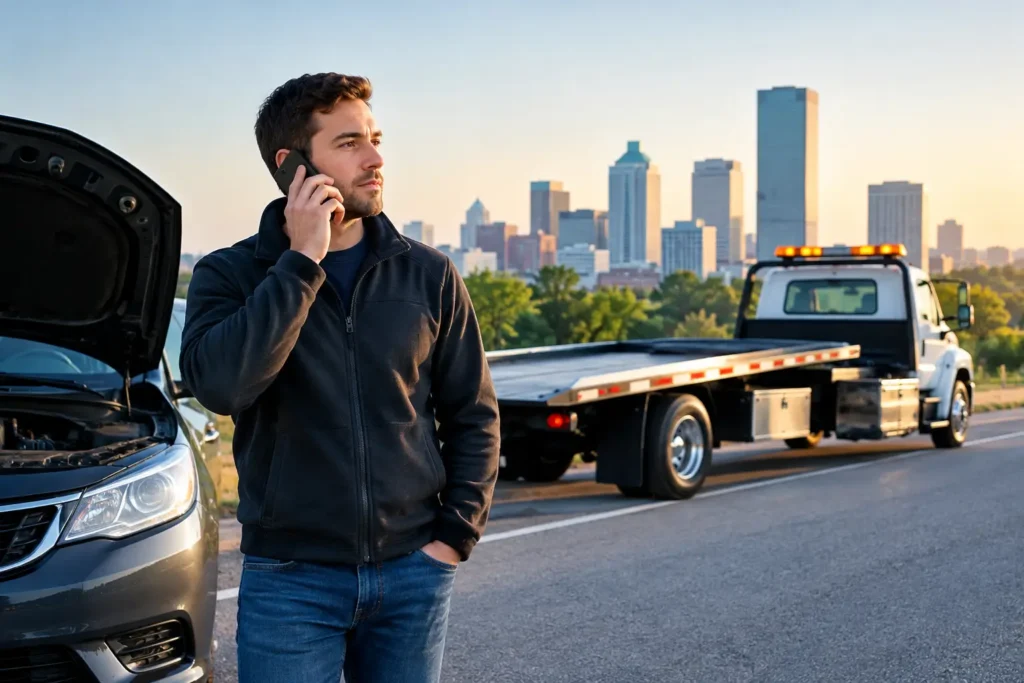
A dead battery on Memorial Drive, a flat on I-44, or a car that will not restart in a Downtown Tulsa parking lot can turn a normal day into a stressful one fast. Good roadside call preparation gives the dispatcher and tow truck operator the information needed to send the right help, find you without delay, and handle your vehicle safely when they arrive.
You do not need to diagnose the vehicle or know towing terms. You just need to give a clear picture of where you are, what happened, and what kind of vehicle is involved. That keeps the call simple and helps avoid sending a truck that is not set up for the situation.
Start With Safety Before Making the Call
If the vehicle can be moved safely, get it out of active traffic and into a parking lot, shoulder, or other safer area. Turn on your hazard lights. At night, use the interior light only if it helps you locate paperwork or makes you more visible without draining an already weak battery.
On busy roads such as US 75, Highway 169, Riverside Drive, or I-44, the location of the vehicle matters as much as the mechanical problem. If you are on a shoulder, stay inside the vehicle with your seat belt on when conditions make getting out unsafe. Do not stand between your vehicle and traffic, and do not try to inspect a tire or crawl underneath the vehicle near moving lanes.
There are situations where moving the car is not the right call. If it has been in an accident, is overheating, has a flat tire that is coming apart, or will not steer or brake normally, leave it where it is if moving it could create more risk. Tell the dispatcher exactly what you see.
What to Have Ready for Roadside Call Preparation
The best calls start with a few facts gathered before you dial. Take a breath, look around, and have these details ready:
- Your exact location, including the street, cross streets, highway direction, nearest exit, or a recognizable business.
- The vehicle year, make, model, color, and license plate if available.
- The problem you are having, such as a no-start, flat tire, lockout, accident damage, or a vehicle stuck in mud.
- Where the vehicle needs to go if a tow is needed, including a repair shop, dealership, home, or other destination.
- Any details that affect loading, including low ground clearance, all-wheel drive, an electric vehicle, oversized tires, or a parking garage.
A phone map can be useful, but do not rely on a dropped pin alone. A clear description like “northbound US 75 just past the 71st Street exit, on the right shoulder” gives an operator something practical to work with. In South Tulsa, apartment complexes and large shopping areas can have several entrances and similar-looking lots. Naming the closest store entrance, building number, or parking row can save time.
If you are in Broken Arrow, Jenks, Bixby, or Glenpool, say that at the beginning of the call. Those areas may be within reach depending on dispatch availability, but the operator needs the full location before confirming the response plan.
Describe the Problem, Not a Guess
You do not have to be certain why the vehicle stopped running. In fact, a simple description is often more useful than a guess. Say, “The dash lights come on, but it will not crank,” or “The front passenger tire is flat and I do not have a usable spare.” Those details help determine whether a jumpstart, tire help, lockout service, winch-out, or tow is the proper response.
Mention warning lights, smoke, leaking fluid, unusual noises, or visible collision damage. If the vehicle is stuck, explain what it is stuck in and whether the wheels can move. A car buried in soft ground near a Riverside-area trailhead is a different setup from a pickup hung up on a curb in a Midtown parking lot.
Be honest if you are unsure. The goal is not to sound technical. It is to prevent surprises once the truck arrives.
Give the Vehicle Details That Protect It
Vehicle information is not just paperwork. It affects how the vehicle should be loaded and transported. Low-clearance cars, trucks with modified suspension, all-wheel-drive vehicles, and electric vehicles require the right approach.
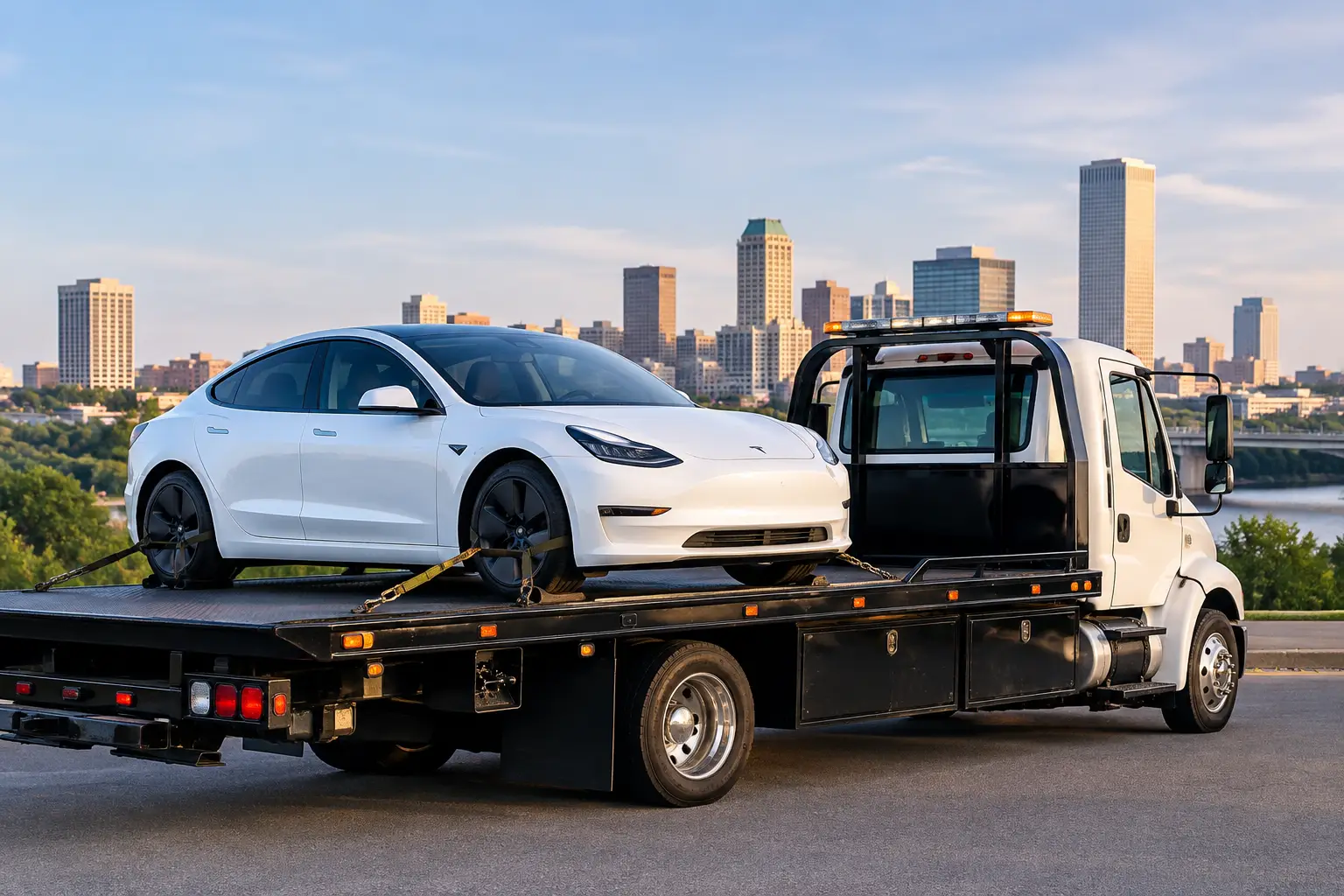
If you drive a Tesla or another EV, say so during the call. EVs should not be handled like a vehicle that can simply be pulled from one end. Proper flatbed loading and correct placement matter. The same goes for a vehicle with a locked wheel, a damaged suspension, or a tire that has come off the rim.
Tell the dispatcher if the vehicle is in a tight space. Parking garages, narrow apartment lanes, steep driveways, and crowded lots can change which equipment is appropriate. A clear note early in the call gives the operator a chance to plan the safest way in and out rather than arriving to find an access issue that was never mentioned.
If you have a key fob, keep it with you and make sure the vehicle can be placed in neutral if it is safe to do so. Do not force a shifter or repeatedly attempt to start a vehicle that is making harsh noises, smoking, or showing an overheating warning.
Know Where the Vehicle Is Going
Before calling for a tow, decide on the destination if you can. A repair shop may be the obvious choice, but confirm whether it is open and whether it accepts after-hours drop-offs. If the shop is closed, ask yourself whether the vehicle can be left there legally and whether you have the exact address.
For dealership delivery, have the service department name or correct entrance if you know it. Large dealer lots can be confusing after hours. For a home delivery, consider whether the driveway is accessible and whether the vehicle needs to be positioned in a particular spot.
It depends on the problem. A straightforward dead battery may only need a jumpstart, while a vehicle that starts after a jump but has a battery warning light may still need a tow to avoid being stranded again. A flat tire can sometimes be handled on site, but not when the spare is missing, damaged, or unsafe to use.
Make the Pickup Easier When Help Is Close
Once service is dispatched, keep your phone nearby and answer calls from an unfamiliar local number. A tow operator may need to confirm which entrance to use, ask you to move a few feet if it is safe, or verify the vehicle description in a crowded lot.
If conditions allow, gather personal items you will need before the vehicle is loaded. That includes medications, house keys, work equipment, identification, and your phone charger. Check the trunk only if it can be opened safely and you are away from traffic.
Do not leave children, pets, or unsecured belongings in the vehicle during transport. If the vehicle has a tow hook cover, locking wheel key, or any special instructions from the manufacturer, mention it rather than waiting until the truck is already positioned.
Tulsa Towing, powered by Neptune Towing, handles local roadside situations with the same basic goal: understand the problem clearly, use the right equipment, and get the vehicle where it needs to go without adding damage or confusion.
A Clear Call Saves Time at the Roadside
Roadside trouble rarely happens at a convenient time, but the call itself does not have to be complicated. Focus on safety first, share an accurate location, describe what the vehicle is doing, and mention anything that changes how it should be handled.
That small amount of roadside call preparation makes it easier for the right help to reach you, whether you are stuck near Tulsa Hills, parked in East Tulsa, or pulled over on the way home through North Tulsa. Keep your phone charged when possible, know your usual repair destination, and let the operator handle the recovery plan from there.