A full-size pickup sitting dead on the shoulder is not the same job as moving a compact car across town. Weight, ride height, drivetrain, tire condition, and where the truck is stopped all change how the tow should be handled. That is why towing a truck with flatbed equipment is usually the safer call when the goal is to move it without adding damage.
For most truck owners, the concern is simple. You do not want transmission problems, bumper damage, scraped wheels, or a truck that gets dragged the wrong way just because it needed a tow. If the truck is disabled, stuck in park, has front-end damage, or has four-wheel drive, a flatbed gives the driver more control from loading to tie-down to transport.
Why towing a truck with flatbed equipment matters
A truck puts more stress on towing equipment than a standard passenger car. Even a half-ton pickup carries more weight, and many trucks on the road have lift kits, oversized tires, toolboxes, bed loads, or suspension changes that affect how they need to be loaded. If the tow setup does not match the truck, that is when damage happens.
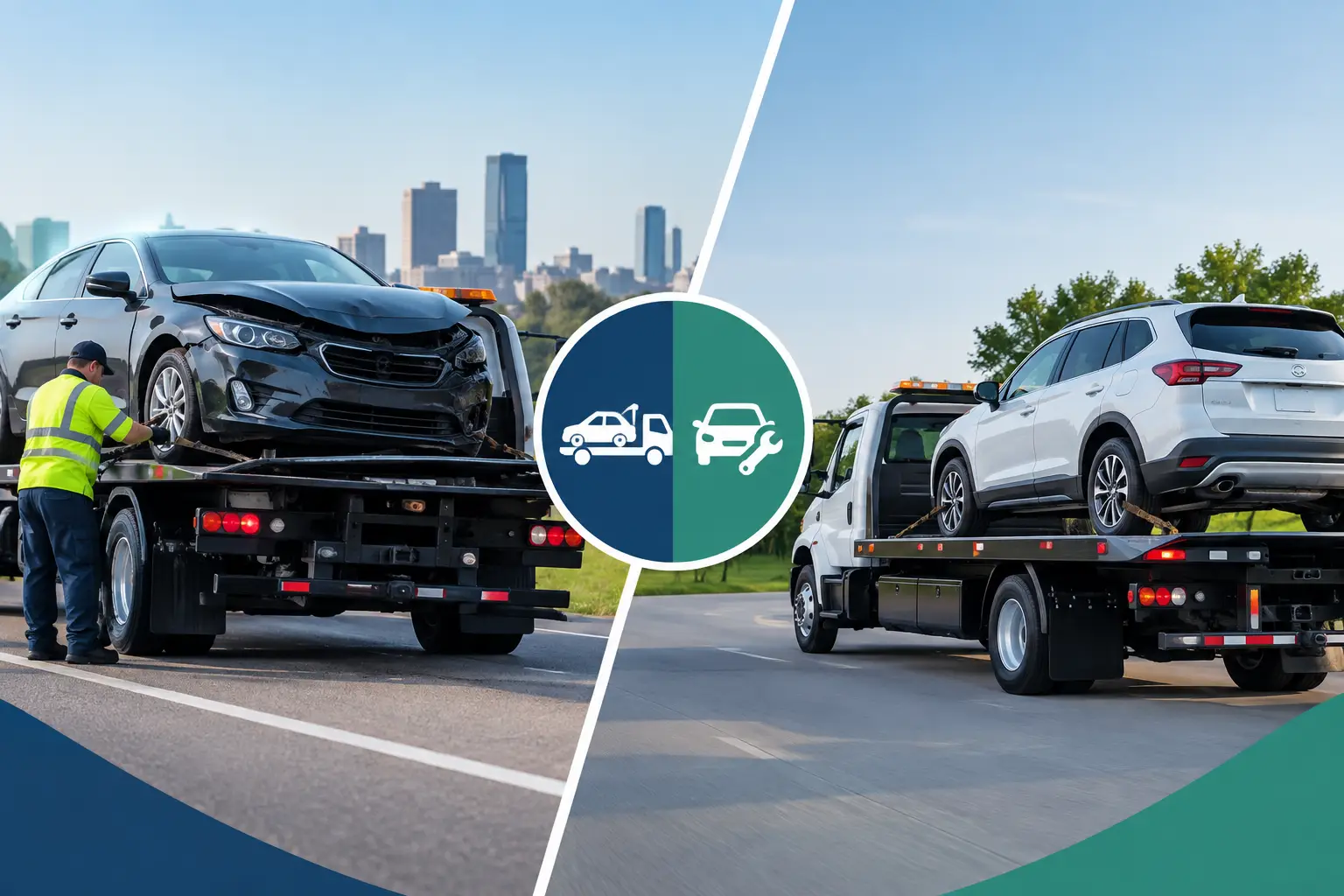
With a flatbed, the truck is pulled fully onto the deck and secured in place for the ride. The drive wheels are not rolling on the road during transport. That matters for rear-wheel drive trucks, four-wheel drive trucks, and trucks with mechanical damage that makes free-rolling unsafe. It also matters when a truck has been in an accident and one corner is damaged, the steering is off, or the suspension is compromised.
There are cases where another tow method can work, but with pickups, the margin for error is smaller. A flatbed is often the cleaner option because it removes a lot of the risk tied to dragging, partial lifting, or trying to move a truck that is already sitting in a bad position.
When a flatbed is the better choice for a truck
Some towing calls are straightforward. Others are not. If a truck has driveline issues, locked wheels, heavy front-end damage, or it will not shift into neutral, a flatbed is usually the right move. The same goes for low-clearance custom trucks, dually trucks, and many EV trucks as those become more common.
Four-wheel drive is a big one. A lot of drivers assume any tow truck can just pick up one end and go. That is where mistakes get expensive. Depending on the drivetrain setup, towing with only two wheels lifted can create serious problems. A flatbed avoids that by getting the entire vehicle off the road.
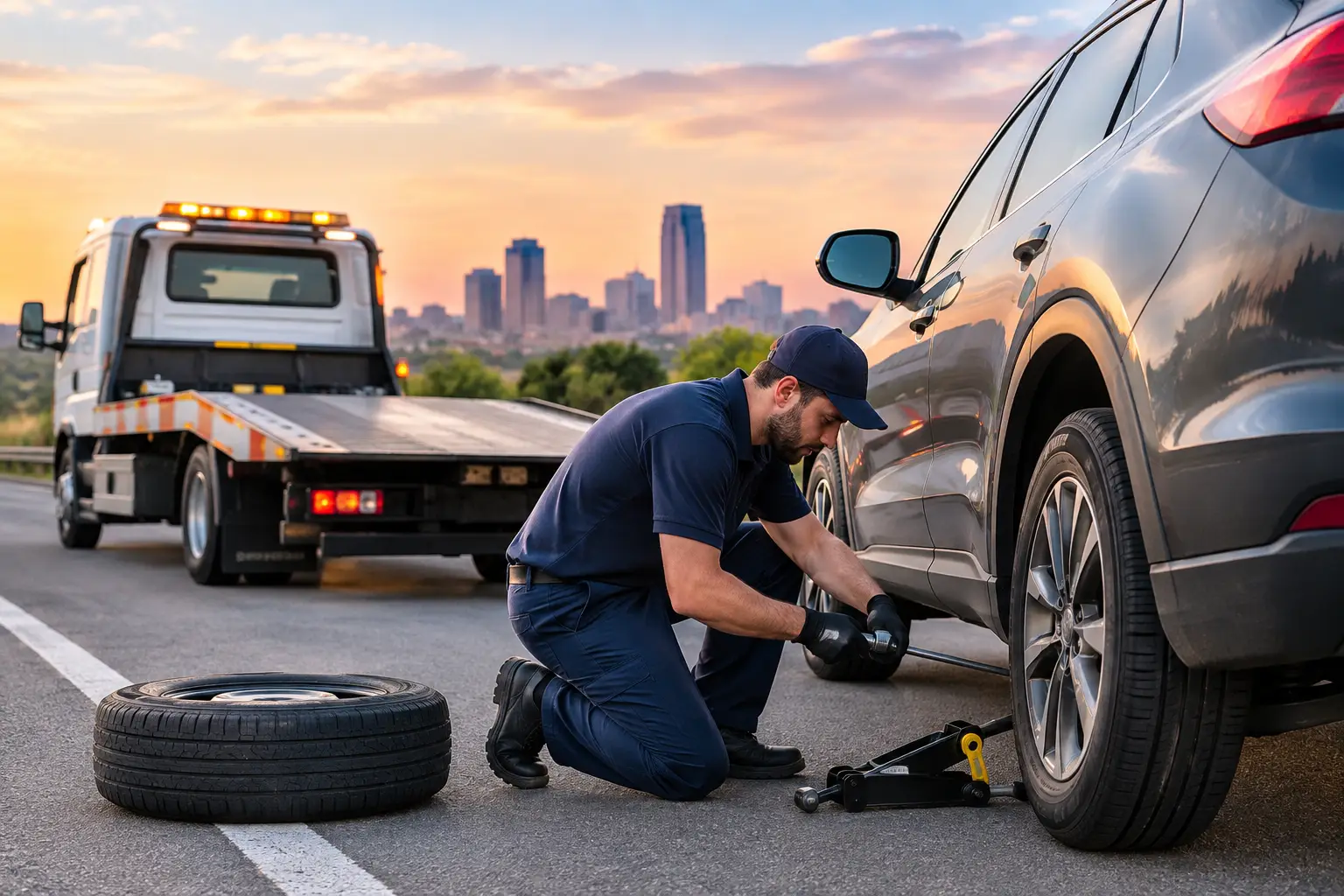
Tire condition also matters more than people think. If a truck has a blown tire, separated tread, broken wheel, or bent suspension component, rolling it behind a wheel-lift can make a bad situation worse. Flatbed loading gives the operator a chance to control the angle, use skates or winching as needed, and secure the truck without forcing damaged parts to carry weight.
The biggest mistakes in towing a truck with flatbed service
The idea sounds simple. Roll the truck up, strap it down, and transport it. In real towing work, that is not enough. The details are what keep the truck from getting damaged.
The first issue is weight. Not every flatbed can handle every truck. A heavy-duty pickup with aftermarket equipment, cargo in the bed, or a crew cab long bed setup may need a larger carrier than a standard tow truck provides. Guessing on weight is how operators end up with poor balance on the deck or unsafe loading angles.
The second issue is clearance. Some trucks sit high, some sit low, and some have body kits, steps, mud flaps, or long overhangs that can catch during loading. A careful operator adjusts the approach, checks the angle, and uses the right equipment to avoid scraping the front valance, rear bumper, or underbody.
The third issue is tie-down points. Trucks should be secured based on what the vehicle can safely handle, not whatever point is easiest to reach in the moment. Improper hook placement can damage suspension parts, steering components, or undercarriage pieces. Proper securement matters just as much as proper loading.
How a proper flatbed truck tow usually works
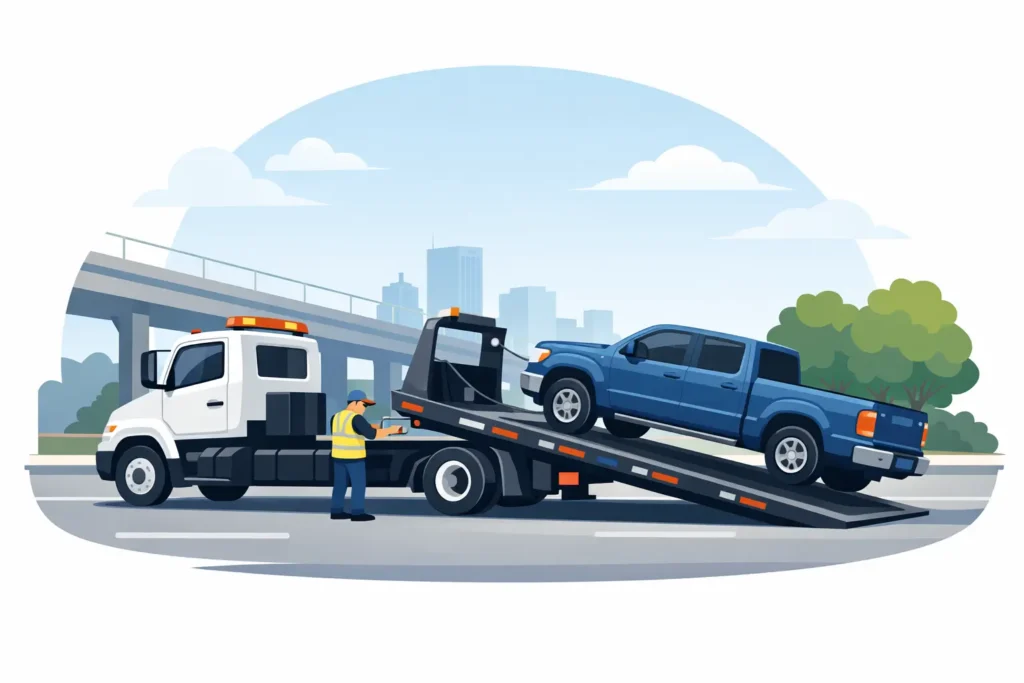
When the truck can still roll and steer, loading is usually straightforward. The bed is lowered, the angle is checked, and the truck is winched onto the deck in a controlled line. Once the truck is positioned correctly for weight distribution, it is secured and rechecked before transport.
When the truck is damaged or stuck, the job changes. Locked wheels, broken steering, collision damage, or being wedged into a curbside position all add time. In those cases, careful towing is less about speed and more about not forcing the vehicle. Wheel skates, repositioning, slower winching, or a different loading angle may be needed to get it onto the bed safely.
That is also why location matters. A truck broken down on I-44 is different from a truck stuck in a tight apartment lot or a downtown garage entrance. Space, traffic, incline, and surface conditions all affect how the tow is handled. Real experience shows up in those moments, not in sales language.
What truck owners should tell the tow driver first
If you need a tow, the fastest way to avoid problems is to give clear information up front. The year, make, and model matter, but so do the details people often leave out. If it is four-wheel drive, lifted, loaded down, damaged on one side, stuck in park, or sitting on a flat tire, say that early.
It also helps to mention whether the truck is in a safe open area or somewhere tight, like a parking garage, alley, steep driveway, or shoulder lane with limited access. The more accurate the description, the easier it is to send the right truck and avoid delays.
Drivers are usually stressed when they call for a tow, so this part gets overlooked. But a thirty-second explanation can make the difference between one trip done right and a call that needs to be reworked because the original truck was not equipped for the job.
Flatbed towing vs other towing methods for pickups
There is no reason to pretend every truck must be moved on a flatbed every single time. Some short local tows with the right setup can be handled other ways, depending on the vehicle condition and drivetrain. But if the priority is damage-free transport, flatbed towing usually gives the most control.
A wheel-lift setup can be useful in certain situations, especially where access is tight. The trade-off is that part of the truck remains on the road, and that may not be ideal for disabled, damaged, or four-wheel drive vehicles. The heavier and more complicated the truck, the more those trade-offs matter.
That is why many owners specifically ask for a flatbed when the truck is newer, customized, or already dealing with mechanical trouble. It reduces the chance of adding one more problem to the list.
Why local experience matters on truck tows
A truck tow in Tulsa is not always a clean parking-lot pickup. It may be a breakdown on US 75 during traffic, a dead truck in Tulsa Hills, or a work pickup that quit in a narrow lot with no room to spare. Those situations do not leave much room for trial and error.
Local route knowledge helps with response time, but it also helps with the tow itself. Knowing where traffic stacks up, where shoulders narrow, and which areas are harder to access makes the job smoother and safer. That is especially true when the truck cannot move under its own power and needs careful loading where it sits.
Tulsa Towing handles these calls with flatbed equipment because the goal is simple – load the truck correctly, secure it correctly, and get it where it needs to go without adding stress or damage.
If your truck needs a tow, the main question is not just how fast someone can get there. It is whether they are bringing the right equipment and using it the right way. That is what protects the truck long after the tow is over.