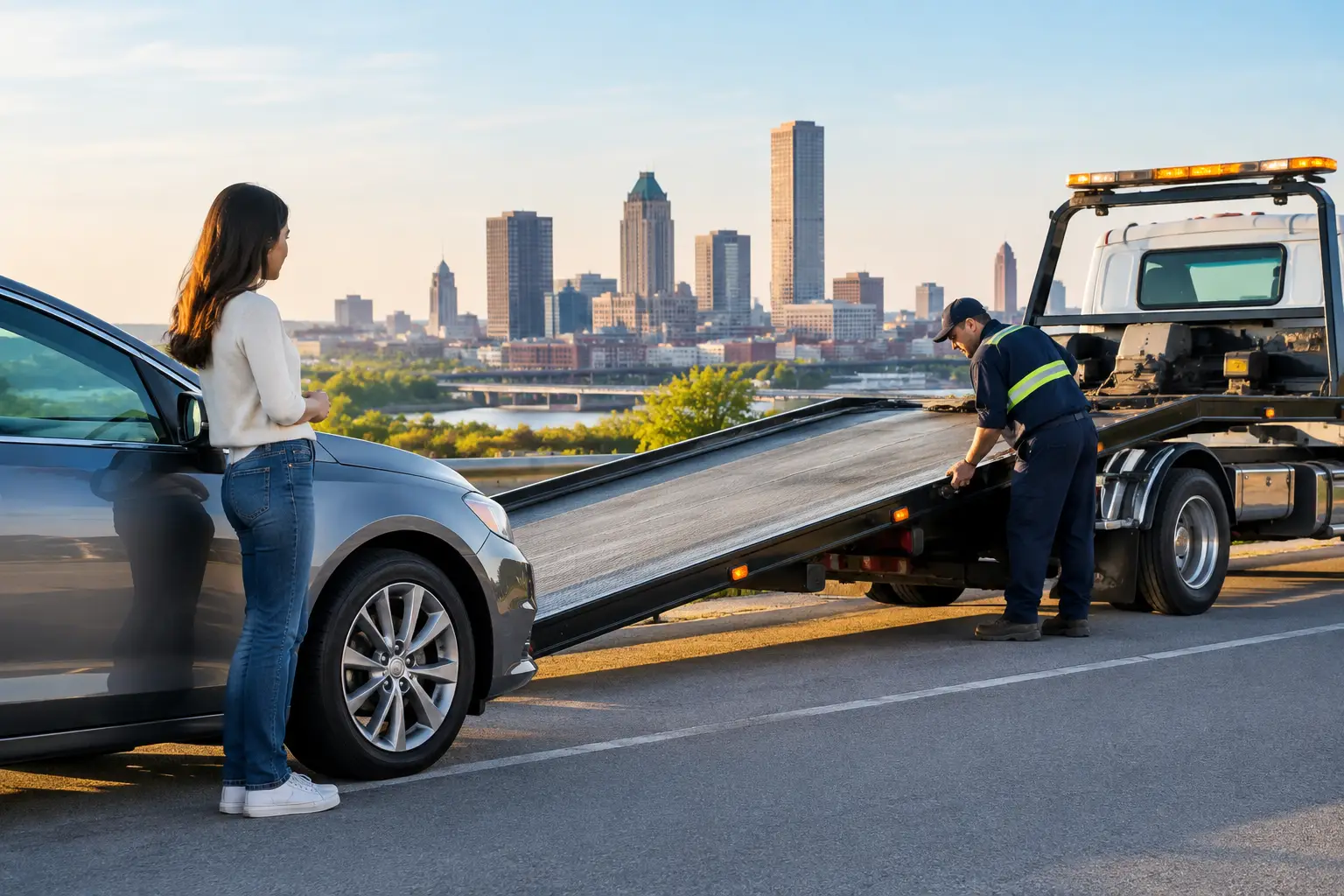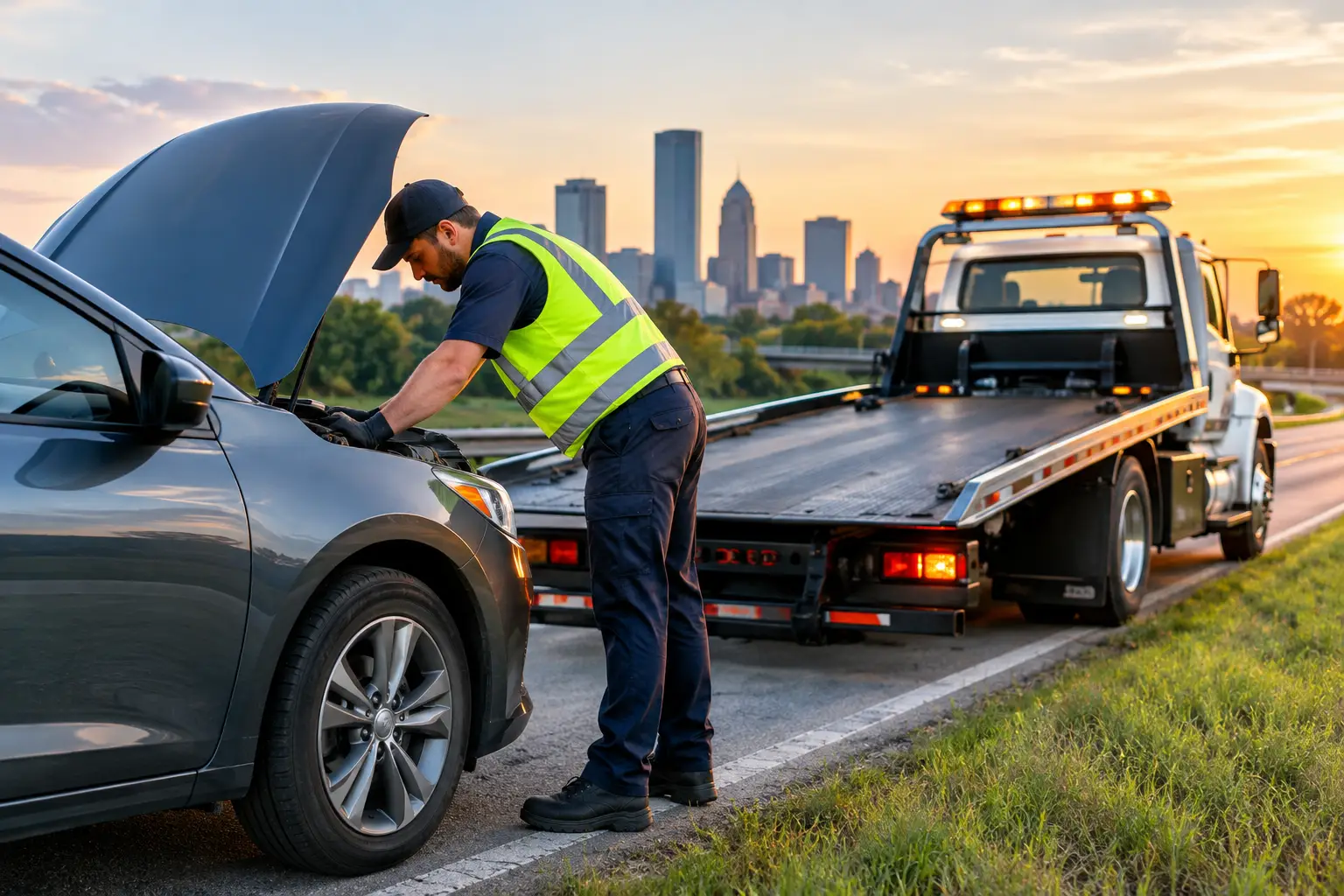
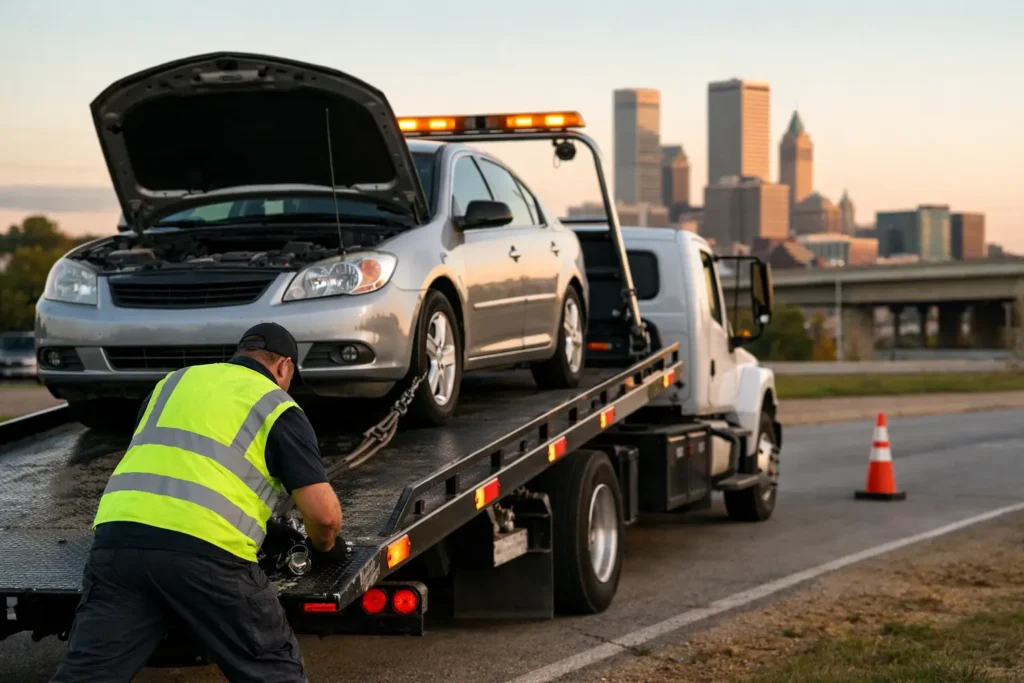
A breakdown in Tulsa usually happens at the worst time – on the way to work, in weekend traffic near Tulsa Hills, or along I-44 with cars flying past. If you are wondering what to do after car breaks down in Tulsa, the first goal is simple: stay safe, then figure out whether the vehicle can be fixed on site or needs a tow.
What to do after car breaks down in Tulsa right away
Start by getting your vehicle out of traffic if it will still roll safely. If you can move to the shoulder, a parking lot, or a side street without forcing the vehicle, do that. If the engine is overheating, if you heard a loud mechanical failure, or if the car no longer responds normally, do not keep pushing it farther than necessary.
Turn on your hazard lights immediately. At night, in rain, or during low visibility, those flashers matter even more. If you have reflective triangles or road flares, set them out only if it is safe to step outside and there is enough space away from traffic.
Your location changes what the next move should be. On a busy stretch of US 75 or Highway 169, staying inside the vehicle with your seatbelt on may be safer than standing near moving traffic. In a store parking lot or neighborhood street, you may have more room to step out, check the situation, and make a call.
Check the problem without making it worse
Not every breakdown means the car needs to be towed, but guessing can turn a small problem into a bigger one. Take a quick look at what the vehicle is doing. If it will not start and you hear clicking, the battery may be dead. If one tire is flat and you are in a safe place, it may be a tire issue only. If the engine temperature climbs, steam is coming out, or warning lights are flashing, stop there.
A lot depends on the type of failure. A dead battery, lockout, or simple flat tire can sometimes be handled as roadside assistance. On the other hand, transmission trouble, major overheating, suspension damage, or anything involving leaking fluids usually means the vehicle should not be driven.
This is where people get into trouble. They try to limp the car a few more miles to save time, then end up with more damage than the original problem. If the vehicle feels unsafe, sounds wrong, or is losing power unpredictably, towing is usually the smarter call.
If the car is stuck in a bad spot
Some breakdowns happen in places that make everything harder – tight parking garages, narrow apartment lots, sloped driveways, muddy shoulders, or the edge of a traffic lane. In those cases, the issue is not just the breakdown itself. It is whether the vehicle can be loaded and moved without scraping bumpers, damaging wheels, or creating more risk.
Low-clearance cars, trucks, and EVs all need to be handled correctly. A rushed hookup can do real damage, especially if the vehicle cannot be shifted, steered normally, or powered on.
Decide between roadside help and a tow
The right call depends on what failed and where you are parked. If the vehicle is in a safe location and the issue looks minor, roadside service may be enough. Jumpstarts, flat tire help, lockouts, and some stuck vehicle situations can often be handled on site.
If the vehicle quit in traffic, will not stay running, has warning lights tied to braking or steering, or has already been driven while overheating, towing is the better option. The same goes for accidents, undercarriage damage, or EV problems where improper movement can create more issues.
A good tow is not just about getting the vehicle off the road. It is about getting it loaded the right way and delivered where you want it to go, whether that is your home, a local shop, or a dealership.
What information to have ready when you call
When you call for help, clear details save time. You do not need a long explanation. The basics matter most: your exact location, the type of vehicle, what the car is doing, and whether you are in a dangerous spot.
If you are near a major Tulsa road, give the closest exit, cross street, or landmark. Saying you are on Riverside is less helpful than saying you are near a specific intersection or parking lot entrance. If the vehicle is a truck, low-clearance car, or electric vehicle, say that up front. That helps make sure the right equipment is sent.
Also mention anything unusual, like wheels turned hard against a curb, a locked steering column, a flat in a parking garage, or a car that will not shift into neutral. Those details change how the job gets handled.
Why equipment matters more than most drivers realize
When people are stressed, they usually just want a truck to show up fast. That makes sense. But how the vehicle is moved matters just as much as when the truck arrives.
Flatbed towing is often the safer choice for breakdowns because the vehicle is fully loaded off the ground. That reduces wear, lowers the chance of driveline issues, and is especially important for all-wheel drive vehicles, damaged cars, and EVs. It also helps in situations where the car has low clearance or cannot be rolled normally.
Proper loading takes experience. Tight turns, awkward parking angles, and disabled vehicles that will not cooperate are common on real jobs. The goal is not just to move the car. The goal is to move it without adding damage.
Stay safe while waiting for help
Once help is on the way, keep the situation simple. If you are on a shoulder near fast traffic, stay inside the vehicle if it is safe to do so. Keep your seatbelt on. If you need to exit because of smoke, fire risk, or unsafe positioning, move well away from the roadway.
Try not to stand between your car and traffic, and do not stay close to the driver side if vehicles are passing nearby. If you are with kids, keep them with you and away from the road at all times.
If it is dark, keep your phone charged and watch for the arriving truck carefully, but do not wave someone down from the road unless you are sure it is your service provider. Clear communication matters here. You should know who is coming and what vehicle to look for.
What happens after your vehicle is loaded
Once the vehicle is secured, the next decision is where it should go. In many cases, sending it straight to a repair shop saves time. In others, taking it home first makes more sense, especially if the breakdown happened after hours or you want to decide on repairs later.
It depends on the problem. A flat tire or battery issue may only need quick service. A no-start condition, overheating event, or mechanical failure may need diagnosis before anyone can tell you the real repair cost. If you already trust a local shop or dealership, have that destination ready.
For drivers in Tulsa, Jenks, Bixby, or Broken Arrow, local familiarity helps. A towing company that works these roads every day generally knows the common breakdown corridors, traffic flow, and access issues that slow down a call.
What not to do after a breakdown
A lot of roadside trouble gets worse because people make fast decisions under stress. Do not keep driving a vehicle that is overheating, losing oil, grinding loudly, or struggling to steer or brake. Do not let someone tow or pull your vehicle in a way that does not fit the vehicle type. And do not assume every disabled car should be handled the same way.
That matters even more with newer vehicles. Electric vehicles, all-wheel drive systems, and low-profile cars often need specific handling. The wrong method can turn a breakdown into body damage or drivetrain trouble.
If you need help, keep the process simple. Focus on safety first, explain the problem clearly, and make sure the vehicle is being moved with the right equipment. Tulsa Towing, powered by Neptune Towing, handles breakdown calls with that same approach – clear communication, proper flatbed towing, and careful transport without extra complications.
When your car quits unexpectedly, you do not need a complicated plan. You need to get yourself safe, get the right help on the way, and get the vehicle where it needs to go without making a bad day worse.