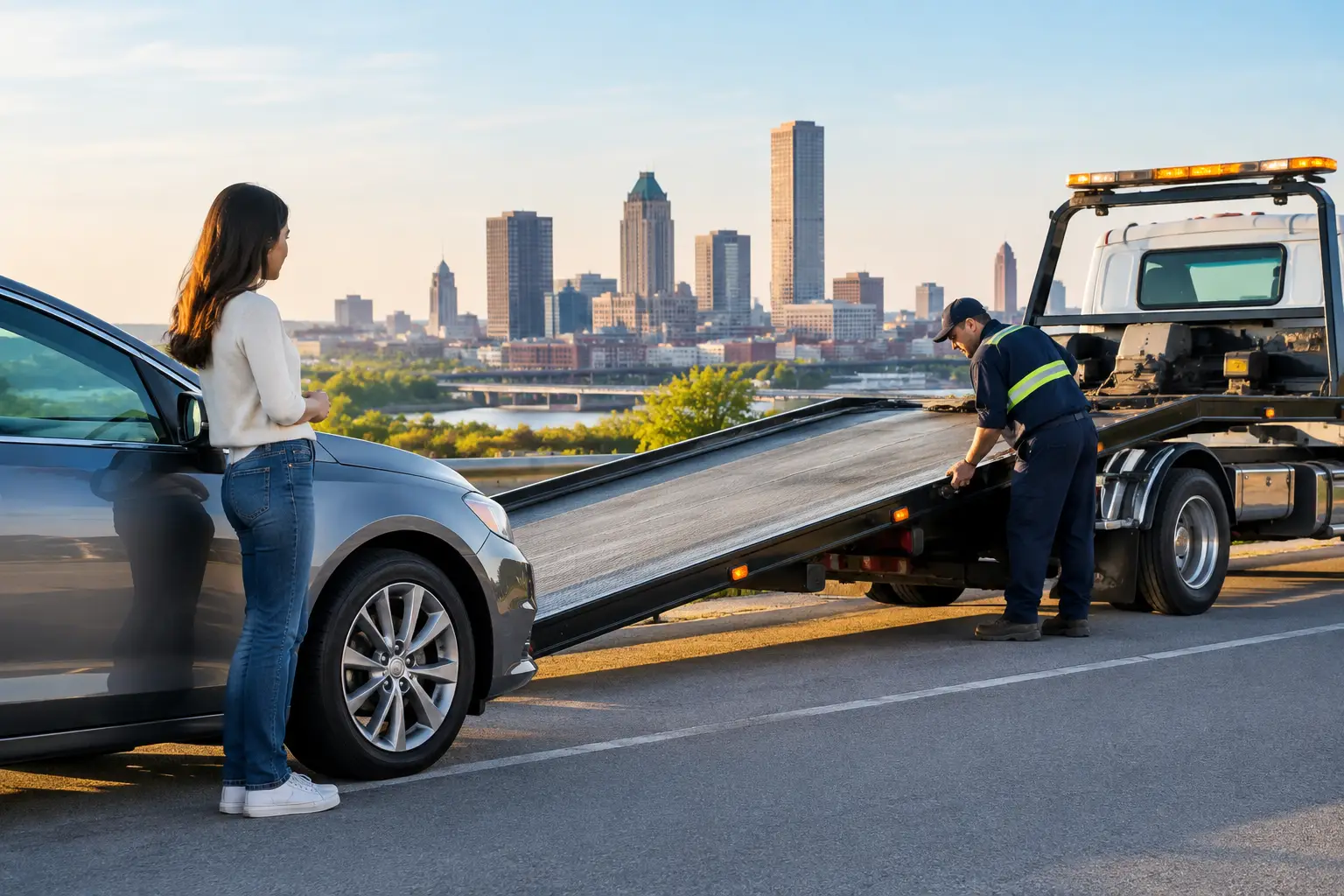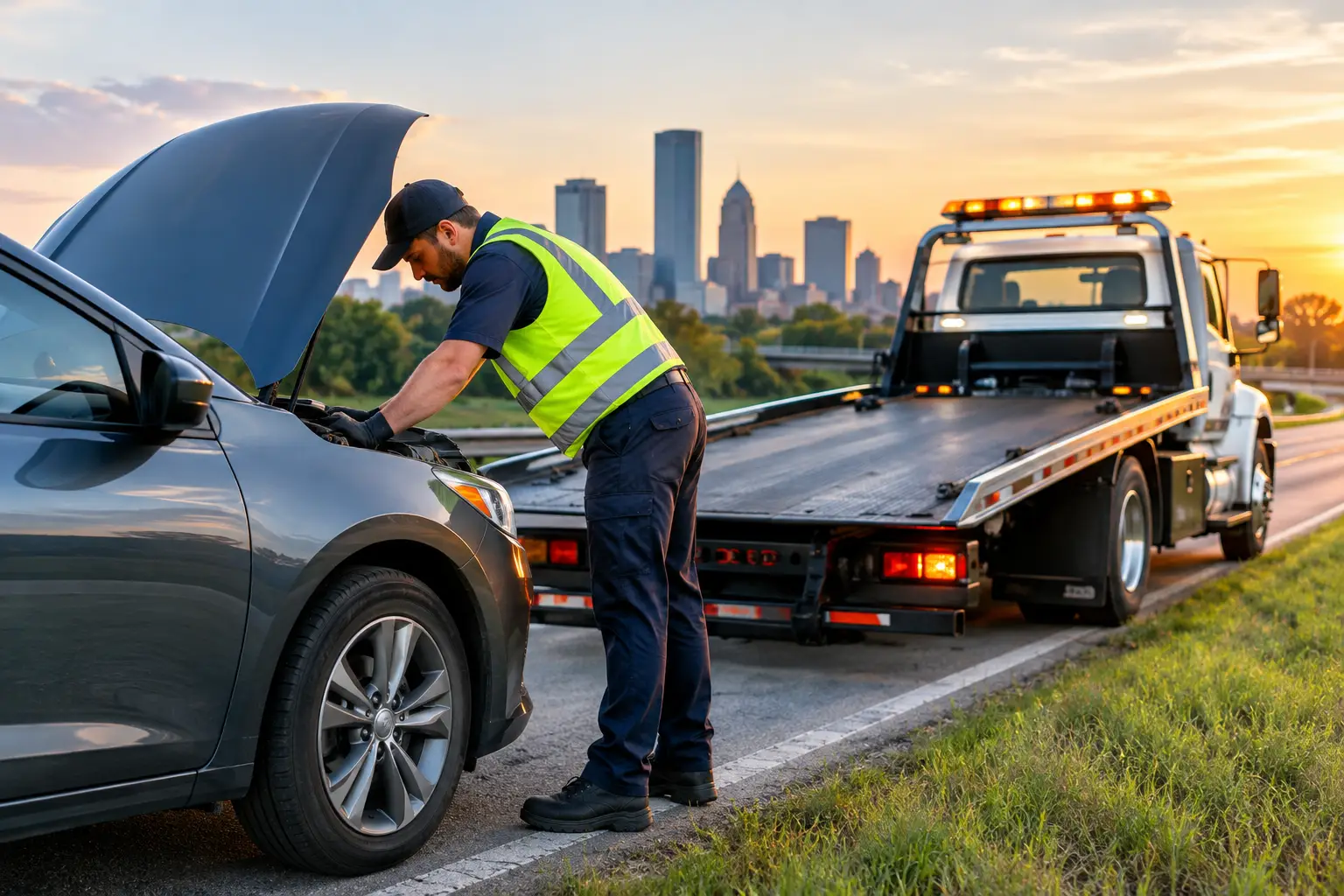
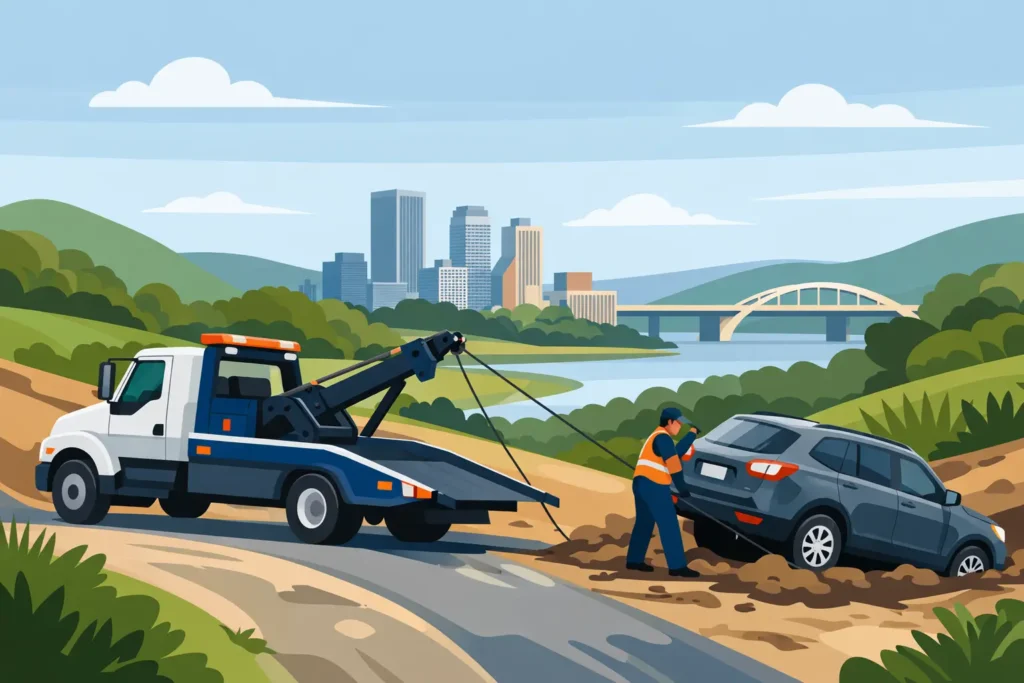
A vehicle can get stuck in Tulsa Hills faster than most drivers expect. One tire drops off the edge of a wet shoulder, a truck loses traction on loose dirt near a construction area, or a car bottoms out entering a steep driveway. When the vehicle will not move without spinning, scraping, or sliding farther, stuck vehicle recovery Tulsa Hills service is about getting it out safely, not forcing it free.
The wrong move can turn a simple winch-out into body damage, drivetrain trouble, or a recovery that is harder than it needed to be. The safest choice is usually to stop, assess the position, and use the right equipment before more damage is done.
When a Vehicle Needs a Winch-Out
A winch-out is used when a vehicle cannot safely drive under its own power but can be pulled back onto stable ground or into a position where it can be loaded. This is different from a standard tow. The main job is controlling the vehicle while it comes out of mud, a ditch, snow, loose gravel, or an awkward off-road position.
Common situations around Tulsa Hills include cars stuck along a soft shoulder after rain, SUVs sliding into a drainage area, pickups losing traction on an unpaved lot, and low-clearance vehicles hung up on a curb or sharp driveway transition. Parking areas with uneven edges can also be a problem, especially after dark when it is hard to judge the drop-off.
Not every stuck vehicle needs the same answer. If the tires still have traction and the car is sitting level on firm ground, a small adjustment may be enough. If the tires are spinning, the underbody is resting on the ground, or the vehicle is leaning toward a ditch or embankment, it is time to stop trying to drive out.
Signs You Should Stop Trying to Move It
Wheel spin is the clearest warning sign. Spinning tires can dig deeper into mud or gravel, throw loose material under the vehicle, and make a recovery angle more difficult. On front-wheel-drive cars, repeated attempts can also add stress without solving the traction problem.
Stop if you hear scraping underneath, smell something hot, see fluid leaking, or notice that a wheel is sharply turned or sitting at an unusual angle. The same goes for a vehicle that is high-centered, meaning the frame, suspension area, or lower body is carrying the weight instead of the tires.
Electric vehicles need extra care in these situations. Their battery packs sit low in the vehicle, and dragging an EV over a curb, rut, or raised ground can cause expensive damage. A careful recovery plan and flatbed transport are often the right choice after the vehicle is freed.
What to Do While You Wait for Stuck Vehicle Recovery in Tulsa Hills
First, get yourself to a safe spot if you can do so without walking into traffic or standing downhill from the vehicle. Turn on hazard lights. If the vehicle is near a busy entrance, Riverside traffic, or a high-speed road, stay well away from passing vehicles and do not stand in the path where the car could move during recovery.
Take a quick look from a safe distance, but do not crawl under the vehicle or put your hands near the tires. Let the recovery operator know what surface the vehicle is on, whether it is loaded, which end is stuck, and whether it has all-wheel drive, four-wheel drive, low clearance, or an EV battery pack. A clear description helps the right truck and equipment arrive prepared.
If you can safely do it, remove loose items around the tires, such as floor mats or branches that may be caught near a wheel. Do not use a tow strap attached to a bumper, suspension component, axle, or trailer hitch unless a trained operator has identified a proper recovery point. Those improvised pulls are where bent parts, broken straps, and injuries happen.
It also helps to tell the operator about access. A narrow driveway, parking garage, locked gate, deep ditch, or slope can change where the tow truck needs to set up. Good recovery work starts before the cable is ever connected.
How a Safe Winch-Out Is Performed
A proper recovery is controlled and deliberate. The operator checks the vehicle’s position, ground condition, traffic exposure, and the direction it needs to travel. The goal is not simply to pull hard. It is to pull from a safe angle, use the correct attachment point, and keep the vehicle stable as it comes back onto solid ground.
Depending on the situation, the truck may be positioned on firm pavement or another stable surface before the winch line is run out. The operator may use recovery straps, soft shackles, blocks, or other gear suited to the vehicle and pull angle. These choices matter because a low car, a heavy-duty pickup, and a Tesla do not have the same clearance, weight distribution, or safe connection points.
During the pull, the vehicle should move slowly and predictably. The driver may be asked to keep the wheels straight, apply light braking at a certain point, or stay out of the vehicle entirely. That depends on the surface, the slope, and how stable the vehicle is. Clear communication keeps everyone out of the danger zone.
Once the vehicle is free, the job is not automatically over. The operator checks whether it can be driven safely. If a tire is damaged, a suspension part is bent, the vehicle scraped hard underneath, or it remains unreliable after the recovery, a flatbed tow is the safer next step.
When Recovery Should Turn Into a Flatbed Tow
Sometimes the vehicle comes out, but it should not be driven away. This is common when the car has been high-centered, struck a curb, slid into a ditch, or run long enough while tires were spinning. A flatbed keeps all four wheels off the road and avoids adding miles to a vehicle that may have hidden damage.
Flatbed towing is especially useful for all-wheel-drive vehicles and EVs. It also makes sense for low-clearance cars that need careful loading after being stuck. The right loading angle, ramps, and securement points prevent a recovery from becoming a second damage event.
For a breakdown, accident, or vehicle that cannot move safely after a winch-out, Tulsa Towing can recover the vehicle and transport it to a repair shop, dealership, or another local destination. The focus is straightforward: assess the problem, handle the vehicle carefully, and get it where it needs to go without unnecessary complications.
Why Location and Ground Conditions Matter
Tulsa Hills has a mix of busy retail areas, highway access points, sloped drives, construction activity, and drainage features. After heavy rain, ground that looked solid earlier in the day can soften quickly. Gravel lots and grassy edges can be just as deceptive, particularly for front-wheel-drive cars or loaded pickups.
Weather is only one factor. A vehicle parked with one side on a curb, backed too far off pavement, or turned sharply on loose ground can lose traction even in dry conditions. Heavier vehicles can sink farther, while low cars may catch underneath before the tires lose grip. That is why recovery is not one-size-fits-all.
A local operator who understands the area can also account for traffic and truck placement. On a crowded access road or near US 75, setting up in the safest available position matters as much as the pull itself.
A Safer Way Out of a Stressful Situation
If your vehicle is stuck, protect the vehicle and yourself by resisting the urge to keep spinning the tires or accepting a random pull from another driver. Explain where you are, describe how the vehicle is positioned, and let an experienced operator determine whether a winch-out, flatbed tow, or both are needed. A careful recovery gets the immediate problem handled and gives you a better chance of avoiding a larger repair afterward.