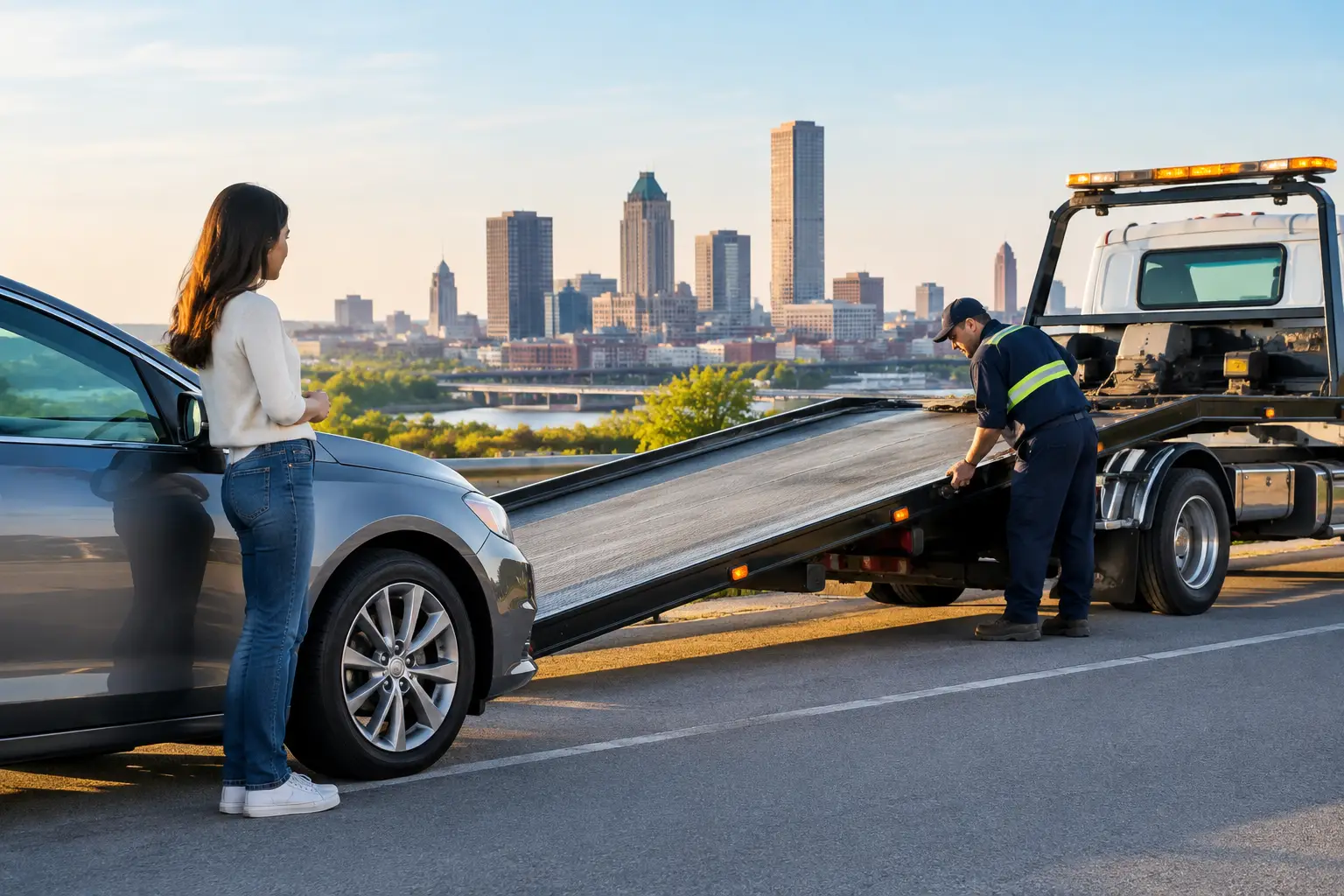
A stalled car on I-44, US 75, or a busy stretch of Memorial can turn stressful fast. Where should disabled drivers wait? The safest answer depends on where the vehicle stopped, how close traffic is, and whether there is an immediate hazard. The goal is simple: get out of the traffic path if possible, stay visible, and avoid putting yourself where another driver can hit you.
A tow truck can handle the vehicle. Your first job is protecting yourself and your passengers until help arrives.
Where should disabled drivers wait after a breakdown?
If your vehicle is safely off the road in a parking lot, driveway, wide shoulder, or other low-traffic location, waiting inside with the doors locked is usually the practical choice. Keep your seat belt on if you are near moving traffic, turn on your hazard lights, and stay alert for the tow truck.
On a busy roadway, the situation is different. If the vehicle is still operable, move it out of active lanes and as far from traffic as conditions allow. A parking lot, side street, exit ramp, or wide shoulder is far better than stopping in a travel lane. Do not worry about whether the vehicle is perfectly parked. Creating space between your vehicle and moving traffic matters more.
Once stopped, do not stand beside the car to inspect the problem, wait for a ride, or flag down help. The area next to a disabled vehicle is one of the most exposed places on the road. Passing drivers may not see you in time, especially at night, in rain, or when traffic is moving quickly.
When staying inside is safer
Staying inside the vehicle is generally the better choice when you are on a shoulder near traffic, in a breakdown lane, or stopped in a place where walking away would put you closer to moving vehicles. Keep the doors locked, buckle up, and call for roadside assistance or emergency help as needed.
This is especially true on Tulsa highways. Even with hazards flashing, a vehicle on the shoulder can be difficult for approaching traffic to see around curves, hills, construction zones, or heavy congestion. Sitting in the vehicle is not ideal, but walking along the shoulder or standing near the rear bumper can be worse.
If you have passengers, have everyone remain calm and stay inside unless there is a clear reason to leave. Children should not be allowed to wander outside the vehicle or near the roadway. Keep phones charged if possible, and avoid repeatedly opening doors on the traffic side.
When to leave the vehicle
There are situations where remaining in the vehicle is not the safest option. Fire, smoke, a fuel leak, rising water, a vehicle that has been hit, or a location where traffic is actively striking or narrowly missing vehicles are clear reasons to get away from the car.
If you must exit, do it only when you can do so without stepping into traffic. Move away from the roadway and, if available, get behind a guardrail or other substantial barrier. Do not stand directly behind the vehicle. A rear-end collision can push a stopped car forward without warning.
If you are stranded on a high-speed road and cannot safely decide what to do, call 911 and follow the dispatcher’s direction. Conditions at the scene matter more than any general rule. A dispatcher can advise based on the vehicle’s exact location, traffic conditions, and the hazard you are reporting.
Get the vehicle to a safer place first
A breakdown does not always mean the vehicle has to remain exactly where it quit. If it will roll, steer, and move without creating more danger, get it off the roadway. Use momentum carefully to reach a shoulder, exit, nearby lot, or side street. Do not stop in the center of a lane just because the warning light came on.
That said, do not attempt to drive a vehicle that is overheating, smoking, leaking heavily, losing steering control, or making severe mechanical noise. A few extra feet are not worth damaging the engine or losing control. Put on hazard lights, stop as far from traffic as you safely can, and request a tow.
In a parking garage or tight lot, try to leave enough room for traffic and a flatbed to reach the vehicle. If the car is blocking a lane, move only if it can be done safely. Clear communication with the tow driver helps more than guessing or trying to force the vehicle into a better position.
Make yourself and the vehicle easier to find
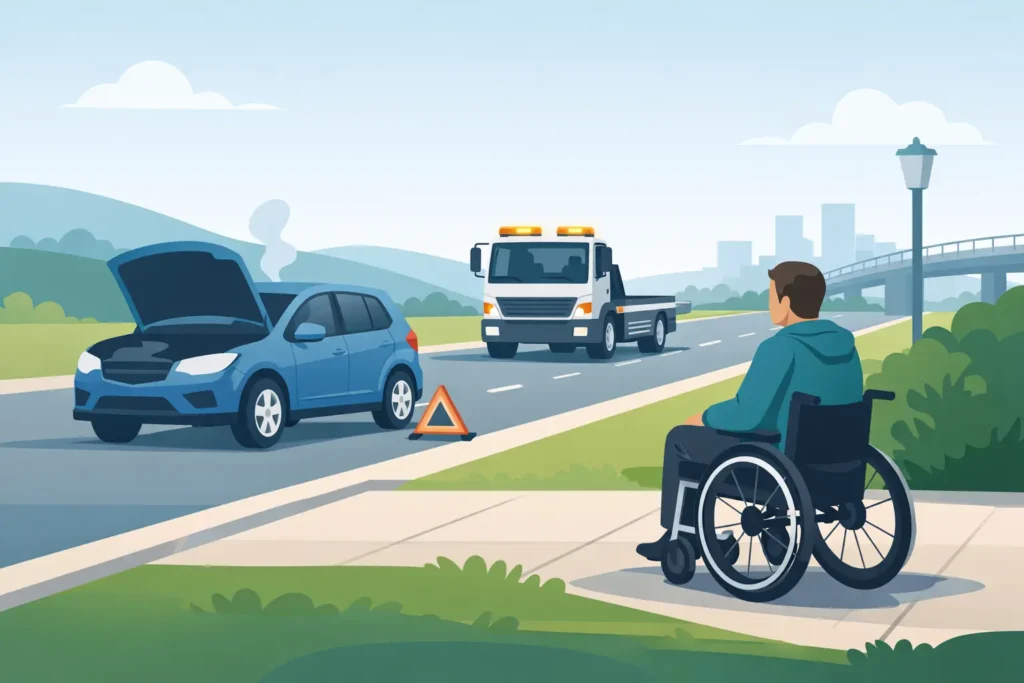
Hazard lights should be on as soon as you realize there is a problem. At night, turn on interior lights only if doing so helps responders identify the vehicle without distracting you. If you have reflective triangles or road flares and can place them without entering danger, they can help. But do not walk into fast traffic to set them out. Visibility equipment is useful only when it can be used safely.
When calling for help, give the dispatcher or tow company details that make locating you easier. The direction you are traveling, the nearest exit, a cross street, a business sign, or a clear landmark can save time. “On US 75 near 71st” is helpful, but “northbound US 75, just past 71st Street, on the right shoulder” is better.
Also describe the vehicle accurately: make, model, color, whether it is a car, pickup, SUV, or EV, and whether it can roll or steer. Mention a low-clearance vehicle, a locked wheel, a flat tire, or accident damage. Those details help ensure the right equipment arrives and that loading can be planned safely.
Avoid common roadside mistakes
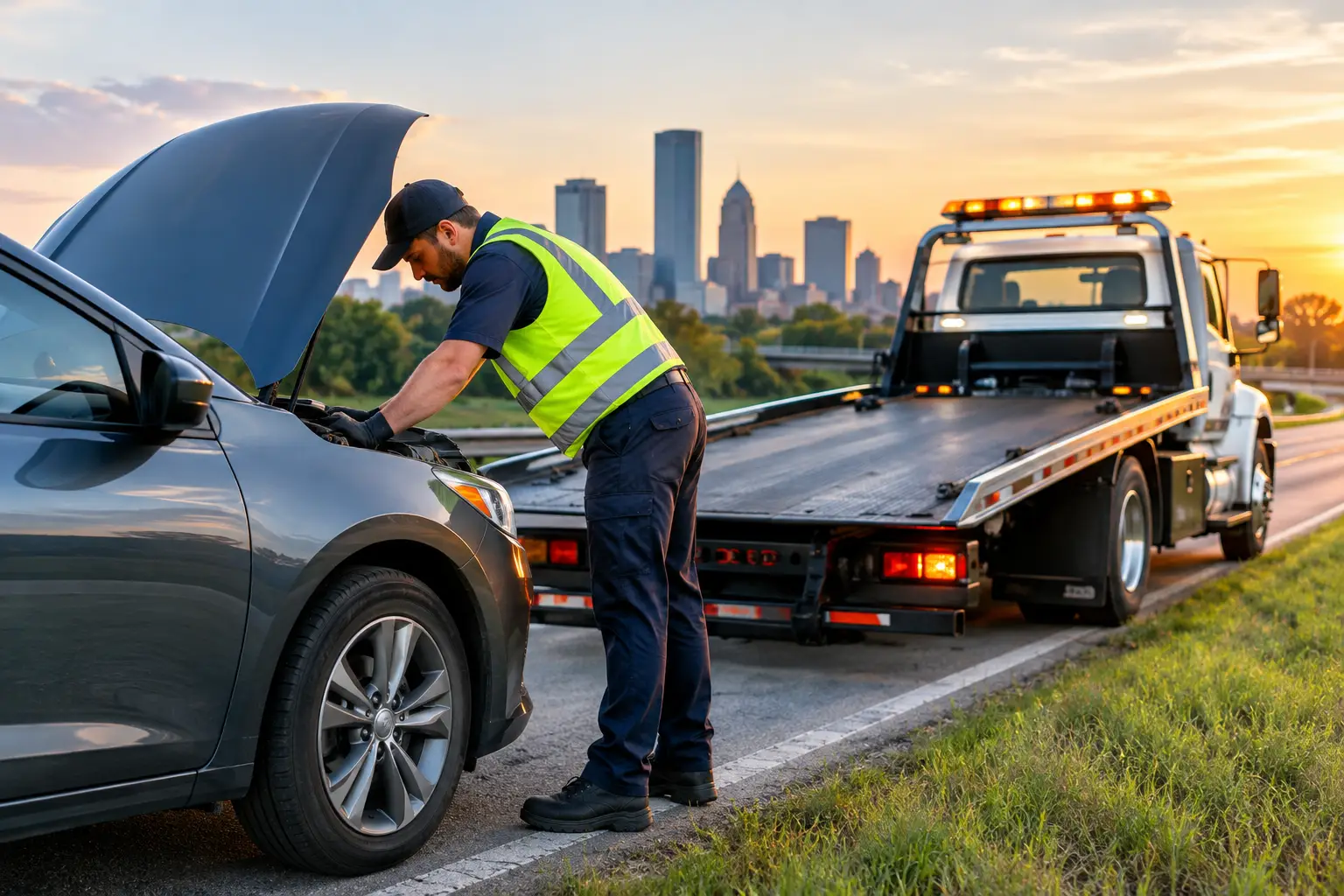
Many drivers make a stressful roadside stop more dangerous by focusing on the vehicle instead of the traffic around it. Opening the hood can tell other drivers that you are disabled, but it also encourages you to stand in an exposed area. Unless you are safely away from traffic and know exactly what you are checking, leave the hood closed.
Do not accept assistance from someone who pressures you to move, tow, or hand over your keys before the service you called arrives. A legitimate provider should be able to identify the vehicle and explain what they are there to do. If a friend or family member is coming to pick you up, have them meet you in a safe nearby location when possible rather than stopping on the shoulder beside you.
It is also smart to avoid sitting with the window down while waiting on a busy road. Keep the doors locked and open the window only enough to communicate when help arrives. If the tow driver needs you outside, they can tell you when and where it is safe to step out.
What to do while waiting for a tow truck
After the call is made, stay reachable. Keep your phone nearby, listen for updates, and watch for the truck without leaving your safe position. If your location changes because police, highway personnel, or a safety concern requires you to move, call back with the new location.
For a vehicle stopped on a street or highway, tell the tow driver which side of the road you are on and whether there is room to approach from the front or rear. This matters for safe loading. A flatbed operator may need to position the truck a certain way, manage traffic around the scene, or use additional care for all-wheel-drive vehicles, heavy-duty pickups, and electric vehicles.
Tulsa Towing handles roadside calls with that practical approach: confirm the location, assess what can be done safely, and transport the vehicle without adding damage. The quickest-looking setup is not always the safe one, particularly in tight traffic or around low-clearance and EV vehicles.
If you are uncertain, choose the safer side of the decision. Get out of the traffic lane if you can, keep clear of the roadway, and give the person coming to help an accurate location. The vehicle can be repaired or moved. Keeping everyone safe while they wait comes first.