A lot of drivers still assume towing is towing. Hook it up, move it, done. That thinking causes problems with electric vehicles. EV towing safety trends are moving in a different direction because these vehicles have different weight, battery systems, ground clearance, and manufacturer handling rules than gas-powered cars.
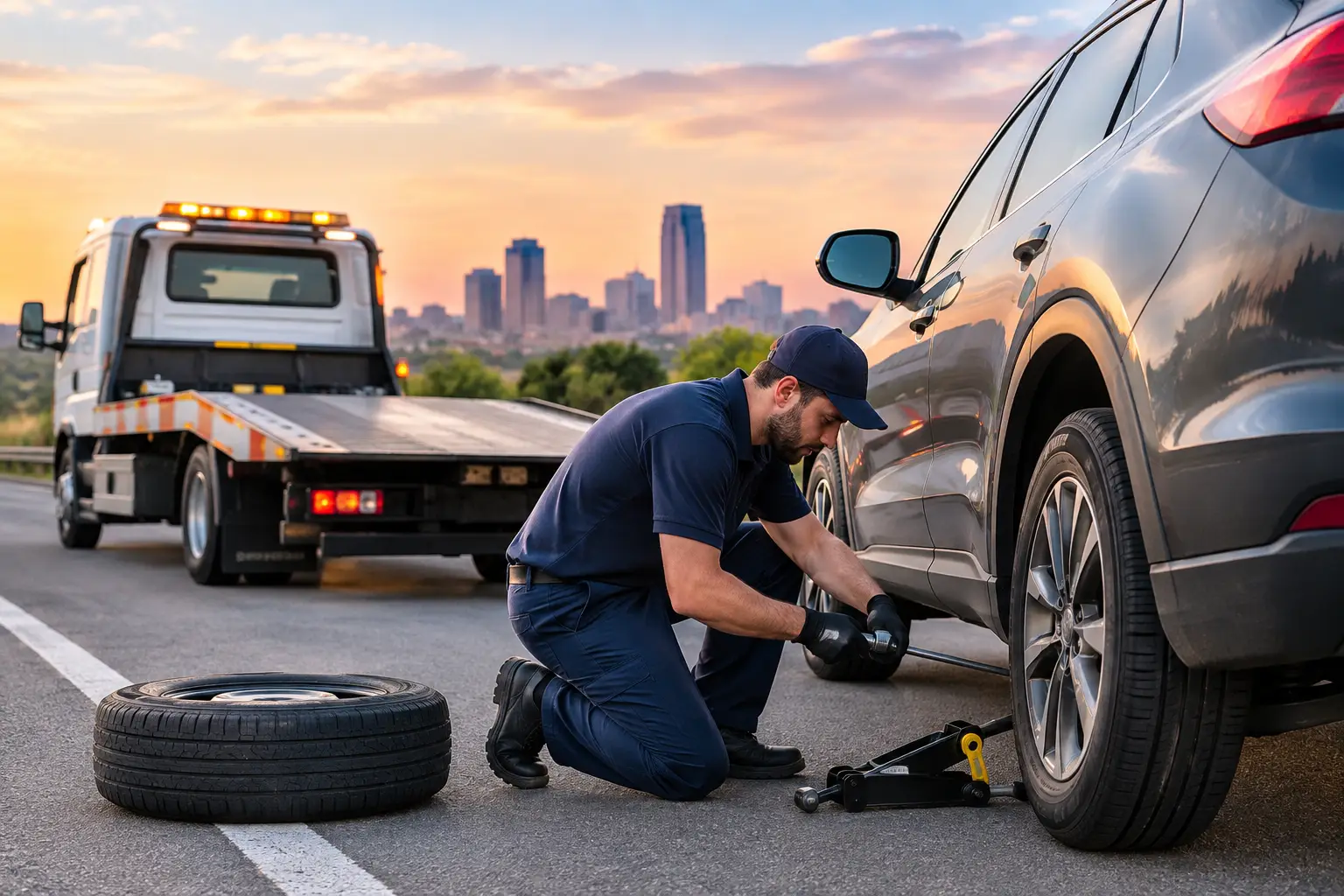
For drivers, that matters most when the car will not move and stress is already high. Maybe it is disabled on I-44, stuck in a parking garage, or showing a battery fault after a curb strike. In those moments, the real issue is not just getting a truck there. It is getting the vehicle loaded and transported the right way so one problem does not turn into a much bigger repair.
Why EV towing safety trends are changing
The biggest shift is simple. More EVs are on the road, and more tow operators are being forced to treat them as their own category instead of just another passenger vehicle. That includes Tesla, Rivian, Ford Lightning, Hyundai, Kia, and other models that all have different towing points, transport modes, and wheel handling requirements.
Years ago, many towing calls involved vehicles that could be moved with more room for error. With EVs, that margin gets smaller. Improper wheel lift towing, dragging a locked wheel, or using the wrong attachment point can damage drivetrains, underbody shielding, wheels, or battery-related components. Safe handling is no longer a nice extra. It is the job.
Another reason these trends are changing is vehicle weight. Many EVs are heavier than drivers expect because of the battery pack. That affects winching, loading angles, tie-down strategy, and how the vehicle sits on the bed. A tow that looks routine from the curb can require a more careful setup than a standard sedan.
Flatbed towing has become the safer standard
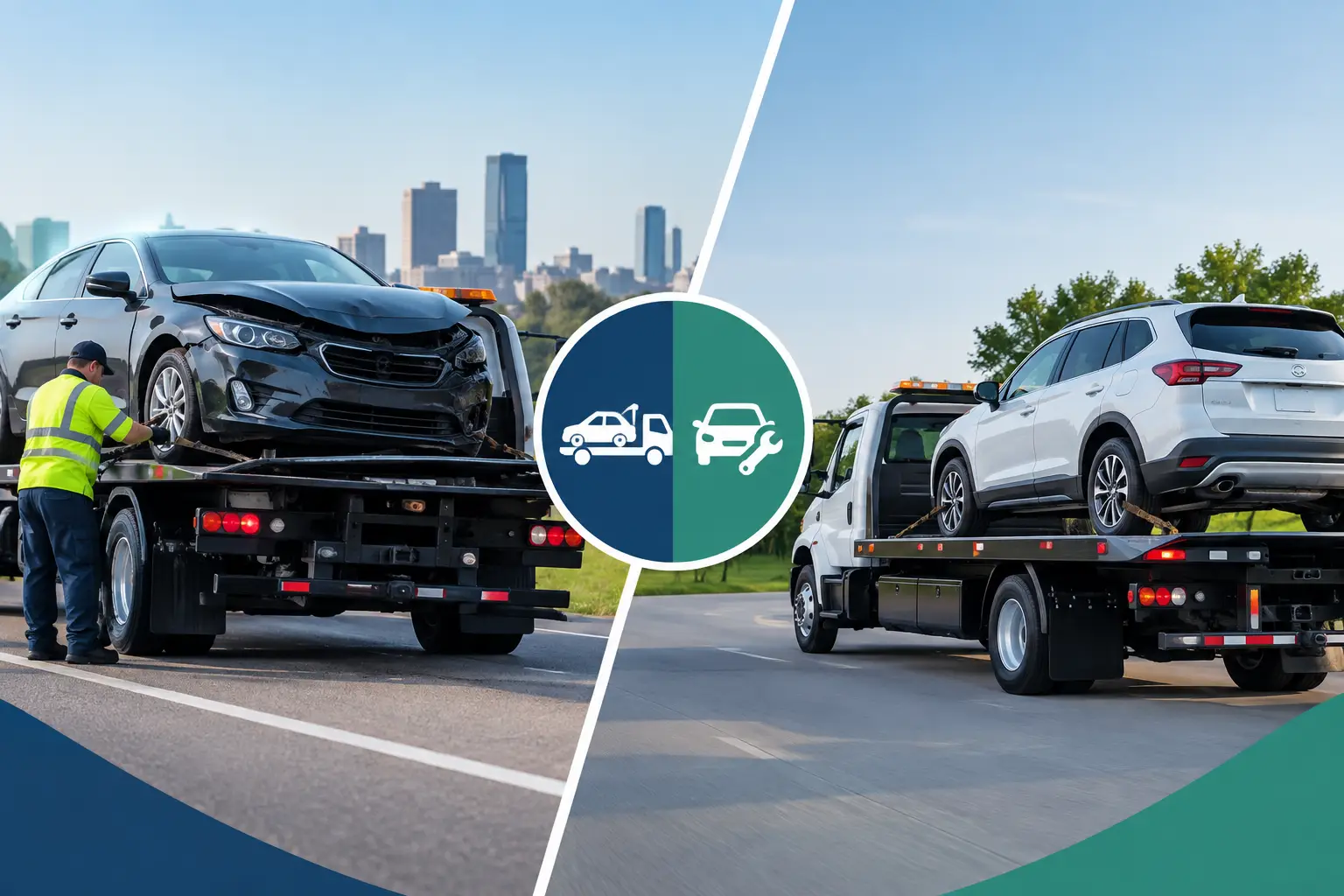
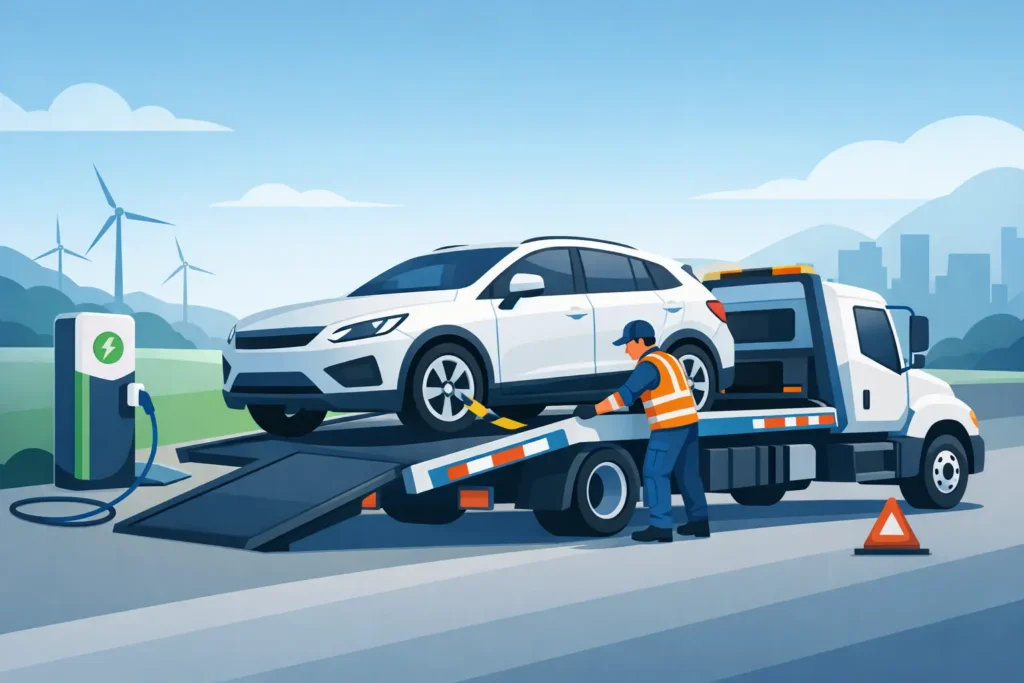
One of the clearest EV towing safety trends is the stronger move toward flatbed towing instead of quick hook-and-go methods. For many electric vehicles, a flatbed is the safer option because it keeps all four wheels off the ground and gives the operator more control during loading and transport.
That matters for vehicles with low ground clearance, locked wheels, or drive systems that should not be rolled the wrong way. It also matters after a collision, when suspension damage or battery area impact may not be obvious at first glance. A flatbed gives more room to handle the vehicle without forcing movement that could make things worse.
This does not mean every EV situation is identical. Some vehicles can be moved short distances under very specific manufacturer procedures. But out in real roadside conditions, especially on busy roads or in tight lots, the safer choice is usually the one that reduces wheel movement and underbody risk.
Safer loading matters as much as the tow itself
A lot of damage risk happens before the truck even leaves. That is another reason EV towing safety trends now focus heavily on loading technique.
Low approach angles, soft straps, correct winch points, and careful alignment are all part of the process. If the vehicle is stuck in park, has a dead 12-volt battery, or will not enter tow mode, the operator may need skates, dollies, or other controlled-loading methods. Rushing this part is where mistakes happen.
EVs also tend to have panels, aero pieces, and battery protection underneath that make clearance more important. On a rough load, the problem may not be visible right away. Drivers might not notice anything until they hear scraping or find underbody damage later. That is why careful setup matters more than speed alone.
Dead batteries and locked systems change the job
When people hear EV battery problems, they usually think of the main driving battery. In towing, the smaller 12-volt system can create just as many problems. If that system is dead, the vehicle may not unlock properly, shift properly, or enter transport mode.
That changes how the tow is handled. The operator may need to access the vehicle differently, stabilize it before movement, or use equipment that allows loading without dragging the tires. For the driver, the takeaway is simple. If your EV is completely unresponsive, tell the tow company that before they arrive. It helps them bring the right setup the first time.
Post-collision EV handling is getting more cautious
One of the most important EV towing safety trends involves crash response. After an accident, electric vehicles need a more cautious inspection before loading, especially if there was damage near the battery area, underbody, or wheel assemblies.
This does not mean every damaged EV is hazardous. It does mean visible damage is not the only concern. A hard impact can affect components you cannot see from standing next to the car. If the vehicle is leaking fluids, showing battery warnings, making unusual noises, or has visible underbody damage, that should be treated carefully from the start.
Tow operators are paying closer attention to where the vehicle can be touched, how it is winched, and whether it should be repositioned at all before loading. In some situations, the safest move is slower and more methodical. That can feel inconvenient in the moment, but it is usually the better call.
Fire risk awareness is part of the trend
Battery fire concerns get a lot of attention, and sometimes more than they should. The average disabled EV is not automatically about to catch fire. Still, the industry has become more alert to thermal events after major impacts or severe battery damage.
What matters for drivers is awareness, not panic. If an EV was in a serious collision, struck road debris hard underneath, or is showing smoke, heat, or strong chemical odor, tell the tow operator and stay clear of the vehicle. These are not details to mention later. They affect how the scene is handled right away.
More operators are working from vehicle-specific procedures
Another change is that safe EV towing is becoming less general and more model-specific. Different manufacturers have different instructions for transport mode, recovery points, jacking points, and wheel movement limits.
That means experience matters, but so does discipline. A careful operator does not assume every EV loads the same way. They verify what applies to that vehicle and then work from there. That approach reduces damage and avoids the kind of guesswork that gets expensive fast.
For drivers, this is a useful sign to watch for. If the person helping you asks specific questions about your EV instead of treating it like any other car, that is usually a good thing. The details matter.
What drivers should expect from safe EV towing
If you need your EV towed, the process should feel clear and controlled. You should be asked where the vehicle is, whether it powers on, whether the wheels roll, whether it was in a collision, and whether there are battery warnings or underbody impacts. Those questions are there to prevent damage, not slow the job down.
You should also expect the vehicle to be loaded with care, not forced. In many real roadside calls, the safest tow takes a little more setup time because the operator is working around low clearance, locked systems, or limited access. That is normal.
In a city-focused service area like Tulsa, this comes up in more places than people think. Downtown garages, apartment lots, shopping centers, and highway shoulders all create different loading challenges. The right equipment matters, but so does knowing how to handle the scene without turning a disabled EV into a damaged one.
EV towing safety trends point to one thing
The main trend is not flashy technology. It is better handling. More flatbed use, more caution after collisions, more attention to battery-related issues, and less guesswork when a vehicle will not move.
That is good for drivers because EVs are not rare anymore, and towing them should not feel experimental. When your vehicle is stranded, what you want is simple – clear communication, proper equipment, and someone who knows how to move it without adding a second problem.
If you ever need an EV towed, the safest move is to treat the tow itself as part of the repair. Getting the vehicle where it needs to go is only helpful if it gets there without new damage.