A dead battery usually shows up at the worst time – before work, after a late shift, or in a parking lot where you do not want to be stuck any longer than necessary. When you search for a jumpstart service near me, you are not looking for a long explanation. You want to know who can get there, whether your vehicle can be started safely, and what happens if the battery problem is bigger than a simple jump.
That is the part many drivers do not find out until someone is already on site. A jumpstart is often the fastest fix, but it is not always the whole answer. If your battery is drained because of a dome light left on overnight, a proper jump can get you moving again. If the battery is failing, the alternator is not charging, or the vehicle has another electrical issue, the car may start and die again a few minutes later.
When a jumpstart service near me is the right call
The most common signs are familiar. You turn the key or push the start button and get a slow crank, a clicking sound, dim lights, or nothing at all. In many of those cases, roadside assistance can get the vehicle started on site without the need for a tow.
That said, it depends on what caused the battery to go dead. A battery can be discharged by cold weather, short trips, interior lights, hazard lights, or simply age. In Tulsa, that can happen in a driveway, at an apartment complex, outside a store in Tulsa Hills, or in a busy lot near Memorial where you need the problem handled quickly and without extra confusion.
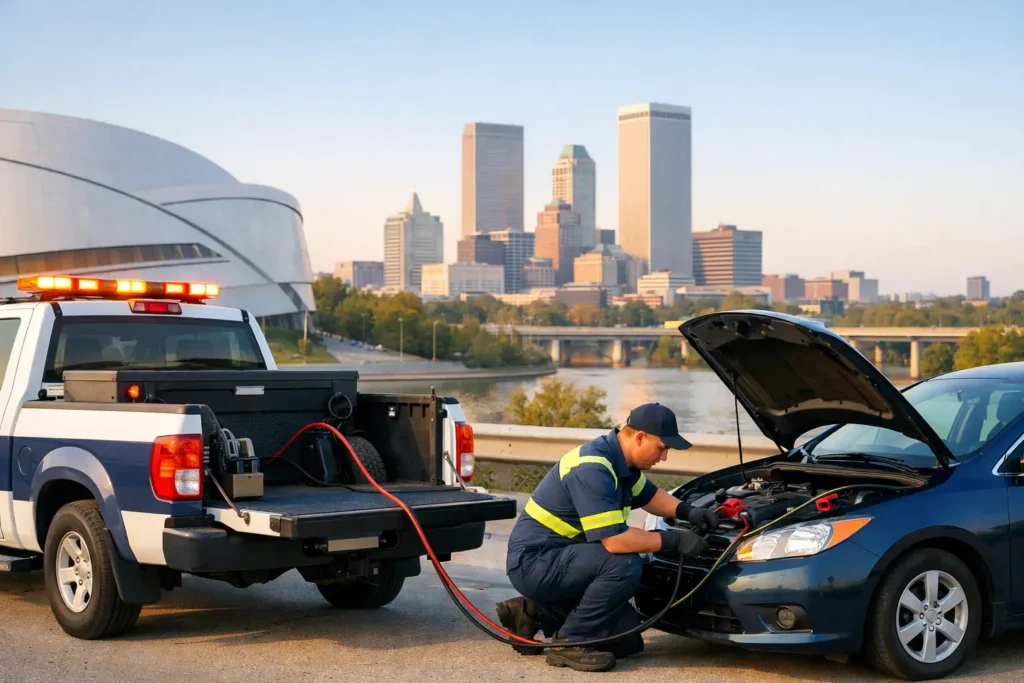
A good roadside jumpstart is not just hooking cables to a battery and hoping for the best. The operator should confirm the battery is the likely issue, connect equipment correctly, and avoid causing damage to the vehicle’s electrical system. That matters even more with newer vehicles that have sensitive electronics, and it definitely matters with hybrids and EV-related systems where guesswork can create expensive problems.
What to expect when you call for a jumpstart
The process should be simple. You call, give your location, describe what the vehicle is doing, and the truck is dispatched. If the vehicle is in a tight garage, along I-44, on US 75, or in a crowded shopping area, local route knowledge helps cut down delays.
Once the operator arrives, the first job is to verify that a jumpstart makes sense. If the battery is visibly damaged, leaking, or completely failed, a jump may not be the right move. If the issue looks like a starter problem, ignition issue, or something else that keeps the engine from turning over, it is better to be upfront about that instead of wasting your time.
If the battery can be safely boosted, the jumpstart equipment is connected and the vehicle is started. In many cases, that solves the immediate problem. But a careful operator should also tell you what to watch for next. If the engine runs rough, dash lights stay on, or the vehicle dies again after shutoff, the battery or charging system may need more than roadside help.
When a jumpstart will not solve it
This is where experience matters. Drivers often assume a no-start condition means dead battery, but that is not always true. If the battery is old and has lost the ability to hold a charge, the jumpstart may work only long enough to move the vehicle. If the alternator is failing, the battery may be fine but not getting recharged while driving.
There are also cases where the vehicle starts but should not be driven far. Maybe the battery warning light is on. Maybe the electrical system is unstable. Maybe the car stalled in traffic and now will not restart. In those situations, towing to a repair shop is usually the safer call than trying to stretch a temporary fix.
For some vehicles, especially low-clearance cars, heavy-duty pickups, and electric vehicles, the next step needs to be handled carefully. If roadside assistance does not solve the issue, proper flatbed transport protects the vehicle and keeps a bad situation from turning into body damage or undercarriage damage.
Why proper equipment matters for a roadside jump
A lot of people think a jumpstart is basic work. Sometimes it is. But plenty of roadside problems get worse because someone rushed the job or used the wrong approach.
Modern vehicles are not all the same. Battery locations vary. Some use remote jump points under the hood. Some have limited access. Some vehicles have electrical systems that do not tolerate careless connections. That means the right jump pack, correct connection points, and a steady process matter more than people realize.
It also matters where the vehicle is sitting. A car stopped on Riverside during traffic, a truck in a narrow apartment lot, or an SUV in a parking garage creates a different kind of roadside call than a vehicle parked safely at home. The work has to be done with attention to traffic, spacing, and whether the vehicle can leave safely once it starts.
Jumpstart service near me or tow truck near me?
Sometimes drivers search one and really need the other. If your battery went dead because the lights were left on, a jumpstart is probably the fastest and least disruptive option. If the vehicle has repeated starting problems, warning lights, or a charging issue, a tow may save you from being stranded again an hour later.
The key is honest assessment on site. There is no benefit in forcing a jumpstart when the vehicle is not likely to stay running. There is also no reason to tow a vehicle that can be safely started and driven. The right service depends on what the vehicle is actually doing, not just the phrase used in the search bar.
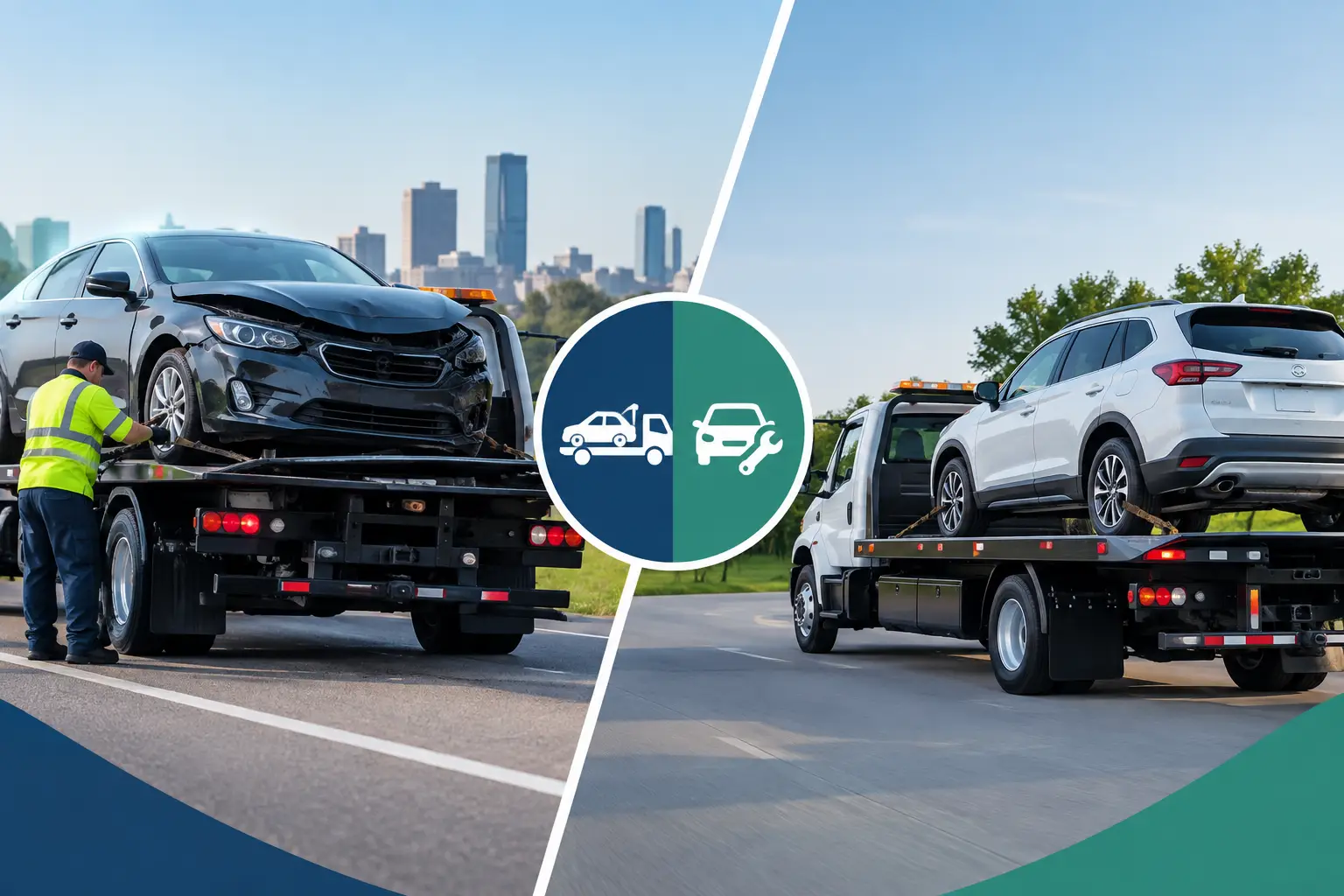
That is why roadside assistance and towing often go together. A dead battery can be fixed on site. A failed battery, electrical problem, or disabled vehicle may need transport to a local repair shop or dealership. The best service call is the one that gets you moving safely, whether that means a jump or a tow.
Local response matters when you are stuck
If you are stranded in Tulsa, Jenks, Bixby, or Broken Arrow, response time is not just about speed. It is also about knowing the area well enough to reach you without unnecessary delays and knowing how to work in the kinds of places drivers here actually get stuck.
That could mean a shoulder on Highway 169, a crowded lot in South Tulsa, a downtown parking deck, or a residential street where there is barely room to work. Local operators deal with those situations every day. They know the traffic patterns, the common breakdown areas, and the quickest way to get a job handled without turning it into a drawn-out mess.
Tulsa Towing, powered by Neptune Towing, works with that same local, straightforward approach. The focus is simple: show up, communicate clearly, handle the vehicle the right way, and get the problem solved without extra hassle.
What to do while you wait
If you are waiting on roadside help, keep things simple. Turn on your hazard lights if it is safe to do so. Stay inside the vehicle if you are on a busy roadway and it is safer than standing outside near traffic. If the vehicle is in a parking lot or residential area, make sure your phone is on and keep an eye out for the truck.
If you already tried to jump the vehicle yourself and it did not work, tell the operator that when you call. That detail can help narrow down whether the battery is discharged, fully failed, or if another issue may be involved.
If the car starts after the jump, do not assume the problem is gone for good. A battery that needed a jump may still be near the end of its life. If the vehicle struggles again later that day, it is usually a sign that more than a one-time boost is needed.
A dead battery is frustrating, but the fix should not be complicated. The right roadside service will tell you whether a jumpstart makes sense, whether towing is the safer option, and what your vehicle is likely doing before you waste more time guessing. When you are stuck, clear answers matter just as much as getting the engine started.