A disabled pickup is rarely in a convenient spot. It is usually stuck on a shoulder, dead in a parking lot, blocking a driveway, or sitting nose-down where it cannot be moved safely. When you need a tow truck for disabled pickup service, speed matters, but the way the truck is handled matters just as much. A full-size pickup has more weight, more ground clearance variables, and more ways to get damaged if the tow is rushed.
That is why the first question is not just, “Can someone get here fast?” It is, “Can they load this pickup the right way and get it where it needs to go without adding another problem?”
When a disabled pickup needs more than roadside help
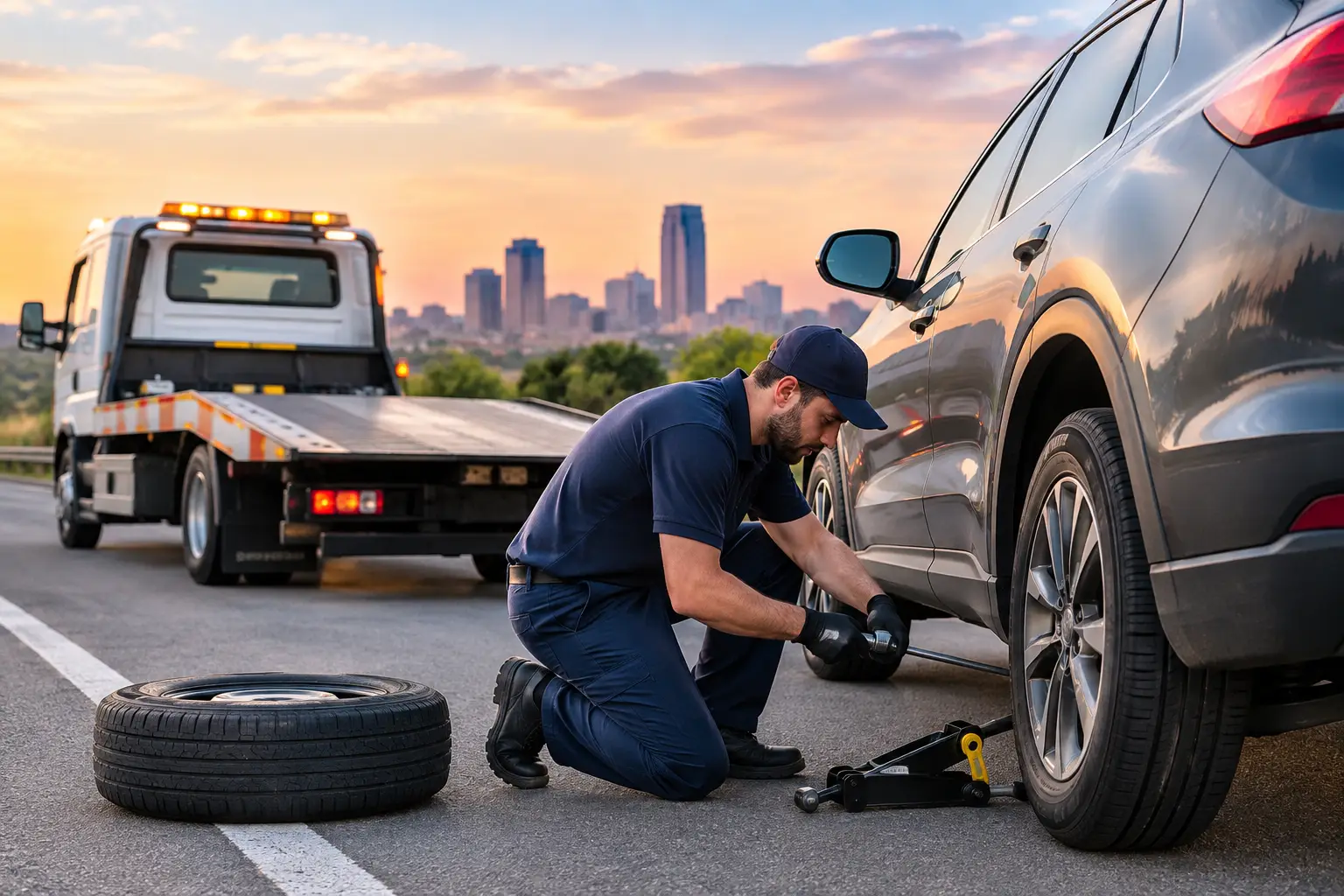
Some pickup problems can be handled on site. A dead battery, a flat tire, or a simple lockout may not require a tow at all. But once the truck will not start, will not shift, has drivetrain damage, was involved in an accident, or cannot roll safely, roadside assistance stops being enough.
This is where the job changes. A pickup is heavier than a standard sedan, and many are lifted, loaded with tools, or carrying equipment in the bed. Some have long wheelbases. Some are two-wheel drive, others are four-wheel drive, and that difference affects how they should be moved. If the wrong towing method is used, the problem can go from a breakdown to undercarriage damage, bumper damage, or drivetrain issues.
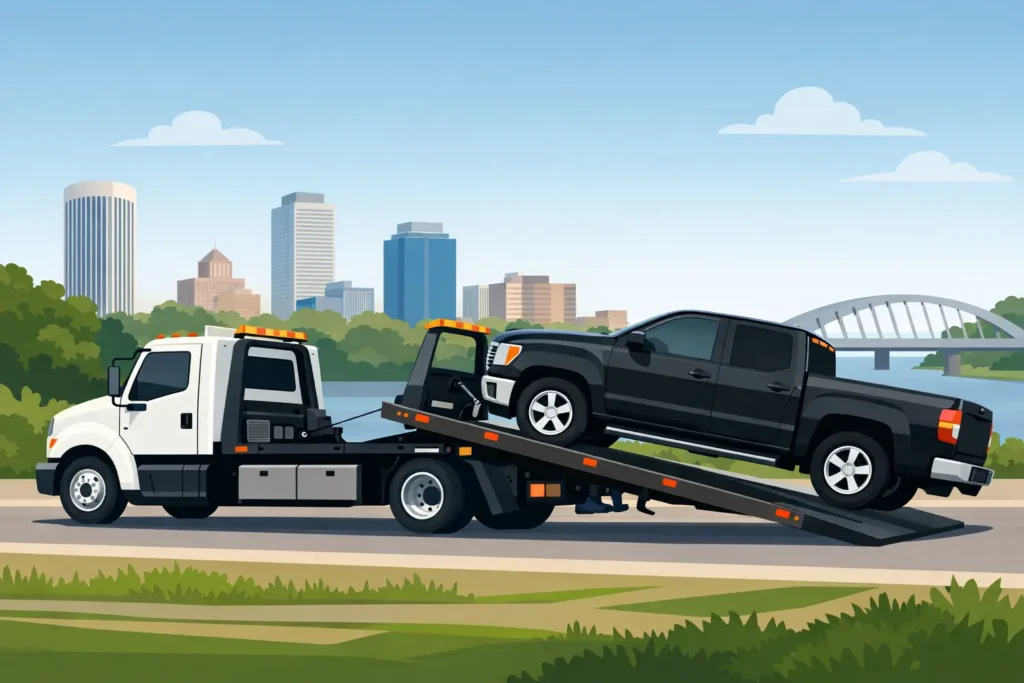
For that reason, a flatbed is often the right call for a disabled pickup, especially when the truck cannot be driven onto the bed under its own power.
Why flatbed towing is usually the safer choice
When people search for a tow truck for disabled pickup service, they are often thinking about one thing – getting the truck moved. What they may not be thinking about is how different loading conditions can be from one call to the next.
A pickup with front-end damage after a crash is not loaded the same way as a truck with a broken axle. A work truck sitting in a muddy lot is not approached the same way as a pickup stalled in a tight garage entrance. Flatbed towing gives more control in all of these situations because the truck is fully supported during transport instead of being partially carried or pulled on its own wheels.
That matters for heavy-duty pickups and newer trucks with more complex suspension and drivetrain systems. It also matters for trucks with low front valances, oversized tires, or poor wheel alignment after a breakdown. The more variables there are, the more important proper equipment becomes.
What the tow operator needs to know first
A good dispatch starts with the right details. If your pickup is disabled, the most useful information is simple. Where is it? Can it roll? Is it stuck in park? Is it four-wheel drive? Has it been in an accident? Is it loaded down with cargo or tools? Is it in a place with limited clearance?
Those details help determine what equipment is needed before the truck is dispatched. That saves time and avoids the common problem of sending the wrong setup to a heavier or more complicated vehicle.
In Tulsa, that can make a real difference. A disabled pickup on I-44 or US 75 needs a different approach than one sitting in a neighborhood driveway in Broken Arrow or a shopping center lot near Tulsa Hills. Traffic flow, shoulder space, and safe loading position all affect how the job gets done.
Common disabled pickup situations we see
Not every disabled pickup call looks dramatic. In fact, most are pretty straightforward once the right equipment arrives.
A common one is a no-start condition in a parking lot after work. Another is a transmission issue where the truck powers on but will not move. We also see accident damage that leaves the steering unsafe, and trucks with front suspension or tire damage that cannot be pulled without risking more harm. In wet weather, pickups also end up stuck off the road, in soft shoulders, or on uneven ground where a winch-out may be needed before loading.
The point is simple. “Disabled” can mean a lot of different things, and the towing method should match the actual condition of the truck, not just the fact that it will not move.
Tow truck for disabled pickup jobs in tight spaces
One part people do not always expect is how often disabled pickups are hard to access. Some are parked between other vehicles. Some are up against curbs. Some are facing downhill in parking garages or stopped in apartment complexes with very little room to work.
That is where experience shows up. Loading a pickup in a tight area is not about brute force. It is about angles, clearance, wheel position, and using the bed and winch correctly so the truck comes up cleanly. Rushing that part is how scrapes happen.
A careful operator will look at approach angle, bed tilt, and whether the pickup needs skates, soft straps, or extra positioning before the load even starts. That extra minute on scene is often what prevents damage.
What to expect when you call
If you are dealing with a disabled pickup, the process should be simple. You call, explain what the truck is doing or not doing, give the location, and say where you want it taken. From there, the focus should be on clear communication.
You should know whether the truck is being transported to a repair shop, dealership, home, or another local destination. You should also know if anything about the pickup could affect loading, such as being lowered, lifted, overloaded, or unable to steer. None of this needs to be complicated, but it does need to be accurate.
Once on site, the operator should confirm the condition of the truck, choose the safest loading method, and secure it correctly for transport. For pickups, securement matters because weight distribution is different than a passenger car, especially with cargo in the bed.
Why proper handling matters with modern pickups
Today’s pickups are not just basic work trucks. Many have advanced suspension systems, larger wheel packages, driver-assist sensors, electronic parking brakes, and four-wheel-drive components that do not tolerate careless towing well.
Even older pickups need the right handling. A truck with worn steering parts or a weak transmission may still look fine from the outside, but dragging or forcing it can create new issues. If the pickup already has one mechanical problem, the goal is to transport it without adding a second one.
That is one reason owner-operated towing tends to feel different. The decisions on site come from real towing experience, not guesswork. Tulsa Towing, powered by Neptune Towing, works from that practical approach – use the right equipment, load it carefully, and get the vehicle where it needs to go without making the day worse.
Local response matters when the pickup is blocking traffic
A disabled pickup can create a safety problem fast, especially on busy roads or narrow shoulders. If the truck is blocking traffic, partially in a lane, or stopped in a high-speed area, local route knowledge matters almost as much as towing skill.
Knowing how to approach a breakdown on Memorial, Riverside, Highway 169, or a crowded surface street in Midtown helps cut down delays and confusion. The goal is not just getting there. It is getting there prepared for the location and the condition of the truck.
That local awareness also helps with destination planning. If the pickup needs to go to a nearby repair shop, dealership, or home address, a city-focused towing service can usually move more efficiently than a company stretched across a much larger area.
The right call is the one that prevents extra problems
If your pickup is disabled, you do not need a long explanation or a sales pitch. You need to know the truck can be loaded safely, moved without damage, and delivered where you want it.
That is what matters most with a tow truck for disabled pickup service. Not just a truck showing up, but the right truck, the right equipment, and someone who understands how to handle a heavier vehicle under real conditions. When your pickup will not move, the best next step is simple – get it off the road or out of the lot safely, and get it where the repair process can start.