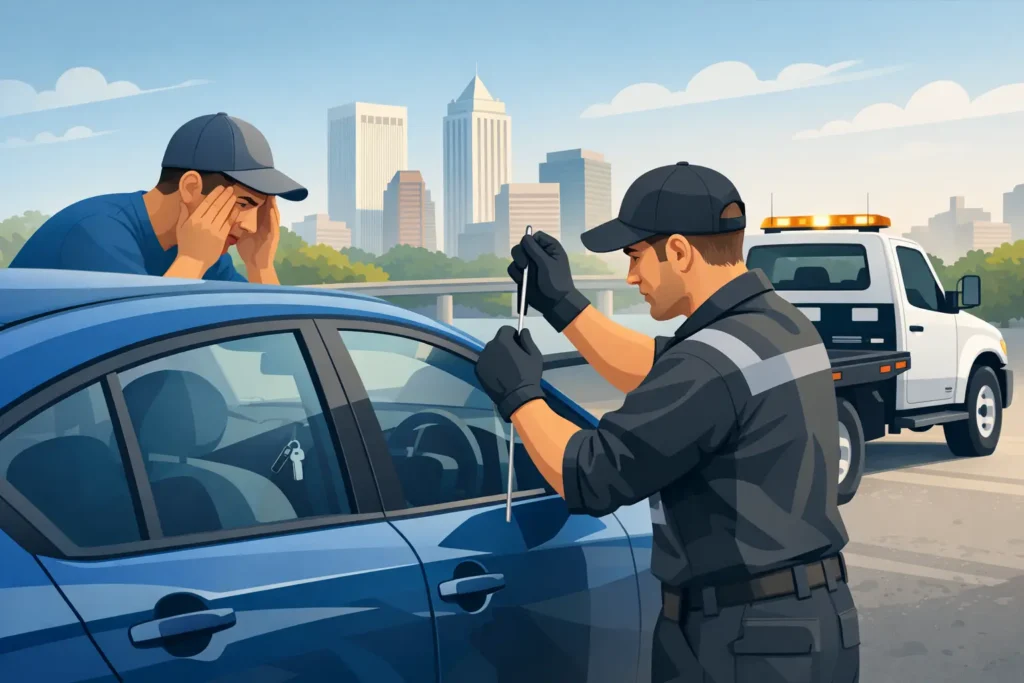
A lockout always seems to happen at the worst time. You step out for gas, a school pickup, or a quick stop at a store, hear the door shut, and then see your keys sitting on the seat. If you are dealing with locked keys in car Tulsa, the first thing to know is simple – this is fixable, and trying to rush it can make the situation worse.
Most vehicle lockouts are straightforward when handled with the right tools and some real care. The problem is that a lot of drivers lose time trying random tricks first. That usually means more stress, possible damage to the weather stripping or door frame, and in some cases a bigger repair bill than the lockout itself.
Locked keys in car Tulsa: what to do first
Start by checking every door and the trunk before doing anything else. That sounds obvious, but many lockouts turn out to be one partially unlocked passenger door or a hatch that still opens. If your vehicle has an app-based entry system, try that next, but only if you already have it set up and working.
Then take a breath and look at where the vehicle is parked. A lockout in your driveway is one thing. A lockout on Riverside, near I-44, or in a busy lot at Tulsa Hills is different because your safety matters just as much as getting the door open. If traffic is close, move yourself and any passengers to a safer spot while you make the call.
If a child, pet, or vulnerable adult is inside the vehicle, treat that as urgent right away. Heat builds fast in Oklahoma, even when it does not feel extreme outside. In that situation, call emergency services first if there is any immediate risk, then arrange roadside help.
Why DIY lockout tricks often cause more trouble
A lot of people have seen the coat hanger method in movies or on social media. Real vehicles are different. Door seals are tighter, lock systems are more protected, and power lock buttons are not always easy to reach without forcing something into the wrong place.
The usual DIY attempts are wedges, hangers, shoelaces, or pry tools that are not made for vehicle entry. Sometimes they work on older cars. Sometimes they bend the top of the door, tear a seal, scratch the glass, or damage trim pieces around the frame. On newer vehicles, especially cars with side curtain airbags, advanced electronics, or tighter body lines, guessing is a bad trade.
That matters even more for higher-end vehicles, low-clearance cars, trucks with more complex lock setups, and EVs. A lockout is a small problem. Door or weather seal damage is a bigger one.
When calling for lockout service is the better move
If you have already checked for an open door, confirmed there is no simple remote entry option, and the vehicle is secured, calling a roadside professional is usually the fastest path. A proper lockout call is not about forcing a door. It is about using the right access tools, the right pressure points, and the right approach for that specific vehicle.
That is especially true if your keys are visible but just out of reach, your key fob battery seems dead, or the vehicle locked itself with the keys inside. These are common situations, and they are usually handled on site without turning the job into something bigger.
A local operator also knows the difference between reaching a vehicle in a shopping center lot, a downtown curb lane, an apartment complex, or a tight garage. That local familiarity saves time when you are already stuck.
What a vehicle lockout service should look like
A good lockout response is simple. You call, explain the vehicle, the location, and whether anyone is inside. The driver gets dispatched, arrives with proper tools, confirms the situation, and works to gain access without creating damage.
Clear communication matters here. If your car is in Midtown near a narrow street, in South Tulsa during heavy traffic, or in a garage with low clearance, that can affect how fast the truck reaches you and where the operator can safely stop. You should not have to guess what is happening.
The actual lockout process depends on the vehicle. Some doors respond quickly with standard long-reach tools and air wedges. Others require a more careful setup to avoid damaging trim or putting stress on the glass. There is no one-size-fits-all method, and that is exactly why experience matters.
Common lockout situations around Tulsa
A lot of lockout calls happen in places drivers use every day. Grocery store lots, office parking areas, apartment complexes, gyms, schools, and gas stations are common. The issue is usually simple – keys dropped on the seat, a child accidentally hitting the lock button, or an auto-lock feature kicking in at the wrong moment.
There are also the less convenient cases. A car running with the doors locked. A truck parked along a busy road shoulder. A vehicle in a parking garage where access is tight. A key fob left in a cupholder while the owner steps out for just a second. None of these are unusual.
That is why the response has to be practical, not overcomplicated. Drivers need someone who can get there, assess it quickly, and handle the vehicle carefully.
Locked keys in car Tulsa on newer vehicles
Newer vehicles can be easier or harder depending on the system. Some let you back in through a connected app or manufacturer service. Others have security features that make manual entry more delicate. Push-button start vehicles add another layer because many drivers assume the car will not lock with the fob inside, but that is not always true in every situation.
Battery issues can also confuse the problem. Sometimes it looks like a lockout, but the real issue is a weak vehicle battery, a dead fob battery, or electronics that are not responding the way they should. That is where an experienced roadside operator can usually tell the difference quickly.
For electric vehicles, careful handling matters even more. The lockout itself may be routine, but the vehicle still needs the right approach. That includes being mindful of body design, glass, trim, and electronic systems.
What to have ready when you call
The fastest calls are the ones with clear information. You do not need a long explanation. Just be ready with your exact location, vehicle make and model, and whether the keys are visible inside. It also helps to mention if the car is running, if a child or pet is inside, or if the vehicle is in a garage or hard-to-reach area.
If you are in Tulsa, Jenks, Bixby, or Broken Arrow, saying the nearest intersection or business can help more than a general description. A call from US 75 or Memorial during traffic is different from a quiet residential street, and route awareness can make the response smoother.
How to avoid another lockout
Not every lockout can be prevented, but some habits help. Keep your key fob in the same pocket or bag section every time. Replace weak fob batteries before they fail. If your vehicle supports app access, set it up before you ever need it. And if you have a spare key, keep it somewhere useful, not locked inside the house when you are already stranded.
The bigger point is not to rely on luck. Most lockouts happen during rushed moments, and a little routine goes a long way.
Why the right help matters
A vehicle lockout should stay a lockout. It should not turn into bent trim, torn seals, a scratched door, or hours of wasted time waiting on the wrong kind of help. The job is simple when the person handling it knows what they are doing and treats the vehicle with care.
That is the approach behind Tulsa Towing, powered by Neptune Towing – straightforward roadside help, clear communication, and careful handling based on real towing experience in Tulsa and nearby areas.
If your keys are sitting on the seat right now, do not make the problem bigger trying to outsmart the door. Get yourself somewhere safe, make the call, and let someone with the right tools handle it properly.