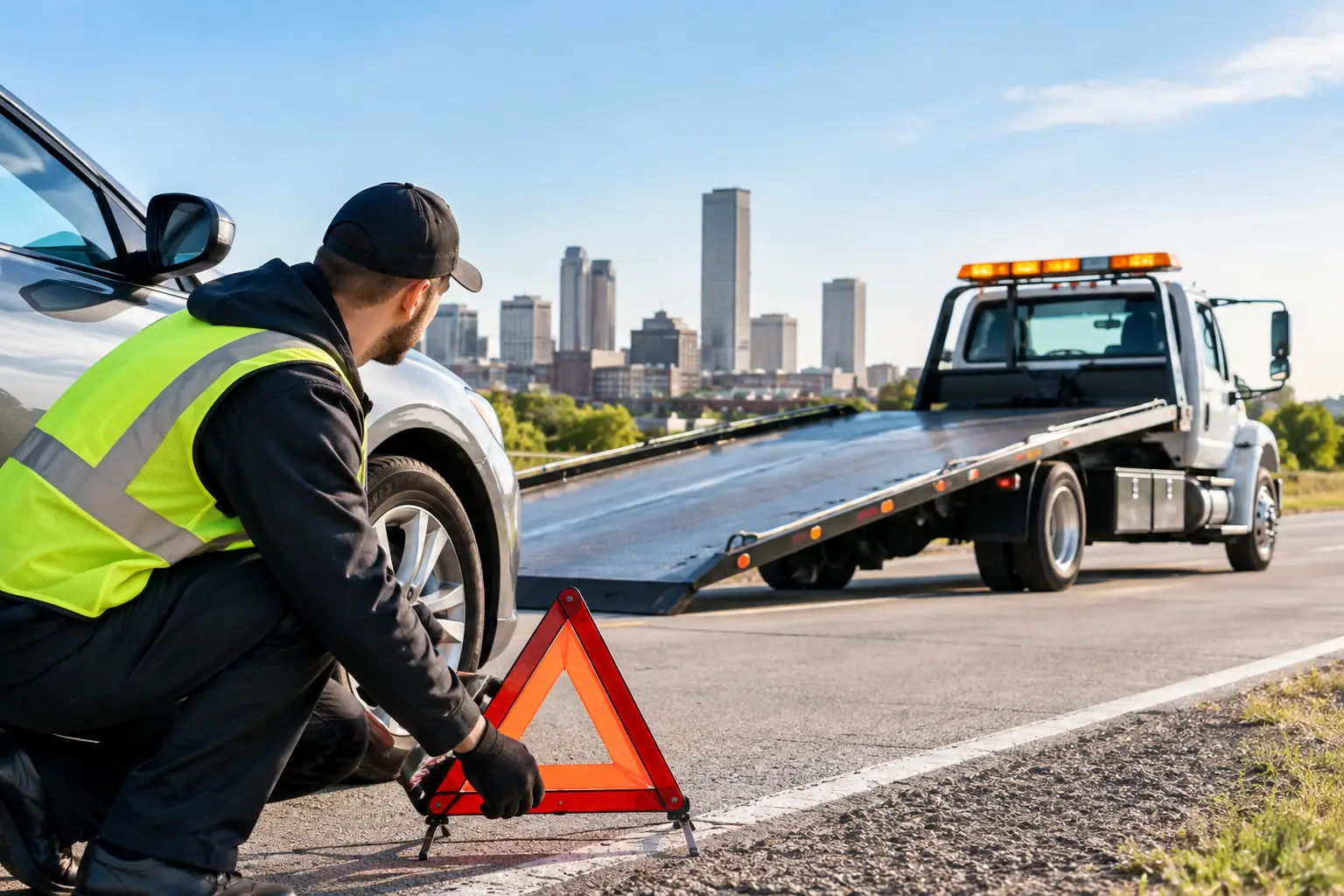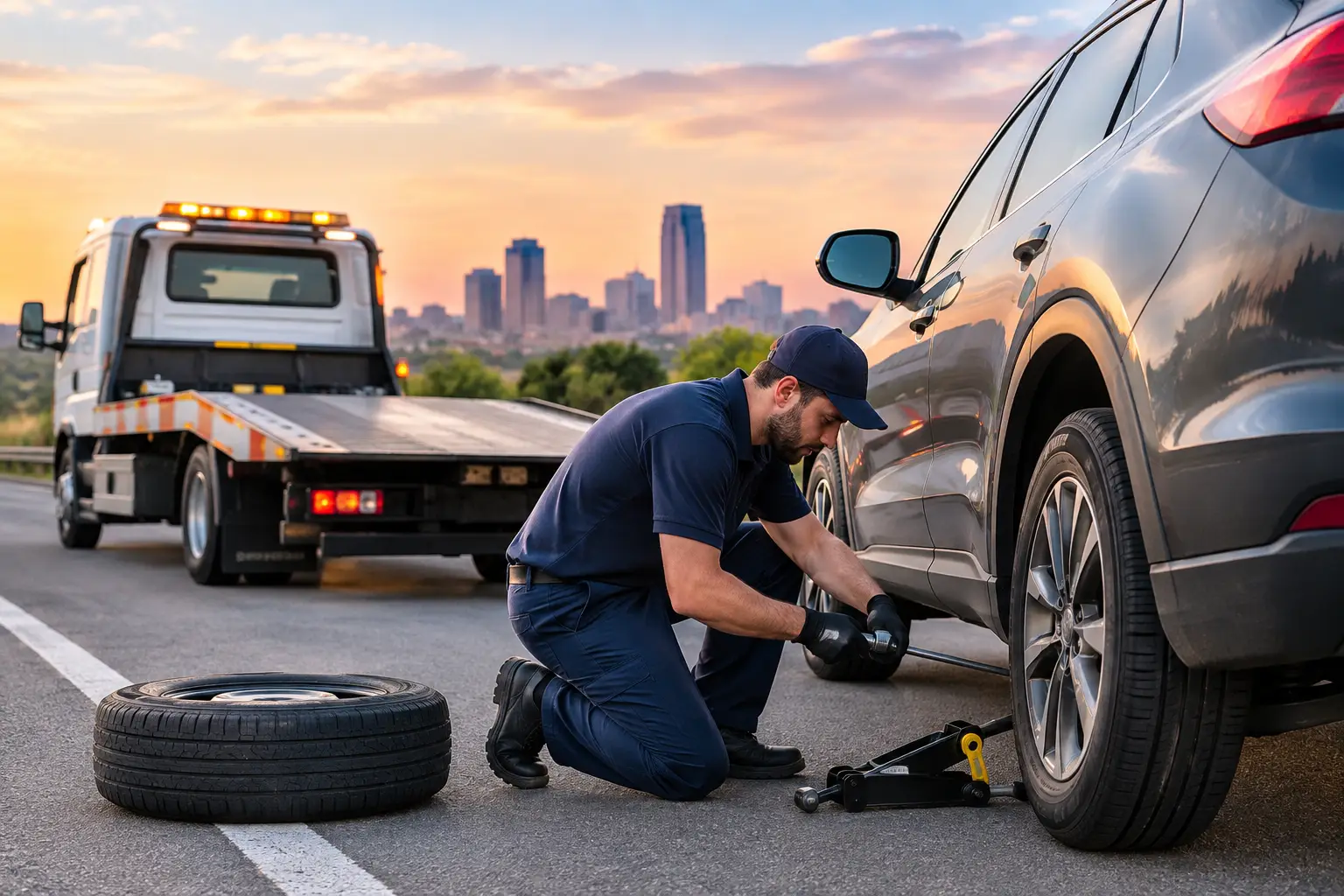
A lot of drivers ask the same question after a breakdown or crash: tow truck versus flatbed truck – what is the real difference, and which one should carry my vehicle? That matters more than most people think. The wrong setup can turn one problem into two, especially with low-clearance cars, all-wheel-drive vehicles, pickups, and electric vehicles.
When you are stuck on the shoulder, in a parking lot, or halfway out of a garage, you do not need towing jargon. You need to know how your vehicle will be moved, whether it can be done without damage, and why one truck may be a better fit than another. That is where the difference becomes clear.
Tow truck versus flatbed truck: what changes?
People often use the term tow truck for every type of towing vehicle. In everyday conversation, that is normal. But in actual towing work, a standard tow truck and a flatbed truck do not move vehicles the same way.
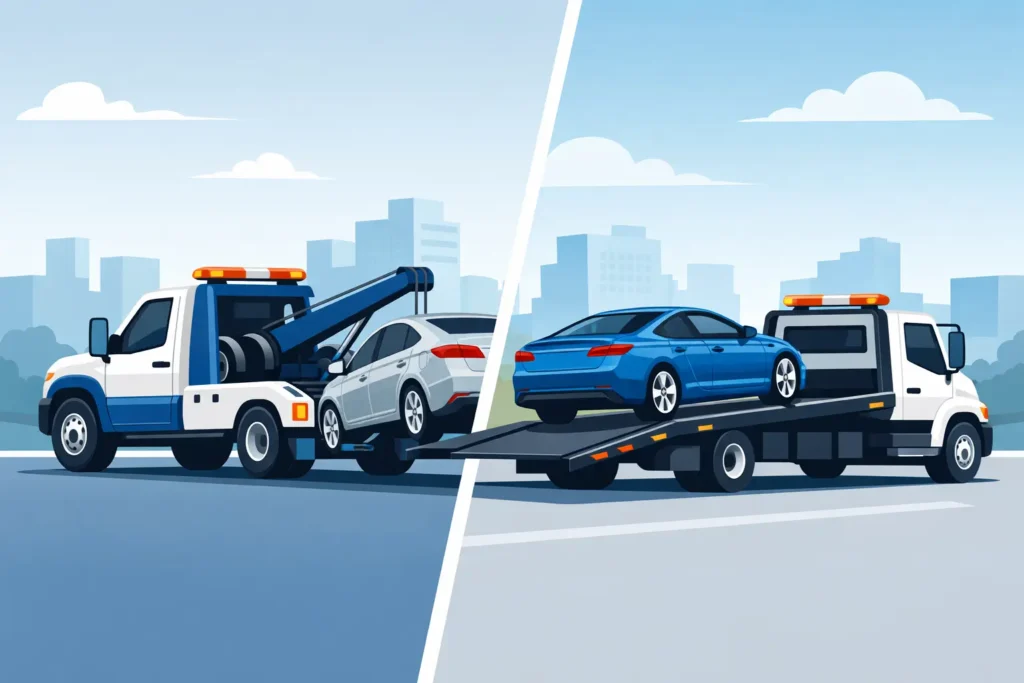
A traditional tow truck usually lifts one end of the vehicle off the ground and pulls it with the other end still rolling. Depending on the setup, that may mean the front wheels are up and the rear wheels stay on the road, or the other way around. This can work in the right situation, especially for short moves or certain disabled vehicles.
A flatbed truck carries the entire vehicle up onto a bed so all four wheels are off the ground during transport. The vehicle is loaded, secured, and moved without any tire contact with the road. That changes the risk level quite a bit.
Why flatbed towing is often the safer choice
If the goal is damage-free transport, flatbed towing gives you more control. The car is not being dragged by two wheels, and drivetrain components are not being forced to rotate while the vehicle is disabled. That matters on newer vehicles and it matters even more on vehicles with sensitive drivetrains.
Flatbeds also make sense for low cars, luxury vehicles, accident-damaged vehicles, and EVs. If a bumper is hanging low, a wheel is broken, or the car will not shift properly, rolling part of it down the road may not be the smart move. Loading the full vehicle onto a bed is usually the cleaner and safer option.
This is also why many drivers prefer a flatbed when they have already had one bad day. If your car broke down on US 75 or got damaged in traffic near Memorial, the last thing you want is extra wear caused during the tow itself.
Better for all-wheel drive and electric vehicles
One of the biggest reasons drivers ask about a tow truck versus flatbed truck is because they drive an all-wheel-drive vehicle or an EV. That is a good question to ask.
With many AWD vehicles, towing with two wheels on the ground can create drivetrain stress if it is not handled exactly the right way. The same concern applies to some electric vehicles, which often have specific towing requirements. A flatbed avoids a lot of that risk because the entire vehicle is carried, not partially rolled.
Tesla and other EVs are a good example. These vehicles often sit low, have different weight distribution, and require careful loading points. Using proper flatbed equipment is usually the safer route.
Better for damaged or non-moving vehicles
Not every disabled vehicle can simply be lifted and pulled. After an accident, a wheel may be jammed, steering may be locked, suspension may be broken, or the car may not roll straight. In those cases, a flatbed is not just convenient. It may be the only practical way to move the vehicle safely.
The same goes for vehicles stuck in awkward positions. A winch and flatbed combination can often recover and load a vehicle with more control than a standard wheel-lift tow.
When a standard tow truck still makes sense
That does not mean every non-flatbed tow is wrong. There are situations where a traditional tow truck is useful. If a vehicle needs a short move, space is tight, or the tow requires a quick repositioning, a wheel-lift style truck can be effective.
This often comes up in tight apartment lots, narrow alleys, compact commercial areas, or places where bed angle and loading room are limited. In some recovery situations, getting the vehicle lifted first is what allows the operator to move it into a better loading position.
So the real answer is not that one type of truck is always right and the other is always wrong. It depends on the vehicle, its condition, and where it is sitting.
Tow truck versus flatbed truck for everyday drivers
For most everyday drivers, the easier question is not what the truck is called. It is this: do you want part of the vehicle on the road, or do you want the whole vehicle carried?
If your car is front-wheel drive, rear-wheel drive, all-wheel drive, electric, lowered, damaged, or simply valuable to you, a flatbed is usually the safer call. It reduces wear during transport and gives the operator more control over how the vehicle is loaded and secured.
If the vehicle is in a tricky spot, there can still be an it depends factor. Sometimes getting it out requires one approach before it can be fully loaded another way. That is where experience matters more than labels.
Clearance and loading angles matter more than people think
A lot of towing damage does not happen on the road. It happens during loading. Front lips get scraped. Rear bumpers drag. Undercarriage panels catch. This is especially common with lower cars and some EVs.
A proper flatbed setup with the right loading technique helps avoid that. Approach angle, ramp position, and where the vehicle gets winched from all matter. If the person loading the vehicle understands clearance, the risk drops. If they rush it, that is where problems start.
That is one reason flatbed towing is often preferred by drivers who care about keeping their vehicle in the same condition it was in before the breakdown.
What to ask when you call for a tow
If you are calling because your vehicle will not move, a few details can help get the right truck sent the first time. Tell the dispatcher what kind of vehicle you have, whether it is all-wheel drive or electric, if it has damage, and whether it is stuck in a garage, parking lot, ditch, or traffic lane.
Also mention anything unusual, like a flat tire that came apart, a locked steering wheel, a dead battery on an EV, or a car that sits very low. Those details change how the job should be handled.
A good towing company will not make it complicated. They should ask a few practical questions, explain the plan clearly, and send equipment that fits the job.
Why local experience matters in real towing situations
In a city like Tulsa, where calls come from highways, neighborhoods, parking garages, and busy shopping areas, the truck type is only part of the job. The other part is knowing how to reach the vehicle, load it safely, and get it where it needs to go without wasting time.
A vehicle broken down on I-44 is different from a vehicle stuck in a tight garage downtown. A pickup in south Tulsa may need a different setup than a sedan in Broken Arrow with suspension damage. This is where real experience matters. Not theory, not sales language, just knowing what works in the field.
That is why many local drivers choose services focused on proper flatbed towing, especially when the priority is protecting the vehicle instead of just moving it quickly. Tulsa Towing, powered by Neptune Towing, is built around that kind of work.
The better question is which method protects your vehicle
If you are comparing a tow truck versus flatbed truck, the safest answer for most vehicles is usually the flatbed. It keeps all four wheels off the road, gives better control during loading, and fits a wider range of vehicles, including trucks, EVs, and low-clearance cars.
Still, every tow is different. Location, damage, vehicle type, and how the vehicle is sitting all affect the right approach. What matters most is that the person handling the job knows the difference and uses the right equipment for your situation.
When your vehicle is already disabled, the tow itself should not create a second problem. The best towing choice is the one that gets your vehicle loaded carefully, moved safely, and delivered where it needs to go without adding stress to an already bad day.