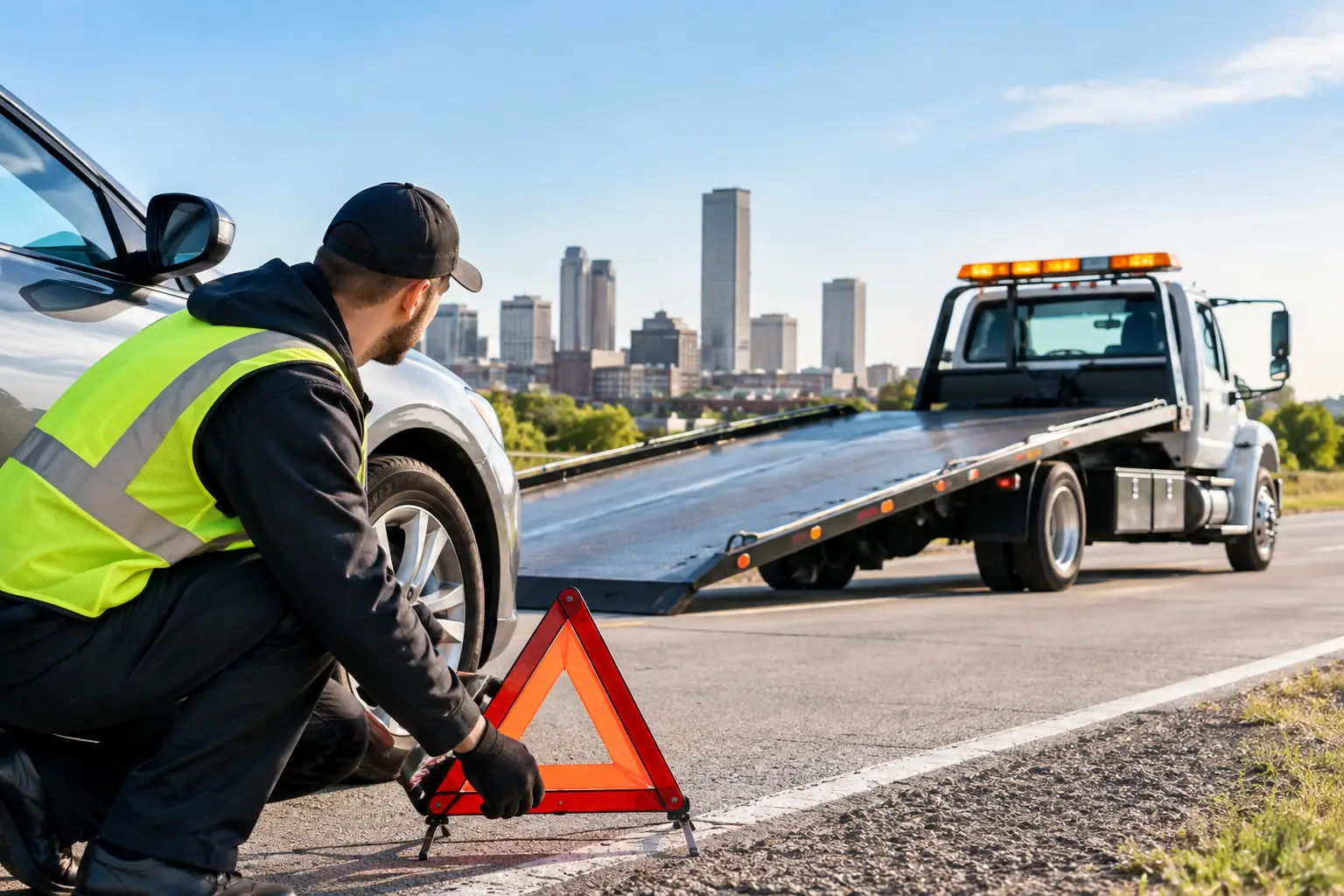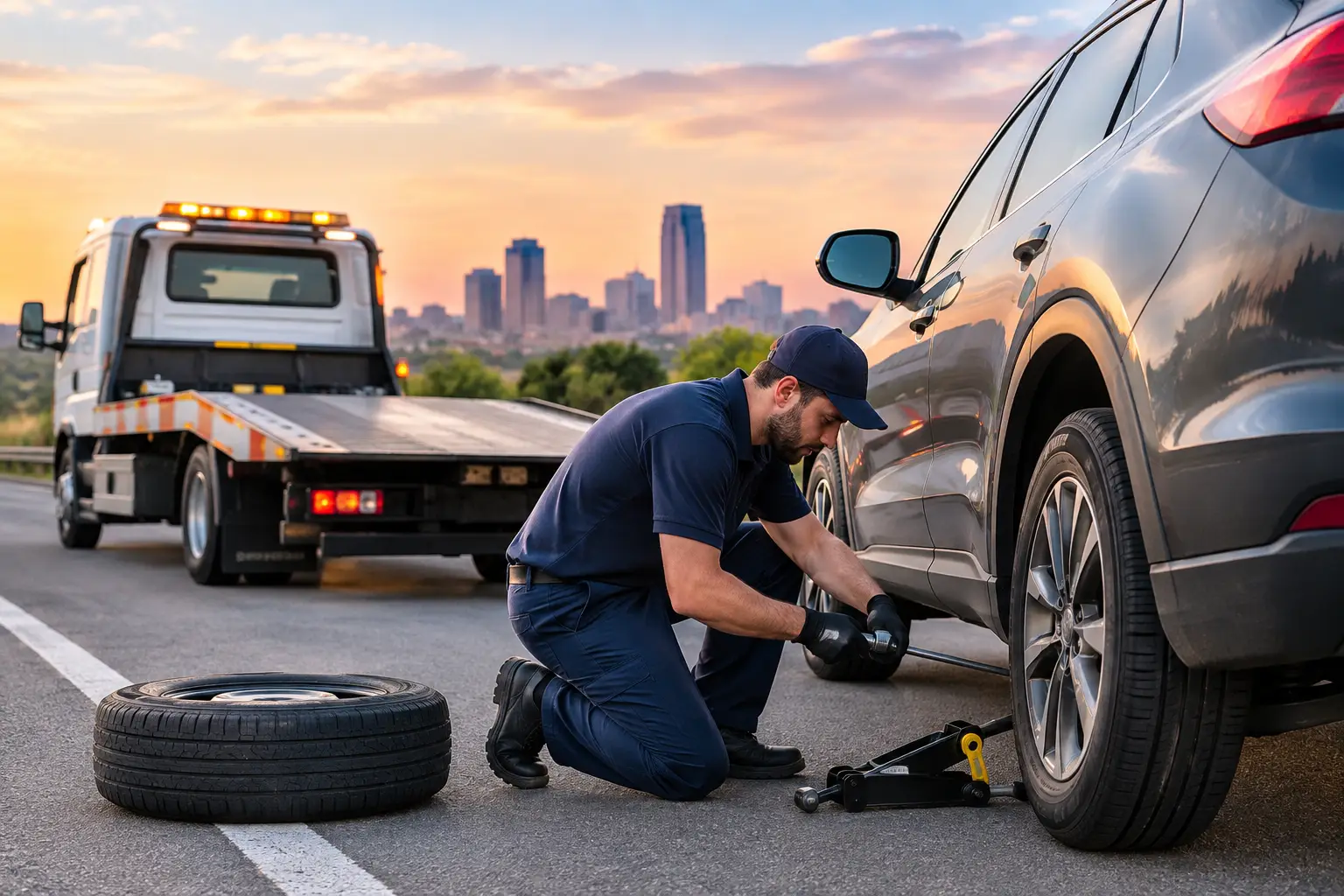
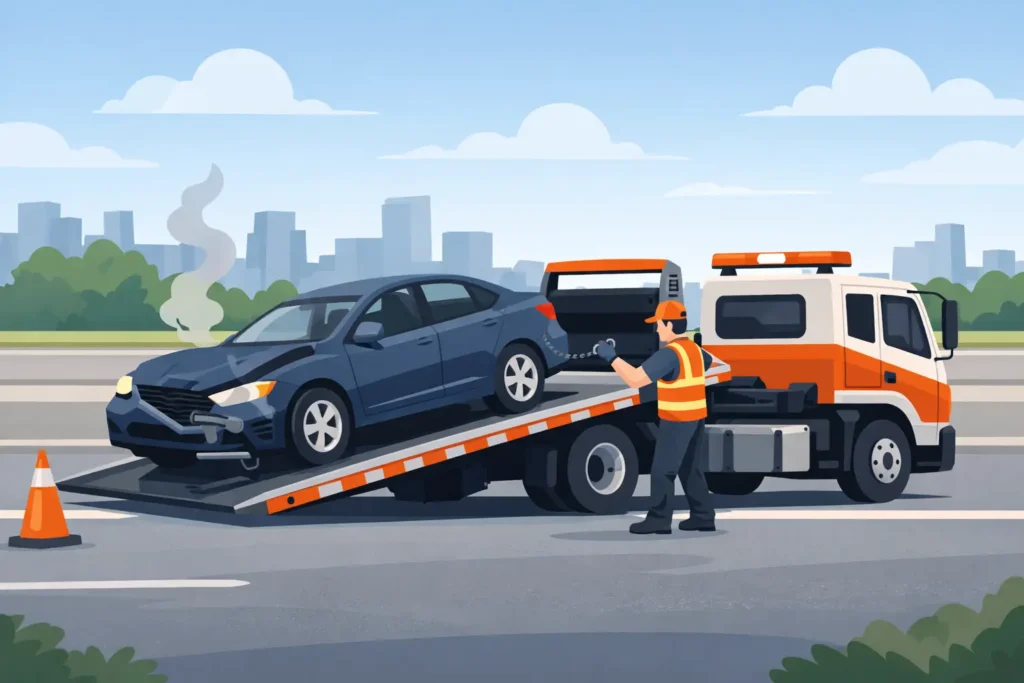
A crash can leave a vehicle looking almost normal while the parts that make it safe to drive are no longer where they should be. That is why towing after car accident what to know starts with one simple rule: do not make a quick decision about driving away just because the car still starts.
A bent wheel, leaking fluid, damaged steering component, loose bumper, deployed airbag, or pushed-in radiator can turn a short drive into a second problem. The goal is to get yourself out of danger, protect the vehicle from further damage, and have it moved carefully to a place where it can be inspected.
What to Do Before the Tow Truck Arrives
First, get to a safer location if you can do so without driving a damaged vehicle. If the vehicle is already stopped in a travel lane, on a shoulder, or near moving traffic, focus on keeping people clear of traffic and following directions from emergency personnel. Turn on hazard lights if they work. At night or in bad weather, visibility matters even more.
Take photos before the vehicle is moved when the scene is safe. Get wide photos showing vehicle positions and close photos of the damage, license plates, debris, and anything leaking from the vehicle. A few minutes of documentation can help later when you speak with your insurance company or repair shop.
Remove personal items you need immediately, such as your wallet, medications, work equipment, garage opener, and child seats if they are not damaged and can be removed safely. Do not reach into a crushed area, crawl under the vehicle, or try to pull loose body panels away from a tire. Parts that look loose may still be under tension or may be holding other damaged pieces in place.
When you call for a tow, be ready to give the dispatcher the exact location, vehicle year, make, model, color, and the type of damage you can see. Mention if the vehicle is in a garage, down an embankment, has a locked wheel, has a flat tire, or cannot be shifted into neutral. Those details help the driver arrive with the right equipment and avoid delays on scene.
Towing After a Car Accident: When Not to Drive It
Some accident damage is obvious. A broken axle, crushed front end, shattered wheel, or airbag deployment means the vehicle needs to be transported. Other damage is easier to miss.
Do not drive the car if you see fluid on the ground, steam from under the hood, a tire rubbing against a damaged fender, a wheel sitting at an odd angle, warning lights that were not on before the crash, or a hood, trunk, or bumper that is not secure. A vehicle that pulls hard, shakes, makes grinding noises, or will not track straight should also be towed.
Even a low-speed hit can damage suspension, steering, cooling, or electrical components. With modern vehicles, sensors behind the bumper and camera systems can also be affected without obvious exterior damage. Driving it home may feel convenient, but it can make the damage worse and make the vehicle harder to handle in traffic.
This is especially true for electric and hybrid vehicles. If an EV has underbody damage, battery warning messages, smoke, heat, unusual odor, or visible damage beneath the car, keep clear and let qualified responders handle the immediate safety situation. Once it is ready to move, tell the tow company it is an EV. A flatbed is generally the right choice because it keeps all four wheels off the ground and prevents unnecessary drivetrain or underbody stress.
Choose the Right Destination Before Loading
The destination matters as much as the tow itself. In many cases, the best choice is the body shop or repair facility you plan to use. If the shop is closed, taking the vehicle home can make sense when there is safe access and you have room for it. Your insurance company may also have repair-network guidance, but the choice depends on your policy and the condition of the vehicle.
Before the truck arrives, confirm the address, the shop name, and whether the location accepts after-hours drop-offs. Ask where the keys should be left if no one is there. It is frustrating to complete a careful tow only to find out the destination cannot receive the vehicle that evening.
For vehicles with major front-end damage, low clearance, locked wheels, or possible suspension damage, a flatbed tow is the safer approach. The vehicle is loaded onto the bed rather than pulled down the road on two wheels. Proper loading angles, soft straps or approved attachment points, and attention to clearance make a difference, particularly with Teslas, lowered cars, all-wheel-drive vehicles, and vehicles with damaged bodywork.
A good tow operator will assess the vehicle before moving it. That includes looking for loose panels, checking whether the wheels roll, noting the damage, and choosing a loading method that will not create more of it. Rushing a damaged car onto the wrong equipment can scrape bumpers, pull on weakened suspension parts, or cause avoidable problems during transport.
Questions Worth Asking the Tow Driver
You do not need to become a towing expert at the roadside. A few direct questions can give you clarity while things are moving quickly. Confirm where the vehicle is going, whether it will be transported on a flatbed, and how the driver plans to handle any special issue such as a locked wheel or low front bumper.
Ask for a clear explanation of the charge before authorizing the tow. The exact cost depends on distance, location, vehicle condition, loading difficulty, and the equipment required. A straightforward answer is better than guessing when you are already dealing with an accident.
It also helps to ask whether you can inspect the vehicle and take photos before it is loaded. In most cases, this takes only a moment. Look over the visible condition with the driver, particularly if there are existing dents, bumper damage, broken glass, or a wheel that is already flat.
Keep the tow receipt, the driver or company information, and the destination details with your accident paperwork. Your insurer may ask for them, and the repair shop may need to know how the vehicle arrived and whether it could be driven at all after the crash.
A Quick Accident Towing Checklist
When your vehicle needs to move, keep the decisions in this order:
- Make sure people are in a safer place away from traffic.
- Photograph the scene and visible damage when it is safe to do so.
- Do not drive a vehicle with steering, wheel, fluid-leak, cooling, or airbag concerns.
- Give the towing company your precise location and any issue that affects loading.
- Confirm the destination, towing method, and charges before the vehicle is moved.
- Take your essential belongings and keep the towing paperwork.
This is not about making the roadside process complicated. It is about avoiding the common mistake of treating a damaged vehicle like it is fine because it can still move under its own power.
Local Conditions Can Change the Tow Plan
In Tulsa, a crash on I-44, US 75, Memorial, or Riverside can put a disabled vehicle close to fast traffic with little room to work. A vehicle in a downtown parking garage, an apartment lot in South Tulsa, or a narrow residential street may require a different approach than one sitting in an open shopping center lot.
Local route knowledge helps, but the vehicle condition still leads the decision. A heavy-duty pickup with a damaged front wheel needs different loading considerations than a compact sedan. A low-clearance car may need extra care at the approach angle. An EV needs proper handling from the first connection point to the final drop-off.
Tulsa Towing, powered by Neptune Towing, focuses on careful flatbed transport and clear communication for accident tows across Tulsa and nearby areas when availability allows. The point is not to add more decisions to a bad day. It is to get the vehicle loaded correctly and delivered where you need it without creating new damage along the way.
After an accident, the best next step is usually the calm one: do not guess about whether the car is safe, do not let urgency force a poor choice, and make sure the tow matches the vehicle and the damage in front of you.