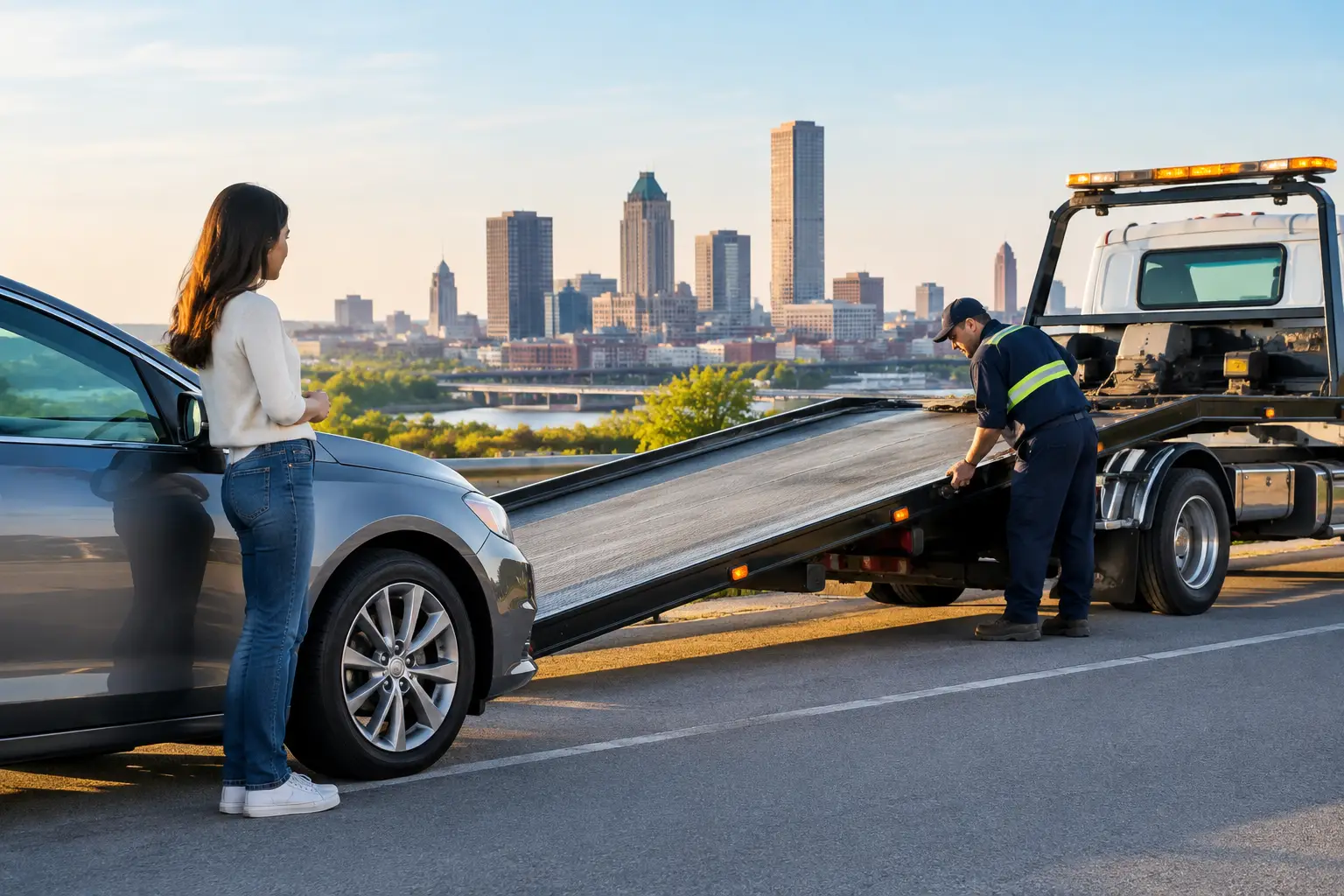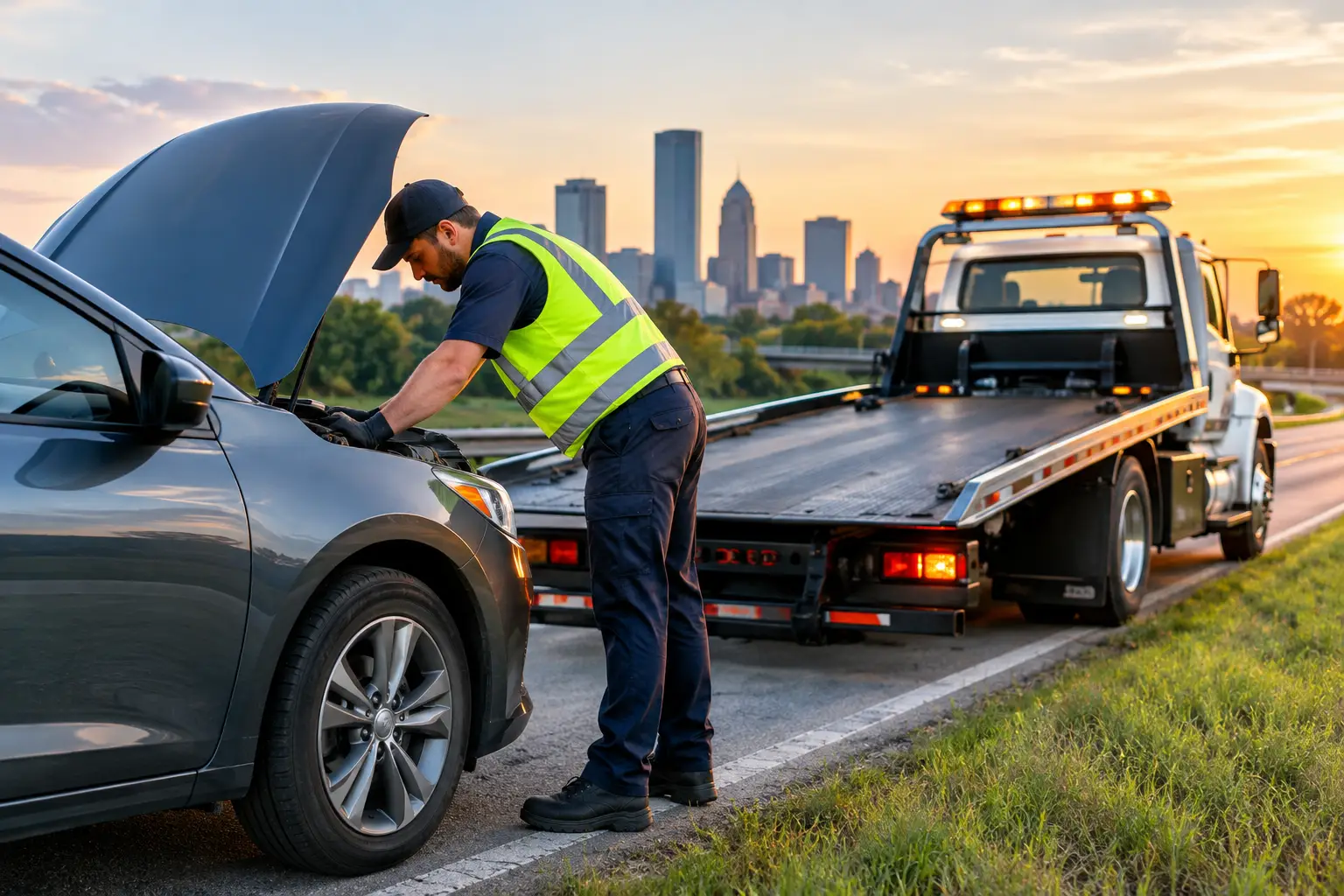
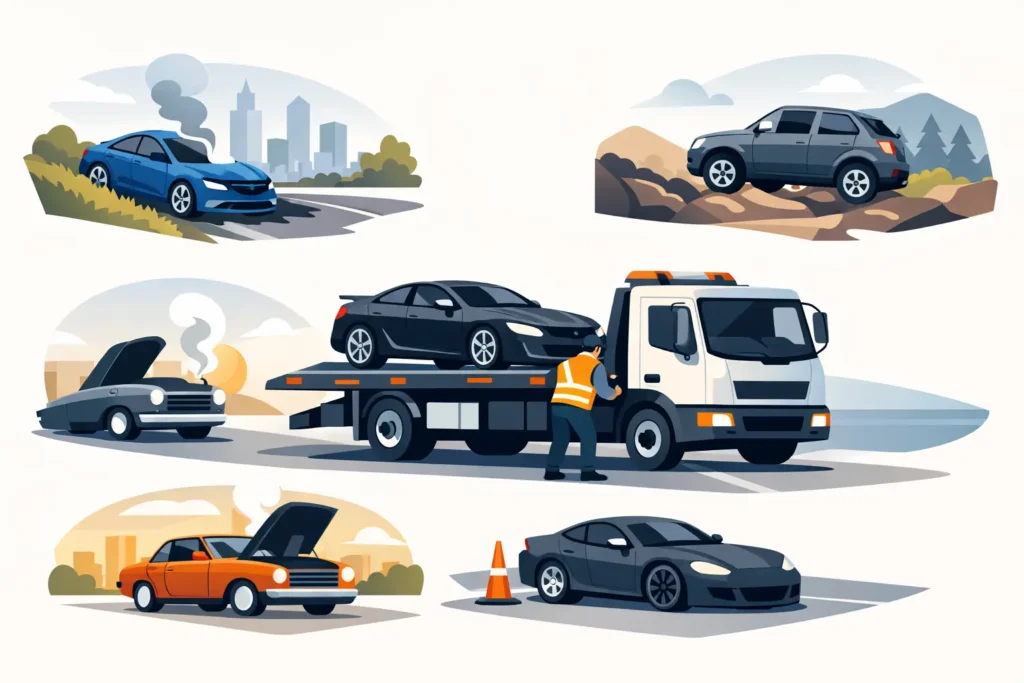
A car with a locked wheel, a bumper dragging the pavement, or a Tesla that will not power into transport mode should not be pulled down the road on two wheels. These are situations that require flatbed towing because the vehicle needs to stay fully off the ground from pickup to drop-off. That protects the drivetrain, suspension, body panels, and tires while getting the vehicle where it needs to go.
A flatbed is not necessary for every short tow. Some vehicles can be moved safely with the proper wheel-lift setup when their wheels, steering, and drivetrain are in good condition. But when there is damage, uncertainty, low clearance, or a vehicle-specific towing requirement, loading it onto a flatbed is usually the right call.
Situations That Require Flatbed Towing
The decision comes down to one practical question: can the vehicle roll, steer, and be towed without causing more damage? If the answer is no, or nobody can say for sure after an accident or breakdown, a flatbed gives the driver and tow operator the safest option.
After an accident with visible damage
Collision damage is one of the most common reasons to use a flatbed. A vehicle may look mostly normal from one side while having a bent wheel, damaged control arm, leaking fluid, broken bumper mount, or shifted suspension underneath. Trying to tow that vehicle with its wheels on the road can turn a repairable issue into a larger repair bill.
A flatbed keeps all four wheels off the pavement and avoids putting load through damaged parts. This matters after a crash on I-44, US 75, Memorial, or any busy Tulsa roadway where the vehicle must be removed quickly but carefully. Even if the car starts and moves a few feet, that does not mean it is safe to drive or tow conventionally.
When a wheel is locked, broken, or pointing the wrong way
A wheel that will not turn is a clear flatbed situation. The cause could be collision damage, a failed bearing, brake trouble, a broken suspension part, or a steering issue. If the tire is turned sharply and cannot be straightened, dragging it onto the road can damage the tire, wheel, and steering components further.
The same applies when a wheel is folded inward, sitting at an odd angle, or physically separated from its normal position. A careful operator can use loading techniques and the right equipment to get the vehicle onto the bed without forcing it to roll. That is far safer than pulling against a locked or damaged wheel.
Low-clearance cars and vehicles with body damage
Sports cars, lowered sedans, modified vehicles, and some newer cars sit close enough to the ground that a rushed hookup can scrape the bumper, splitter, exhaust, or rocker panels. Flatbed towing is often the better choice because it gives the operator more control over the loading angle and how the vehicle is secured.
This is also true for a standard-height vehicle with a loose front bumper, damaged undertray, or hanging exhaust. The issue is not only whether the car can roll. It is whether the body and undercarriage can clear the ground without being pulled, bent, or torn off during transport.
Low clearance does not automatically mean a vehicle cannot be loaded safely. It does mean the tow truck operator needs to assess the angle, use the proper loading approach, and avoid guessing. That is the difference between getting a car moved and getting it moved without adding damage.
Electric vehicles and all-wheel-drive vehicles
Many electric vehicles should be transported on a flatbed. Tesla models and other EVs have specific towing procedures because their electric motors, battery systems, and parking functions are not handled the same way as a conventional gas-powered car. Pulling an EV with its drive wheels on the ground can create expensive problems if it is not placed in the correct transport mode or if the vehicle cannot be put into that mode.
All-wheel-drive vehicles also need extra attention. Depending on the vehicle and the condition causing the breakdown, towing with only two wheels lifted may put stress on the drivetrain. A flatbed removes that concern by keeping every wheel off the road.
If an EV has a dead 12-volt battery, will not shift into neutral, is showing warning messages, or has been involved in a collision, tell the dispatcher before the truck arrives. That information helps ensure the right approach is used from the start.
Drivetrain, transmission, or axle problems
When a vehicle has transmission trouble, a broken axle, or drivetrain damage, it may still be able to start but should not be driven or pulled in the usual way. Common signs include a car that will not move in gear, loud grinding, fluid leaking underneath, or one wheel spinning while the vehicle stays put.
A flatbed prevents the disabled drivetrain from turning during the tow. This can be especially useful when the exact cause is unknown. If your vehicle lost power while driving, made a hard bang, or suddenly would not move, there is no benefit in testing it further on the road. A safe transport to a repair shop gives the technician a better chance to diagnose the original problem without additional towing-related damage.
The vehicle cannot roll safely
Sometimes the issue is simple: the car is stuck, the parking brake will not release, the tires are flat, or it cannot be moved out of a parking spot without dragging. In these cases, a flatbed gives the operator a stable platform for loading rather than relying on the vehicle to behave normally.
This can happen in apartment lots, office garages, driveways, and tight spaces around Downtown or South Tulsa. Access matters. A flatbed may be the safest transport method, but the operator still needs enough room to position the truck, lower the bed, and load the vehicle without striking curbs, walls, or nearby cars. Clear communication about the vehicle’s location saves time when dispatching the right truck.
When a flatbed is preferred, not strictly required
There are also jobs where a flatbed is the cautious choice even if another method may be possible. A car with a simple dead battery or a flat tire may not require a tow at all if roadside assistance can solve the problem. If it does need transport, a wheel-lift tow may be appropriate for certain vehicles when the wheels roll freely and the drivetrain allows it.
Still, flatbed transport offers one major advantage: the vehicle does not travel on its own tires. For drivers concerned about mileage, a damaged tire, a low front end, or a vehicle they want handled with extra care, that can make the decision straightforward. It depends on the vehicle, the condition it is in, where it is parked, and the destination.
What to Tell the Tow Truck Dispatcher
You do not need to diagnose the vehicle before calling. Give the facts you can see: whether there was an accident, whether any wheel is damaged or locked, whether the car is all-wheel drive or electric, and whether it can roll and steer. Mention low clearance, flat tires, leaking fluid, a parking garage, or a tight driveway.
Also provide the pickup location and where you need the vehicle delivered. A repair shop, dealership, home, or another safe destination all require a different level of coordination. If you are on a high-traffic road, focus first on getting yourself to a safe location away from moving traffic when possible, then communicate the vehicle’s position clearly.
Tulsa Towing handles flatbed transport for damaged, disabled, low-clearance, and electric vehicles with the goal of getting the vehicle loaded correctly the first time. There is no need to gamble on a vehicle that may have hidden damage just to save a few minutes at pickup.
When your car cannot roll, steer, or sit normally, treat it as a flatbed job until a qualified tow operator can assess it. Keeping the vehicle off the road during transport is often the simplest way to prevent one roadside problem from becoming two.