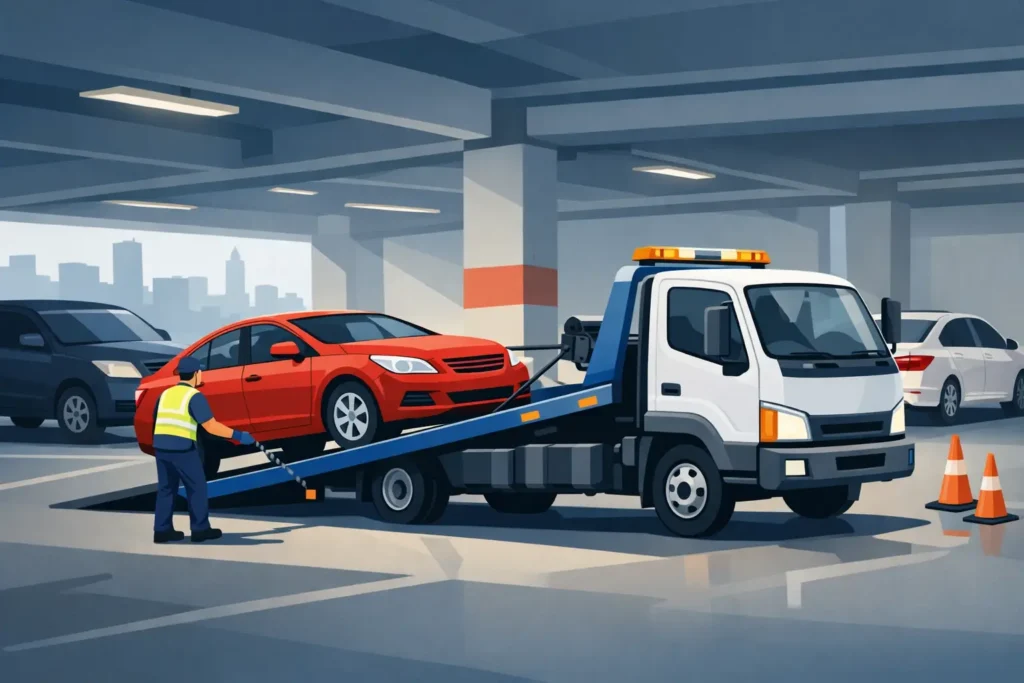
A vehicle that will not start or move inside a garage creates a different kind of towing problem. There may be low concrete beams overhead, tight turns, one-way ramps, limited room beside the vehicle, and other drivers trying to get through. For parking garage towing Tulsa drivers need, the right response starts with checking the space before a truck ever enters the structure.
The goal is simple: get your vehicle out safely without turning a breakdown into body damage, undercarriage damage, or a long delay. That takes clear communication, the right equipment, and a driver who understands that a garage recovery cannot be handled exactly like a curbside tow.
Why Parking Garage Towing Is Different
Most garages are built for passenger vehicles, not full-size tow trucks. Height limits are the first issue. A standard flatbed often cannot clear the entrance or the ceiling inside the garage. Even when the truck fits at the entrance, sprinkler pipes, signage, lighting, and lower clearance areas on ramps can make the route unsafe.
Space is the next problem. A disabled car may be parked between concrete columns, close to a wall, or boxed in by other vehicles. If it is on a ramp, the angle adds another layer of difficulty. Low-clearance cars, all-wheel-drive vehicles, heavy pickups, and electric vehicles each need to be moved in a way that protects the drivetrain and body.
That is why the tow operator needs the details before dispatch. The garage location, level, posted height clearance, vehicle type, and whether the vehicle rolls all affect the plan. A careful operator does not guess at a garage entrance or force equipment into a space that is too tight.
What to Do When Your Car Is Stuck in a Garage
First, make sure you and anyone with you are in a safe place. If the vehicle is stopped in a driving lane, turn on the hazard lights if possible and avoid standing where other vehicles may not see you. In a busy Downtown Tulsa garage or a medical-office garage, traffic can be close and visibility can be poor around corners.
Call the garage office, attendant, or security desk if one is available. They may be able to direct traffic, open a service exit, confirm the clearance, or identify a safer place for the recovery. This is especially helpful if the vehicle is on an upper level or blocking the only way through a ramp.
When you call for towing, have the garage name and address ready along with the level and nearest stairwell, elevator, or section marker. Tell the dispatcher the vehicle make, model, and whether it is a sedan, truck, SUV, EV, or Tesla. Also explain what happened: no-start condition, flat tire, accident damage, locked steering, dead battery, or a vehicle that is stuck and cannot move safely.
A few details can prevent wasted time. Check the posted clearance sign at the entrance if you can do so safely. Let the operator know whether the car is in a regular parking space, on a ramp, near a wall, or in a lane. If the wheels are locked or the vehicle is in park and will not shift, say that upfront.
How a Safe Garage Recovery Is Planned
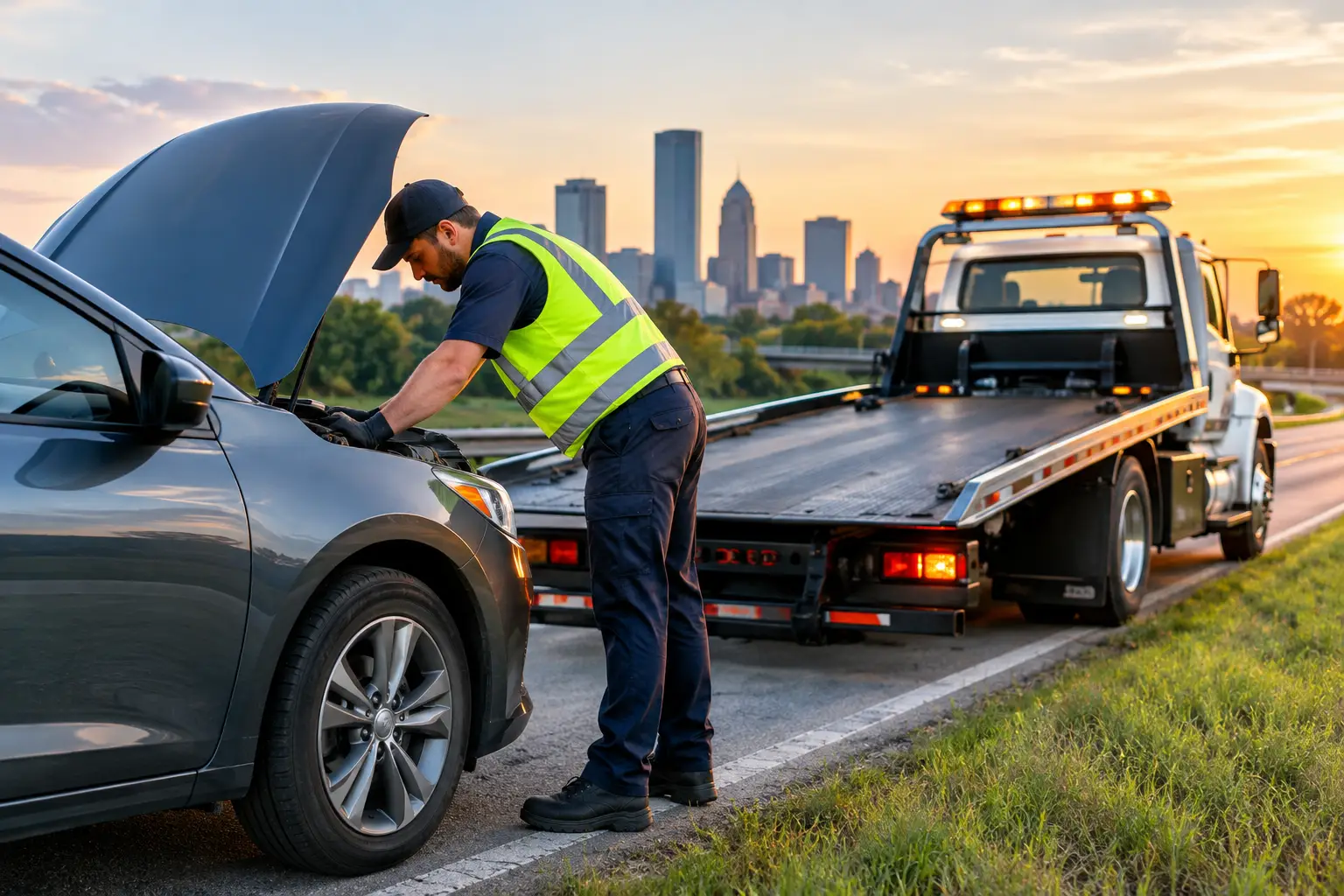
The first question is whether roadside assistance can solve the problem where it sits. A dead battery may only need a jumpstart. A flat tire may be handled with a spare or tire service if the vehicle is parked on level ground and there is enough room to work safely. A lockout can often be resolved without moving the vehicle at all.
If the vehicle needs to be towed, the operator will determine whether a suitable truck can access the garage. Some garages allow entry for lower-profile equipment. Others do not provide enough clearance for any tow truck to enter safely. It depends on the structure, the vehicle location, and the equipment required.
When a truck cannot enter, the vehicle may need to be carefully moved or recovered to a safe pickup point outside the garage. That can involve proper dollies, a winch, or other recovery equipment, depending on the situation. The vehicle must be handled correctly throughout the move, especially when it cannot roll freely.
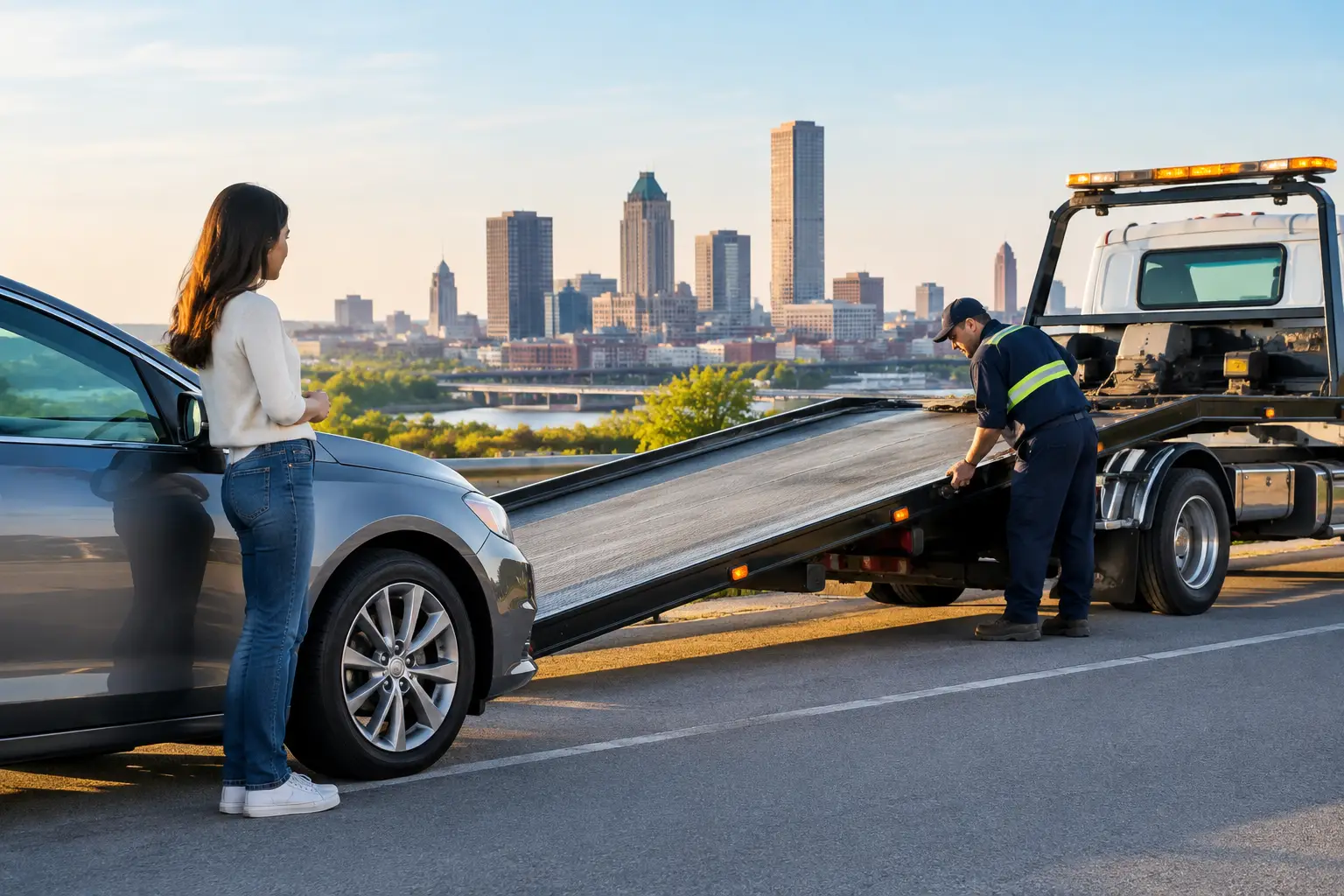
Once the vehicle is outside and clear of the garage, it can be loaded onto a flatbed for transport to the repair shop, dealership, home, or other destination you choose. Flatbed towing keeps all four wheels off the ground, which is often the safest method for all-wheel-drive vehicles, electric vehicles, and cars with low front bumpers or low ground clearance.
Clearance Is Not the Only Risk
People often focus only on the posted height at the garage entrance. That number matters, but it is not the whole job. The route inside may have lower hanging signs, pipes, corners that limit turning room, or ramps that change the truck’s effective height and angle.
The vehicle itself can also create challenges. A car with suspension damage may sit lower than normal. A vehicle with a locked wheel may not track straight. An EV needs careful handling because of its weight and underbody battery pack. A pickup may fit through a lane but leave little room to work around it.
Rushed towing is where damage happens. Pulling a vehicle at the wrong angle, dragging a locked wheel, or trying to load a low car without the right approach can damage bumpers, tires, steering components, or the underside. Taking a few minutes to assess the setup is not wasted time. It is how the vehicle gets moved without adding another problem.
Common Garage Situations We See
A no-start is one of the most common calls. The driver returns from work, shopping, or an appointment and the battery is dead. In many cases, a jumpstart is the simplest answer. If the battery will not hold a charge or the vehicle has another electrical problem, then a tow may be needed.
Flat tires are another frequent issue. A tire can lose air slowly while the vehicle is parked, or a driver may notice a flat after pulling into the garage. If there is enough safe working room, roadside tire help may get the vehicle moving again. If the tire is damaged, the wheel is bent, or the car cannot be driven safely, transport is the better call.
Accident damage inside a garage needs extra care. Even a low-speed impact can leave a wheel turned, a bumper rubbing a tire, or fluid leaking. Do not keep trying to drive it out if something feels wrong. A vehicle that moves a few feet under its own power may still cause more damage on a ramp or tight turn.
Some calls involve vehicles stuck on curbs, wheel stops, or steep transitions. Trying to power off a concrete stop can tear up a bumper or underbody. A controlled winch-out or recovery may be the safer option, but the setup has to be evaluated on site.
Information That Helps Get the Right Truck There
Before help arrives, take a quick look around only if it is safe. Note the entrance clearance, garage level, vehicle position, and the closest exit to the street. A photo of the clearance sign and the vehicle location can be useful when you are speaking with dispatch, though a clear description works too.
Tell the operator about any special vehicle needs. This includes an all-wheel-drive system, electric vehicle, very low ride height, oversized tires, steering damage, or a vehicle that will not shift into neutral. The more accurate the information, the better the recovery plan.
Do not try to improvise with another vehicle, straps, or a friend pushing your car through a ramp. Garage floors can be slick, sightlines are limited, and vehicles gain speed quickly on an incline. Waiting for proper equipment is usually the safer and less expensive choice.
Local Help Without Added Confusion
When you need parking garage towing in Tulsa, clear communication matters as much as the tow itself. You should know whether the equipment can enter the garage, what the next step will be if it cannot, and where your vehicle will be taken after recovery.
Tulsa Towing, powered by Neptune Towing, focuses on getting disabled vehicles moved safely without the added complications of impound or storage service. Whether the answer is a jumpstart, a careful winch-out, or flatbed transport after the vehicle is brought outside, the work should be handled with the garage layout and your vehicle’s condition in mind.
If your car is stranded in a garage, stay safe, share the exact location and clearance details, and let the recovery be planned before anyone starts moving the vehicle. That small amount of preparation is often what keeps a difficult garage call straightforward.