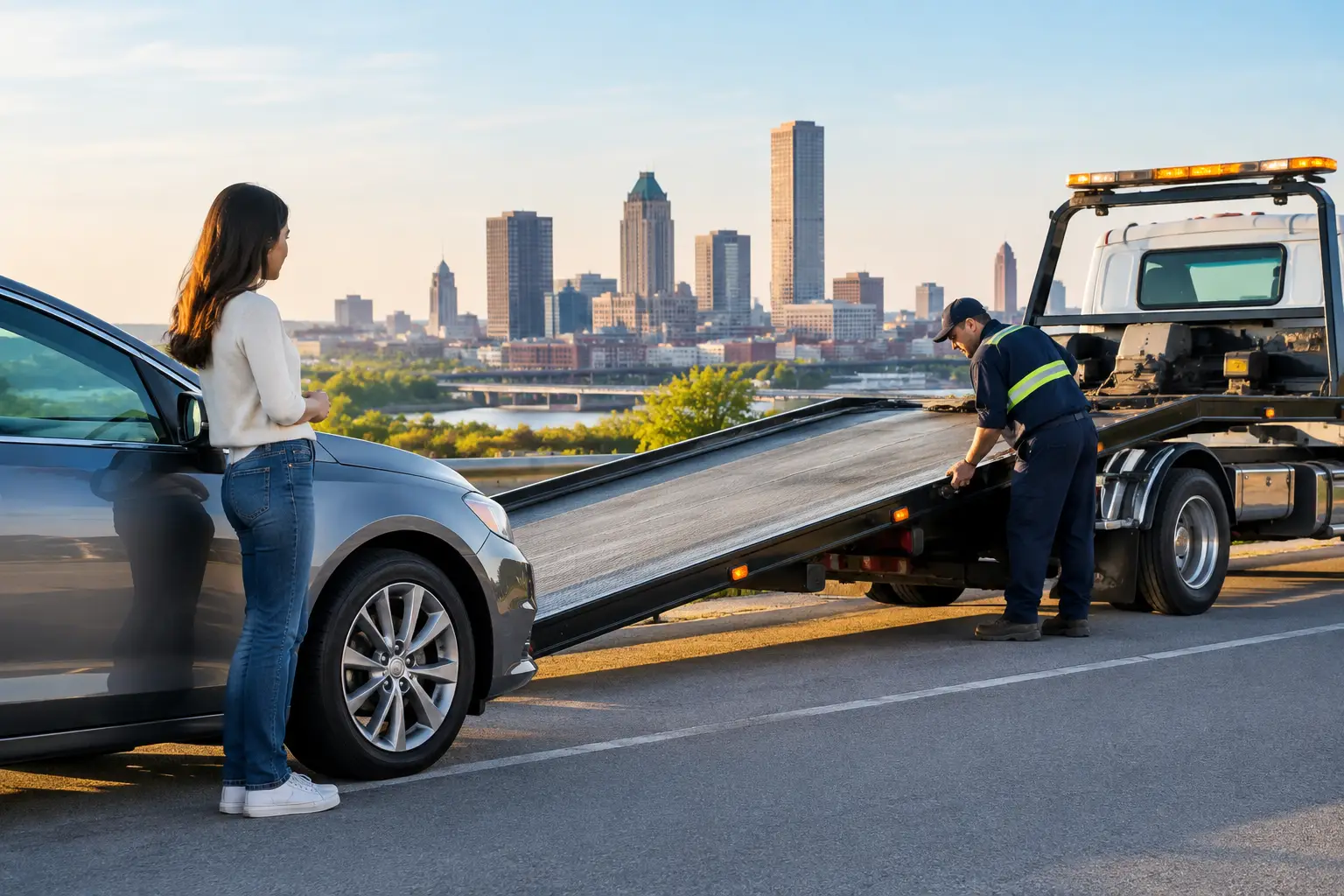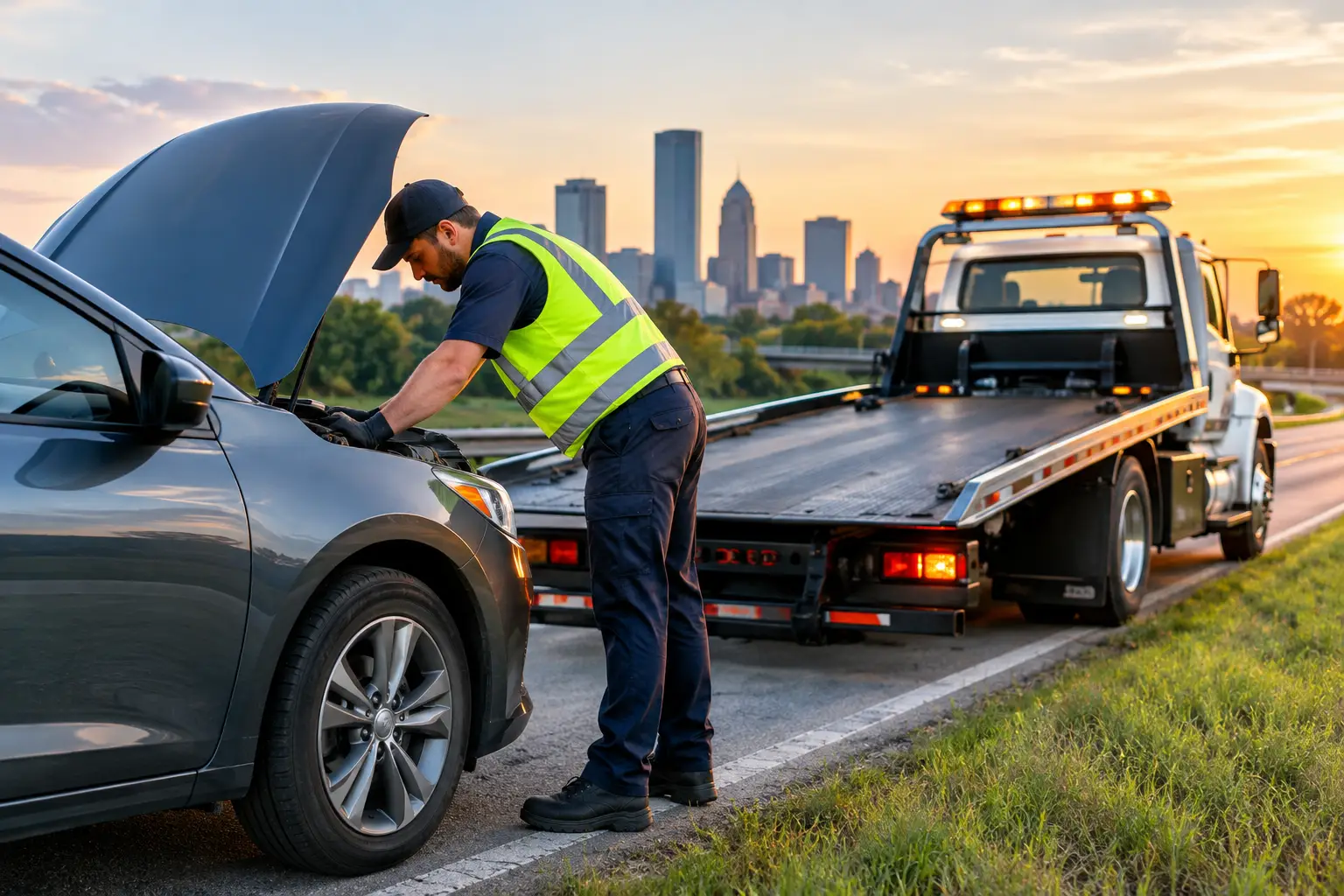
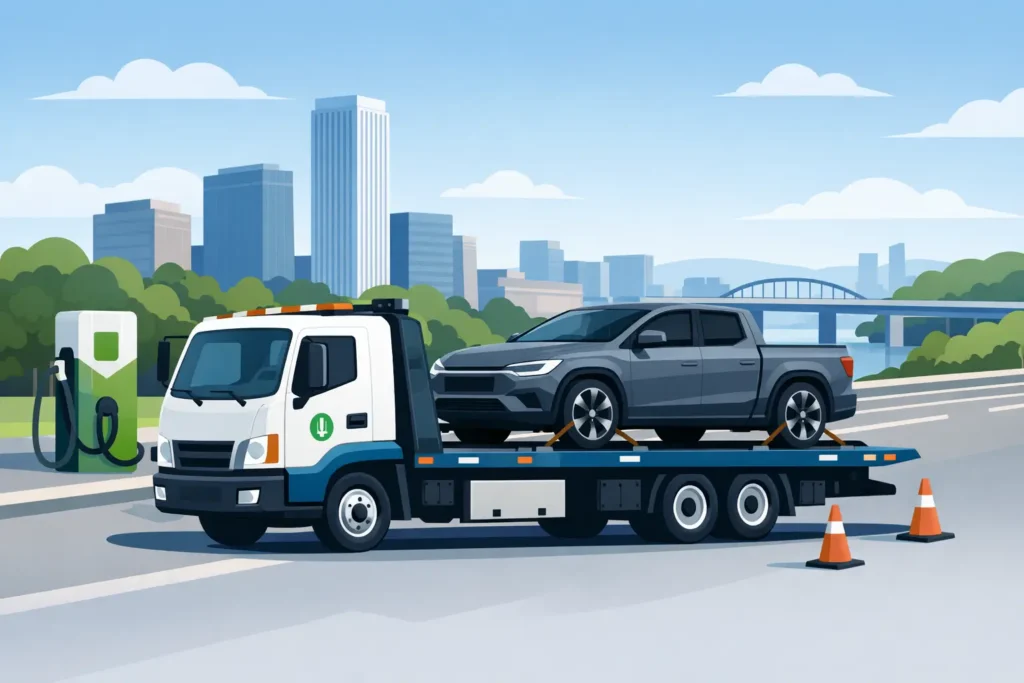
A dead battery in an EV does not always mean the large battery pack is empty. Sometimes the problem is a failed 12-volt battery, a charging fault, a damaged tire, or a vehicle that will not shift into the proper mode. That is where the best flatbed uses for EVs become clear. A flatbed keeps all four wheels off the pavement and gives the driver a controlled way to move an electric vehicle without treating it like a standard gas-powered car.
For an EV stopped on I-44, parked at a Tulsa shopping center, or sitting in a home driveway, the goal is simple: get it loaded correctly and delivered where it needs to go without adding damage. Not every EV situation requires a tow, but when the vehicle cannot safely roll, drive, or remain on the road, a flatbed is usually the right call.
Why Flatbed Towing Is Usually the Right Choice for EVs
Most electric vehicles use a drive system that is connected to the wheels, even when the vehicle appears to be off. Letting the drive wheels turn while the vehicle is being pulled can create problems with motors, gearing, or regenerative braking systems. The exact risk depends on the vehicle, its drivetrain, and the manufacturer’s towing instructions, but it is not something to guess about on the shoulder of a busy road.
A flatbed eliminates that issue by carrying the vehicle rather than dragging it. All four tires are secured on the deck, so none of the wheels rotate during transport. This matters for rear-wheel-drive, front-wheel-drive, and all-wheel-drive EVs alike.
Flatbeds also work well with the low ground clearance found on many EVs. Careful ramp positioning, a controlled winch pull when needed, and the right tie-down points help avoid scraping the front bumper, underbody panels, or battery-area shielding. The vehicle is not just expensive – its lower structure contains components that need to be handled with care.
Best Flatbed Uses for EVs in Real Roadside Situations
The reason for the tow matters. A vehicle that simply needs a tire changed is different from one with collision damage or a charging system failure. Here are the situations where flatbed transport makes the most sense.
The EV Will Not Drive or Shift Into Gear
An EV may have enough charge on the display but refuse to move. A warning message, electronic fault, damaged key fob system, parking brake issue, or low-voltage battery problem can leave it stuck in place. If it will not shift into drive or reverse, forcing it to move is not the answer.
A flatbed allows the vehicle to be loaded with a winch and moved without relying on its own power. Before loading, the tow operator needs to assess whether the wheels can roll, whether the parking brake is engaged, and whether the vehicle has a tow or transport mode. Those details affect how the job is handled.
The Main Battery Is Too Low to Reach a Charger
Running out of usable driving range is one of the more familiar EV towing calls. Sometimes a nearby charging station is available, but the vehicle cannot make it there. Other times, the closest charger is out of service, occupied, or incompatible with the vehicle.
Flatbed towing is the safer way to transport the EV to a working charger, home, dealership, or repair facility. It avoids putting miles on the drive wheels and avoids the uncertainty of trying to pull the vehicle even a short distance. A short tow can still be the wrong tow if the wheels are on the ground.
Accident Damage Makes Driving Unsafe
After a collision, an EV may look drivable but have damage that is not obvious from the outside. A bent wheel, damaged suspension, loose underbody panel, leaking coolant, broken steering component, or warning light can make driving it a bad idea. If the impact involved the lower battery area, the situation calls for extra caution.
A flatbed keeps the vehicle stable during transport and avoids loading stress onto a damaged wheel or suspension corner. It also gives the operator a chance to inspect the immediate loading area and choose an approach that does not worsen visible damage. If there is smoke, heat, a strong odor, fluid leaking from the battery area, or any sign of battery damage, move away from the vehicle and contact emergency services first. That is no longer a normal tow situation.
A Flat Tire, Wheel Damage, or Broken Suspension
A flat tire is often repairable roadside. But there are times when an EV needs to be transported instead – especially if the tire is damaged beyond a safe temporary repair, the wheel is bent, or the vehicle’s suspension has been affected by a pothole or curb strike.
Driving an EV with a severely low tire can damage the wheel and make the vehicle harder to control. Using a wheel-lift on a car with an uncertain drivetrain setup or low clearance can create another set of concerns. A flatbed keeps the damaged wheel off the road completely and gets the vehicle to a tire shop or repair shop without asking it to travel on a compromised corner.
Charging Equipment or Electrical Faults
A vehicle can be plugged in and still fail to charge. The issue might be the charging station, the cable, the vehicle’s onboard charging system, or an electrical fault that needs diagnosis. If the battery level is low and the car will not take a charge, driving around to test more stations can leave the driver stranded farther from a safe location.
In that case, a flatbed tow to a dealership, qualified repair shop, or a reliable home charging location can be the practical move. The tow does not diagnose the vehicle, but it removes the immediate roadside problem and gets the EV to the place where it can be properly checked.
Proper Loading Matters as Much as the Flatbed
Having a flatbed available is only part of the job. The vehicle still needs to be loaded using the correct approach. EVs often have specific manufacturer instructions for tow mode, neutral, parking brake release, recovery points, and tie-down locations. A careful operator checks the vehicle condition before assuming it can be driven or rolled onto the bed.
The battery pack is commonly mounted low in the vehicle floor. That means lifting, pulling, or securing an EV from the wrong point can damage underbody panels or worse. Proper wheel straps and approved attachment points are used to hold the vehicle in place. Chains or hooks should not be placed wherever they happen to fit.
Low-clearance EVs may also need extra attention at the ramp transition. A rushed load can scrape the nose, rocker panels, or lower air dam. On a clean, level surface, the process is easier. In a tight parking garage, apartment lot, or busy roadway, it takes more planning and patience.
What an EV Driver Can Do Before the Tow Truck Arrives
If it is safe to do so, put the vehicle in park, turn on hazard lights, and move yourself away from traffic. Do not keep trying to drive the EV if it has a warning message, collision damage, or a tire that is rapidly losing air.
If you can access the owner’s manual or vehicle screen, look for towing or transport instructions. You do not need to solve the loading process yourself, but knowing whether the vehicle has a tow mode can help. Tell the tow operator the make, model, whether it is all-wheel drive, what warning messages are showing, and whether the car can roll or shift into neutral.
For Tesla and other EV models, also mention whether the vehicle has power, whether the 12-volt system appears dead, and whether it is parked in a garage or another restricted-access area. Clear details before dispatch help bring the right equipment and avoid wasted time at the scene.
When Roadside Help May Be Enough
Flatbed towing is not required for every EV issue. If the vehicle has a simple low tire that can be safely changed, a lockout, or a 12-volt issue that can be assessed on site, roadside assistance may get you moving without transport. The decision depends on the vehicle’s condition and whether it can be driven safely after the problem is addressed.
But if there is any doubt about damage, drivability, wheel condition, or a warning that prevents normal operation, it is better to keep the EV off the road. Tulsa Towing handles EV transport with proper flatbed equipment and a damage-free approach, whether the destination is a local repair shop, dealership, charger, or home.
When an electric vehicle stops cooperating, the safest next step is usually not to force it. Get it assessed, get it loaded correctly, and let the repair or charging decision happen somewhere safe.