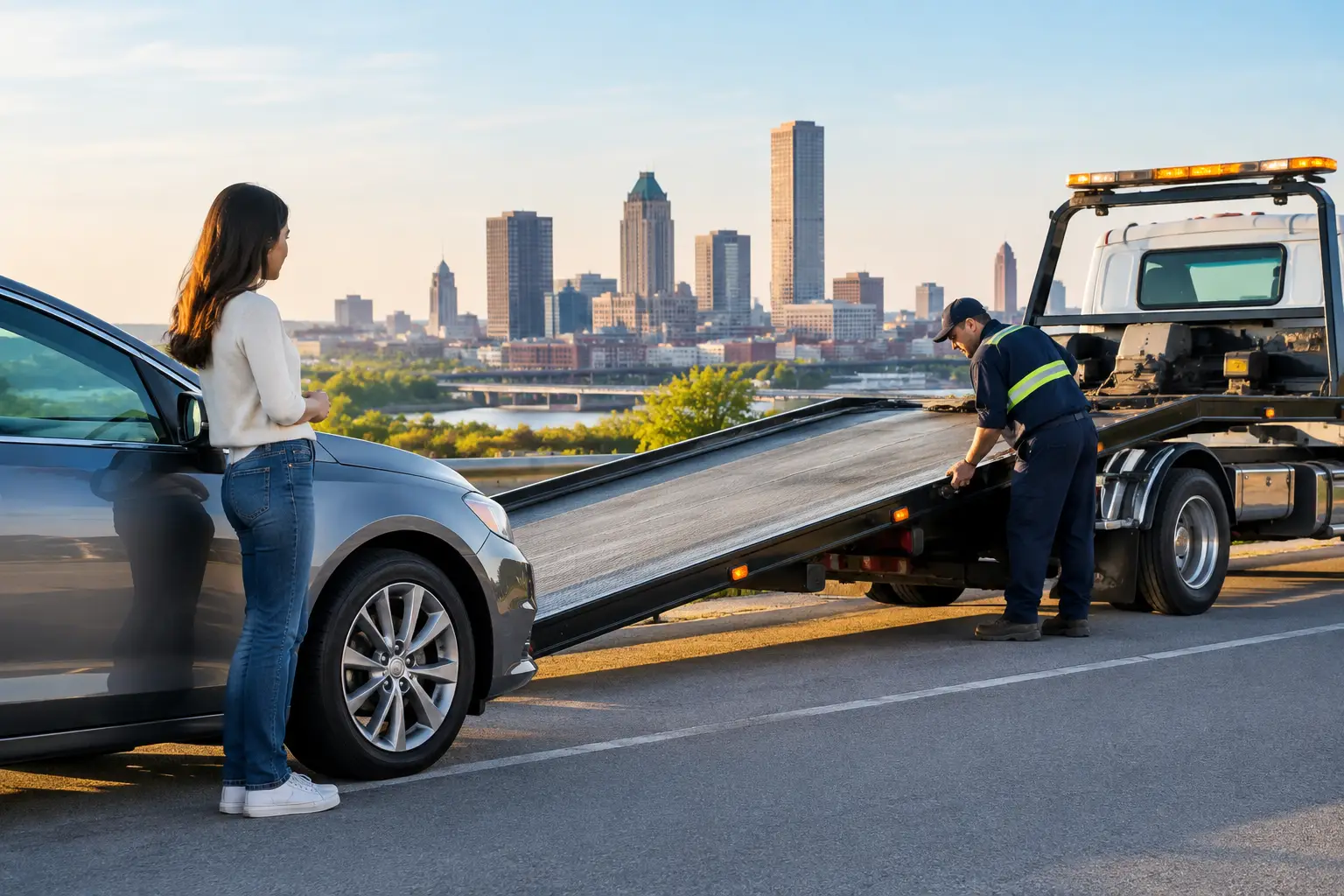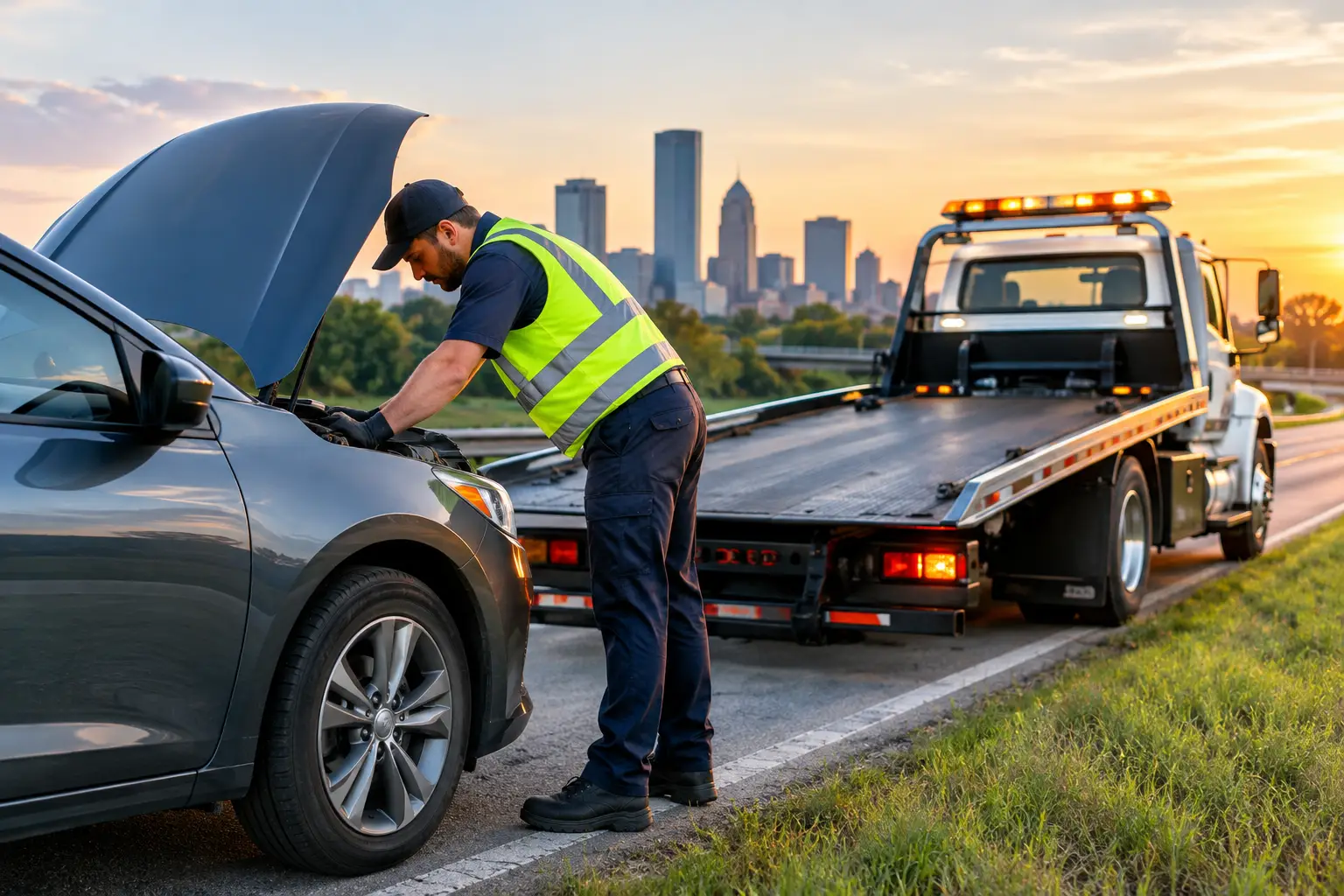
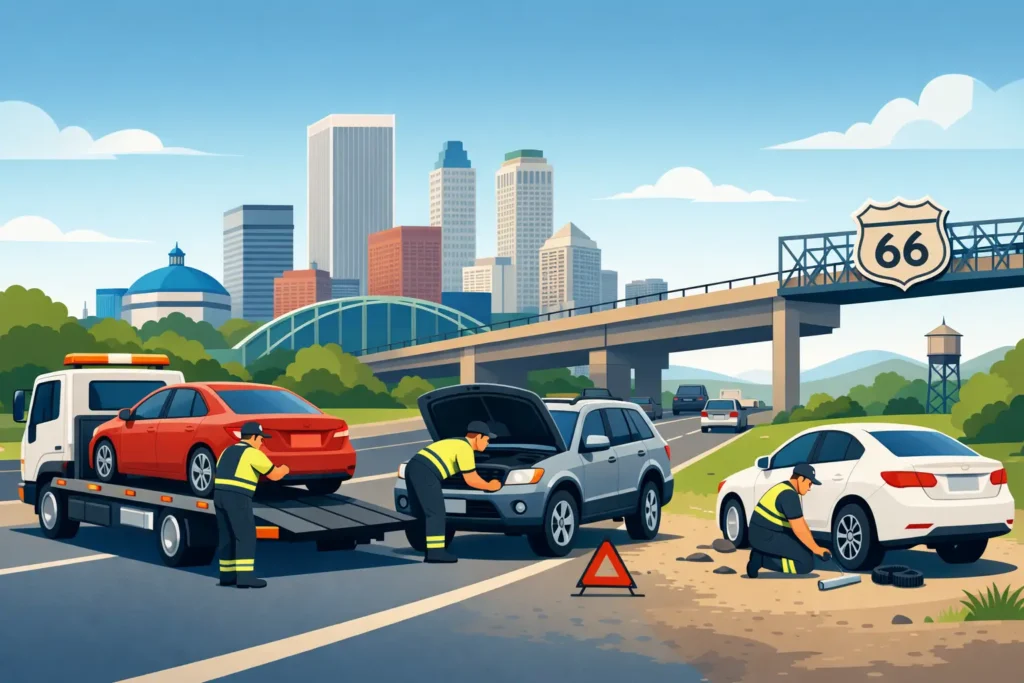
A vehicle rarely quits in a convenient spot. It may happen in rush-hour traffic on US 75, at the far end of a store parking lot, or in a tight apartment garage where getting loaded safely takes some planning. Knowing the places vehicles commonly break down helps you make the right first move: get out of danger if possible, communicate your exact location, and decide whether the issue can be handled roadside or needs a tow.
The location matters as much as the problem. A dead battery in a quiet driveway is different from a flat tire beside I-44. The vehicle may have the same issue, but the risks, access, and safest solution change quickly.
Places Vehicles Commonly Break Down Around Tulsa
High-traffic highways and entrance ramps
I-44, US 75, Highway 169, and the Broken Arrow Expressway see a steady mix of commuter traffic, construction activity, and long-distance travel. These are common places for overheating, tire failures, dead batteries after a brief stop, and cars that simply lose power without warning.
If your vehicle is still moving, get as far onto the shoulder as you safely can. Turn on your hazard lights and avoid stopping near the end of an on-ramp, a blind curve, or a narrow shoulder if there is another safe option ahead. Do not stand between your vehicle and passing traffic. If you can exit from the passenger side and move well away from traffic, that is often the safer choice.
Highway recovery is not just about hooking up a vehicle quickly. Traffic speed, shoulder width, vehicle position, and how the car will load all matter. A flatbed is often the right call for a disabled car, truck, or EV on a busy route because it keeps the vehicle fully off the ground during transport and reduces the chance of added damage.
Major intersections and busy surface streets
Memorial Drive, Riverside Drive, Peoria, Yale, 71st Street, and Tulsa Hills traffic can turn a simple no-start into a problem for everyone around you. Vehicles often break down here because they stop at a light, then will not restart. Overheating can also show up after slow stop-and-go driving, especially during hot Oklahoma weather.
If the vehicle stalls in an active lane, do not keep trying to crank it while traffic builds behind you. Shift into neutral only if it is safe and you know the vehicle can be moved without putting yourself at risk. In some cases, a short move out of a travel lane is possible. In others, it is safer to leave the vehicle where it is, use hazard lights, and wait in a protected location.
Clear location details make dispatch faster. Instead of saying you are on Memorial, identify the nearest cross street, direction of travel, a visible business, or which turn lane you are blocking. That information helps a tow operator plan the safest approach before arriving.
Parking lots at stores, offices, and shopping centers
Parking lots are one of the most common breakdown locations because vehicles sit long enough for a weak battery to show itself. Drivers also discover flat tires after coming back from a store, or find that a car will not shift, start, or move out of a parking space.
The good news is that most parking lots offer room to work. The challenge is often access. A vehicle parked nose-in between other cars, near a cart return, or under a low overhang may need careful positioning before it can be loaded. That is especially true with low-clearance cars, larger pickups, and electric vehicles.
A jumpstart can solve the problem when the battery is simply discharged. But if the car starts and immediately dies, displays warning messages, or has electrical issues, a tow to a repair shop may be the more practical choice. Repeated jump attempts can waste time and leave you stranded again a few miles later.
Apartment complexes and residential streets
A car that will not start before work is a familiar call in neighborhoods across South Tulsa, Midtown, Broken Arrow, Jenks, and Bixby. Dead batteries, lockouts, flat tires, and starter problems often happen at home because the vehicle has been sitting overnight.
These calls may seem simple, but residential towing can have its own obstacles. Narrow streets, tightly parked cars, steep driveways, gated entries, and soft ground after rain affect how a truck can safely reach and load the vehicle. Let the dispatcher know if the car is in a garage, backed into a driveway, blocked by another vehicle, or located behind a gate.
If you are locked out, avoid forcing a door or breaking a window. Modern door seals, side airbags, and electronic locks make do-it-yourself entry more likely to cause expensive damage. Roadside lockout help is usually the cleaner solution when the keys are visible but inaccessible.
Parking garages and tight access areas
Downtown garages, medical facilities, office buildings, and some apartment properties present a different challenge: clearance. A standard tow truck may not fit under the structure, and even when access is possible, the vehicle needs to be handled without scraping it against columns, ramps, or other parked cars.
Before requesting service, check whether your vehicle is on an upper level, what the posted clearance is, and whether there is a second exit. Tell the dispatcher if the car is in a garage from the start. That allows the right equipment and recovery plan to be considered instead of discovering an access problem after arrival.
For a vehicle that can roll but will not drive, the safest plan may involve carefully moving it to an accessible loading area. It depends on the garage layout, traffic inside the structure, and the vehicle itself. Low-clearance cars and EVs should not be dragged or handled by guesswork.
Roadsides after a tire failure or slide-off
Tulsa weather can turn shoulders, medians, and unpaved edges soft quickly. A driver may pull off for a flat tire, then find the vehicle is stuck in mud or angled down an embankment. Wet grass, loose gravel, and uneven ground can also make a standard tow more complicated.
Do not keep spinning the tires. That can dig the vehicle deeper, damage the bumper or underbody, and make the recovery harder. A winch-out may be appropriate when the vehicle is stuck but otherwise drivable. If there is suspension damage, a leaking fluid, or the vehicle is sitting at an unsafe angle, a flatbed tow is usually the safer next step.
What to Do Before Help Arrives
First, put safety ahead of the vehicle. Turn on hazards, move away from traffic when it is safe, and keep children and passengers out of the roadway. If you are on a highway or cannot safely exit the vehicle, use your judgment based on traffic and surroundings.
Next, have the details ready: your exact location, the vehicle year, make, model, color, whether it is two-wheel drive, all-wheel drive, or electric, and what happened before it stopped moving. Mention a flat tire, locked keys, warning light, collision damage, or whether the wheels are turned or locked. Those details help determine whether roadside assistance is realistic or a tow truck should be dispatched.
Remove personal items you will need from the vehicle if it is safe to do so. Bring your phone, wallet, medications, and any key fob. If the car is going to a repair shop or dealership, confirm the destination before the truck arrives. Clear communication prevents delays when you are already dealing with a bad day.
When a Tow Is the Safer Choice
Roadside help works well for a straightforward jumpstart, lockout, or tire issue when the vehicle is in a safe, accessible spot. A tow makes more sense when the vehicle has overheated, will not stay running, has collision damage, has an electrical warning, cannot be driven safely, or is in a location where attempting a roadside fix creates more risk.
This is where proper loading matters. Tulsa Towing, powered by Neptune Towing, uses flatbed equipment for damage-free transport, including low-clearance vehicles, trucks, and electric vehicles that need specific handling. The goal is not to rush the vehicle onto a truck. It is to get it loaded correctly and delivered where you need it without creating another problem.
A breakdown is stressful enough without wondering what happens next. Give a clear location, stay in the safest place available, and choose the help that fits both the vehicle issue and the spot where it happened.