A flat tire rarely happens in a convenient place. It happens leaving work, on the shoulder of I-44, in a crowded lot, or while trying to get the kids home. Roadside tire service is meant to solve that immediate problem safely, whether that means installing a usable spare or getting the vehicle transported when a tire change is not the right move.
The first goal is not simply getting the wheel off. It is keeping you out of traffic, avoiding damage to the vehicle, and making sure the next step is actually safe. A spare can get some drivers moving again. In other situations, especially with damaged wheels, missing tire tools, low-clearance vehicles, or multiple flat tires, a tow is the smarter call.
What Roadside Tire Service Covers
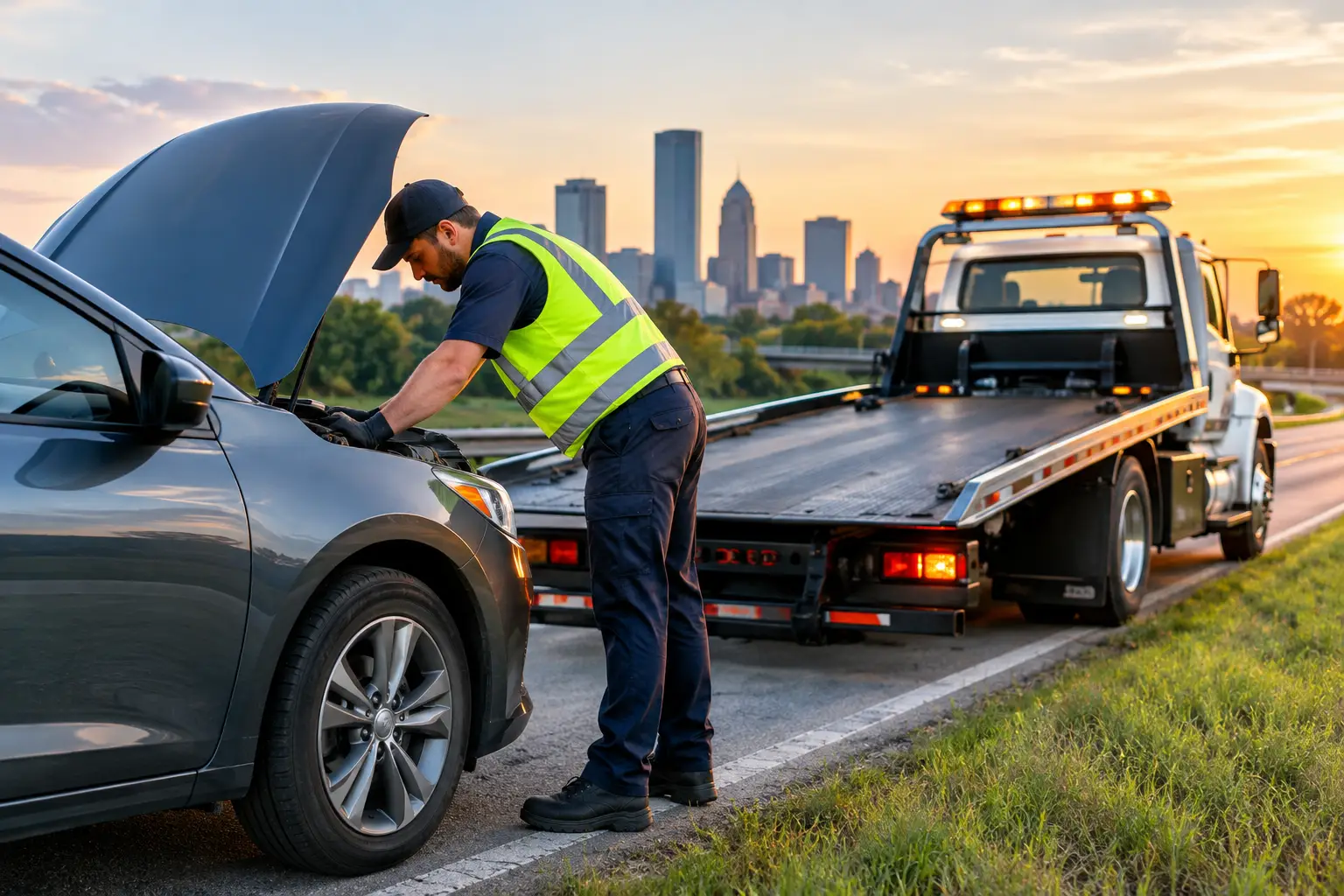
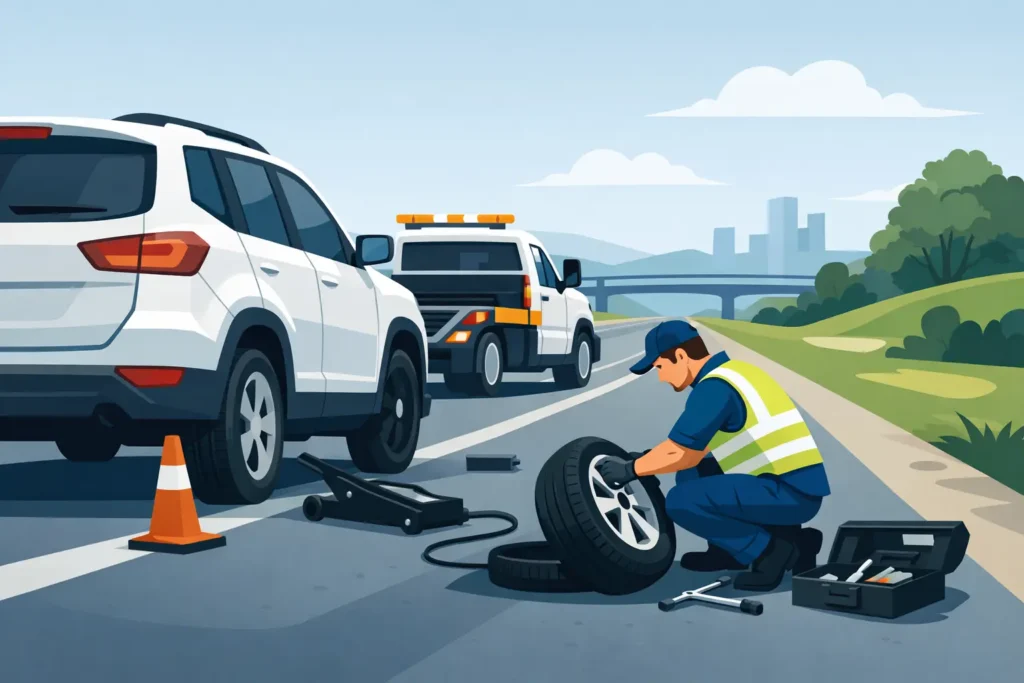
Roadside tire service usually starts with a quick look at the tire, wheel, and vehicle location. If you have an inflated spare tire and the vehicle can be safely lifted where it sits, the flat can often be changed on site. The damaged tire is removed, the spare is installed, and the lug nuts are tightened correctly before the vehicle is lowered.
That sounds simple until the vehicle is parked on a narrow shoulder, the wheel is seized, the locking lug key is missing, or the spare has been sitting flat in the trunk for years. Real roadside work is about recognizing those issues before they create a bigger problem.
A service call may also involve checking whether the tire is completely flat from a puncture, split at the sidewall, or damaged after striking a curb or pothole. A nail in the tread may be repairable at a tire shop. A torn sidewall or bent wheel generally is not something that can be safely handled on the roadside.
A spare tire is a temporary solution
Most compact spare tires are designed to get you to a repair shop, not to handle normal driving for days. They usually have lower speed limits, reduced traction, and different handling than a full-size tire. If a compact spare is installed, drive carefully and have the damaged tire inspected as soon as possible.
A full-size spare gives you more flexibility, but it still needs to be properly inflated and in good condition. A spare with dry rot, exposed cords, or low pressure is not a safe answer just because it is available.
When It Is Safer to Call for a Tow
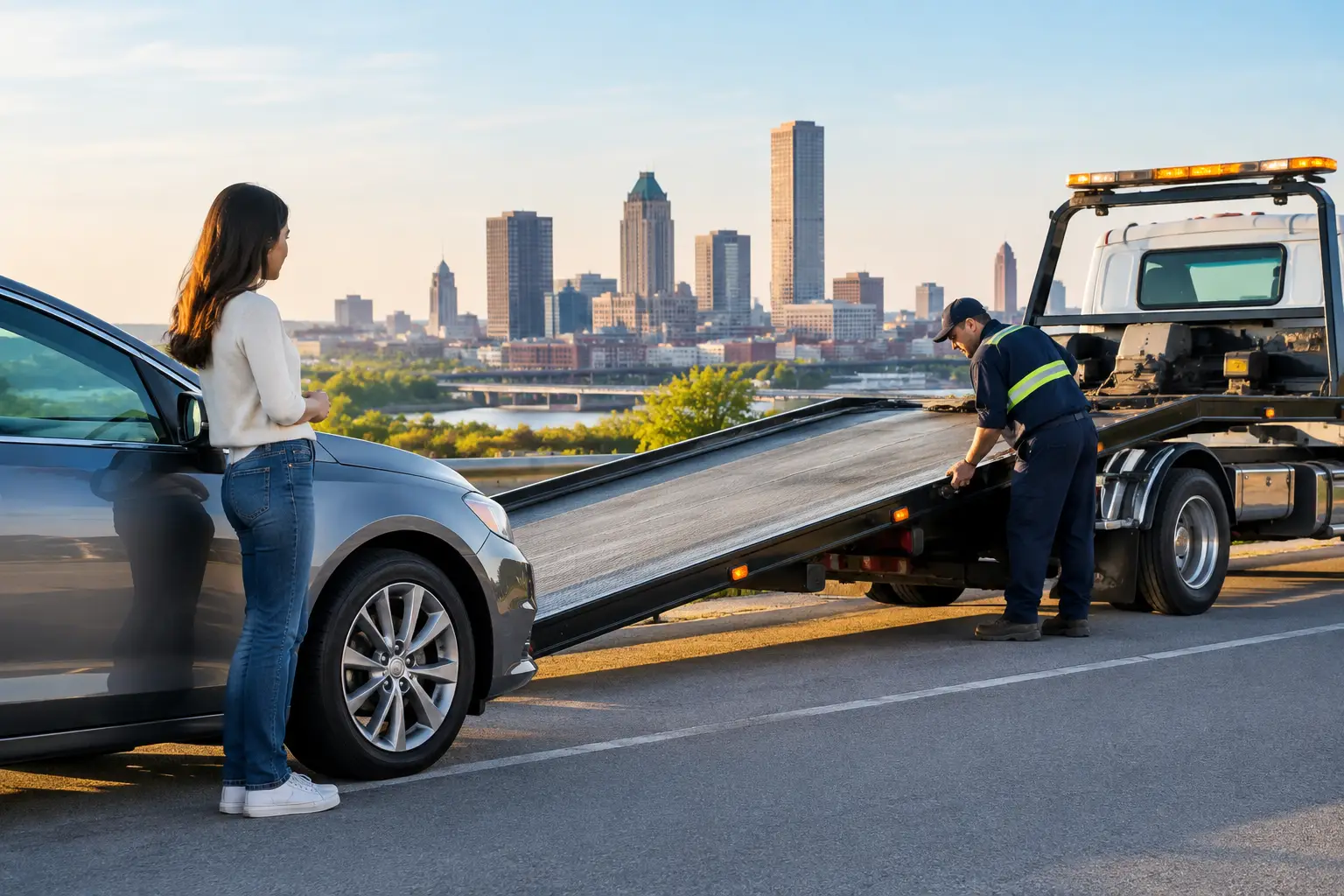
There are times when changing a tire on site is not worth the risk. A vehicle stopped close to moving traffic is one of them. On US 75, Highway 169, or a busy stretch of Memorial Drive, even a routine flat can turn dangerous quickly. Moving the vehicle to a repair shop on a flatbed may be safer than working beside traffic.
Towing also makes sense when there is no spare, the spare is flat, or more than one tire is damaged. The same applies if a wheel is bent or cracked, a tire has come apart, or the vehicle was driven while flat long enough to damage the rim. Installing a spare on a damaged wheel may not hold air or may create a vibration and handling issue immediately.
Low-clearance cars and electric vehicles deserve extra care. Improper lifting points can damage the underbody, battery area, rocker panels, or suspension components. A flatbed provides a controlled way to move the vehicle without adding avoidable damage. This is especially useful when a Tesla or another EV has a flat and cannot be handled like a standard sedan.
If the vehicle is in a parking garage, on soft ground, or stuck with a flat tire in an awkward position, access matters too. Sometimes the right equipment and loading plan are more useful than forcing a tire change in a space that does not allow safe lifting.
What to Do While You Wait for Help
Get the vehicle as far from active traffic as possible without driving on a completely flat tire any farther than necessary. Turn on your hazard lights, put the vehicle in park, and set the parking brake if you are on stable ground. If you are on a highway shoulder, stay aware of traffic and avoid standing near the travel lane.
If you can safely exit the vehicle and stand well away from traffic, do that. If leaving the vehicle would put you closer to moving cars, staying buckled inside may be safer. There is no one rule for every location. A quiet residential street, a shopping center lot, and a narrow highway shoulder require different decisions.
When calling for help, have the vehicle make, model, color, and exact location ready. Nearby cross streets, exit numbers, store names, or visible landmarks help with faster dispatch. Let the driver know whether you have a spare and whether the tire is simply flat or the wheel appears damaged.
It also helps to mention anything unusual ahead of time. Tell the dispatcher if the vehicle is an EV, has very low ground clearance, is in a garage, has oversized tires, or is loaded with cargo. That information helps ensure the right approach from the start.
Why Driving on a Flat Causes More Damage
A tire that has lost air cannot support the vehicle normally. The sidewall flexes excessively, the rubber overheats, and internal structure can fail quickly. Even a short distance can turn a repairable puncture into a tire that must be replaced.
The wheel can suffer too. Once the tire is no longer cushioning the rim, potholes, road edges, and even normal pavement impacts can bend or crack it. That is why the best move after noticing a flat is usually to pull over safely and stop, rather than trying to make it several more miles to a shop.
Run-flat tires are different, but they are not invincible. Some vehicles can travel a limited distance after a pressure loss, usually at reduced speed. The exact limits depend on the tire and the vehicle manufacturer. If you are unsure whether your vehicle has run-flats or how far they can be driven, treat it like a regular flat and avoid guessing.
Common Problems That Delay a Tire Change
The most common issue is a spare tire that is not usable. Drivers often discover that the spare is low on air only after getting a flat. Missing jacks, lug wrenches, wheel locks, and lock-key adapters can stop a DIY tire change as well.
Corroded lug nuts and wheels that have bonded to the hub are another real problem, particularly on older vehicles. Applying excessive force in the wrong way can break a stud, damage a wheel, or create a situation where the vehicle cannot be driven after the spare is installed.
Some newer vehicles do not include a spare at all. Instead, they may come with an inflator kit and tire sealant. Those kits can sometimes help with a small tread puncture, but they will not fix a sidewall cut, a large hole, or a tire that has separated from the wheel. Tire sealant can also complicate later repairs, so it is not always the first choice when professional help is available.
Getting the Right Help in Tulsa
For a simple flat in a safe location, on-site tire service can save time and get you moving toward a tire shop. For a damaged wheel, unsafe roadside location, or vehicle without a usable spare, flatbed towing keeps the situation simple and protects the vehicle.
Tulsa Towing handles both situations with the same focus: clear communication, proper equipment, and careful vehicle handling. Service is available throughout Tulsa, with nearby calls in Jenks, Bixby, Broken Arrow, and Glenpool handled when scheduling and availability allow.
A flat tire is already enough of a disruption. Pull over safely, avoid driving on the flat, and choose the option that gets both you and the vehicle out of a bad spot without creating another repair.