A vehicle that will not start can turn a normal morning into a problem fast, especially when you are parked at work, stuck in a busy lot, or pulled over near I-44. This dead battery troubleshooting guide helps you narrow down what happened, decide whether a jump-start is safe, and know when it makes more sense to call for roadside help or a tow.
A dead battery is common, but it is not always the battery. Loose cable connections, a failing alternator, a bad starter, or an electronic issue can create similar symptoms. The goal is not to diagnose every part of the vehicle from the driver’s seat. It is to handle the immediate situation safely and avoid making a small problem worse.
Start With the Signs of a Dead Battery
Before connecting jumper cables, pay attention to what the vehicle does when you turn the key or press the start button. A completely dead battery often means no interior lights, no dash lights, and no sound at all. A weak battery may allow lights to come on but produce rapid clicking when you try to start the engine.
Slow cranking is another familiar sign. The engine may turn over like it is struggling, then fail to start. Headlights that dim sharply while starting also point toward low battery power.
One solid click with bright lights can be different. That may indicate a starter issue rather than a dead battery. If the engine cranks normally but will not fire up, fuel, ignition, or another mechanical problem may be involved. A jump-start may not solve those situations.
Check for the simple causes first. An interior light left on overnight, a door that did not latch fully, accessories plugged into a power outlet, or an older battery during a cold Oklahoma morning can all drain enough power to leave you stranded.
Dead Battery Troubleshooting Guide: Check the Connections
If it is safe to do so, open the hood and look at the battery terminals. You are checking for obvious issues, not taking the battery apart. A terminal that is visibly loose, heavily corroded, cracked, or damaged can keep power from reaching the vehicle even when the battery has a charge.
Corrosion often looks like white, blue, or green buildup around the battery posts. Do not touch it with bare hands, and do not use metal tools around the battery unless you know exactly what you are doing. Batteries can release flammable gas, and an accidental short can cause sparks or damage electrical components.
If a cable is clearly loose and can be secured without forcing anything, that may restore the connection. If the terminal is badly corroded, the battery case is swollen, leaking, or smells like rotten eggs, do not attempt a jump-start. Step away from the vehicle and arrange professional assistance. A swollen or leaking battery is not a roadside DIY situation.
Make Sure You Are in a Safe Place First
Where the vehicle is stopped matters as much as the mechanical problem. A dead battery in your driveway is inconvenient. A dead battery on the shoulder of US 75, near Memorial, or in a crowded Tulsa parking lot needs a more cautious approach.
Turn on your hazard lights if they work. If you are on a highway shoulder or near moving traffic, stay in the vehicle with your seat belt on when it is safer to do so. Do not stand between vehicles while someone tries to jump-start your car. On a narrow shoulder, at night, or where traffic is moving fast, calling for help is usually the better decision.
Be careful in parking garages as well. Tight spaces, low clearance, and limited room around the front of a vehicle can make jumper cables difficult to connect safely. The same applies when a vehicle is angled, stuck in a muddy area, or blocked by other cars.
How to Jump-Start a Car Safely
A jump-start can get you moving, but only if the battery is the actual issue and both vehicles are compatible. Check your owner’s manual first, particularly for hybrid vehicles, electric vehicles, and newer cars with dedicated jump terminals. EVs such as Teslas have a low-voltage battery that may need assistance, but they should not be used to jump-start another vehicle.
Park the assisting vehicle close enough for the cables to reach, but do not let the vehicles touch. Put both vehicles in park or neutral, set the parking brakes, and turn off lights, radios, and climate controls.
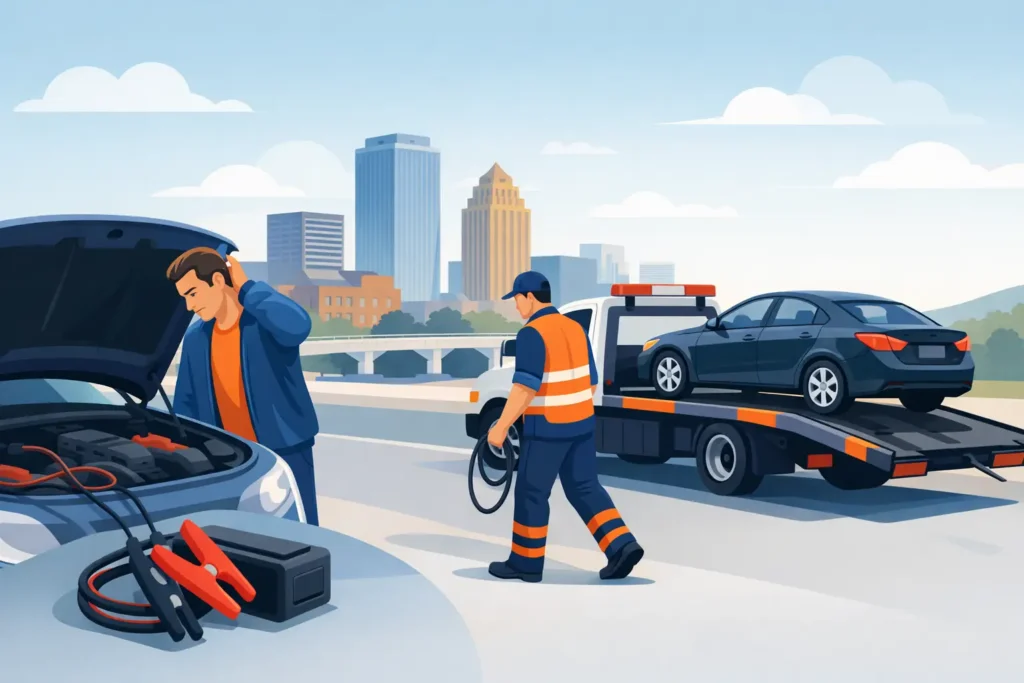
With both engines off, connect the red positive clamp to the positive terminal on the dead battery. Connect the other red clamp to the positive terminal on the good battery. Then connect the black negative clamp to the negative terminal on the good battery. Connect the final black clamp to an unpainted metal ground point on the disabled vehicle, away from the battery and fuel system.
Start the assisting vehicle and let it run for a few minutes. Then try starting the disabled vehicle. Do not crank it continuously. A few short attempts are enough. If it does not start after that, stop. Repeated attempts can overheat a starter, drain the good battery, or point to a problem that a jump cannot fix.
Once the vehicle starts, remove the cables in reverse order. Keep clamps from touching each other or metal surfaces while they are connected. Let the vehicle run, but do not assume the problem is solved just because it started.
When a Jump-Start Is Not the Right Answer
If the vehicle starts and immediately dies, the charging system may not be keeping the battery alive. A battery warning light on the dash, flickering lights, power steering changes, or a burning smell can point to an alternator or belt problem. Driving farther in that condition can leave you stranded again, sometimes in a worse location.
The same goes for a battery that has needed multiple jumps recently. A battery can fail from age, extreme temperatures, internal damage, or a charging issue. Most car batteries last several years, but actual life depends on use, heat, short trips, and electrical demand. Replacing a battery may fix it, but testing the charging system is the only way to know whether the alternator is also part of the problem.
If you are unsure whether the car will make it to a shop, do not gamble on a busy route. A flatbed tow keeps the vehicle off the road and avoids the risk of losing power in traffic. This is especially useful for low-clearance cars, all-wheel-drive vehicles, trucks, and EVs that need proper handling rather than being pulled with the wrong equipment.
What to Do After the Vehicle Starts
If the jump works and the vehicle is running normally, drive directly to a trusted repair shop or battery retailer for a battery and charging-system test. Avoid making unnecessary stops. Turning the engine off too soon could mean needing another jump.
Pay attention during the drive. If the battery light comes on, lights begin dimming, the engine runs rough, or the vehicle loses electrical functions, pull over safely and shut it down. Those are signs that continuing to drive may not be worth the risk.
It also helps to think back to the last time the vehicle was driven. A car that sat for two weeks may simply have a drained battery. A daily driver that suddenly goes dead after a normal commute deserves a closer look. That difference helps determine whether you are dealing with an isolated drain or a component that is failing.
When to Call for Roadside Help or a Tow
Call for help when the location is unsafe, you do not have proper jumper cables, the battery looks damaged, or the vehicle will not start after a careful jump attempt. It is also the right move if you are driving an EV, do not know where the correct jump points are, or suspect the alternator has failed.
For drivers in Tulsa, Jenks, Bixby, and Broken Arrow, a local roadside response can provide a jump-start when appropriate or transport the vehicle to the repair shop you choose when it is not. Tulsa Towing focuses on getting the vehicle handled safely without turning a battery problem into extra stress.
A dead battery is frustrating, but it does not have to leave you guessing. Take a moment to check the symptoms, protect yourself around traffic and electrical connections, and choose the option that gets both you and the vehicle to a safe place.