A dead battery in a grocery store lot is one thing. A disabled vehicle on the shoulder of I-44, US 75, or Highway 169 is another. How roadside dispatch works starts with figuring out exactly where you are, what your vehicle needs, and whether the situation can be handled safely on site or requires a tow truck.
That first conversation is not just taking your name and sending the nearest truck. Good dispatch helps prevent wasted time, the wrong equipment, and avoidable damage to your vehicle. The clearer the information is from the start, the faster the driver can arrive prepared to do the job.
What Happens When You Request Roadside Help
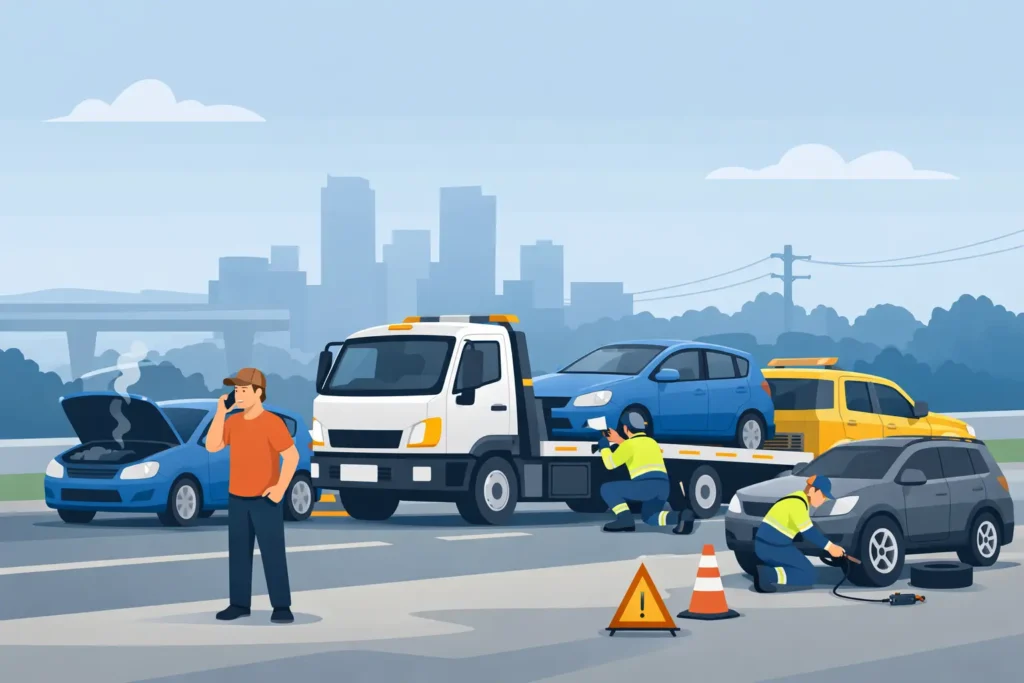
Roadside dispatch begins when a driver calls with a breakdown, flat tire, lockout, dead battery, accident-related damage, or a vehicle that will not move. The dispatcher gathers the basic job details, checks the service area and truck availability, then assigns the job to the operator best positioned and equipped to handle it.
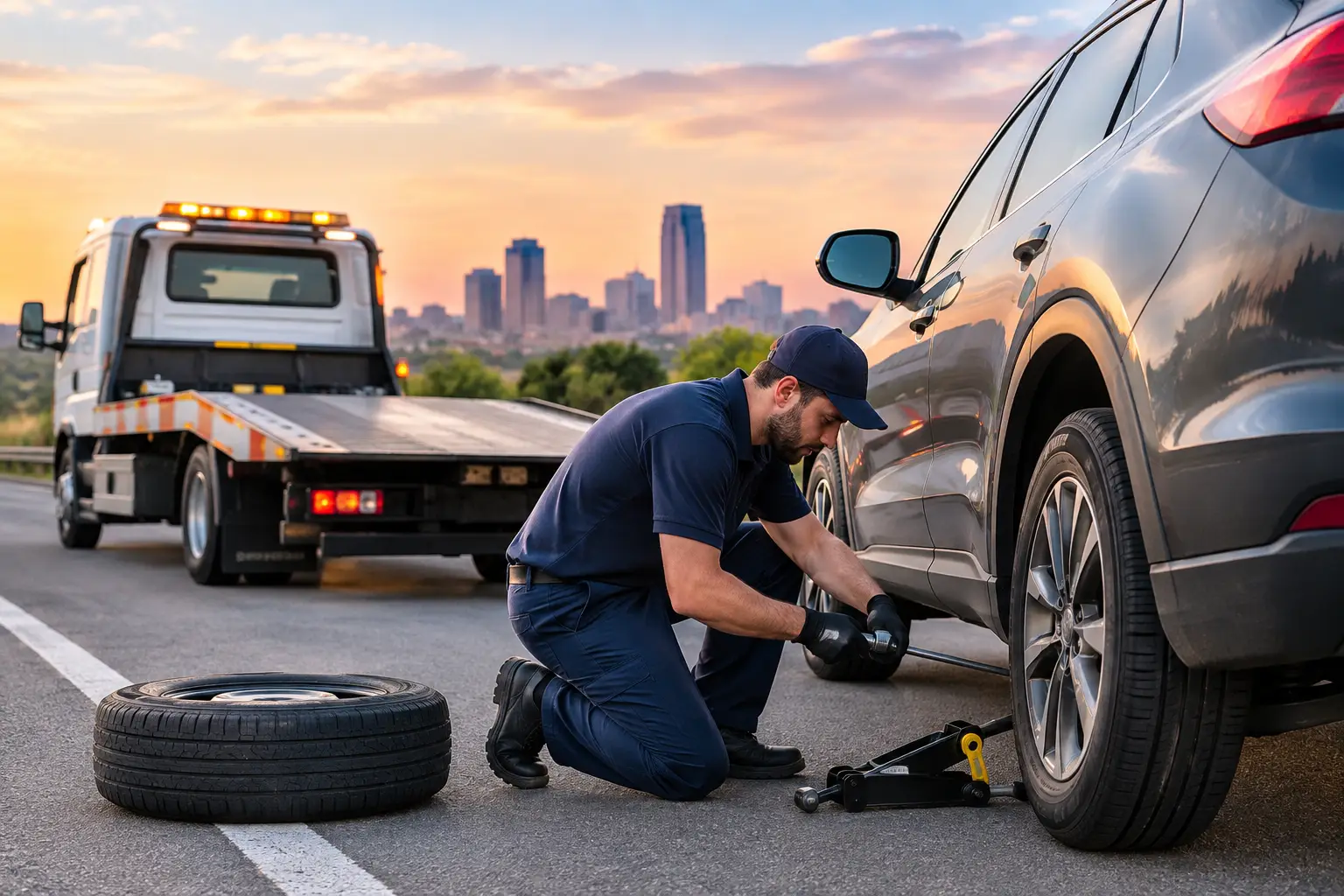
For a straightforward jumpstart or lockout in a safe parking lot, the call may be handled with roadside assistance. If the vehicle has a damaged tire without a usable spare, will not start after a basic check, has steering or suspension damage, or cannot be driven safely, the dispatcher will usually send a tow truck instead.
In Tulsa, location details matter more than people think. Saying you are near Memorial or Riverside may get the conversation started, but the dispatcher needs the exact lot, cross street, direction of travel, entrance, or exit number. On a highway, the direction you are facing and the side of the road are just as important. A truck on northbound US 75 cannot safely or quickly reach a vehicle on the opposite side without taking the proper route.
The Information a Dispatcher Needs
The goal is simple: send the right help to the right place without making you repeat the whole situation when the truck arrives. A dispatcher will normally ask for your callback number, a precise location, the vehicle year, make, model, and color, plus the problem you are dealing with.
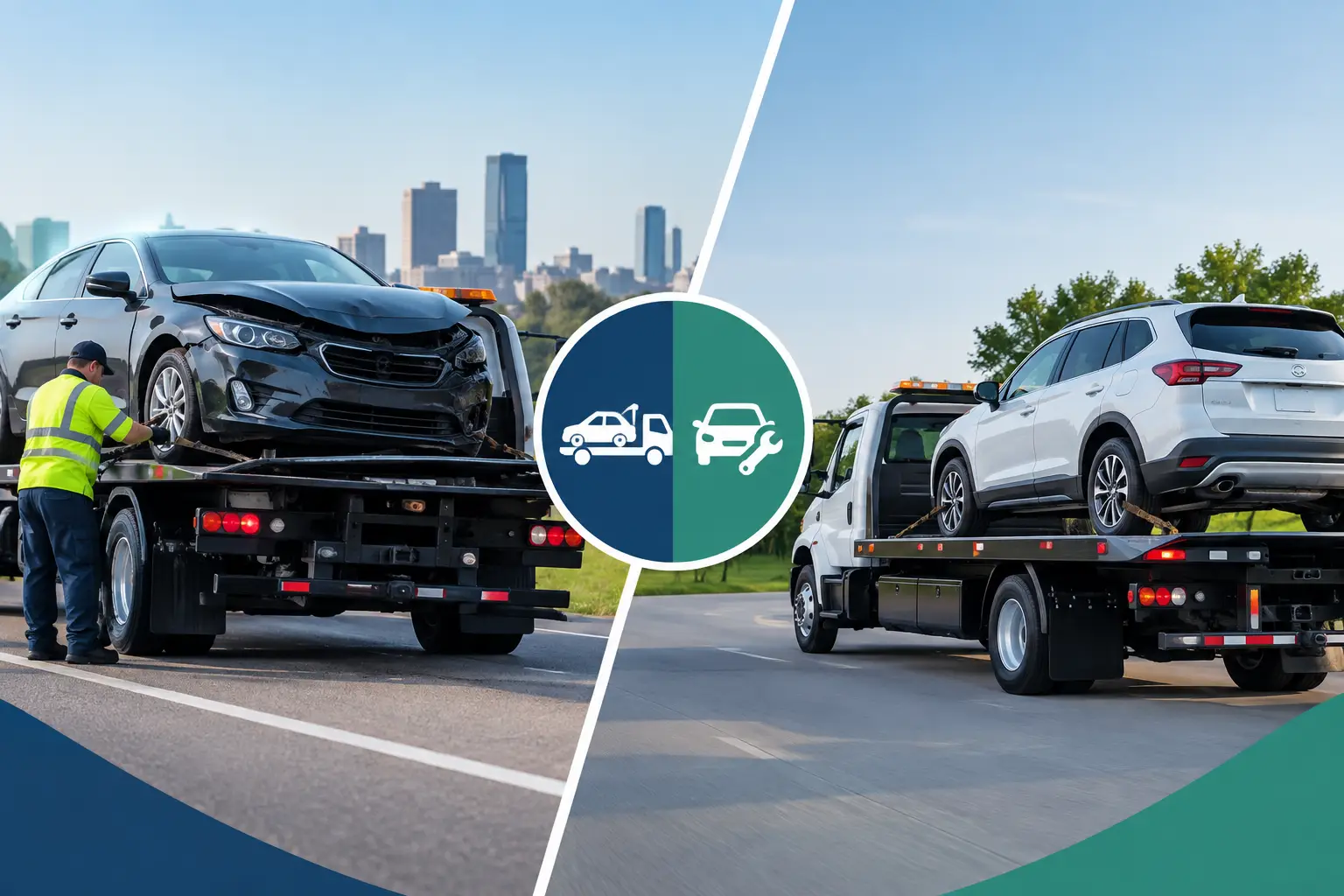
Vehicle details are especially useful when a tow may be needed. A low-clearance car, all-wheel-drive vehicle, electric vehicle, full-size pickup, or vehicle with a wheel locked or damaged may require a different loading plan. A flatbed is often the safest choice for damage-free transport, but the operator still needs to know what is wrong before arriving.
Be upfront about anything that affects access or loading. Tell dispatch if the vehicle is in a parking garage, parked nose-down in a tight driveway, stuck in mud, blocked by another vehicle, or unable to shift into neutral. Mention if the keys are missing, the wheels are turned sharply, or there was an accident. These details are not a reason to delay service. They help the operator bring the proper equipment and avoid surprises at the scene.
If you can safely check, having the destination ready also saves time. That might be your home, a local repair shop, a dealership, or another approved location. A driver does not need to know every detail of the repair. They do need a clear drop-off address and, if it is after hours, a safe place at that address where the vehicle can be left.
How the Right Truck Gets Assigned
Dispatch is partly about distance, but it is not only about distance. The closest truck may be finishing a job, traveling on the other side of a divided highway, or set up for a different type of call. A dispatcher weighs truck availability, current location, traffic, vehicle type, and the service needed.
For example, a driver locked out at Tulsa Hills may need a roadside service call. A Tesla with a suspension issue near downtown may need a flatbed and careful loading. A heavy-duty pickup with a flat tire in Broken Arrow may require a setup that is different from what a compact sedan needs. Sending the wrong truck first can turn a one-trip job into a longer wait, which is why accurate dispatch matters.
Dispatch also accounts for safety. A vehicle stopped in an active traffic lane, near a blind curve, or on a narrow shoulder needs an operator who understands how to approach and load without adding risk. Traffic conditions, weather, construction zones, and the ability to safely turn a truck around can all affect the arrival time.
That is why an estimated arrival time is an estimate, not a promise made from a desk. A prior recovery can take longer than expected, a highway closure can change the route, or a call ahead of yours may involve an unsafe vehicle position. Clear communication is the right way to handle that. If conditions change, you should know rather than being left wondering where the truck is.
What the Tow Truck Operator Receives
Once a call is assigned, the operator receives the job information collected during dispatch: your contact number, location, vehicle description, service request, and destination if a tow is needed. The operator may call or text before arrival to confirm where you are, especially at large apartment complexes, busy shopping centers, hospitals, or highway interchanges.
This is also when a minor issue can become clearer. A no-start call may turn out to be a dead battery and be resolved with a jumpstart. On the other hand, a vehicle that starts may still not be safe to drive because of overheating, a warning light, a flat tire, or collision damage. The operator assesses the situation on site and explains the practical next step.
For towing, the operator checks the vehicle and plans the load before hooking up. Proper wheel securement, clearance, and loading angle matter. They matter even more for EVs, lowered cars, all-wheel-drive vehicles, and trucks with damage. Rushing this part is how vehicles get scraped, dragged, or handled incorrectly.
What You Should Do While You Wait
Your first job is staying safe. If your vehicle is on a busy road and can be moved safely, get it out of traffic and as far from moving vehicles as practical. Turn on hazard lights. If you are on a highway shoulder, stand well away from traffic when it is safe to exit the vehicle. Do not wait between your vehicle and passing cars.
Keep your phone available, but do not drain the battery watching for updates if your vehicle is already having electrical trouble. Watch for calls from an unfamiliar local number because it may be the operator trying to find you. If your location changes, such as moving from the road into a nearby parking lot, call dispatch right away.
If you need a tow, remove valuables and gather anything you will need before the vehicle is loaded. That includes medication, work equipment, garage remotes, child seats if needed, and any personal items you cannot leave behind. You may not have easy access to the vehicle again until it reaches the destination.
Why Clear Dispatch Makes the Job Easier
A roadside call moves smoothly when everyone has the same basic picture: where the vehicle is, what it is doing, whether the area is safe, and where it needs to go. It reduces callbacks, prevents an operator from searching the wrong side of a highway, and helps avoid sending roadside equipment when a flatbed is the safer answer.
Tulsa Towing, powered by Neptune Towing, keeps the process focused on that practical goal: assess the call, send the appropriate help, handle the vehicle carefully, and get it where it needs to go. There is no need to make a stressful situation more complicated than it already is.
If you are stopped now, take a breath, note your exact location and vehicle details, and put safety ahead of trying to force the vehicle to move. Those few details give dispatch what it needs to get the right help headed your way.