A pickup that will not move is not always a simple tow. Weight, wheelbase, drivetrain, suspension height, and where the truck is sitting all affect how it needs to be loaded. This safe pickup vehicle transport guide is for Tulsa drivers who need to get a truck off the road, out of a parking lot, or to a repair shop without turning one problem into body, drivetrain, or tire damage.
Whether your pickup quit on I-44, was involved in a crash near Memorial Drive, or will not start at home in Midtown, the first goal is the same: get yourself out of danger and make sure the vehicle is moved with the right equipment.
Start With Roadside Safety, Not the Tow
If your pickup is disabled in traffic, move it only if it can be driven safely and doing so gets it out of an active lane. A truck stopped on US 75, Highway 169, or a busy South Tulsa intersection can be hard for other drivers to see, especially at night or in bad weather. Turn on your hazard lights, keep passengers away from traffic when possible, and do not stand between your truck and approaching vehicles.
Once you are in a safer position, take a quick look at the truck. You do not need to diagnose the mechanical problem, but a few details help the tow operator plan the load. Let them know if the truck is in park and cannot be shifted, if a wheel is damaged, if the steering is locked, or if the vehicle is sitting unusually low after an accident.
Also mention where it is parked. A pickup in an open lot is different from one in a tight apartment drive, parking garage, muddy shoulder, or steep driveway. Clear information before the truck arrives saves time and reduces the need to force a vehicle into position.
Why Pickup Transport Requires Extra Care
Pickups are built for work, but that does not mean they can be handled roughly. A half-ton truck, a diesel heavy-duty pickup, and a lifted four-wheel-drive truck each have different loading concerns. The right method depends on the truck’s condition and configuration.
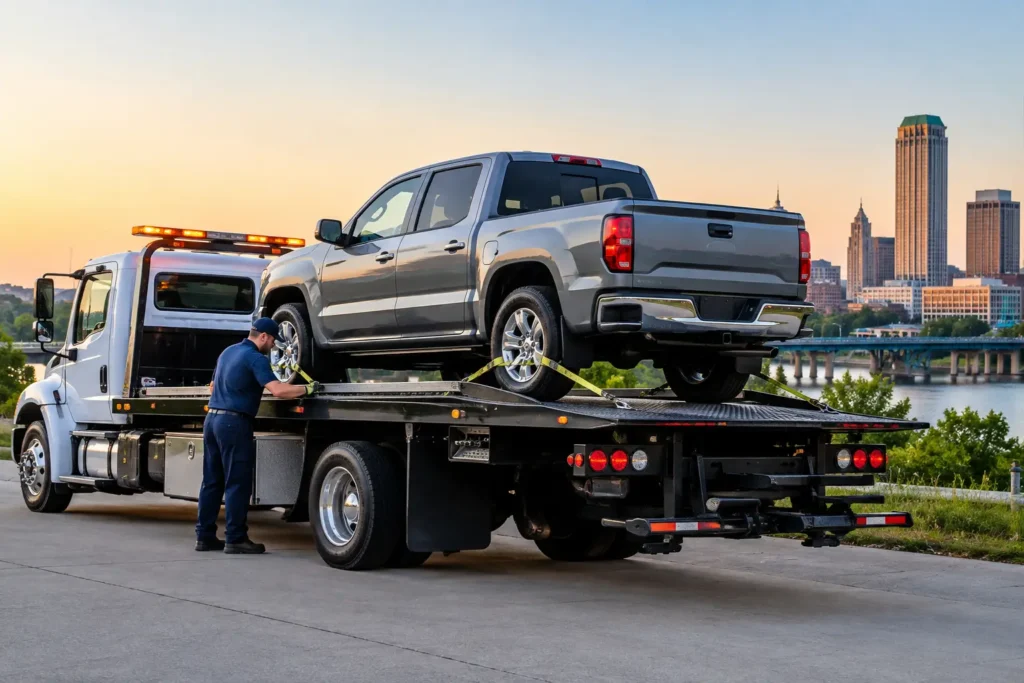
A flatbed is usually the safest choice because all four wheels can ride off the ground. That matters when the truck has a drivetrain problem, an unknown mechanical issue, accident damage, or a four-wheel-drive system that should not be pulled with two wheels rolling. Flatbed transport also avoids adding miles, wear, or stress to a disabled vehicle while it is being moved across town.
Wheelbase is another factor. Longer trucks need enough deck space and a controlled loading angle. Low-clearance trucks, lowered pickups, and models with long front air dams may need extra care to avoid contact at the bottom of the ramps. A careful operator adjusts the setup rather than rushing a truck up an angle that does not fit it.
Weight matters too. A fully equipped pickup with a diesel engine, toolboxes, oversized tires, or a loaded bed can be much heavier than it looks. Proper equipment, secure tie-down points, and balanced placement on the flatbed are not details to skip. They are what keep the vehicle stable during turns, braking, and uneven Tulsa streets.
Four-Wheel Drive and All-Wheel Drive Need the Right Setup
If your pickup has four-wheel drive, tell the operator. Do the same for all-wheel drive, even if you are not sure whether the system is currently engaged. Some trucks can be placed in a neutral tow mode or have a transfer case setting that changes how the vehicle is transported. Others should be loaded completely onto a flatbed.
Dragging a truck with the wrong wheels on the ground can damage drivetrain components. That risk is not worth taking just to make a short move from Broken Arrow to a repair shop in Tulsa. When there is uncertainty, a flatbed keeps the wheels off the road and removes the guesswork.
Modified Trucks Need an Honest Description
Lifted pickups, oversized tires, aftermarket bumpers, and suspension modifications can all change the loading plan. Modifications do not make a tow impossible, but they should be communicated before arrival. A tall truck may need a different approach angle. A custom front bumper may limit where recovery equipment can safely attach. Wide tires can affect positioning on the bed.
The same goes for a truck carrying cargo. Secure loose items in the bed if you can do it safely. Remove anything that could blow out, shift, or create a hazard during transport. If the bed is heavily loaded with tools, equipment, or materials, say so when requesting service. The truck may still be transportable, but its total weight and balance need to be considered.
What a Safe Flatbed Load Looks Like
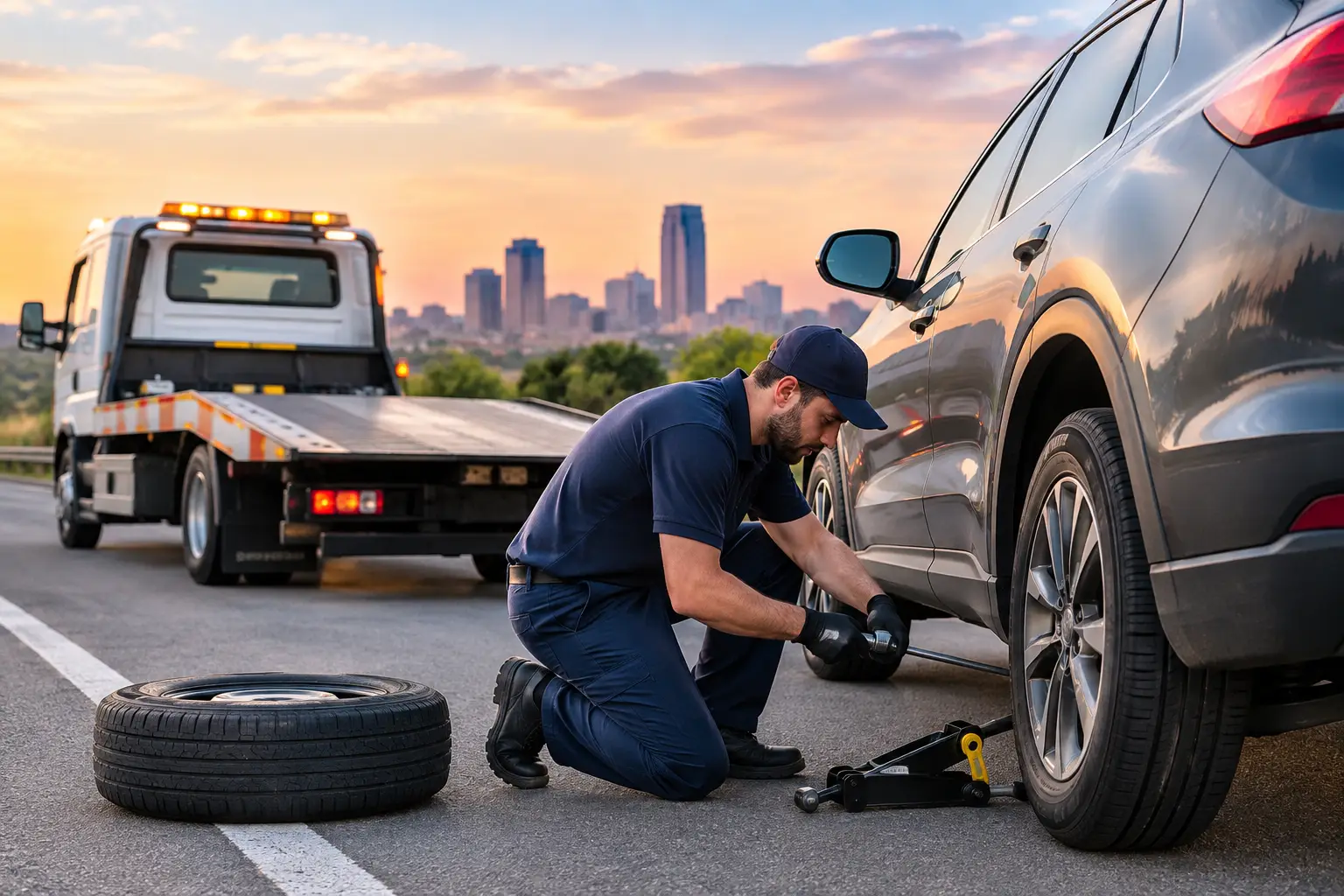
A proper pickup transport is controlled from the beginning. The operator first checks the truck’s position, visible damage, tire condition, and ability to roll and steer. If a wheel is locked, broken, or missing, additional equipment may be needed to move it without dragging it across pavement.
Next comes the loading path. The flatbed is positioned to create the safest, straightest approach possible. This is especially important in narrow lots around Downtown Tulsa, crowded retail centers, or residential streets where there is limited room to line up the truck. Loading a vehicle at an angle can create unnecessary risk, so a few extra minutes spent positioning correctly are usually worthwhile.
The pickup is then winched onto the bed in a steady, controlled manner. It should not be yanked, rushed, or pulled from a questionable attachment point. Once it is on the deck, the truck is secured for transport using proper wheel restraints and tie-down procedures. The goal is to hold the vehicle in place without damaging suspension parts, brake lines, body panels, or drivetrain components.
Before leaving, a professional tow operator checks that the pickup is centered and secure, that no straps are rubbing against vulnerable parts, and that clearance is adequate. This matters even on a short local tow. A few miles through stop-and-go traffic on Riverside Drive can put real force on an improperly secured load.
Information to Have Ready When You Call
You do not need a detailed mechanical report. A straightforward description is enough: the truck’s year, make, model, location, and whether it can roll, steer, and shift into neutral. Mention if it is two-wheel drive, four-wheel drive, lifted, lowered, loaded, or damaged from a collision.
It also helps to know where you want it delivered. That might be your home, a dealership, a body shop, or an independent repair shop. If the destination has a narrow entrance, closed gate, low clearance, or after-hours drop-off instructions, share that information early. A safe tow includes a safe unload.
Keep your keys, registration, insurance information, and personal valuables with you when possible. If the truck must be left at a shop after hours, confirm where the keys should go and whether the facility accepts overnight drop-offs. These small steps prevent confusion after the truck has been delivered.
Do Not Let a Friend Tow It With a Strap
When a pickup will not move, it can be tempting to call a friend with another truck and use a chain or tow strap. That can be dangerous on public roads and can create damage fast. Without proper braking, lighting, secure attachment points, and control of the disabled vehicle, a simple pull can turn into a collision or a damaged bumper, frame component, or transmission.
A strap may have limited use for a controlled recovery on private property, but it is not a substitute for professional vehicle transport. If your truck is stuck in mud, a ditch, or a soft shoulder, the recovery method depends on the ground conditions and the truck’s location. Pulling from the wrong point can cause more damage than the original problem.
Safe Pickup Vehicle Transport in Tulsa Starts With Clear Communication
The safest tow is not about making the fastest possible hookup. It is about matching the equipment and loading method to the truck in front of you. That is particularly true for heavy-duty pickups, four-wheel-drive models, accident-damaged trucks, and vehicles that cannot roll normally.
When you need help in Tulsa, Jenks, Bixby, or nearby areas, describe the situation clearly, stay in a safe location, and choose transport that keeps all four wheels protected when the condition calls for it. Tulsa Towing approaches pickup transport with proper flatbed equipment, a careful load plan, and clear communication from roadside pickup through delivery. Your truck may be down for the moment, but it does not need to leave the scene with additional damage.