
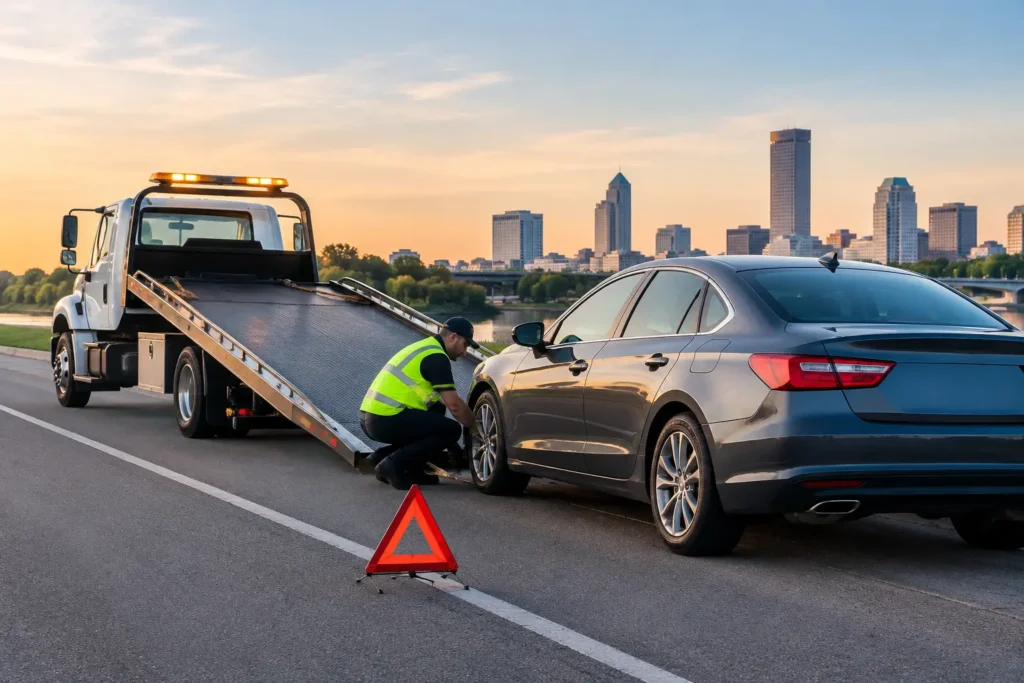
Memorial Drive can go from moving traffic to a bad roadside situation in seconds. If you are handling a breakdown on Memorial in Tulsa, your first job is not figuring out what failed. It is getting yourself, your passengers, and your vehicle out of immediate danger. Whether you are near South Tulsa shopping centers, the busy 71st Street intersection, or heading toward East Tulsa, a clear plan makes a stressful stop easier to manage.
Handling a Breakdown on Memorial Drive Starts With Safety
Memorial is not a road where you want to sit in a travel lane, especially during rush hour or near major intersections. If the vehicle is still able to move, ease off the road into a parking lot, side street, wide shoulder, or another safe location. Do not keep driving farther than necessary if you have a flashing temperature warning, a flat tire, smoke, grinding noises, or a loss of oil pressure. A short drive can turn a repairable problem into major engine or wheel damage.
Turn on your hazard lights as soon as you know something is wrong. This is especially important after dark, during rain, or when traffic is moving quickly around you. Brake early and make your movements predictable. Other drivers need time to see that you are slowing down or changing lanes.
If you cannot safely move the vehicle, stay calm and assess your surroundings. Keep your seat belt on if you are stopped in a live lane or close to moving traffic. If it is safe to exit, leave from the passenger side and move well away from the road. Do not stand between your vehicle and traffic, and do not try to push the vehicle through an intersection on Memorial.
Do not make a quick repair in an unsafe spot
A dead battery in a quiet parking lot is one thing. A flat tire beside fast traffic is different. Even if you know how to change a tire, the location matters more than the repair itself. A passing vehicle, limited shoulder space, uneven ground, or poor visibility can make roadside work unsafe.
The same goes for looking under the hood. Steam, smoke, or a strong burning smell are signs to shut the engine off and wait. Never remove a radiator cap on an overheated vehicle. If you smell fuel or see fluid actively leaking, move away from the vehicle and keep other people clear.
Decide Whether Roadside Help or a Tow Makes Sense
Not every breakdown requires a tow truck, but guessing can waste time and create more damage. The right choice depends on what happened, where you are stopped, and whether the vehicle can be safely driven after help arrives.
A jumpstart may be enough if the battery is dead and the vehicle has no other warning signs. A lockout can be handled on site when the keys are inside and the vehicle is otherwise fine. A flat tire may be manageable if you have a usable spare, safe ground, and enough room away from traffic.
A tow is the better call when the vehicle will not start after a jump, has overheated, has a damaged wheel, is making serious mechanical noise, has a transmission issue, or has been involved in a collision. It also makes sense when you are on Memorial with no safe place to wait or inspect the problem. Getting the vehicle to your repair shop, dealership, or home without trying to nurse it along is often the less expensive decision.
For all-wheel-drive vehicles, low-clearance cars, trucks, and electric vehicles, proper loading matters. Dragging a disabled vehicle or using the wrong hookup can damage bumpers, suspension components, underbody panels, or the drivetrain. A flatbed is usually the safest option when the vehicle cannot be driven normally.
What to Have Ready When You Call
Clear information helps the driver find you and bring the right equipment. Memorial Drive is long, and saying only that you are “on Memorial” can add unnecessary delay. Give the nearest cross street, business, neighborhood, or direction of travel. For example, Memorial and 61st Street, southbound near 101st, or in a parking lot near Midtown are much more useful details.
Tell the dispatcher what kind of vehicle you have, whether it starts, and what problem you noticed. Mention if it is an EV, if the wheels are locked, if a tire is flat, or if the vehicle is in a garage or tight parking area. Those details affect how the vehicle is loaded and whether roadside service may solve the issue.
You should also tell them where you want the vehicle taken. Many drivers choose a local repair shop, a dealership, or their driveway. Having that destination decided before the truck arrives keeps the job moving. If you are not sure, focus first on getting out of the unsafe location. The tow can be arranged to a place that makes sense once you have a minute to think.
Protect Yourself While You Wait
After calling for help, keep your phone charged and stay aware of traffic. If you are in a safe parking lot, you can usually wait inside the vehicle with the doors locked. If you are close to moving traffic, stand well away from the roadway when conditions allow. Keep children and pets away from the shoulder and out of the path of traffic.
Do not accept help from someone who cannot clearly identify what service they are providing. A professional tow operator should communicate where they are, confirm your vehicle, and explain the plan before loading it. Ask questions if you are unsure where the vehicle is going or how it will be handled.
Take a few photos of the vehicle if you can do so safely, especially after a collision, curb impact, or tire failure. This is not about creating extra work. It simply gives you a record of the vehicle’s condition before transport. Remove valuables, medications, garage remotes, and anything you will need before the vehicle is loaded.
If you are on I-44, US 75, or Highway 169 near Memorial
Memorial connects to several high-traffic areas, and a breakdown near I-44, US 75, or Highway 169 calls for extra caution. Highway traffic moves faster, shoulders can be narrow, and drivers may not have much room to react. If your vehicle loses power near an exit or merge lane, use momentum to get as far from traffic as possible without making sudden moves.
Once stopped, do not walk along the highway looking for assistance. Call for help, share the closest exit or landmark, and wait in the safest available location. If the situation creates an immediate traffic hazard or you feel unsafe, contact emergency services first.
Avoid These Common Breakdown Mistakes
The biggest mistake is continuing to drive because the destination is only a few blocks away. That is how an overheating issue becomes engine damage, or a tire problem destroys a wheel. Another common mistake is allowing a vehicle to be towed without confirming that the operator understands its needs. This matters with Teslas and other EVs, as well as vehicles with all-wheel drive or very low front ends.
Do not leave the vehicle unattended in a dangerous location unless you have no safe alternative. If you must leave it, make sure you know exactly where it is and can describe the location. Do not rely on a vague landmark that may be hard for a driver to spot in traffic.
Finally, do not let frustration rush the decision. A breakdown is inconvenient, but safe handling is more important than getting moving five minutes sooner. Tulsa Towing, powered by Neptune Towing, focuses on clear communication and damage-free flatbed transport when a vehicle needs to be moved from Memorial Drive or elsewhere in Tulsa.
A breakdown on Memorial can interrupt your whole day, but it does not have to become a bigger problem. Get to a safe place if you can, make your location clear, and choose help based on the vehicle’s condition and the traffic around you. That gives you the best chance of getting the vehicle where it needs to go without adding avoidable damage or stress.

