
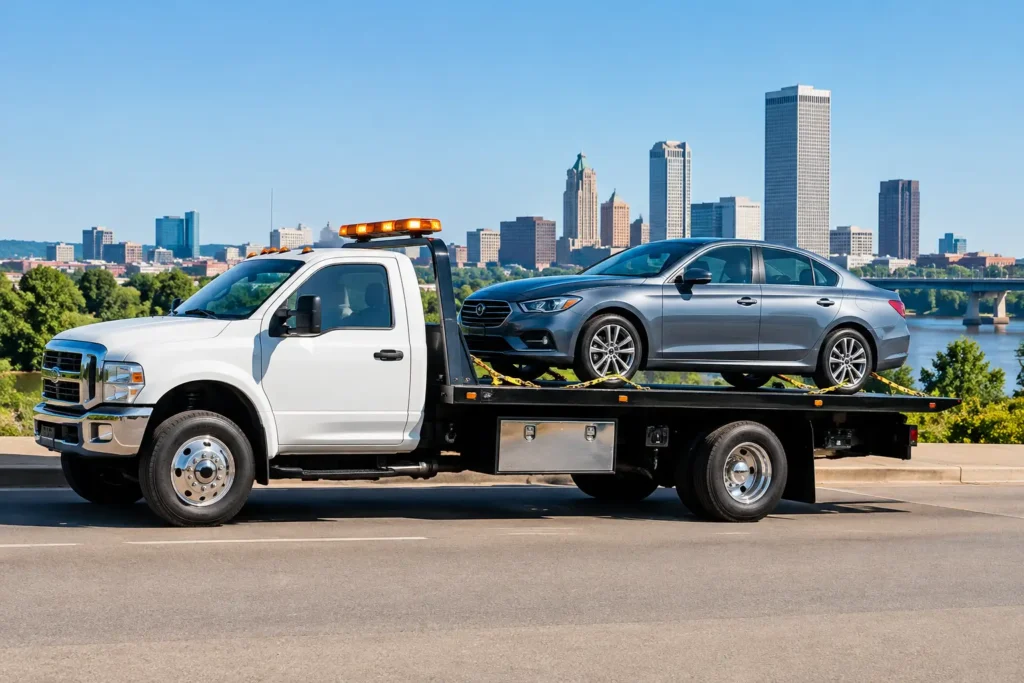
A breakdown on I-44, a collision near Memorial Drive, or a no-start situation in a South Tulsa parking lot can turn into a towing problem fast. The three ways to avoid towing damage come down to clear information, the right equipment, and careful loading. Those details matter more than most drivers realize, especially when the vehicle already has low clearance, drivetrain trouble, or damage from an accident.
Towing damage is rarely one dramatic event. More often, it starts with a rushed hookup, an incorrect recovery point, wheels left rolling when they should not be, or a car loaded at the wrong angle. A careful tow starts before the truck arrives and continues until the vehicle is offloaded at the repair shop, dealership, or home.
Three Ways to Avoid Towing Damage
1. Tell the dispatcher exactly what happened and what you drive
The first step is giving accurate information when you call for a tow truck. The make, model, year, and current condition of the vehicle all affect how it should be handled. A standard front-wheel-drive sedan, a four-wheel-drive pickup, a lowered car, and an electric vehicle may all need a different loading plan.
Be direct about what happened. Let the dispatcher know whether the car was in an accident, has a flat tire, will not go into neutral, is stuck in park, has broken suspension parts, or is sitting in a parking garage. If the wheels are turned, a tire is missing, or the vehicle is leaking fluid, say that too. It is not about making the call complicated. It helps the operator arrive with the right plan instead of discovering a problem after the truck is already on scene.
A vehicle that will not roll normally should not be treated like one that simply ran out of gas. Forcing a locked wheel, dragging a damaged tire, or trying to move a vehicle with compromised suspension can create more damage. The same applies to vehicles with all-wheel drive. Depending on the vehicle and the issue, letting the wrong wheels roll on the road can affect the drivetrain.
Electric vehicles deserve special attention. A Tesla or another EV may have specific tow-mode steps, designated lifting points, and underbody areas that need to be protected. Battery packs sit low in the vehicle, so ground clearance and loading angle matter. Tell the towing company it is an EV before they arrive, and have the key or key card available if possible.
The location also matters. A car on the shoulder of US 75 presents a different safety and loading situation than one parked in a tight Downtown Tulsa garage. In Midtown, narrow driveways and busy streets can limit where a truck can position. Details help the operator choose the safest approach before traffic, space, or vehicle condition turns a straightforward tow into a harder job.
2. Use a flatbed and proper securement for the vehicle
For most passenger vehicles, flatbed towing is the safest choice because all four wheels are carried off the road. The vehicle is loaded onto the bed, secured, and transported without its tires rolling behind the tow truck. That reduces unnecessary wear and avoids many drivetrain concerns.
A flatbed alone is not the whole answer. The bed has to be positioned correctly, the loading angle has to work for the vehicle, and the tie-down method must be appropriate. Low-clearance cars can scrape if they are pulled onto a bed too steeply. A careful operator may use the right approach angle, ramps, boards, or other loading techniques to keep the front bumper, rocker panels, and underside clear.
Securement matters just as much once the vehicle is on the bed. A vehicle should be held firmly at the wheels with properly placed straps or restraints. The goal is to prevent movement during turns, braking, and uneven pavement without putting unnecessary stress on vulnerable components.
This is especially important on Tulsa roads where the trip may include highway speeds, bridge transitions, rough pavement, or quick lane changes around traffic. A short tow from Riverside to a local repair shop still needs the same attention as a longer transport toward Broken Arrow or Jenks. Distance does not change the need for correct loading.
There are situations where a flatbed may take more time to set up, particularly after an accident or in a cramped space. That extra time is often worthwhile when it prevents dragging, scraping, or drivetrain damage. The right question is not whether the tow can be done quickly. It is whether it can be done safely without creating another repair bill.
3. Do a quick handoff check before the vehicle moves
Before your vehicle leaves, take a minute to look it over and make sure the operator has what they need. This does not require a full inspection in the middle of a stressful roadside situation. A few practical checks can prevent misunderstandings and help the tow go smoothly.
Remove or secure loose items around the vehicle, including anything near the tires or underneath the bumper. If you have a low front spoiler, aftermarket body parts, custom wheels, or known mechanical concerns, point them out. Mention where you want the vehicle delivered and confirm whether the shop is open or has a designated after-hours drop area.
If the car can be safely entered, place it in the condition requested by the operator. That may mean releasing the parking brake, turning the wheels straight, putting it in neutral, or using the vehicle’s tow mode. Do not force anything that is not working. If the shifter will not move or the steering is locked, tell the operator and let them handle it with the proper equipment.
It also helps to take a few clear photos of the vehicle before loading, particularly after a collision. This is not about expecting a problem. It simply gives you a record of the vehicle’s condition at pickup, including existing damage from the accident or breakdown. If it is dark, rainy, or you are stopped near fast traffic, stay in a safe place first. Your safety matters more than photos.
Once the vehicle is loaded, ask where it is going, confirm the drop-off instructions, and make sure the operator has a working contact number if the destination is closed. Clear communication at pickup prevents the common headache of arriving at a repair shop with no key plan, no space to unload, or no authorization for the vehicle to be left there.
When the Vehicle Is Already Damaged or Stuck
Some towing calls need more than a standard load-and-go approach. After an accident, a wheel may be pushed out of position, a bumper may be hanging low, or the suspension may be damaged. A vehicle stuck in mud, a ditch, or a soft shoulder may need a controlled winch-out before it can be loaded safely.
In those cases, do not keep trying to drive the vehicle free or pull it with another car. Improvised recovery can damage bumpers, suspension parts, or the undercarriage. It can also put people too close to traffic on roads such as Highway 169 or busy stretches around Tulsa Hills.
An experienced operator will assess what is safe to move, where to attach recovery equipment, and whether the vehicle needs to be repositioned before loading. The process may look slower than simply hooking up and pulling, but that is often the difference between getting the vehicle to a shop and adding avoidable damage along the way.
Tulsa Towing, powered by Neptune Towing, handles local transport with a flatbed-first approach and clear communication from dispatch through delivery. For drivers dealing with a breakdown, the practical goal is simple: give accurate details, do not force a damaged vehicle to move, and make sure it is loaded with equipment suited to the job. A careful tow is one less problem to deal with when your day has already gone sideways.

