A vehicle problem rarely happens at a convenient time. It happens leaving work in Downtown Tulsa, on the shoulder of I-44, outside a store in South Tulsa, or in your own driveway when the car simply will not start. When you need a tow service, the main question is not whether the problem is inconvenient. It is whether the vehicle can be handled safely where it sits or needs to be moved.
The right answer depends on the situation. A dead battery may only need a jumpstart. A flat tire may be fixable on site if you have a usable spare. But if the vehicle will not run, has accident damage, is overheating, is stuck, or cannot be driven without risking more damage, towing is usually the safer call.
What Happens When You Call a Tow Service
A good tow starts with clear information. The dispatcher or driver needs to know where the vehicle is, what kind of vehicle it is, and what happened. That does not mean you need to diagnose the problem. A simple description such as “my truck will not shift,” “the wheel is damaged,” or “my Tesla has a warning message and will not move” gives the operator a useful starting point.
Your location matters just as much. Saying you are on US 75 is helpful, but the direction of travel, nearest exit, cross street, or visible landmark can make dispatch much faster. If you are in a parking garage, behind an apartment complex, or in a tight space near Riverside Drive, mention that early. Access and clearance affect how the truck approaches and loads the vehicle.
Once the truck is dispatched, the goal is straightforward: assess the vehicle, handle any safe roadside solution available, then load and transport it if needed. Clear communication should continue through the job. You should know where your vehicle is going, whether it can be loaded normally, and if there is anything you need to do before leaving the scene.
When Roadside Help Is Enough
Not every call requires a tow truck ride to a repair shop. Roadside assistance can solve a few common problems quickly when the vehicle itself is otherwise safe to drive.
A jumpstart may get you moving after a drained battery. Still, a vehicle that dies again soon after starting may have a battery, alternator, or electrical issue. If the dash lights are flickering, the battery warning light is on, or the engine will not stay running, driving away can leave you stranded a second time.
Flat tire help is another situation where the details matter. If the tire went flat and the vehicle has a properly inflated spare, a tire change may be all you need. If there is no spare, the wheel is bent, multiple tires are damaged, or you are stopped in an unsafe location, a flatbed tow is the better option.
Lockouts can often be handled on site without damage when the correct tools and technique are used. The same goes for a simple winch-out when a vehicle is stuck in mud, a ditch, or a slick area and can be recovered safely. The point is not to force a quick fix. It is to choose the option that gets the vehicle and driver out of a bad situation without creating a bigger repair bill.
When Towing Is the Safer Choice
There are times when trying to drive even a short distance is not worth the risk. Accident damage is the obvious example, especially when a wheel is pointed the wrong way, a tire is rubbing, fluid is leaking, or body panels are contacting the tire. A vehicle can look mostly fine after a collision and still be unsafe to move under its own power.
Overheating is another common reason to stop and call. If the temperature gauge climbs into the red, steam is coming from under the hood, or coolant is pouring out, shut the engine off. Continuing to drive can turn a hose, radiator, or cooling-system issue into serious engine damage.
Transmission trouble, steering problems, brake issues, and a no-start condition also call for careful handling. This is especially true for all-wheel-drive vehicles, low-clearance cars, and electric vehicles. Pulling the wrong vehicle from the wrong end or rolling it with its drive wheels on the ground can cause damage that was not part of the original breakdown.
Why Flatbed Towing Makes a Difference
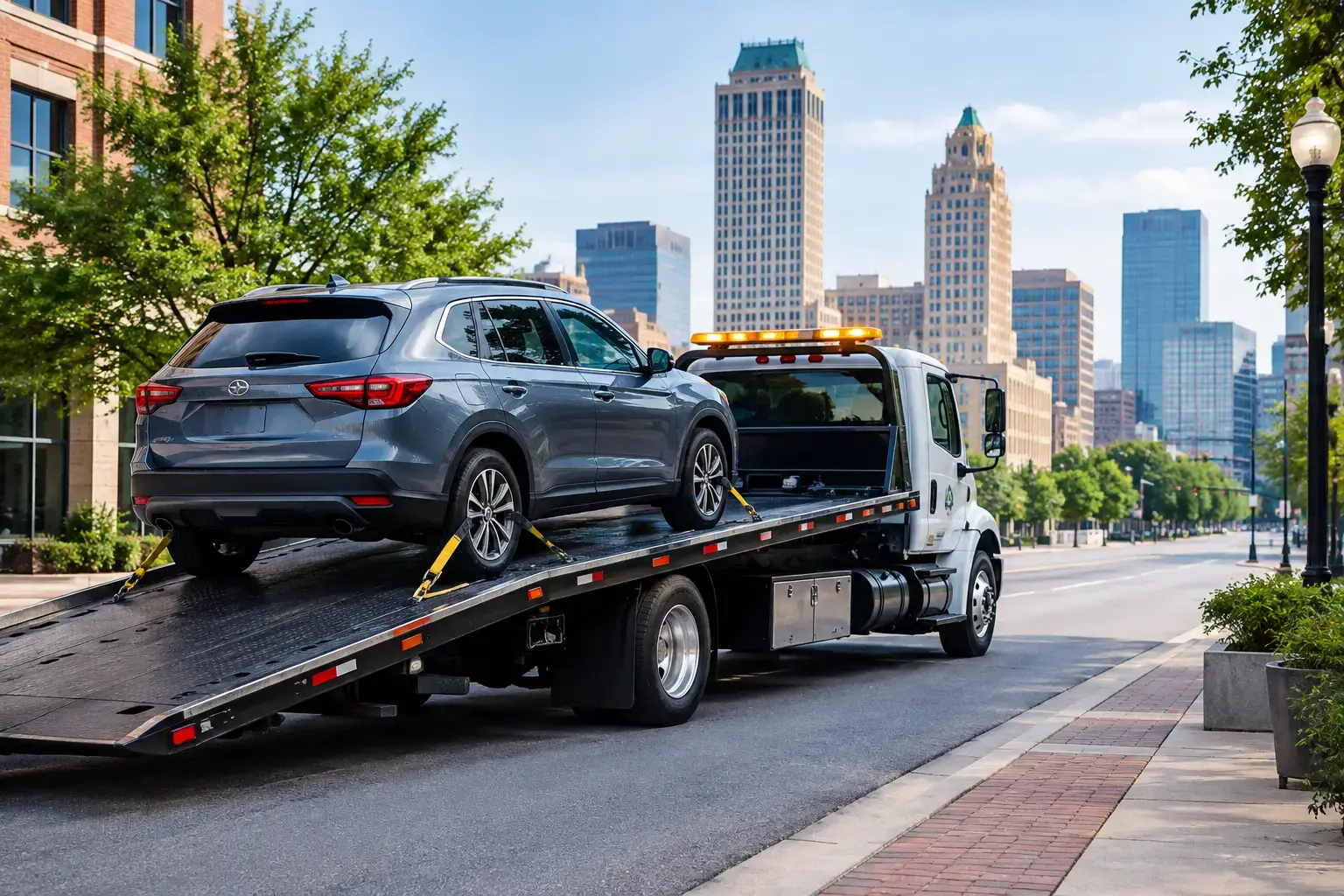
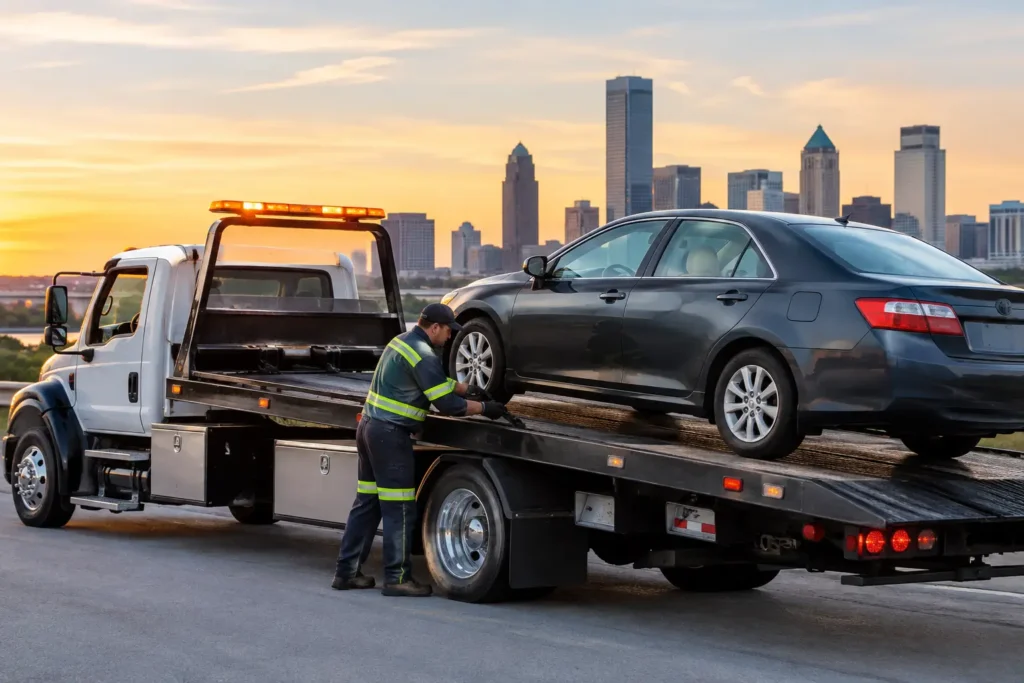
For many vehicles, flatbed towing is the safest way to transport it. The vehicle is loaded onto the bed, secured at the proper points, and carried with all four wheels off the road. That avoids unnecessary wear on tires, drivetrain components, and suspension parts during transport.
Flatbeds are particularly useful for vehicles that cannot be driven onto the truck normally. A car with front-end damage, a locked wheel, a broken suspension part, or a dead electric vehicle may need extra care during loading. The job can require skates, dollies, a controlled winch pull, or an adjusted loading angle. Those are not details a driver should have to manage, but they are details the towing operator needs to recognize.
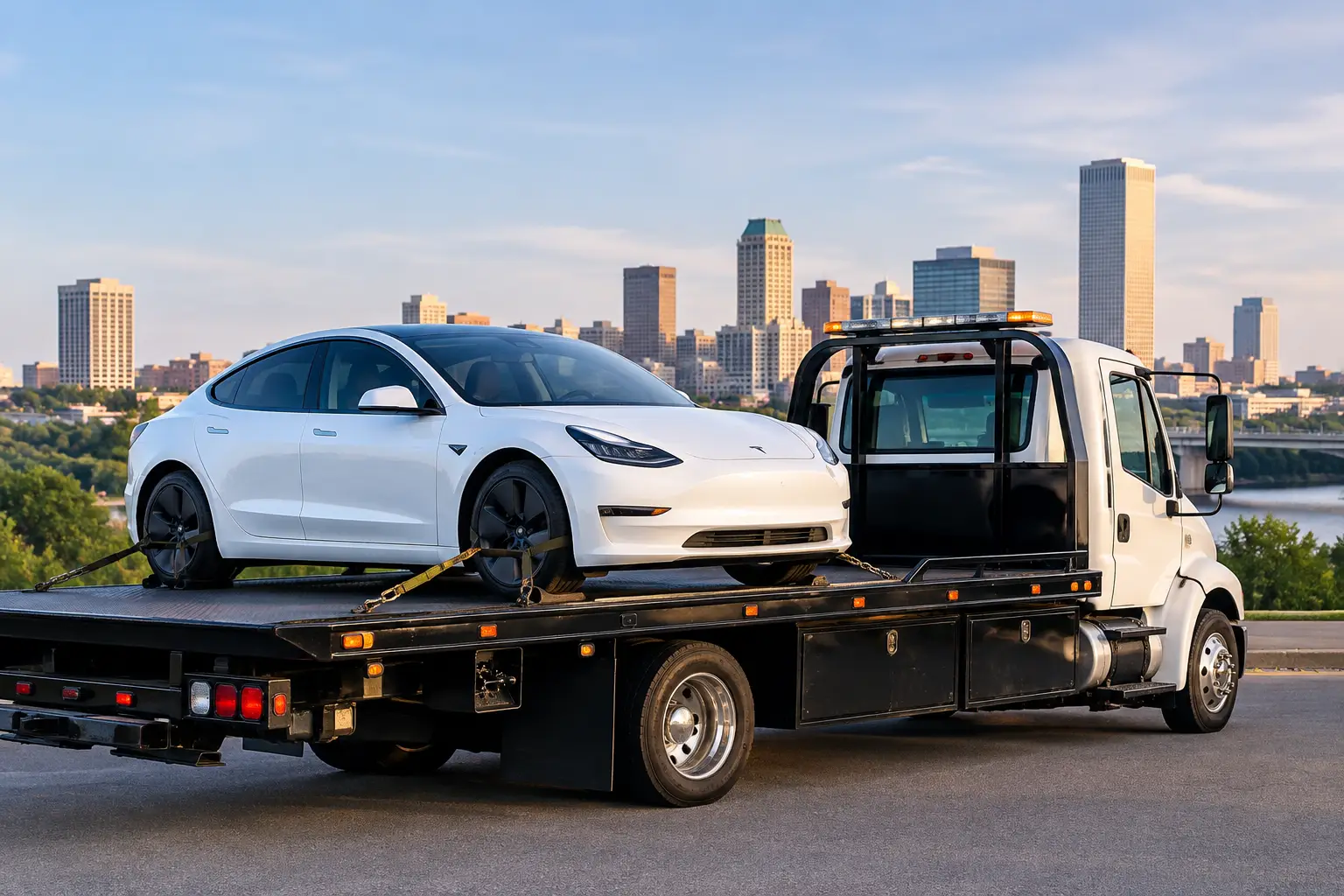
Electric vehicles deserve special attention. Tesla and other EV models have specific towing requirements, low battery packs, and low ground clearance. Improper attachment points or careless loading can damage the vehicle underneath, even if the outside looks untouched. Proper flatbed equipment and a driver who understands the loading process matter more than rushing the job.
The same applies to pickups and heavier vehicles. A full-size truck may need a different setup than a compact sedan, especially if it is loaded with tools, equipment, or cargo. Let the towing company know what you are driving and whether it is carrying anything unusually heavy before the truck arrives.
Staying Safe While You Wait
Your first job is to protect yourself, not the vehicle. If you are on a busy road such as Highway 169, Memorial Drive, or I-44, get as far from moving traffic as the vehicle safely allows. Turn on hazard lights. At night or in poor weather, make yourself visible without standing close to traffic.
If the vehicle is disabled on a highway shoulder and remaining inside feels safer, stay buckled up with the doors locked. If you must get out, move well away from traffic and avoid standing directly in front of or behind the vehicle. Do not try to push a disabled vehicle across lanes or attempt a roadside repair where drivers have little room to react.
Before help arrives, gather what the driver will need: your destination, vehicle keys, and any instructions for the repair shop or dealership. Remove valuables if you are leaving the vehicle. If it is an accident situation, follow instructions from emergency responders before arranging transport.
Choosing a Tow Service Without Adding Stress
When you are searching “tow truck near me,” the fastest-looking result is not the only thing to consider. You need a company that asks the right questions, tells you what to expect, and has equipment that matches the job. A vague estimate or no questions about vehicle type can be a warning sign, particularly for damaged, low-clearance, or electric vehicles.
Look for direct communication. You should be able to explain the situation in plain language and get a plain-language response. If the vehicle needs to go to a local repair shop, a dealership, or back home, confirm the destination before loading begins. That keeps the process simple when you are already dealing with an unexpected problem.
Local familiarity also helps. A driver who works around Tulsa regularly knows that traffic near Tulsa Hills, narrow areas around Midtown, and busy corridors in Broken Arrow can change the safest route and loading plan. Nearby calls in Jenks, Bixby, or Glenpool may be available depending on scheduling and truck location.
Tulsa Towing, powered by Neptune Towing, focuses on getting drivers out of these situations with careful flatbed transport, practical roadside help, and clear communication. The goal is not to make a stressful day feel complicated. It is to assess the problem, protect the vehicle, and get it where it needs to go.
If your vehicle cannot move safely, do not gamble on getting it “just a few more miles.” Pull over where you can, share your location clearly, and let the right equipment handle the rest.