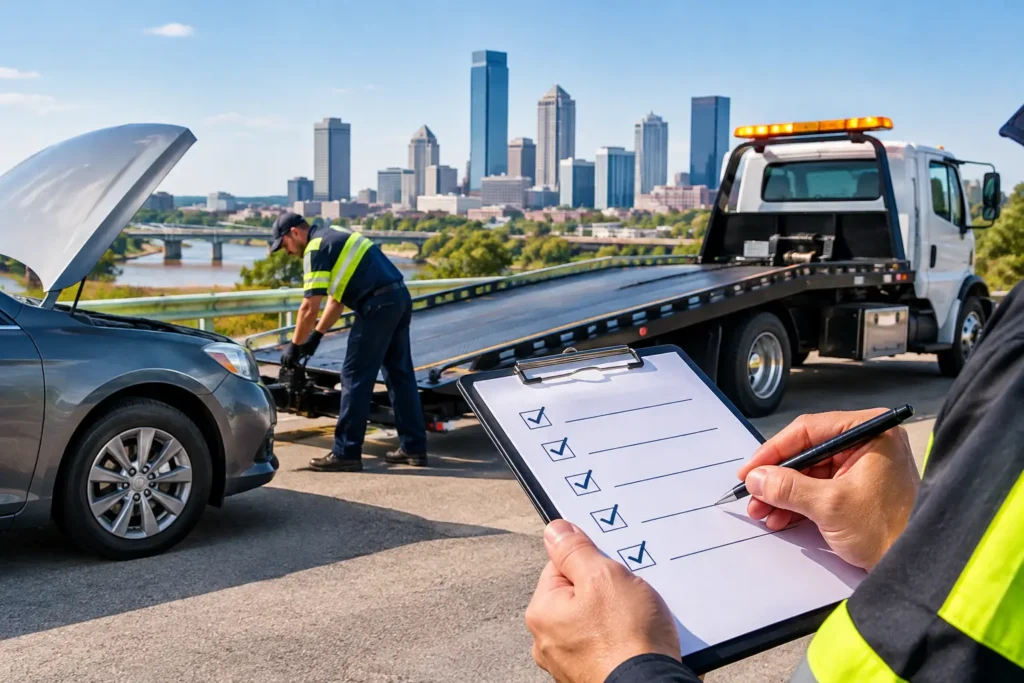
A vehicle that suddenly loses power on I-44 or will not restart in a Midtown parking lot creates the same immediate problem: get yourself out of danger first, then get clear help. This breakdown response checklist gives Tulsa drivers a practical order of operations when the car, truck, or EV cannot safely move.
The goal is not to diagnose the whole vehicle on the roadside. It is to protect the people in and around the vehicle, give the towing provider accurate information, and avoid turning a mechanical problem into a traffic or damage problem.
Breakdown Response Checklist: First Five Minutes
Start by getting as far from moving traffic as the vehicle will safely allow. If the engine is still running and the vehicle can roll, use the shoulder, a parking lot, or a wide side street. On major roads such as US 75, Highway 169, or Riverside Drive, even a vehicle that is partly in the travel lane can put everyone at risk.
Turn on your hazard lights right away. At night, during rain, or in low visibility, leave them on until help arrives. If you have stopped on a hill or a narrow road, keep your wheels turned away from traffic when possible and set the parking brake after coming to a complete stop.
Then decide whether it is safer to remain inside the vehicle or get out. If you are stopped on a busy highway shoulder, staying buckled inside with the doors locked is often the safer choice. If there is smoke, fire, the smell of fuel, or the vehicle is exposed to a likely impact, move away from it and away from traffic if you can do so safely. Do not stand directly in front of or behind the vehicle.
Once you are in a safe position, take a breath and gather the facts. A tow truck can be dispatched more efficiently when the driver knows exactly what they are approaching.
What to Tell a Tow Truck Dispatcher
Location is more useful than a general statement like “I’m by Memorial.” Give the nearest cross street, highway direction, exit number, business name, or recognizable landmark. If you are on I-44, say whether you are eastbound or westbound and which side of the highway you are on. A precise location matters when traffic is moving fast or a driver is trying to reach you through a divided roadway.
Explain what the vehicle is doing in plain language. “It cranks but will not start,” “the tire is flat,” “the battery is dead,” and “it overheated and I shut it off” all point to different possible roadside solutions. Do not keep trying to start a vehicle that is overheating, smoking, making a severe grinding noise, or showing an oil-pressure warning. Repeated attempts can make a manageable issue worse.
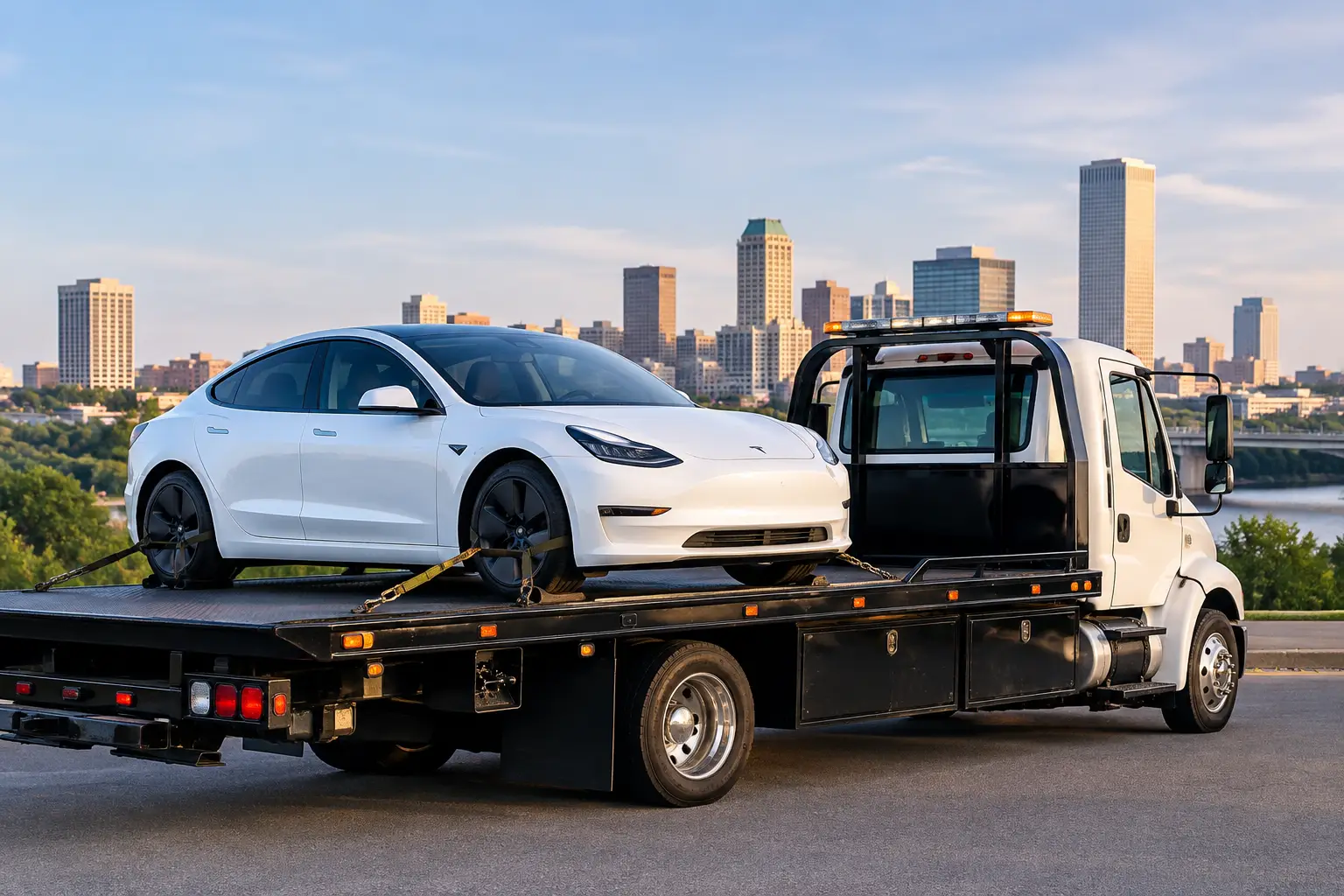
The vehicle details matter too. Share the year, make, model, color, and whether it is two-wheel drive, all-wheel drive, four-wheel drive, lowered, electric, or carrying a heavy load. This is especially important for Teslas and other EVs, which need to be loaded and transported correctly. A vehicle with locked wheels, a missing wheel, suspension damage, or accident damage may also need a different loading approach than a normal breakdown tow.
It also helps to say where the vehicle needs to go. That may be your home in South Tulsa, a repair shop near Tulsa Hills, or a dealership in Broken Arrow. If you only need a jumpstart, a flat-tire change, or a lockout service, say that clearly. If the problem cannot be safely handled on site, the next step is a proper tow.
Do Not Create a Second Problem
Roadside stress leads people to make fast decisions that can damage the vehicle or put them in a worse position. The most common one is accepting help from a friend who arrives with a rope, chain, or strap. Pulling a disabled vehicle through traffic or onto a busy road is rarely a good solution. It can damage bumpers, steering parts, drivetrain components, and the vehicle doing the pulling.
Avoid crawling under the vehicle, especially on a shoulder, and do not attempt a tire change where passing traffic leaves no safe working room. A flat tire in a quiet Bixby neighborhood is different from one on the edge of Highway 169. The right response depends on the space around you, traffic speed, weather, and whether you can work without being exposed to vehicles.
If you are waiting for roadside help, keep your phone charged if possible and watch for the responding truck. Do not walk along a highway to find a gas station or try to flag down traffic. If your vehicle is blocking traffic, tell the dispatcher that detail up front so the response can be planned around the situation.
Protect the Vehicle Before It Is Loaded
Remove any personal items you need before loading begins. Take your wallet, keys, medications, work equipment, garage remote, and anything valuable that could shift during transport. If the vehicle has a special starting procedure, a wheel lock key, an electronic parking brake issue, or a low front bumper, mention it to the tow operator before they begin.
Take a few quick photos if the vehicle was involved in a collision or has visible damage. This is not about making the process complicated. It is simply a clear record of the vehicle’s condition before transport. For an accident scene, follow directions from emergency personnel first and keep a safe distance from traffic.
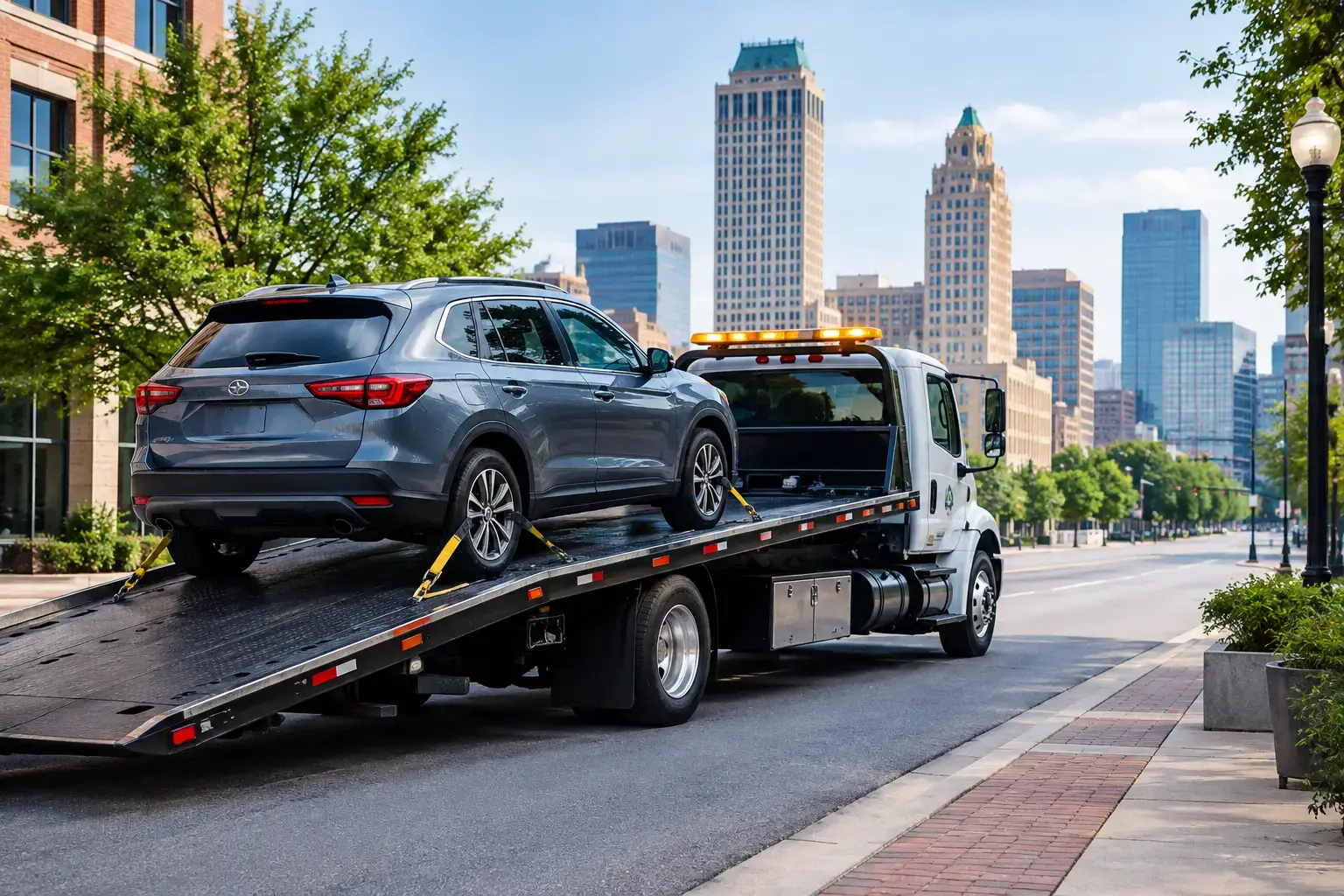
A careful tow operator should inspect the vehicle, explain the loading plan when needed, and use equipment that fits the situation. Flatbed transport is often the right choice for low-clearance cars, all-wheel-drive vehicles, EVs, and vehicles that cannot be safely rolled. Proper loading is not a detail to rush. A disabled vehicle is already having a bad day, and careless handling should not add to the repair bill.
If the Breakdown Is an EV
Electric vehicles need a few extra details. Tell the dispatcher that it is an EV, whether the vehicle is completely unresponsive, and whether it has any warning messages related to the battery or charging system. Do not attempt to tow an EV with its drive wheels on the ground unless the manufacturer’s instructions specifically allow it. That can cause serious damage.
If there is smoke, heat, unusual odors, or visible damage near the battery area after an accident, move away from the vehicle and contact emergency services. For a routine no-start or low-charge situation, the towing provider still needs to know the model and destination so it can be moved using the correct method.
When Roadside Help Is Enough and When You Need a Tow
A jumpstart may solve a simple dead battery, but it does not answer why the battery died. If the vehicle starts and you are near home or a trusted repair shop, you may choose to drive it there only if it is operating normally. If warning lights remain on, the vehicle stalls again, or the battery light is illuminated, towing is usually the safer call.
A flat tire can sometimes be changed on site if there is a usable spare and a safe place to work. If the tire sidewall is damaged, the wheel is bent, the spare is missing, or the vehicle is in an unsafe location, transport to a tire shop makes more sense. The same applies to a lockout: roadside service can get you back into the vehicle, but a damaged key fob or dead vehicle battery may still leave you unable to drive.
There is no prize for forcing a vehicle to move when it is clearly not ready. A short tow inside Tulsa is often less expensive and less frustrating than turning a small issue into an engine, transmission, or suspension repair.
A Clear Plan Makes the Wait Easier
Breakdowns are disruptive, whether they happen outside a Downtown office, on the way home through East Tulsa, or while picking up kids near Jenks. But the response can stay simple: get safe, make yourself visible, give accurate vehicle and location details, and let the vehicle be handled with the right equipment.
Tulsa Towing, powered by Neptune Towing, focuses on that straightforward process: clear communication, careful roadside work, and damage-free transport when your vehicle needs to go to a shop, dealership, or home. When the vehicle cannot safely continue, choosing a calm, informed response is the first step toward getting the rest of your day back on track.