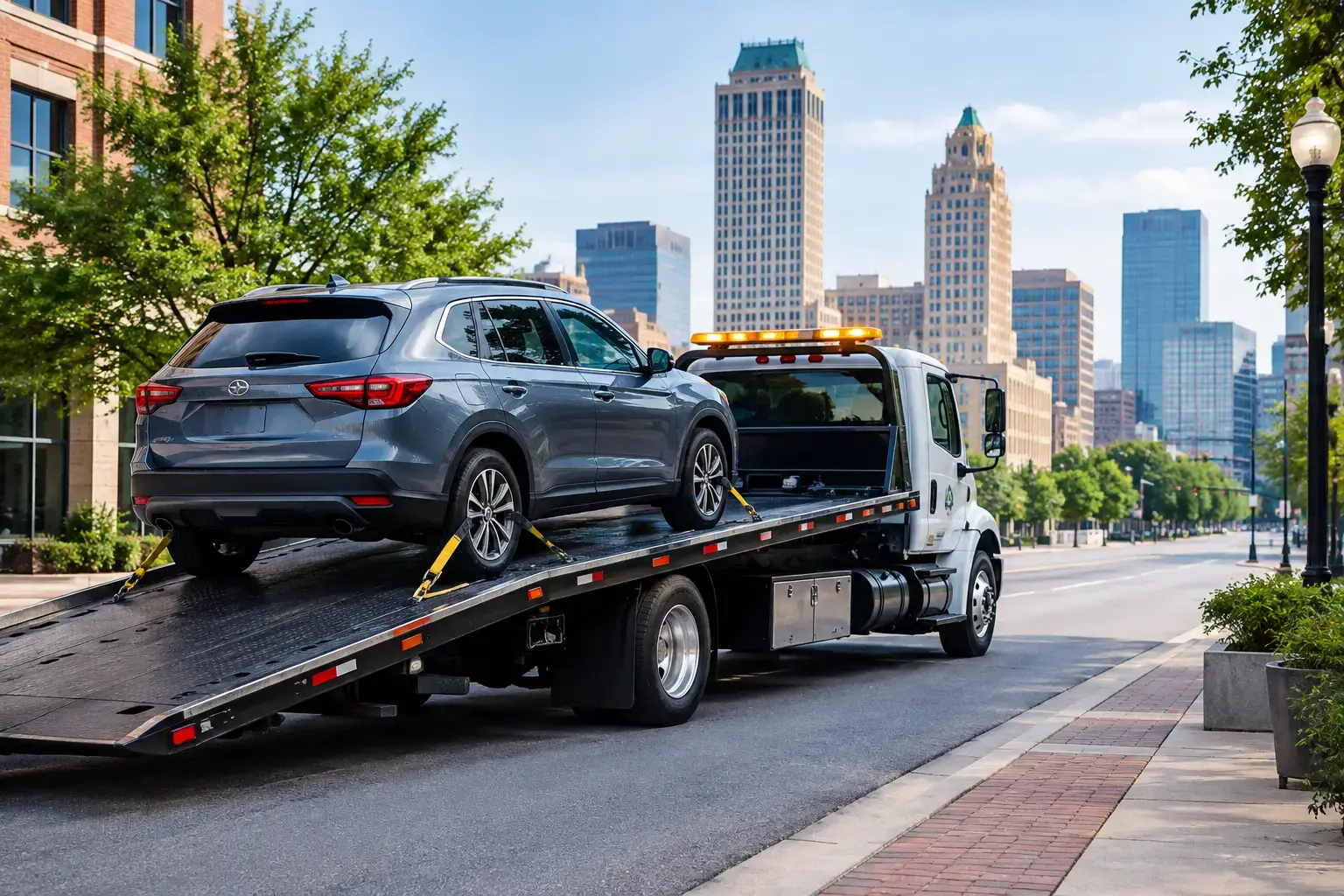
A disabled vehicle on I-44, US 75, or Highway 169 can become dangerous fast. Traffic moves quickly, shoulders get narrow, and drivers may not see a stopped car until they are already close. Safe practices for highway recovery start before the tow truck arrives: get out of the traffic flow if you can, make yourself visible, and avoid turning a mechanical problem into a roadside emergency.
Safe Practices for Highway Recovery Start With Your Position
If the vehicle is still moving, the first goal is simple: get as far from live traffic as safely possible. Use your turn signal, slow down steadily, and aim for a wide shoulder, exit ramp, parking lot, or side street. Do not stop in a travel lane unless the vehicle will not move any farther.
Once you are stopped, put the vehicle in park, set the parking brake, and turn on the hazard lights. At night, in rain, or during heavy traffic, visibility matters as much as location. A vehicle with hazards on is easier for approaching drivers and a responding tow operator to identify.
Do not keep driving on a flat tire, overheating engine, or damaged wheel just to reach the next exit. That decision can turn a towable problem into more expensive damage. If the car is pulling hard, smoking, losing power, or making severe noise, pull over as soon as a safe spot is available.
Know When to Stay Inside and When to Get Out
There is no single answer for every highway breakdown. It depends on where the vehicle is sitting, the traffic speed, weather, and whether another safe location is nearby.
If your vehicle is fully off the roadway and there is room to stand well away from traffic, it may be safer to exit from the passenger side and move behind a guardrail or far from the shoulder. Keep an eye on traffic and do not stand directly behind or beside the vehicle.
If the vehicle is stopped in a lane, on a narrow shoulder, or close to fast-moving traffic, getting out may expose you to more danger. Keep your seat belt on, lock the doors, turn on hazards, and call for help. Avoid opening the driver-side door into traffic. If you are unsure, stay put until a professional can assess the scene or emergency responders give directions.
Children, older passengers, and pets need extra attention. Do not let anyone wander along the shoulder. Keep everyone together and calm, and explain that the priority is staying away from moving vehicles.
Call With Details That Help the Recovery Go Safely
When you call for a tow, give the dispatcher a clear location first. Highway direction, nearest exit, mile marker, cross street, or a recognizable landmark all help. Saying “I am on I-44 near Riverside” is useful, but “eastbound I-44 just past the Riverside exit, on the right shoulder” gives a tow operator a much better starting point.
Describe the vehicle and what happened. Include the make, model, color, and whether it is a car, SUV, pickup, or electric vehicle. Let the operator know if a wheel is damaged, the vehicle will not shift into neutral, it has been in an accident, or it is sitting in a difficult position. Those details affect the equipment and loading plan.
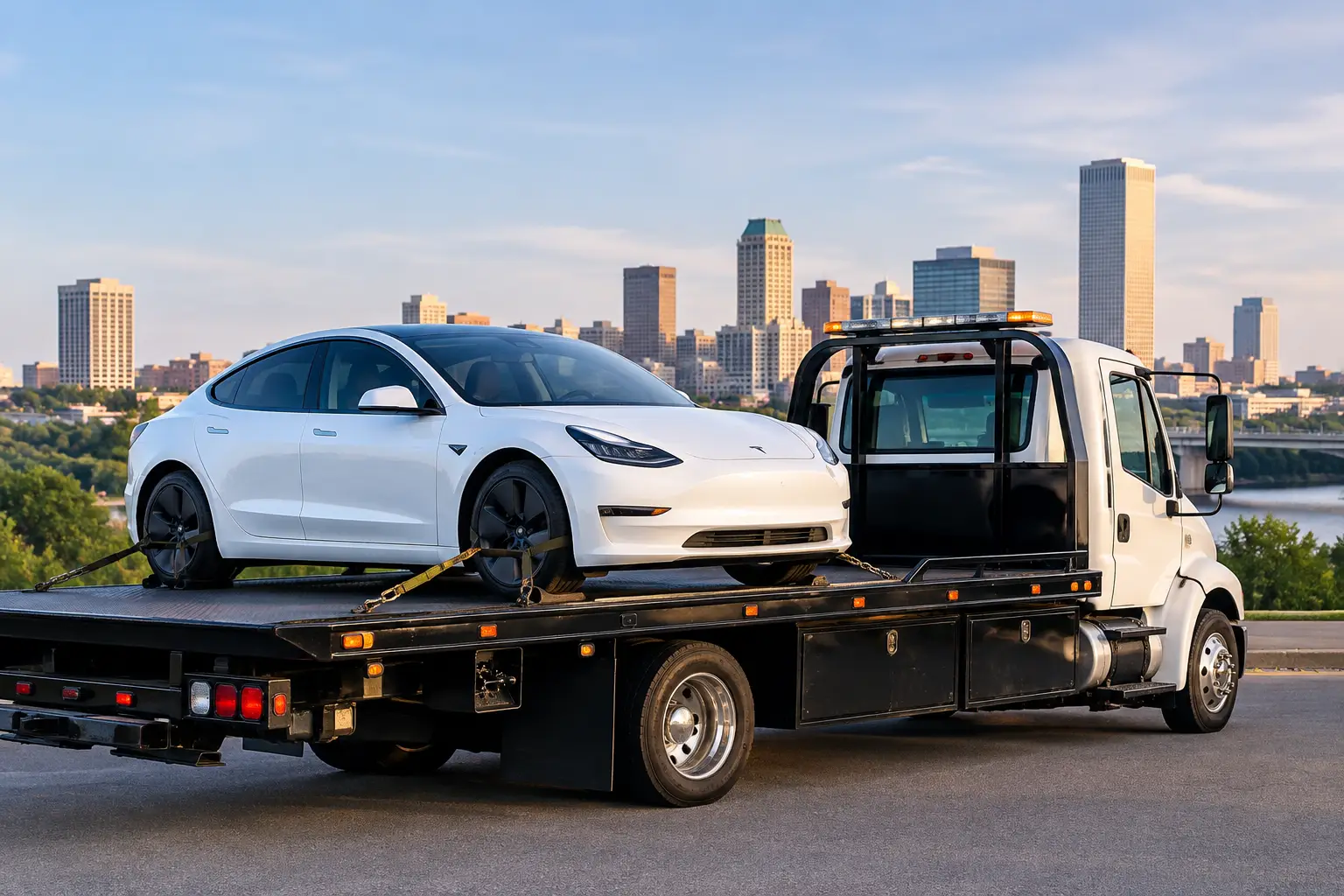
A low-clearance car, all-wheel-drive vehicle, heavy-duty pickup, and Tesla should not be handled the same way. Proper recovery may require a flatbed, skates, dollies, a winch, or a specific loading angle. Clear information up front helps prevent rushed decisions at the roadside.
If you are in an immediate hazard, injured, or blocking traffic, contact emergency services first. A tow company can handle the vehicle, but an unsafe scene may need traffic control or medical assistance before recovery can begin.
What Not to Do While You Wait
The shoulder is not a repair bay. Avoid trying to change a tire, inspect damage underneath the vehicle, or work under the hood beside highway traffic. Even a simple task becomes risky when vehicles are passing only a few feet away.
Do not accept help from a stranger who wants to pull your vehicle with a rope, chain, or another vehicle. Improper pulls can damage bumpers, suspension components, driveline parts, and electric vehicle battery areas. More importantly, a failed strap or sudden movement can injure someone standing nearby.
It is also smart to avoid repeated attempts to start a vehicle that is overheating, smoking, or showing a serious warning light. Turn it off, keep hazards on, and wait for help. If there is smoke or a fire risk, move people away from the vehicle and call emergency services.
You can prepare for the tow by gathering your license, insurance information, and keys. Keep your phone charged if possible. If the vehicle needs to go to a repair shop or dealership, know the address and confirm whether the location is open. That saves time once the truck arrives.
Give the Tow Operator Room to Work
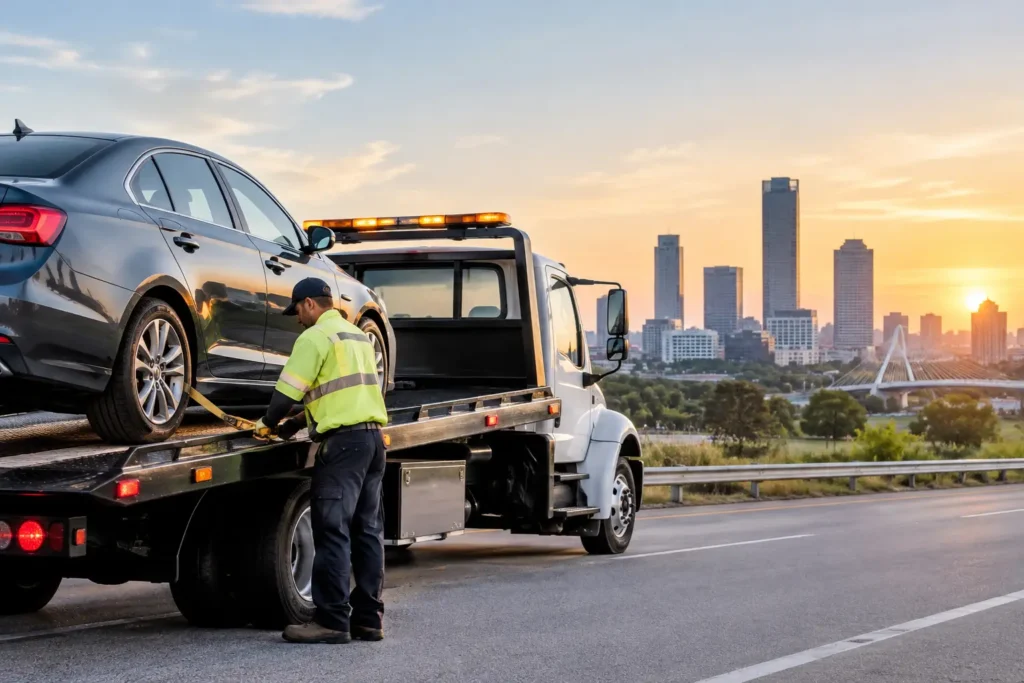
A highway recovery is not just parking a truck and loading a car. The tow operator has to position the truck to shield the work area, watch traffic, set up the bed or winch, secure the vehicle correctly, and load it without creating another hazard.
When the truck arrives, follow the operator’s directions and stay in the safest designated area. Do not stand beside the flatbed, walk behind the vehicle during loading, or try to help attach chains or straps unless asked. A vehicle can shift during recovery, especially after a collision or when a wheel is locked.
Tell the operator about anything that could affect the load. This includes a vehicle that is in park, a broken steering component, a missing wheel, a very low front bumper, or cargo in the bed of a truck. For electric vehicles, mention the model and any warning messages. EVs have specific tow points and transport requirements, and dragging one incorrectly can cause damage.
The same care applies after an accident. A car may look drivable but have hidden suspension, wheel, or fluid damage. Flatbed transport is often the safer choice when there is any question about whether the vehicle can roll or steer normally.
Tulsa Highway Conditions Change the Plan
Tulsa highway calls can look different depending on the time and place. Morning and evening traffic around Downtown, Midtown, and South Tulsa can close in quickly. Rain can make shoulders slick around the Creek Turnpike or US 75, while nighttime breakdowns near Memorial Drive or Tulsa Hills can be harder for other drivers to see.
Weather changes the recovery plan too. In heavy rain, strong wind, ice, or poor visibility, give the operator extra room and expect safety to take priority over speed. A careful load may take a few more minutes, but that is better than placing people or vehicles in a bad position.
Local route knowledge helps after the vehicle is loaded. The best path to a repair shop is not always the shortest line on a map, especially when traffic is backed up or an accident has closed lanes. A city-focused tow service can make practical decisions based on the vehicle, destination, and current road conditions.
After the Vehicle Is Loaded
Before the truck leaves, confirm the destination, provide the shop or dealership address, and remove valuables you need from the vehicle. Ask where the keys should go and whether you need to meet the tow operator at the destination. Clear communication prevents confusion after a stressful roadside stop.
If the vehicle is headed to a repair shop after hours, verify the drop-off instructions. Some locations have designated key boxes or parking areas. The goal is to leave the vehicle securely and where the shop can receive it without creating another problem.
A breakdown on the highway is never convenient, but the right decisions keep it from becoming worse. Get to the safest available location, make the vehicle visible, keep people away from traffic, and let properly equipped recovery professionals handle the loading. That gives you the best chance of getting off the shoulder safely and getting your vehicle where it needs to go.