A Downtown towing guide matters because a breakdown downtown is different from one in a quiet neighborhood. Traffic moves around you quickly, parking is tight, loading space can be limited, and one blocked lane near the Blue Dome District or the Deco District can create a problem fast. The first job is not figuring out the repair. It is getting yourself, your passengers, and your vehicle into a safer position.
What to Do When Your Vehicle Stops Downtown
If the vehicle still rolls, get it as far out of the travel lane as you safely can. A nearby parking lot, curbside space, or low-traffic side street is usually better than sitting in an active lane. Turn on your hazard lights right away. At night, keep interior lights low enough that you can see outside, but make sure the vehicle remains visible.
Do not stand between your vehicle and traffic. If you are on a busy street near the BOK Center, the Inner Dispersal Loop, or a downtown ramp, stay in a safe spot away from moving cars when possible. On a highway shoulder, move well away from the roadway after you have called for help.
If the car cannot move, do not keep trying to start it or force it into gear. A failed transmission, overheated engine, damaged tire, or electrical issue can get worse when the vehicle is pushed beyond what it can handle. Let the tow operator know whether it rolls, steers, shifts into neutral, or is completely disabled. That information affects how the truck is set up and how the vehicle is loaded.
Downtown Towing Guide: Give Dispatch the Right Details
A clear location saves time, especially downtown where one block can have multiple entrances, loading zones, garages, and one-way streets. Start with the street name, nearest cross street, and the direction you are facing. If you are in a garage, say which level you are on, the garage entrance you used, and any posted height clearance.
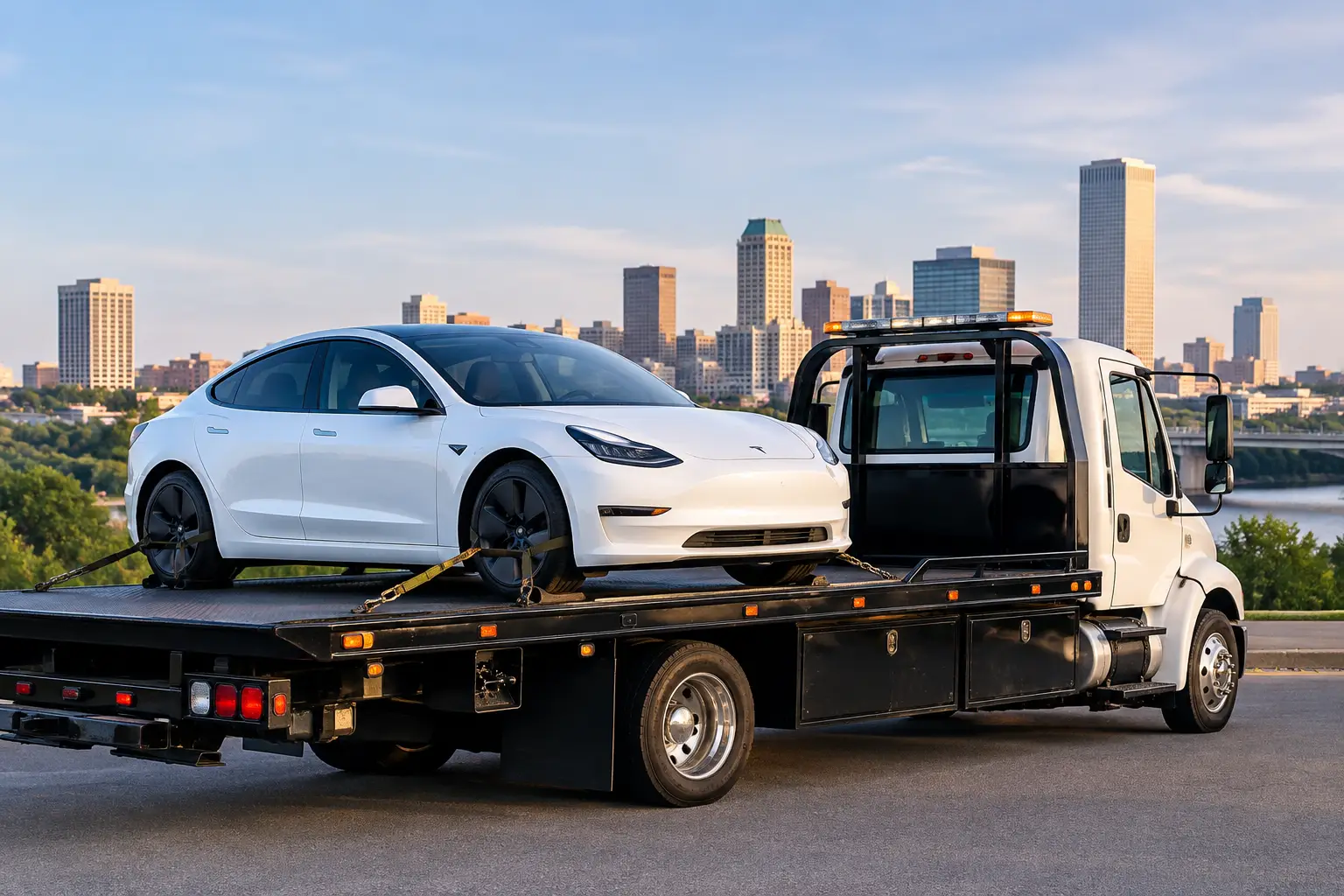
Then describe the vehicle. Dispatch needs the year, make, model, color, and whether it is a car, SUV, pickup, or electric vehicle. Mention modifications that affect loading, such as very low ground clearance, oversized tires, a locked steering wheel, or a missing wheel. If you drive a Tesla or another EV, say so up front. Electric vehicles need to be handled correctly, including the right loading method and attention to tow points.
It also helps to explain why you need service. A vehicle that simply has a dead battery may be handled on site with a jumpstart. A flat tire may be resolved with tire help if you have a usable spare. But a car with accident damage, a leaking fluid line, suspension damage, or a no-start condition often needs a flatbed tow to a repair shop, dealership, or another destination you choose.
The most useful information to share is simple:
- Your exact downtown location and a nearby cross street or landmark.
- Whether the vehicle is in a travel lane, garage, lot, driveway, or shoulder.
- What the vehicle will and will not do, including whether it rolls and steers.
- The vehicle type, any low-clearance concerns, and your preferred destination.
Clear details prevent the wrong equipment from arriving and reduce back-and-forth when you are already dealing with a stressful situation.
Why Downtown Loading Takes More Planning
Downtown towing is not just a matter of pulling up behind a vehicle. A flatbed needs room to position safely, lower the bed, winch the vehicle on, and leave without creating a larger traffic issue. On narrow streets around East Village, the Tulsa Arts District, or the Pearl District, parked cars and delivery vehicles can make that setup more difficult.
That does not mean the job cannot be done. It means the operator needs to assess the space before loading. In some situations, moving the vehicle a short distance to a safer loading area is the right call. In others, traffic conditions, vehicle damage, or a blocked wheel make it safer to load where the vehicle sits. The decision depends on the scene, not on rushing through the job.
Parking garages deserve special attention. Many garages have clearance limits that do not work for every tow truck. Before requesting service, look for the posted clearance height and tell dispatch. If a truck cannot safely enter, the vehicle may need to be moved out by other means or loaded from the garage entrance. This is one reason location details matter more downtown than they do in an open parking lot.
When a Flatbed Is the Right Choice
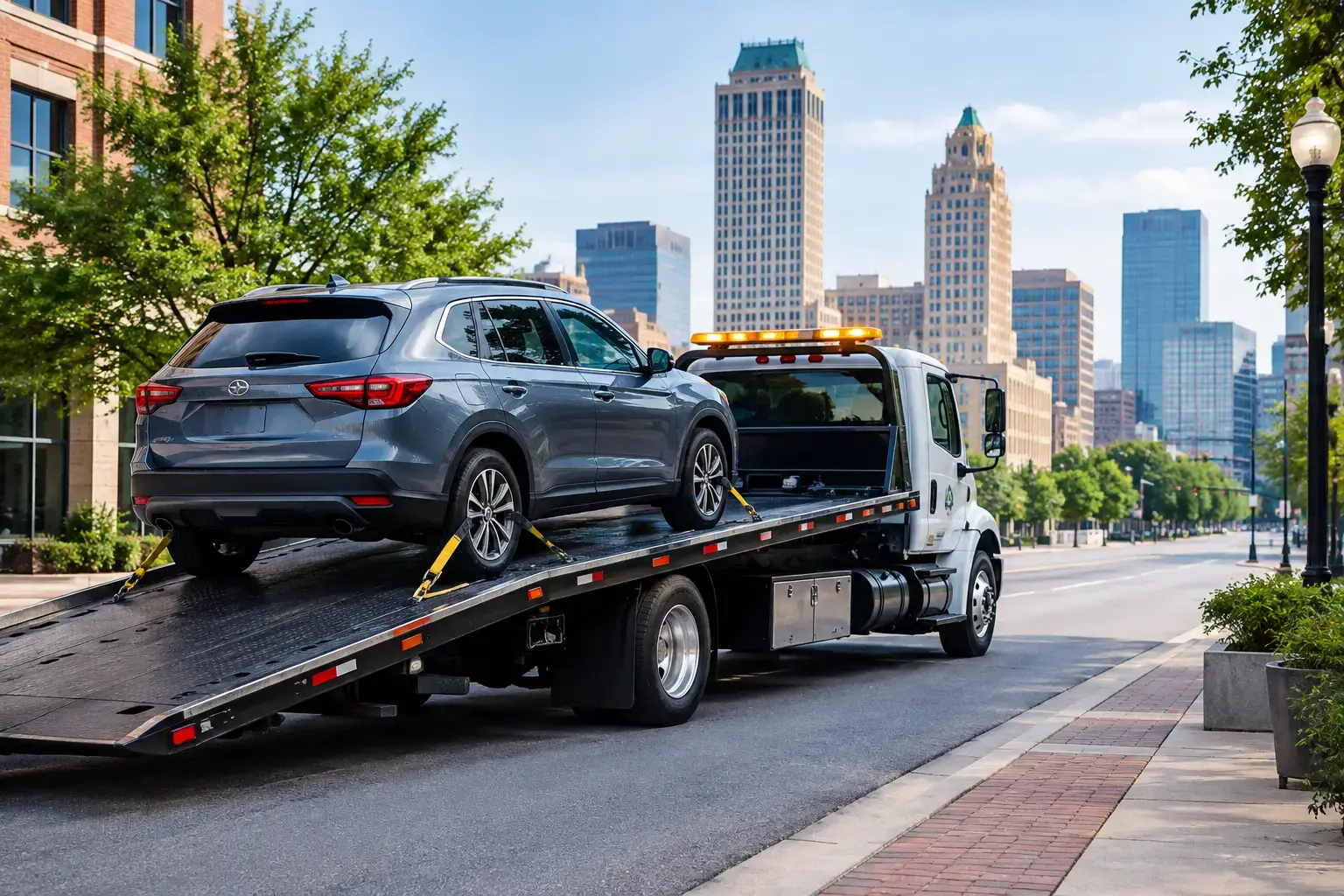
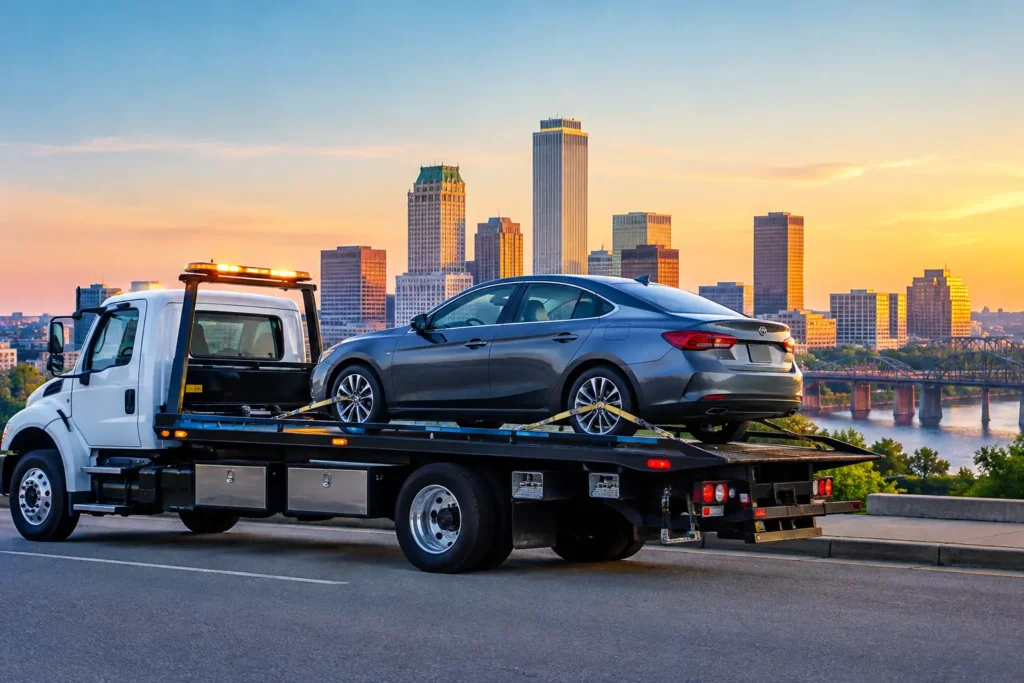
Flatbed towing is often the safest option for a disabled vehicle because all four wheels ride off the ground. That matters for all-wheel-drive vehicles, electric vehicles, cars with transmission trouble, and vehicles with accident damage. It is also a good choice for low-clearance cars that can be damaged by improper angles or careless loading.
A proper flatbed setup is not about making the job look easy. It involves using the correct attachment points, controlling the loading angle, securing the vehicle correctly, and checking clearance before transport. A damaged bumper, locked wheel, or low front end changes the approach. So does a heavy-duty pickup that needs the right capacity and tie-down method.
There are situations where roadside assistance makes more sense than a tow. If the battery is weak, the tire is flat, or keys are locked inside, on-site help may get you moving without transporting the vehicle. But if the vehicle is unreliable, overheating, warning lights are flashing, or you are stopped where traffic is tight, a tow may be the safer choice. Getting it to a local shop is better than risking another breakdown on I-244, US 75, or a busy downtown street.
Choose a Destination Before the Truck Arrives
A tow goes smoother when you know where the vehicle needs to go. That may be your regular repair shop, a dealership, your home, or a safe place where you can make a repair decision later. Confirm the shop is open if you need immediate service. If it is closed, make sure there is a safe, permitted place for the vehicle to be left.
Tell the operator about any destination access issues. A repair shop behind a gate, a dealership service lane, an apartment complex with tight turns, or a home on a narrow street may require a different unloading plan. The goal is to place the vehicle where it can be accessed safely, not leave it in a spot that creates another problem.
You should also remove or secure valuables before transport. Take out loose electronics, work equipment, medication, and important documents if it is safe to do so. Keep your keys and any needed paperwork available, and ask what you need to do if you cannot ride with the truck. Local towing rules and available seating can vary by situation.
A Calm Call Makes the Whole Job Easier
Breakdowns downtown can feel urgent because there is traffic, noise, and pressure to get out of the way. Focus on the next safe step rather than trying to solve everything at once. Give an accurate location, explain the vehicle condition, and say where you want it delivered.
Tulsa Towing, powered by Neptune Towing, handles downtown calls with flatbed equipment and a city-focused approach to safe loading. The point is straightforward: communicate clearly, use the right method for the vehicle, and get it where it needs to go without adding damage or confusion.
If your vehicle quits near downtown Tulsa, move out of danger if you can, turn on the hazards, and stay aware of traffic while help is on the way. A careful tow starts with those few decisions, long before the truck reaches your location.